Puglia Without a Car
Explore Italy's heel by train and bus: routes, itineraries and practical advice for a slower trip.
After the weather, this is the question I am asked most often: do you have to hire a car to visit Puglia? The answer is no. But you need to approach the trip differently and plan accordingly.
Puglia's rail network: the 4 operators and their routes
Look at a map and you will see railway lines everywhere. Perfect, surely? The catch is that Puglia has four different railway operators, often using separate stations even within the same town. That is the first thing to understand before you go.
| Operator | Main route | Reliability | Sunday service |
|---|---|---|---|
| Trenitalia | Foggia, Bari, Polignano, Monopoli, Ostuni, Brindisi, Lecce | Excellent | Yes |
| FSE (Ferrovie del Sud Est) | Itria Valley, Alberobello, Locorotondo, Otranto, Gallipoli | Unpredictable | No (replacement buses) |
| FAL (Ferrovie Appulo Lucane) | Bari to Matera (Basilicata) | Reasonable | No (replacement buses) |
| Ferrotramviaria | Bari Airport, Ruvo di Puglia, Andria | Good | Yes |
© Chris0693 / Wikimedia Commons — CC BY-SA 3.0
1. Trenitalia: the fast national network
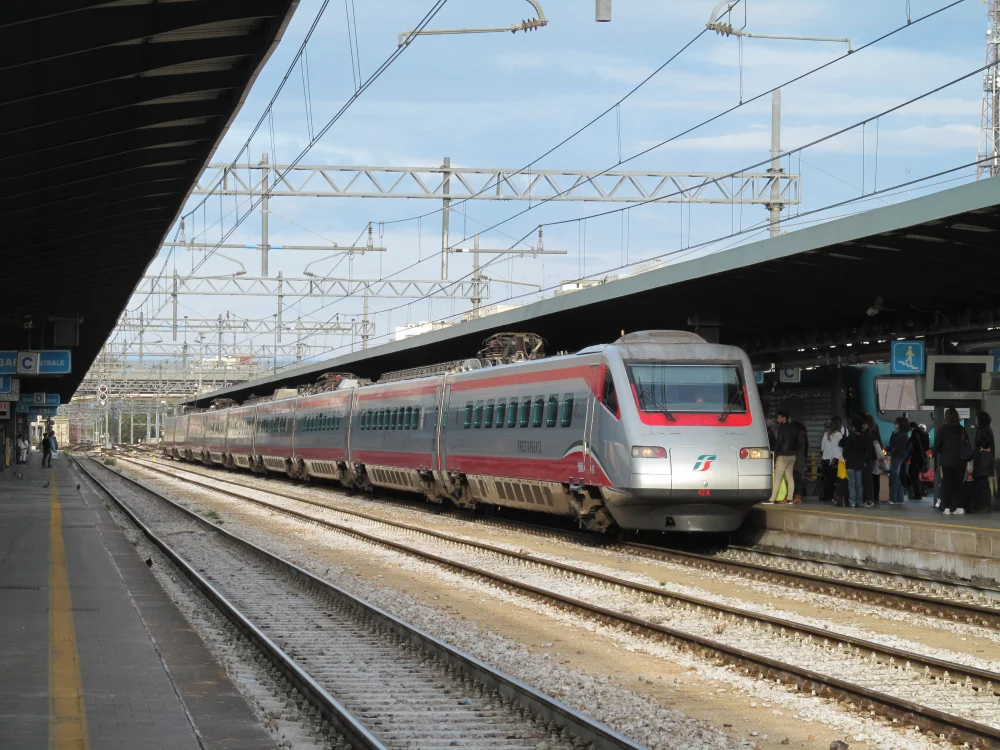
This is the backbone of your trip. Trenitalia operates the main coastal line down the Adriatic, with modern, air-conditioned trains. Remember this route: Foggia, Bari, Polignano a Mare, Monopoli, Ostuni, Brindisi, Lecce. Services along it are frequent, often hourly or half-hourly. Bari to Polignano takes just 20 minutes for around €3.
Buy tickets from station machines or through the Trenitalia app. Validate paper tickets where required. Trenitalia’s Digital Regionale ticket validates automatically at the scheduled departure time of your selected train; no manual check-in is needed. Other operators and ticket formats may follow different rules.
2. Ferrovie del Sud Est (FSE): the slower inland route
This is where the adventure begins. FSE, now part of the FS group, serves the Itria Valley, including Alberobello, Locorotondo and Martina Franca, and southern Salento from Lecce towards Otranto or Gallipoli. These small regional trains have plenty of charm. They cross olive groves, stop at remote level crossings and travel slowly enough for you to count the poppies.
The downside? They are slow, often delayed and, crucially, most FSE lines do not run on Sundays. They are replaced by very infrequent buses. Treat the Itria Valley as inaccessible by public transport on Sundays and plan a coastal visit or a walk around the town where you are staying instead.
3. Ferrovie Appulo Lucane (FAL): for Matera
If you fly into Bari and want to visit Matera in neighbouring Basilicata, take FAL. Its station at Bari Centrale is separate from Trenitalia's, in the neighbouring building upstairs. Allow around 1 hour 45 minutes for a ticket costing under €6. The Sunday rule applies here too: FAL trains do not run that day and are replaced by much slower buses. Have an espresso at the station café before boarding. The route crosses the arid, rocky Murge landscape.
4. Ferrotramviaria: for the airport and north of Bari
This operator links Bari Airport with the city centre in 15 minutes for €5.20. It also serves attractive towns north of Bari, such as Ruvo di Puglia and Andria.
FSE and FAL trains do not run on Sundays. Replacement buses are infrequent and slow. Plan accordingly: use Sundays for coastal visits or walks around the town where you are staying. Avoid discovering this rule on the platform that morning.
Regional buses in Puglia: Cotrap and Salento in Bus
© Benjamin Smith / Wikimedia Commons — CC BY-SA 4.0
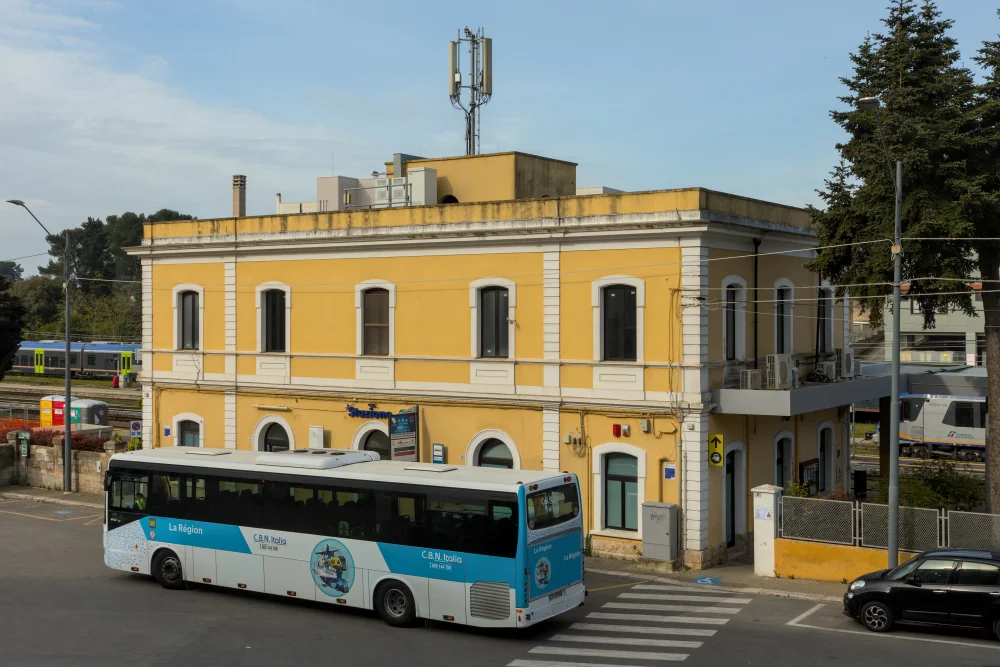
Trains do not go everywhere, particularly if you want to reach specific beaches or small villages. This is where buses help. The Cotrap network brings together many local operators. Its website is not especially intuitive, but it gathers their timetables in one place.
In summer, from around mid-June to early September, the province of Lecce runs Salento in Bus. It is particularly useful without a car, linking Lecce with the main seaside resorts: Torre dell'Orso, Otranto, Gallipoli and Santa Maria di Leuca. The brightly coloured buses are easy to recognise, and timetables are designed for visitors.
On route 105 from Otranto to Santa Maria di Leuca, sit on the left. The road follows the cliffs above the Adriatic for several kilometres, with the sea directly below. The driver handles the bends skilfully.
Avoid buying your bus ticket on board if you can. Drivers do not always sell them, or may charge a supplement. Look for a bar or tabaccheria near the stop, identifiable by a large black T: that is where you buy your biglietti.
Luggage storage in Puglia: options beyond the main stations
This is the big challenge on a car-free trip with several stops. What do you do with a 20-kilo suitcase while visiting a town between hotels? Major stations such as Bari Centrale and Lecce have official, supervised luggage storage at around €6 for the day. Intermediate stations such as Monopoli, Ostuni and Polignano do not have these facilities.
The golden rule for travelling without a car is to pack lightly: a good cabin-sized backpack makes all the difference. If you need a suitcase, these are the options that work.
- Nannybag or Bounce apps: leave bags with partner businesses in town centres, at around €5 per day per bag
- The local approach: ask the station café owner with a friendly smile whether they can keep your bag in a corner in return for a coffee and a generous tip. This often works in southern Italy
- Bari Centrale station: official luggage storage open daily, around €6 per bag for each 5-hour period
- Lecce station: luggage storage on the car park side, at a similar rate to Bari
Where to stay in Puglia without a car: Bari, Monopoli and Lecce
Without a car, accommodation location is crucial. Avoid isolated masserie unless your hosts provide a shuttle. You need to stay near a station, but choose the right one. These are my three bases for exploring the region without moving hotel every day.
You can access all 4 rail networks from one city. Spend your first 3 or 4 days here. Polignano, Monopoli, Trani, Matera and Alberobello are all possible day trips. Murat, the grid of streets between the station and the old town, is an ideal area to stay.
For more of a seaside and village feel than Bari, Monopoli is an excellent choice. Its Trenitalia station is a 15-minute walk from the historic centre. You are on the main line, just a few minutes from Polignano or Ostuni.
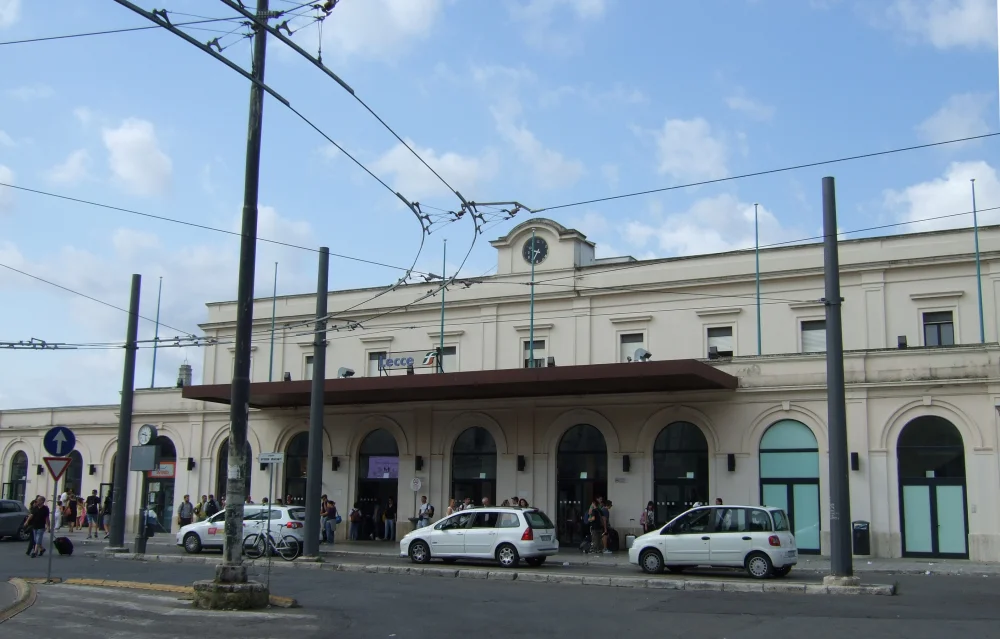
Lecce station is your starting point for all of Salento. Take summer buses to the beach or FSE trains towards Otranto. The city is also large enough to have all the facilities you need between outings.
© Haragayato / Wikimedia Commons — CC BY-SA 4.0
7 days in Puglia without a car: a train and bus itinerary
The accommodation plan is simple: 3 nights in Bari and 3 in Lecce. The most practical option is to fly into and out of Bari, or return from Brindisi Airport further south. This itinerary is entirely feasible without stress, using mainly the fast Trenitalia network. Compare flights and the cheapest days on Skyscanner before you book.
© Peter A Brown / Wikimedia Commons — CC BY-SA 4.0
Take the Ferrotramviaria train from the airport to Bari Centrale and drop off your bags. Spend the end of the day in Bari Vecchia's lanes, watching the nonne make orecchiette on Strada Arco Basso. For a full route through the neighbourhood, see street food in Bari Vecchia.
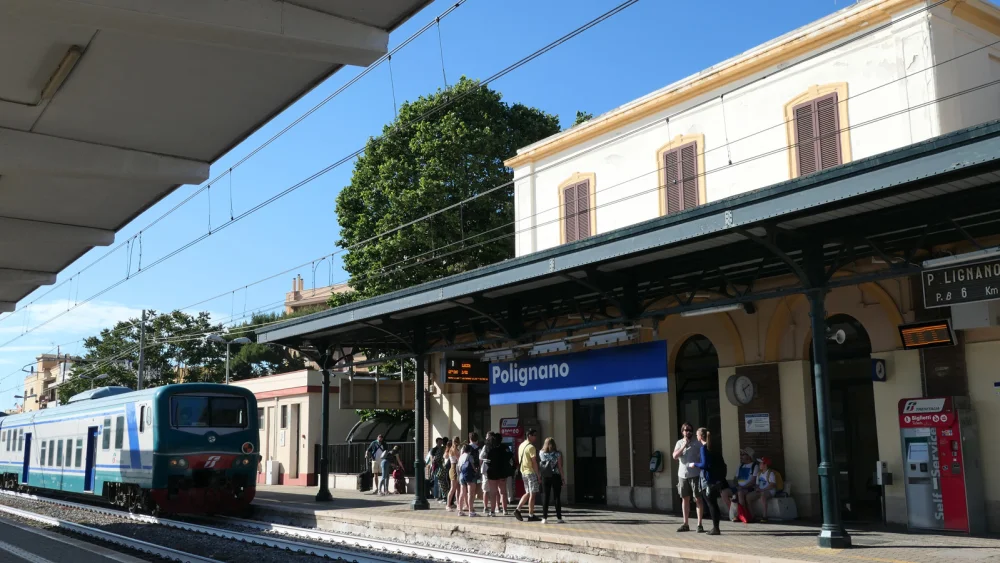
Take a Trenitalia train in the morning and see the famous Lama Monachile beach. Have lunch, then catch another train to Monopoli in the afternoon: just 5 minutes away. Dine by the harbour before returning to Bari in the evening.
Take the FAL train from Bari, using the upstairs station at Bari Centrale. Spend the day wandering through the Sassi, the old cave-dwelling districts listed as a World Heritage Site. Return to Bari towards evening.
Take a Trenitalia train towards Ostuni. The station is 2 kilometres below the white town: use the STP shuttle bus to reach the centre uphill. There is no official station luggage storage, so use Nannybag or ask the café owner. In the evening, take a train to Lecce for a three-night stay.
A relaxed day exploring Lecce on foot. Baroque façades, a warm pasticciotto at Caffè Alvino and a visit to Santa Croce basilica. Take your time with the city.
From Lecce, take an FSE train on a weekday or Salento in Bus in summer to Otranto. Swim below the walls and visit the cathedral with its medieval 12th-century mosaic.
Allow time for the train, bus or taxi connections needed to reach your chosen airport; do not assume a direct Trenitalia train serves both airports.
Where public transport falls short in Puglia, and the alternatives
© Benjamin Smith / Wikimedia Commons — CC BY-SA 4.0
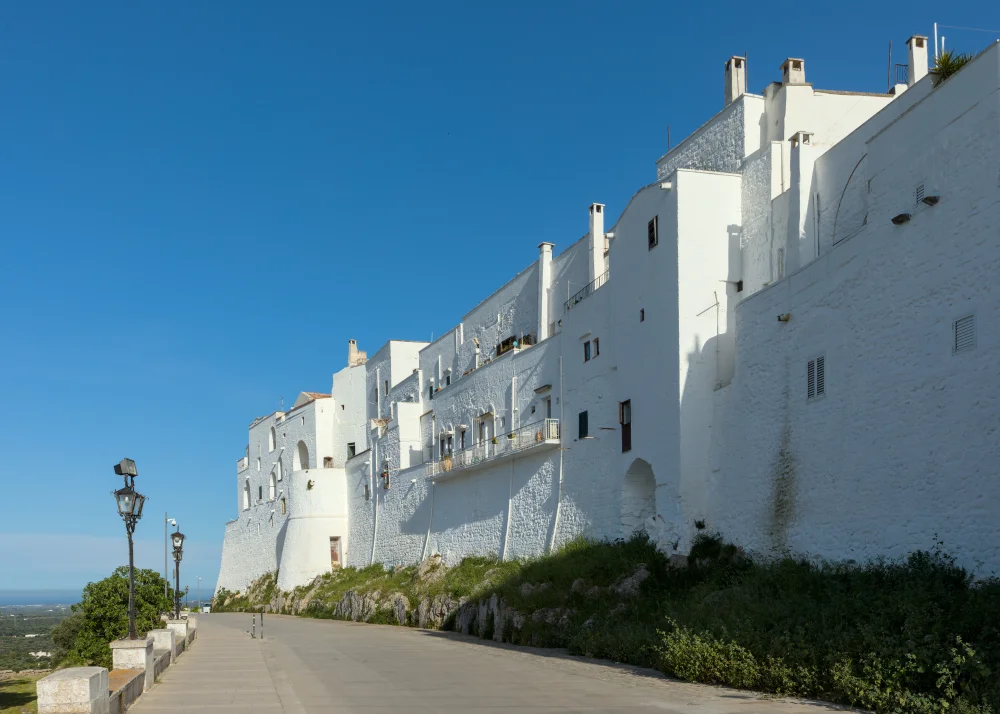
Public transport means giving up some freedom. Gargano's wild beaches, the rugged coast south of Otranto and Salento's hidden coves will be very difficult to reach. Exploring the Itria Valley's towns of Alberobello, Locorotondo and Martina Franca by FSE train is possible, but connections make it very time-consuming.
Mix public transport with organised excursions. From Bari, a half-day minibus trip lets you visit with a guide, leave the timetables to someone else and be back in time for an aperitivo.
From Monopoli or Lecce, hire a bike or e-bike to explore country roads and small coves buses cannot reach. E-bike hire costs around €25–35 a day, giving you freedom without the complications of a car.
Do not rely solely on Google Maps for FSE and FAL timetables. Its algorithms sometimes struggle with these smaller operators' timetable changes. Use the operators' official websites or the Trenitalia app, which now includes most FSE trains. Checking the next morning's journey the evening before takes two minutes and avoids surprises. To choose your travel dates, see when to visit Puglia.
Puglia without a car: frequently asked questions
Do you have to hire a car in Puglia?
Which town is the best base for visiting Puglia by train?
Are Puglia's buses and trains air-conditioned?
Do you need to book train tickets in advance in Puglia?
Can you pay the bus driver by card?
Can you visit Alberobello from Bari without a car?
From Baroque Lecce to Polignano's cliffs, compare ten towns and cities to choose your stops without spending the whole trip…
Read more →Puglia stretches for 400 kilometres. Here is how to choose the main sights, plan your journeys and avoid the tourist…
Read more →Baroque Lecce: guided walk and underground rooms