Monopoli vs Polignano a Mare: Where Should You Stay?
It is a familiar dilemma on a trip to the Itria Valley. These two Adriatic towns are barely fifteen minutes apart by road, yet staying in each feels very different.
For a longer stay, I would choose Monopoli for easier beach access and gentler prices. Polignano a Mare suits a short romantic break with dramatic cliff views. The best choice depends on your budget and the kind of base you want.
Monopoli vs Polignano at a glance
If you want to decide quickly, here is how the two towns compare on the things that can make or break a stay in Puglia.
| What matters | Polignano a Mare | Monopoli |
|---|---|---|
| Dramatic scenery | 5/5 (sheer cliffs) | 3/5 (classic beauty) |
| Walkable beaches | 2/5 (pebbles, heavy crowds) | 4.5/5 (fine-sand coves) |
| Value for money | 2.5/5 (tourist prices) | 4/5 (generally affordable) |
| Local life | 2/5 (souvenir shops) | 4.5/5 (working fishing harbour) |
| Ease of driving | 1.5/5 (complicated ZTL, expensive) | 3/5 (car parks easy to locate) |
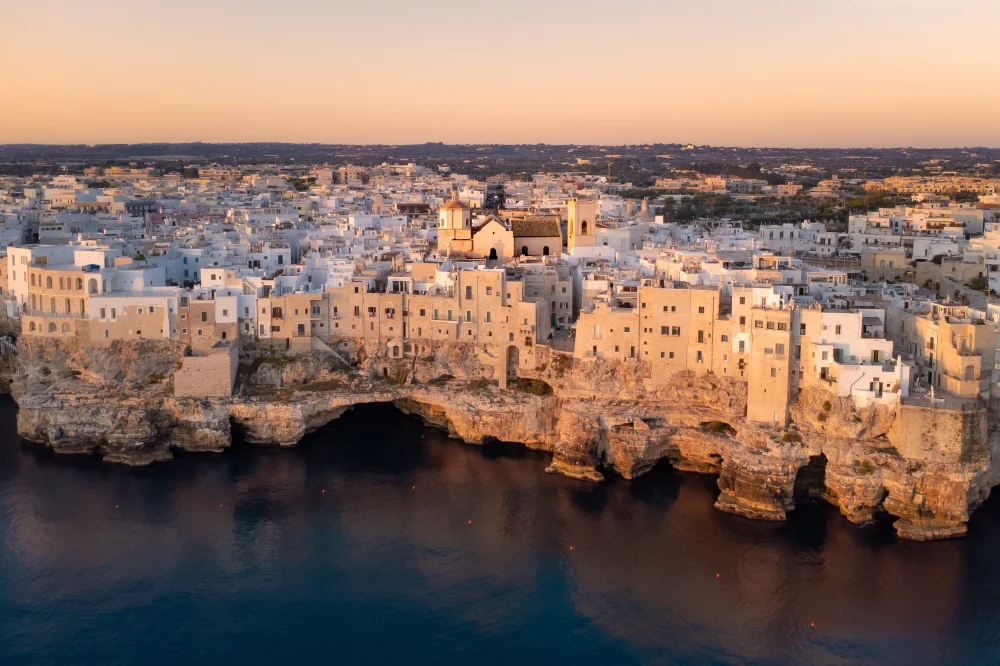
Choose Polignano a Mare for the dramatic setting
© Pasquale Alberto Carone / Wikimedia Commons — CC BY-SA 4.0
Set aside the photographs you have seen a thousand times online: arriving in Polignano a Mare is something you feel as much as see. On the Roman bridge of Via Traiana, sea wind funnels through the ravine. Waves crash against the limestone below, almost drowning out conversation.
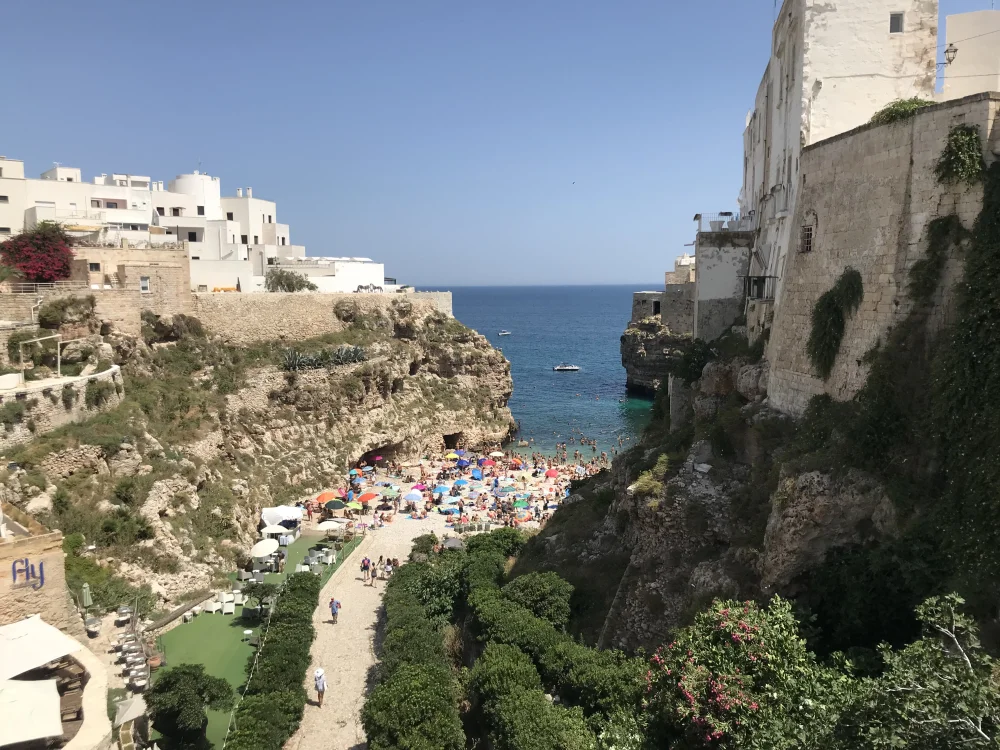
Look down and Lama Monachile comes into view, the narrow cove whose white houses seem to hang over empty space. Polignano's appeal comes from this height. Its maze of stone streets opens unexpectedly onto panoramic terraces suspended thirty metres above the water.
Poems by "Guido il Flâneur" decorate doors and steps around the town. Beside the statue of Domenico Modugno, the local singer who gave the world "Volare", the horizon from this spray-washed headland makes his inspiration easy to imagine.
On the central square, Super Mago del Gelo is worth a stop. Its Caffè Speciale, an espresso with lemon zest, amaretto and cream, is a local institution that tends to escape conventional tourist guides.
© Wikimedia Commons
High-season reality can be less appealing. Between June and September, the lanes are packed by 10 am. Swimming at Lama Monachile takes determination, with uncomfortable pebbles, towels squeezed together and fierce sun. The wait for Pescaria's famous octopus sandwiches can exceed an hour.
Polignano feels most like itself after dark or very early in the morning, when the town returns to its residents and the relatively few visitors staying overnight.
Stay in Polignano when you want somewhere special. It is ideal for a honeymoon, a short romantic break of no more than two nights, or a room overlooking the sea if your budget allows.
Where to stay in Polignano a Mare
Staying in the old town means parking on its outskirts. The paid San Francesco car park and the area near the station on Via Marco Polo are the most practical options before walking into the centre, pulling your luggage over the chianche paving stones.
A well-placed property with sweeping Adriatic views. Rooms are filled with natural light, and breakfast is served with a view of the horizon. Prices are reasonable for Polignano, around €150–180 a night depending on the season.
Just a few metres from the arch into the old town, with beautiful exposed-stone vaults and particularly attentive hospitality. Expect €180–250 a night in season.
The cave restaurant divides opinion, but the adjoining hotel offers something out of the ordinary. In high season, from May to September, prices rise to €800–1,200 a night. Winter nights start at around €400.
Choose Monopoli for local life and an easier stay
© Andrea Rota Nodari / Wikimedia Commons — CC BY-SA 4.0
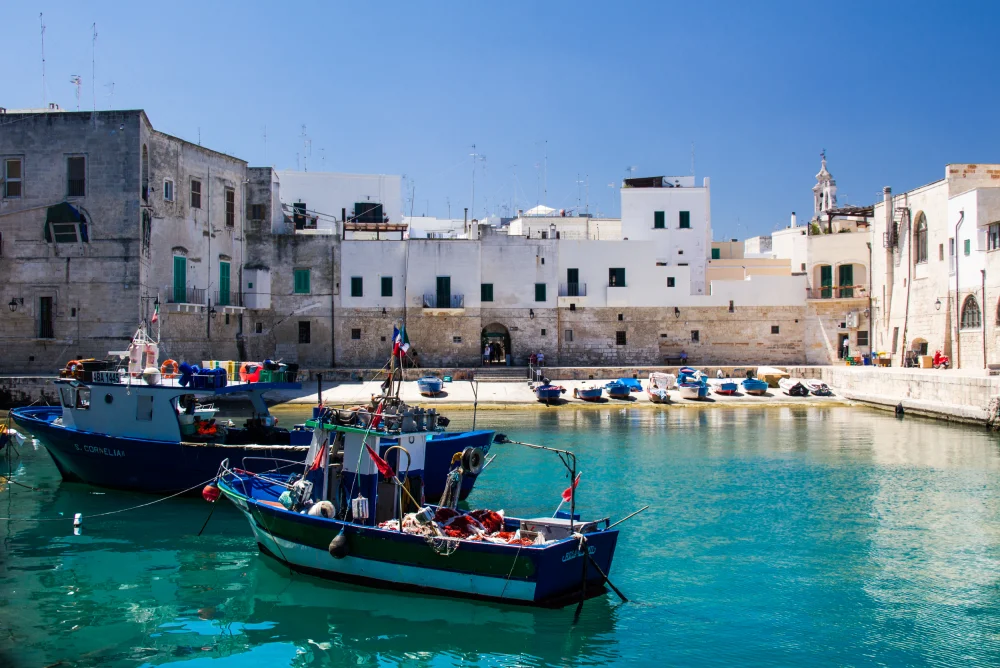
While Polignano a Mare enjoys posing for the camera, Monopoli gets on with everyday life. The atmosphere is entirely different. Rather than sitting on a rocky headland, the town spreads along the coast close to sea level.
The contrast is striking when you first see Porto Vecchio. The gozzi, small wooden fishing boats painted bright blue and red, rock gently below the protective walls. Early in the morning, fishermen still untangle their nets while chatting in the local dialect.
Around the harbour, the historic centre is a tangle of paved lanes with washing hanging from the windows. In the evening, residents gather on Piazza Garibaldi for the traditional passeggiata. This town of 50,000 people has kept its lively neighbourhoods and excellent places to eat.
By 11 am, the smell from Panificio La Romana drifts through the lanes. A still-hot slice of cherry-tomato focaccia is hard to beat. For dinner, Osteria Perricci is a local institution, serving cavatelli ai frutti di mare among local families without the usual tourist mark-up.
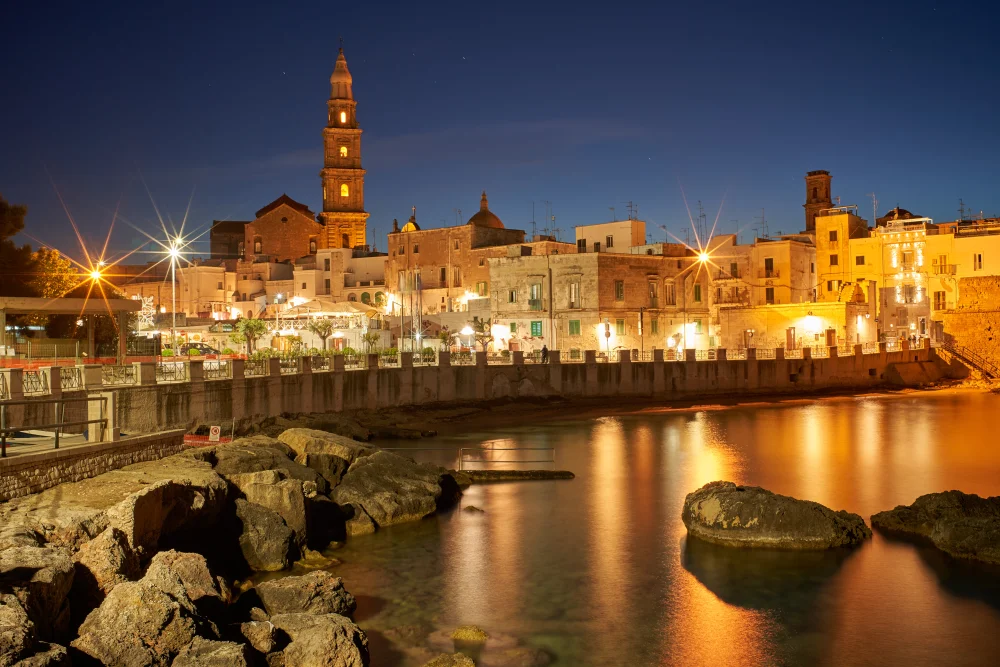
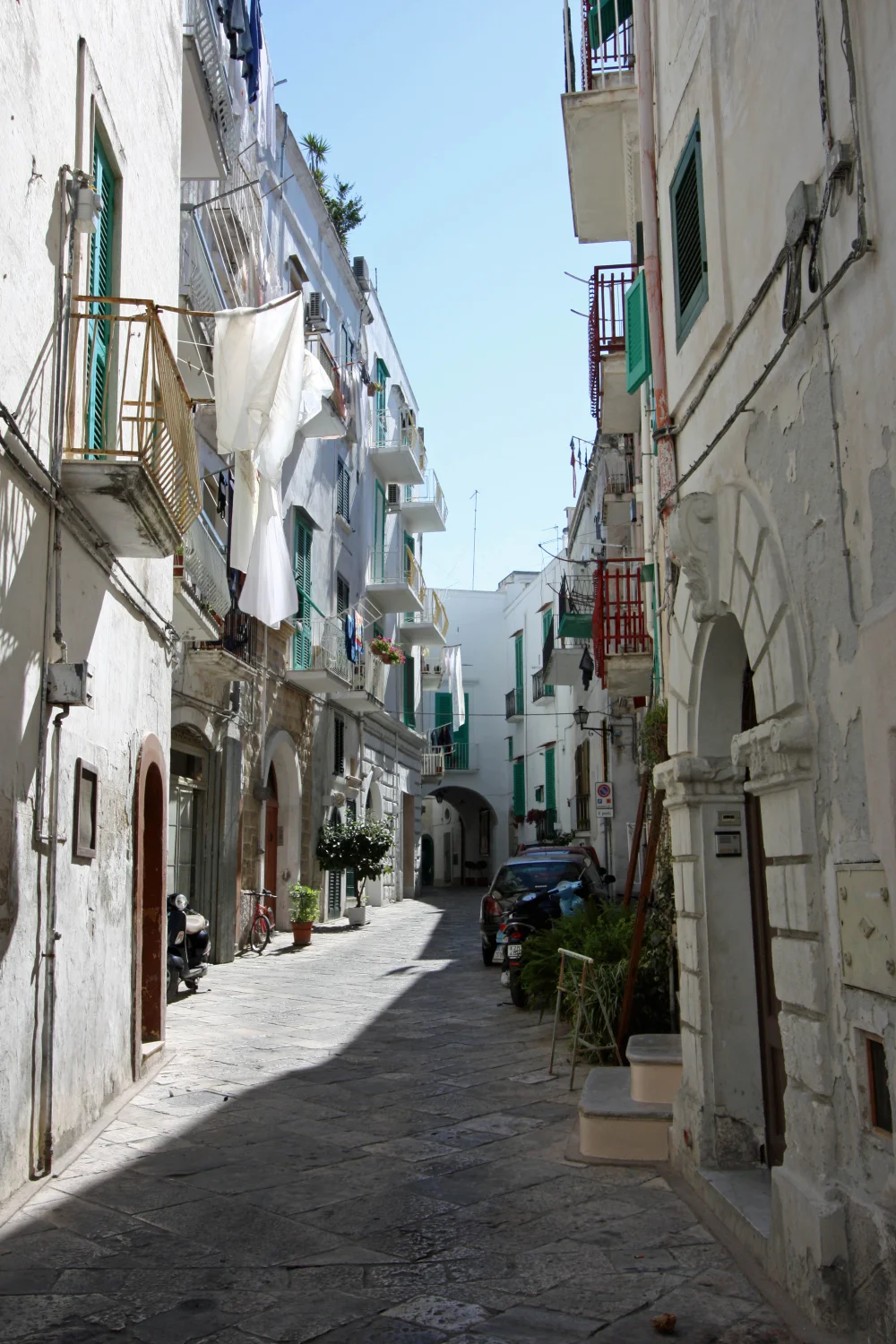
From accommodation in the old town, follow the defensive muraglia, pass the imposing Castello di Carlo V and head straight down to small golden-sand coves. Cala Porta Vecchia sits below the fortifications, with clear, shallow water. This is where Monopoli's grandmothers take their 7 am sea swim.
Further south, in the Capitolo area, kilometres of sandy beaches have organised lidos, sunloungers and small bars, ideal for easy days doing very little.
Where to stay in Monopoli
Monopoli has excellent accommodation. Many owners have restored old buildings and added lovely roof terraces for a sunset aperitivo.
You check in and have breakfast at central locations, but the rooms are spread across different houses in the town centre. You come home with your own key, like someone who lives in the neighbourhood. Expect around €120–150 a night.
Spacious, elegant suites run by Paolo and his father with remarkable attention to detail. A ten-minute walk from the seafront and historic centre. The highest-rated property in this selection, from €174 a night.
A beautifully restored former fortress. Service is impeccable, and the small rooftop pool is a rare treat in the historic town. Prices generally exceed €350 a night and can top €500 in August.
The Dolce Routes verdict and practical details
For a stay of more than two days, Monopoli is my clear choice of base. A less crowded atmosphere, easy access to proper sandy beaches, good local restaurants and noticeably gentler prices make it a very practical place to stay. There is room to slow down here.
Once you have chosen your base, our guides to Monopoli and Polignano a Mare help you plan sightseeing and divide your days between the two towns.
Rent an apartment in Monopoli and enjoy its relaxed pace. Set aside half a day for Polignano: go very early to photograph an empty Lama Monachile, or book a good restaurant in the evening to see the town after dark. Then return to quieter Monopoli for the night.
Driving is not only complicated in Polignano. Monopoli's historic centre is also a ZTL, where non-resident vehicles are strictly prohibited. Cameras monitor the entrances, and a fine can reach you at home months later. Use blue-marked paid spaces or white-marked free spaces around Piazza Vittorio Emanuele II, or try the Via Nazario Sauro car park near the harbour. The centre is a flat five-minute walk away.
Compare Bari Airport hire deals well ahead: small-car prices rise sharply in July.
If you would rather avoid a car, there is a simple, inexpensive option. Take the Ferrotramviaria train from the airport to Bari Centrale, a journey of about 15 minutes. Go through the underpass, buy a ticket from the machines and board a direct Trenitalia regional train to Monopoli. The station is only a fifteen-minute walk from the first coves.
Clinging to limestone cliffs above an azure sea, Polignano a Mare is one of Puglia's most striking sights. Come ready…
Read more →A working fishing harbour, a lively, well-preserved old town and clear water. A convenient base for exploring the Adriatic coast.
Read more →Monopoli vs Polignano: frequently asked questions
When is the best time to enjoy the coast around Monopoli?
Do you have to pay to swim in Polignano a Mare or Monopoli?
How long does it take to get from Monopoli to Polignano?
Polignano's sea caves by boat from Monopoli