Polignano a Mare
The Pearl of the Adriatic
Clinging to limestone cliffs above an azure sea, Polignano a Mare is one of Puglia's most striking sights. Come ready for some remarkable views.
Polignano a Mare stays with you: the low crash of waves against porous limestone, the smell of amaretto coffee early in the morning and an endless blue horizon at the end of every whitewashed alleyway.
What to see in Polignano a Mare: the highlights
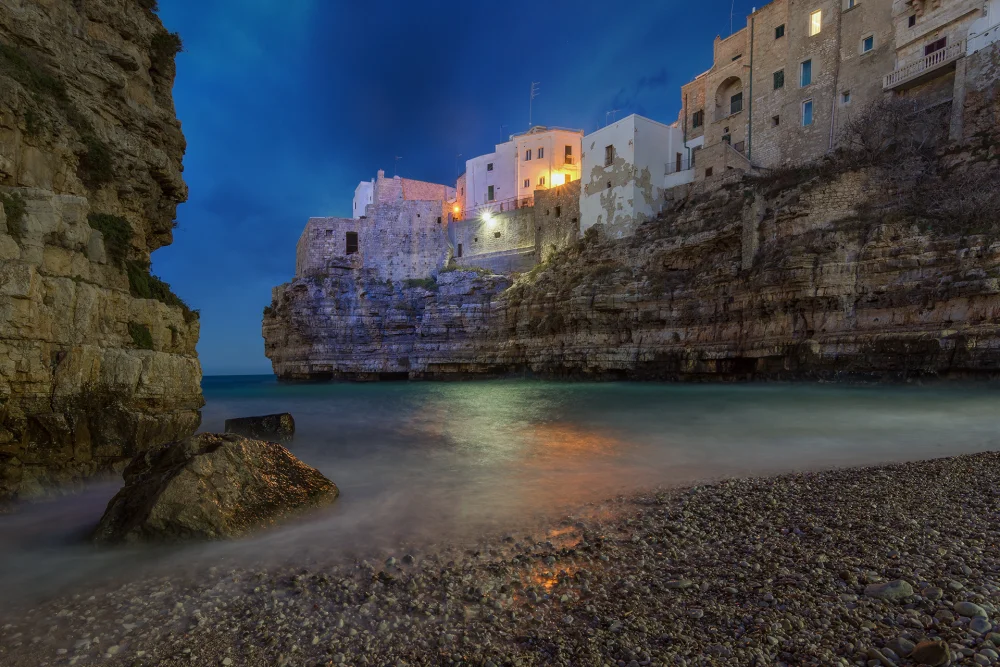
In Polignano, the cliff is part of the town. Houses stop at the edge, an alley opens onto a balcony and, a few steps below, pebbles replace the paving stones. Lama Monachile makes you want to stop straight away. Save some time for the old town's terraces and the view from the sea, too.
Half a day is enough for the streets and viewpoints; a full day lets you add a boat trip or a proper beach break. Staying overnight gives you time after the day-trippers leave, dinner without watching the clock and another look at the streets the following morning. Most sights cluster around the old town, so leave room for pauses.
© Calogero77 / Wikimedia Commons · CC BY-SA 4.0
Lama Monachile and its two bridges
Lama Monachile, also known as Cala Porto, sits at the mouth of an old lama, a valley cut into the limestone. From the large bridge, cliffs frame the sea. This is the 19th-century Ponte Borbonico. The small Roman bridge of the Via Traiana is lower down: these are two different structures.
Walk down to the pebbles for another perspective. From below, the façades seem taller and the cove narrower than in photographs. Beach access is free. If the steps, crowds or sea conditions do not suit you, enjoy the view from above instead.
© Gian Luca Sgaggero / Wikimedia Commons · CC BY 2.0
The old town's balconies and the Modugno statue
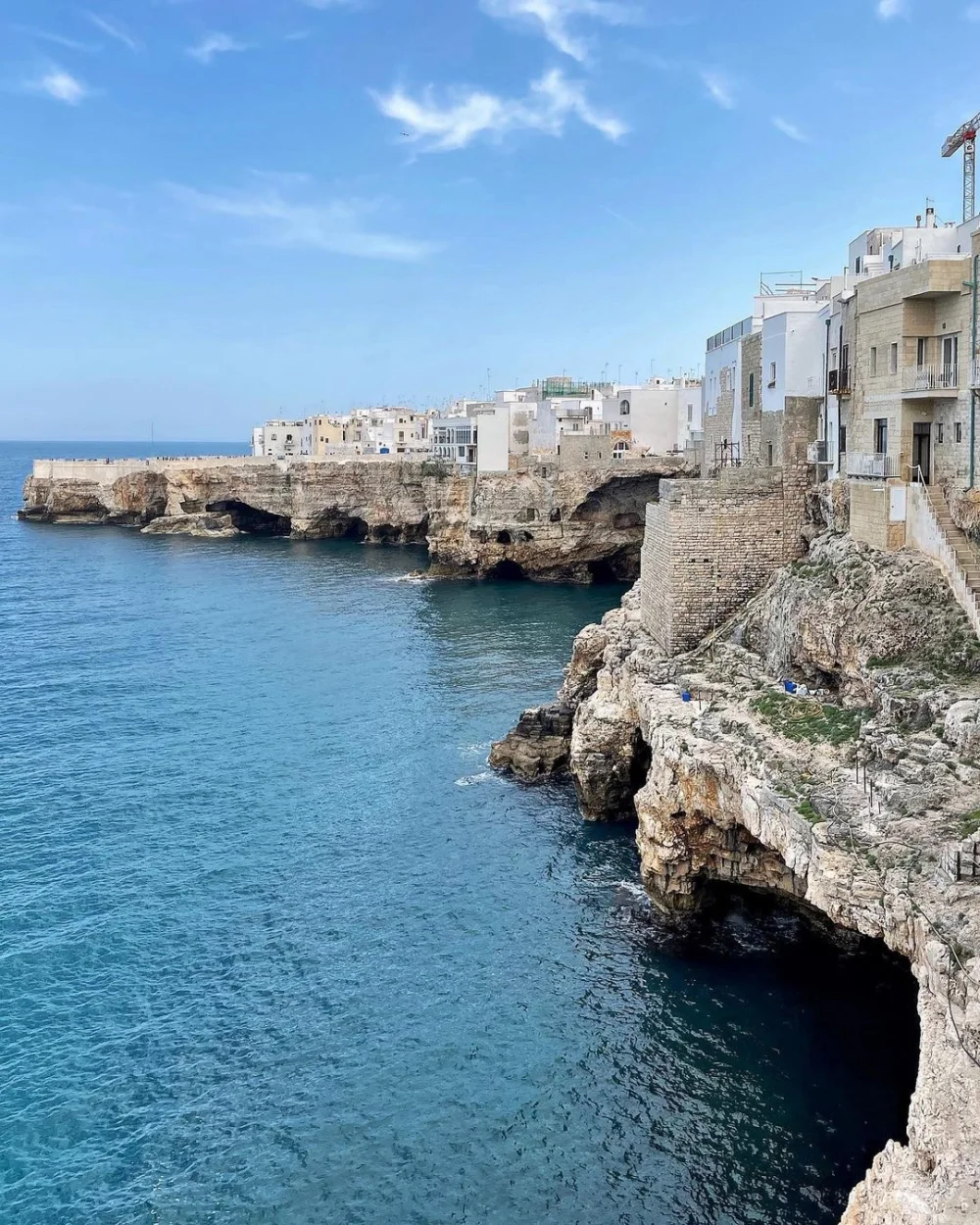
Beyond the Arco Marchesale, follow the passages to the sea-facing terraces. The Santo Stefano viewpoint looks over Lama Monachile and the opposite shore. Take time to trace the cliff's shape, the small private balconies and the caves beneath the houses.
Cross back over the bridge towards the monument to Domenico Modugno, born in Polignano and famous for 'Volare'. The statue stands with its arms open. Steps lead down to the rocks at Pietra Piatta; stay on the upper promenade if the steps are wet or waves are reaching the platform.
© Giacomo Resta / Wikimedia Commons · CC BY-SA 4.0
The sea caves by boat
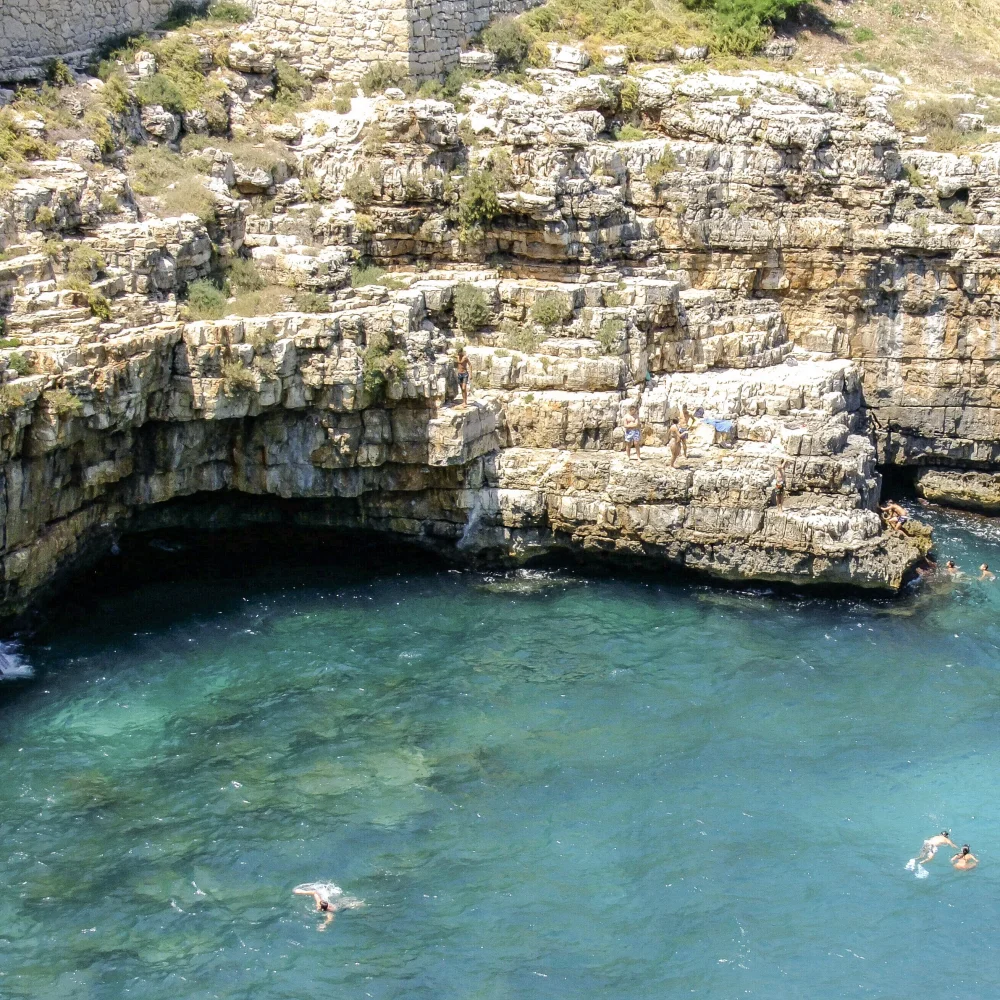
From the water, you see Polignano on a different scale: how the houses rest on the rock and how the sea hollows out the cliffs. Depending on the route, trips approach several caves, including Grotta delle Rondinelle and Grotta Palazzese. The appeal is seeing the coast from offshore, rather than ticking off a particular number of caves.
A short trip generally means 1 hour 30 minutes to 2 hours on the water, plus travel to the departure point. Many tours leave from San Vito, north of the centre; others depart from Cala Ponte Marina or Monopoli. Boats, passenger numbers and stops vary: look at photos of the vessel and the details of the option before choosing.
© Giacomo Resta / Wikimedia Commons · CC BY-SA 4.0
San Vito, its small harbour and abbey
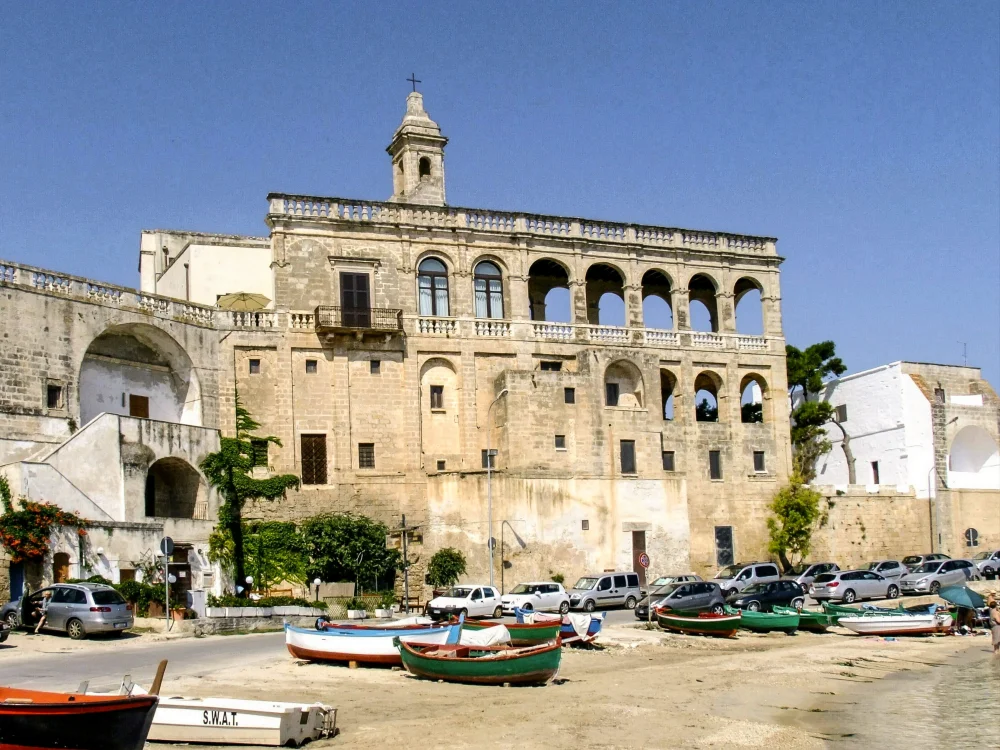
Around three kilometres north of the centre, San Vito brings together a small harbour, fishing boats and the imposing outline of the former abbey. The setting feels more open than Lama Monachile. Come to see the building from the shore, walk beside the water and take a break before or after a boat trip.
Do not expect to wander freely through the whole monastic complex: much of it is private. This stop is mainly about the exterior and harbour. In season, boat departures add to the activity.
Our selection of Polignano sea-cave trips explains the departure points and options. It lists harbours, durations and possible transfers from the centre. You can also compare activities in Polignano for a different duration or type of trip.
The centro storico beyond the balconies
The Arco Marchesale marks the entrance to the old town. Cross the little Piazza Fulvia Miani Perotti, then head to Piazza Vittorio Emanuele II, home to Santa Maria Assunta and the Palazzo dell'Orologio. The square brings a little space to a district of short passages, steps and closely spaced doorways. Visit the church when it is open, respecting services. Look for the 16th-century sculpted Nativity scene.
In the alleyways, phrases painted on walls and steps invite you to look up. Some are associated with Guido il Flâneur, who helped bring poetry into these public spaces; the words also quote other authors. You do not need to find them all. A couple of side streets often give you more space to walk before returning to another balcony.
Pino Pascali Museum: another visit by the sea
South of the centre, the Fondazione Pino Pascali occupies a former seafront slaughterhouse. It displays Pascali's work and contemporary art exhibitions. It makes a good alternative to another beach, especially in rough seas or during a two-day stay.
Allow around an hour, longer if an exhibition catches your interest. Full-price admission is €10, with free entry for under-18s and for everyone on the first Sunday of the month. The visitor information covers opening times and tickets; the exhibition programme introduces the featured artists.
Polignano a Mare in half a day, one day or two days
Half a day · One day · Two days · Town-centre map
Half a day: the old town and cliffs
From the station, walk to Piazza Aldo Moro and then the Lama Monachile bridge. Take in the overall view, enter the old town through the Arco Marchesale and make a loop between the church square and the balconies. Finish across the bridge near the Modugno statue. With a coffee stop or lunch, allow three to four hours at your own pace.
Walk down to the pebbles if you feel like it. A boat trip with a transfer to San Vito, however, takes up much of this time. With just half a day, choose either the full walk or a shorter look around the centre combined with a boat trip.
One day: the sea, then the town
This plan works for a day trip from Bari or an overnight stay. Book the boat and transfer first, then arrange your walk and meal around them. If you stay on land, replace the cruise with Cala Paura or the Pino Pascali Museum when it is open.
Boat trip and old town
A first look at Lama Monachile
Start at the large bridge, then head to your boat departure if you have booked one. If you arrive late, save the view for your return: your boat's departure time determines the morning's order.
From the station or your accommodationBoat trip and a stop in San Vito
Add travel and boarding time to the two-hour cruise from San Vito. Use the journey to see the abbey and harbour too. If you book a different trip, follow its own departure point and duration.
Two hours on the water, plus the transferBack to the centre
Return towards Piazza Aldo Moro for a sandwich or a sit-down meal. Allow time for lunch even if your trip includes aperitivo on board.
A proper break between the sea and alleywaysThe centro storico and its balconies
Go through the Arco Marchesale to the church square, then the terraces. Walk down to Lama Monachile if conditions allow, or stay at the viewpoints. Save the museum as an alternative or for the following day.
Explore independently; church access depends on opening timesModugno, then dinner or the journey back
Walk to the statue, then along the promenade towards Cala Paura. Stay for dinner if you are sleeping in town. Otherwise, allow time to walk back to the station before your chosen train.
Adjust the end of the visit to your return journeyTwo days: stay overnight and make the second day count
Follow the route above on day one. The next morning, enjoy the streets without a tight schedule, then choose a direction: the museum and southern coast, a beach, or Monopoli by train. An overnight stay gives you room for a more relaxed morning.
Where to swim and explore around Polignano
Polignano's coast is mainly rocky, cut by small coves. Do not expect Lama Monachile to be a broad sandy beach with easy access to the water everywhere. When choosing a swimming spot, look at access and sea conditions as closely as the colour of the water.
| Venue | What is it best for? | Plan ahead |
|---|---|---|
| Lama Monachile | The iconic setting, close to the old town. | Pebbles, steps down and limited space in season. |
| Cala Paura | An alternative near the centre, on the Modugno-statue side. | Small coves, pebbles and rocks; check how to enter the water. |
| San Vito | A coastal break before or after a boat trip. | Around 3 km north; keep swimming areas separate from harbour boat traffic. |
| Cala Incina | An outing along the coast to the south, towards Monopoli. | A separate journey, rocky ground and a climb back up; not part of an old-town walk. |
Lama Monachile or Cala Paura?
Choose Lama Monachile for the setting and a swim as part of your sightseeing. The cove fills quickly in season and its pebbles are not ideal for a whole afternoon. A thick towel or mat and water shoes will do more for your comfort than a tightly packed schedule.
Cala Paura is a natural extension of the walk from the Modugno statue. Its little coves mix pebbles and rocks. With children, check the route down and how to get out of the water before settling in.
Cala Incina: an outing in its own right
To the south, between Polignano and Monopoli, Cala Incina cuts into the rocky coast. With its coastal tower, it is worth a detour if you want another cove during a longer stay. Plan a separate journey and bring water: it is not immediately beyond the old-town alleyways.
If you want to explore underwater, wait for conditions suited to your ability and stay away from boat routes. In rough seas, view the coast from above and then return to town. Swimming is not the only reason to come.
Monopoli, Bari or inland Puglia?
Monopoli is the easiest extra stop by train, with an old harbour and lived-in streets to explore at a different pace. To choose your base, read our Monopoli or Polignano comparison. You can visit both without repeating a beach, boat trip and every monument in each town.
Bari deserves a day of its own for the old town and major churches. Alberobello and its trulli make a real contrast to the coast. Allow half a day or a day for inland visits: planning is different from using the coastal railway. Our five-day Puglia itinerary gives you a route to adapt between these stops; save Otranto and Gallipoli for the Salento part of your trip.
What to eat in Polignano a Mare and where to sit down
Coffee with lemon and amaretto, an octopus sandwich or a seafood restaurant: Polignano offers several ways to take a break. Stay near the centre for lunch between walks. For an evening by the sea, choices range from a restaurant terrace to dinner in a cave, with very different budgets.
Caffè speciale
Super Mago del Gelo's speciality blends coffee, cream, lemon zest and homemade amaretto. Lemon gives this Campanella-family creation its character. It contains alcohol; choose a classic espresso if you want to avoid it.
The octopus sandwich
At Pescaria, the Polpo fritto combines fried octopus, cime di rapa, ricotta, cooked fig must and anchovy oil. Expect to pay around €15 for the sandwich.
Crudo and seafood cooking
Crudo means seafood served raw: shellfish, crustaceans or fish, depending on the catch. Osteria di Chichibio's selection changes from day to day. Cooked fish dishes are also available.
Three places for a simple meal or a longer evening
| Restaurant | What suits you? | Indicative budget per person |
|---|---|---|
| Pescaria | A lunch of sandwiches and seafood. | Around €15–20 for a sandwich and a drink. |
| Antiche Mura Via Roma 11 |
A sit-down meal with pasta, fish or a tasting menu. | Around €35–45 for two courses and the cover charge, excluding drinks and dessert. |
| Grotta Ardito Largo Grotta Ardito 11 |
A seafood restaurant with a sea-facing terrace in season. | Around €40–50 for two courses and dessert, excluding drinks. |
Fish priced by weight, shellfish and wine raise the bill faster than a plate of pasta. A sandwich or a single course works for a light meal; if you want to enjoy a terrace, allow time to sit down.
Grotta Palazzese: know the price before choosing the setting
Grotta Palazzese sets its tables inside an open cave above the sea, at Via Narciso 59. The lowest-priced menus are around €250 per person, excluding drinks and supplements. The menu sets out the different options.
Plan this dinner as a special occasion. For two, even the lowest-priced menu comes to €500 before drinks. If you mainly want to see the cave and cliff, a boat trip gives another perspective without entering the restaurant. For dinner, compare menus at other restaurants in town.
One last stop by the water
At Vico Calaporto 13, Cove Cliff Restaurant Bar lets you linger by the sea, with a table above the cove.
Where to stay in Polignano a Mare
Staying overnight means you can enjoy dinner without leaving straight afterwards and see the centre at different times of day. In summer, restaurants and alleyways stay lively into the evening. Choose according to your transport, luggage and whether you want to be in the heart of that bustle.
The old town or streets near the station
The old town puts you within walking distance of the balconies and restaurants. Older houses often have stairs, so check which floor your room is on and the route from the drop-off point if you have suitcases. A terrace may be shared or available only with certain rooms.
The streets between the station and centre make train arrivals and trips to Bari or Monopoli easier. You may lose a cliff view but gain convenience. Check the walk to the balconies and, for a room on a busy street, the soundproofing listed.
| Search | What to check | Availability |
|---|---|---|
| Places to stay in Polignano | Map location, luggage access and the facilities in your chosen room. | Compare accommodation |
| 4-star accommodation | Location, services and breakfast; sea views depend on the room. | See 4-star options |
| Masserie and countryside | Actual distance, evening transport, seasonal pool opening and parking arrangements. | Find a masseria |
A few places to consider for your stay
Nel Blu Dipinto Di Blu, Via Roma 72, offers a station transfer and a private garage by prior arrangement. Terraces and views vary by room or apartment.
Sei Stelle Mama, Piazza Vittorio Emanuele II 63, occupies a historic old-town house with a panoramic terrace. It suits exploring the neighbourhood on foot; check the luggage drop-off point for your arrival.
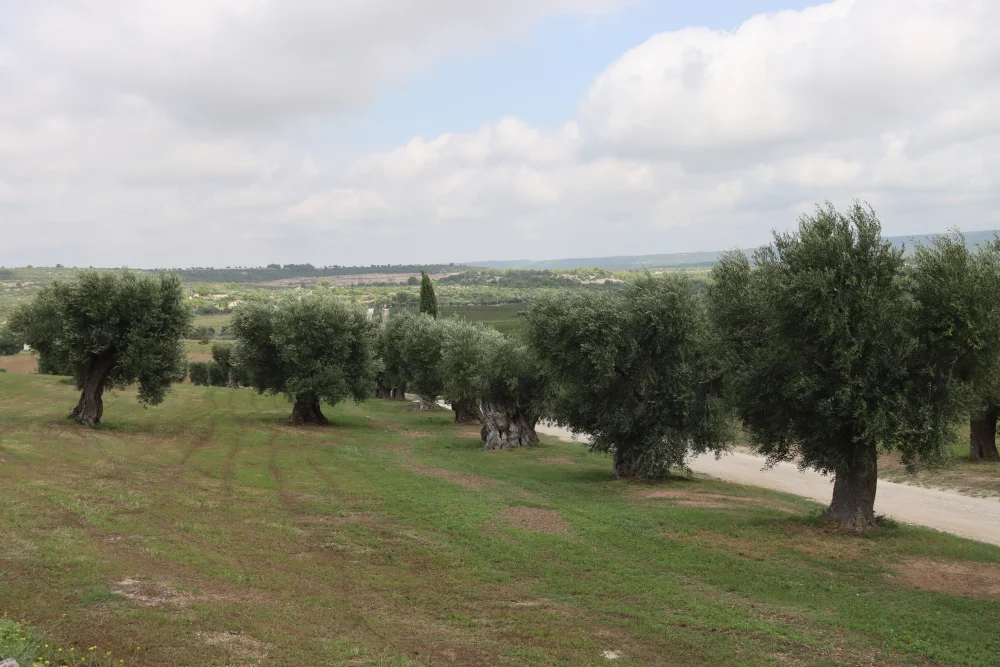
The olive grove at Masseria Amastuola, Crispiano — an illustration of Puglia's countryside · © FrDr / Wikimedia Commons · CC BY-SA 4.0
A masseria if you are travelling by car
Masseria AuraTerrae occupies a former farm estate between Polignano and Conversano. This five-star hotel has two outdoor infinity pools. It suits a stay where you also want to enjoy the accommodation, rather than a quick night between trains.
A masseria works well with a car and time to enjoy the estate. Add journeys to the centre and parking to your overnight budget. If the pool matters, check its opening season.
Planning a stay in Polignano a Mare
Coming by train from Bari
A regional train is convenient for a day in Polignano: no car to park, and you arrive within walking distance of the main viewpoints. Expect around €3–4 one way in second class. Check departures on Trenitalia and make sure your train stops at Polignano.
From the station, head to Piazza Aldo Moro, then Lama Monachile and the entrance to the old town. If you stay for dinner, leave time to get back. The train also serves Monopoli, an easy extra stop on a car-free trip to Puglia.
From Bari or Brindisi airport
Bari–Karol Wojtyła is a convenient gateway. The Ferrotramviaria train connects the airport with Bari Centrale in around twenty minutes, for about €5–6. At Bari Centrale, head to the Trenitalia platforms for a regional train to Polignano. Allow connection time in addition to the two journeys.
From Brindisi, the airport bus runs to the station, then trains follow the coast north to Polignano. Compare flights to both airports on Skyscanner, taking landing times into account. A cheaper flight may mean paying for a private transfer if you miss the last public-transport connection.
Where to park and how to reach San Vito
By car, look for San Francesco to the north or Marco Polo to the south, depending on your approach. The Pro Loco map also marks parking near the station and Via Marconi. Read the signs where you park: prices and charging hours vary by location.
Access to the old town is restricted. Set your car park as the destination before entering the narrow streets. For accommodation in the old town, ask where to drop off luggage. A room booking does not itself grant permission to enter the ZTL traffic-restricted zone.
For a boat from San Vito, arrange a taxi, a booked transfer or the option offered with your excursion. The journey from the centre covers three kilometres, so allow for travel time as well as time on the water. Some shuttles are tied to a car park and have their own times and fares.
How much should you budget?
The streets, balconies and access to Lama Monachile are free. For a day trip from Bari, allow around €25–30 per person for return train travel and a simple lunch. Add coffees, dinner or activities to suit your plans; accommodation is separate.
Budget separately for the boat and any transfer: the sea-trip selection sets out the options and prices. A museum visit is another way to spend part of the day on a smaller budget.
When to visit and how to adapt your day
May, June and September are good for combining walks and time by the sea. Swimming depends on water temperature and conditions: in May, do not build the whole trip around already-warm water. July and August feel more summery, with busier streets, beaches and restaurants.
Outside summer, Polignano is mainly about viewpoints, restaurants and the museum. Boat trips depend more on the day's conditions. With a pushchair or reduced mobility, favour the upper promenades and plan access: steps down to the cove or Pietra Piatta, and the pebbles themselves, make some stops harder.
Return to the same balcony after a boat trip. The caves seen from the water give a new perspective on the houses and terraces above. Then leave your phone in your pocket for a few minutes: a railing, the sound of water below and nowhere you need to rush to.— DolceRoutes · Polignano a Mare
Puglia stretches for 400 kilometres. Here is how to choose the main sights, plan your journeys and avoid the tourist…
Read more →From Baroque Lecce to Polignano's cliffs, compare ten towns and cities to choose your stops without spending the whole trip…
Read more →