When Is the Best Time to Visit Puglia?
Southern Italy is warm, but winter can be harsher than you expect and August can feel stifling without planning. Here is how to choose your dates.
It is easy to picture Puglia in an endless July. In reality, this long region has distinct seasons. I would start with late May or the first half of September for a balance of warmth and quieter visits, or June to mid-September if swimming is the priority.
| Month | Air temperature | Sea | Crowds | Budget | Best for |
|---|---|---|---|---|---|
| January–March | 12–14°C | Cold | Very quiet | Very low | Culture, food and the Fòcara di Novoli |
| April | 18°C | 15–16°C | Quiet | Low | Old towns and Holy Week |
| May | 24°C | 18–20°C | Moderate | Low | Cycling, walking and flowering olive groves |
| June | 28°C | 21–23°C | Fairly busy | Medium | Swimming, terraces and the start of summer |
| July | 32°C | 24–26°C | Busy | High | Beaches, patron saint festivals and luminarie |
| August | 33°C | 26–27°C | Very busy | Very high | Dolce vita and warm seas — avoid if you can |
| September | 27°C | 23–25°C | Moderate | Medium | Best balance of swimming, cost and quieter places |
| October | 23°C | 20–22°C | Low | Low | Ottobrata, olive harvest and late-season swimming |
| November–December | 13–16°C | Cold | Almost empty | Very low | Christmas markets and city breaks |
When to visit Puglia for your kind of trip
When should you visit Puglia? The best dates depend on what you enjoy and the kind of trip you have in mind. Choose the season to suit what you actually want to do.
For swimming and dolce vita: June to mid-September
If a holiday means salt on your skin, grilled fish beside the beach and dips in clear water, aim for early June to mid-September. From the first days of June, well-known beach clubs such as Togo Bay near Porto Cesareo spread their large white parasols across the fine sand. The Ionian Sea reaches 26°C in July, with sandy bottoms visible several metres below.
The lidos are in full swing, lounge music drifts through the air and evenings stretch late with a caffè leccese in hand, the iced almond-milk coffee that sums up Salento's way of life. For the best places to lay out your towel, see our guide to Puglia's 9 best beaches.
For exploring without the crowds: April, May and October
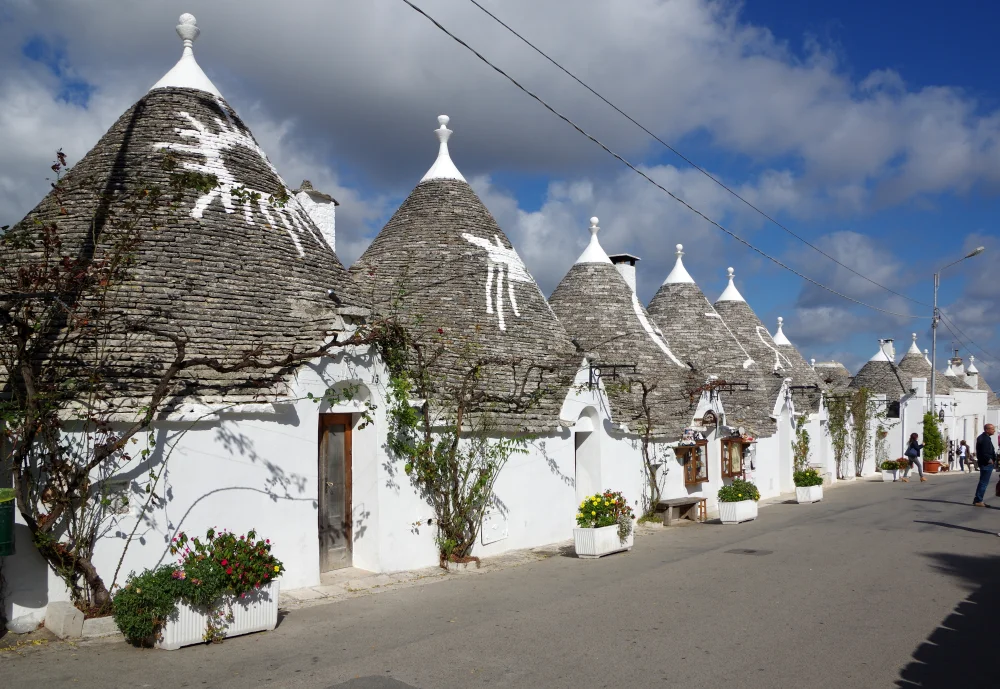
© Berthold Werner / Wikimedia Commons — CC BY-SA 3.0
This is my favourite time. Want to wander Ostuni's whitewashed lanes without jostling for space, or photograph Alberobello's trulli without a forest of selfie sticks in the frame? Mid-spring and early autumn are for you.
Temperatures are a comfortable 20–25°C. You can explore historic centres without sweltering, sit on a terrace at midday for orecchiette and join locals for the passeggiata, the traditional evening stroll. Our guide to Puglia's towns helps you plan your city stops.
For an active or cycling holiday: spring and autumn
Puglia is relatively flat, making it rewarding for touring cyclists and walkers, especially in the Itria Valley, where small roads wind between dry-stone walls, red earth and olive trees. Pedalling in 38°C August heat is hard work. April, May, late September and October bring the cool mornings you need for comfortable miles. The late-afternoon wind is a pleasant breeze rather than a blast of hot air. A 7-day Itria Valley cycling itinerary makes the most of these milder seasons.
Puglia's weather and seasons: what its Mediterranean climate means for your trip
The local rule of thumb: when the cool northerly Tramontana blows, swim on the sheltered Ionian coast. When the hot African Sirocco arrives, head for the Adriatic coves around Otranto, where the sea stays calm.
Spring: Easter to late May
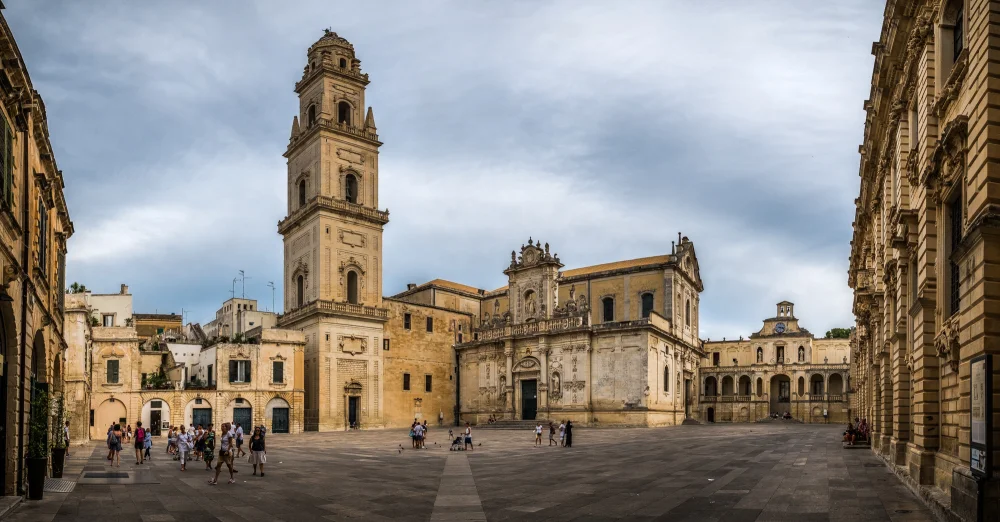
© Giuseppe Milo / Wikimedia Commons — CC BY 3.0
The region comes back to life. From April, temperatures climb above 18°C. Days lengthen, and low afternoon light catches Lecce's golden, porous stone. Wildflowers and poppies carpet the olive groves.
The sea is still distinctly cool. Hardy swimmers may go in towards late May, but at barely more than 19°C it is chilly for a long swim. This is also the season of the major Holy Week processions: Easter Sunday falls on 5 April in 2026, a date to bear in mind when booking. Taranto's barefoot Perdoni processions are a powerful expression of local faith, but accommodation prices jump for a few days.
Summer: June to August
Summer in Puglia is intense. In July and especially August, temperatures regularly pass 35°C, sometimes driven by the Sirocco, the African wind that leaves a fine layer of red dust on hire cars. The atmosphere is lively, festive and occasionally exhausting, but unmistakably Italian.
Ferragosto, on 15 August, brings a nationwide holiday rush south. Beaches are packed, and coastal car parks are full by 10am. If your dates are fixed, follow the local rhythm: get up very early for the beach, book activities at least three weeks ahead and retreat behind your accommodation's thick walls for a well-earned rest between 1pm and 5pm.
Historic centres are strictly closed to non-residents, in summer and winter alike. Camera-issued fines catch many visitors, including those in hire cars. Always ask your accommodation about authorised access before driving into the heart of a town.
Autumn: September to November
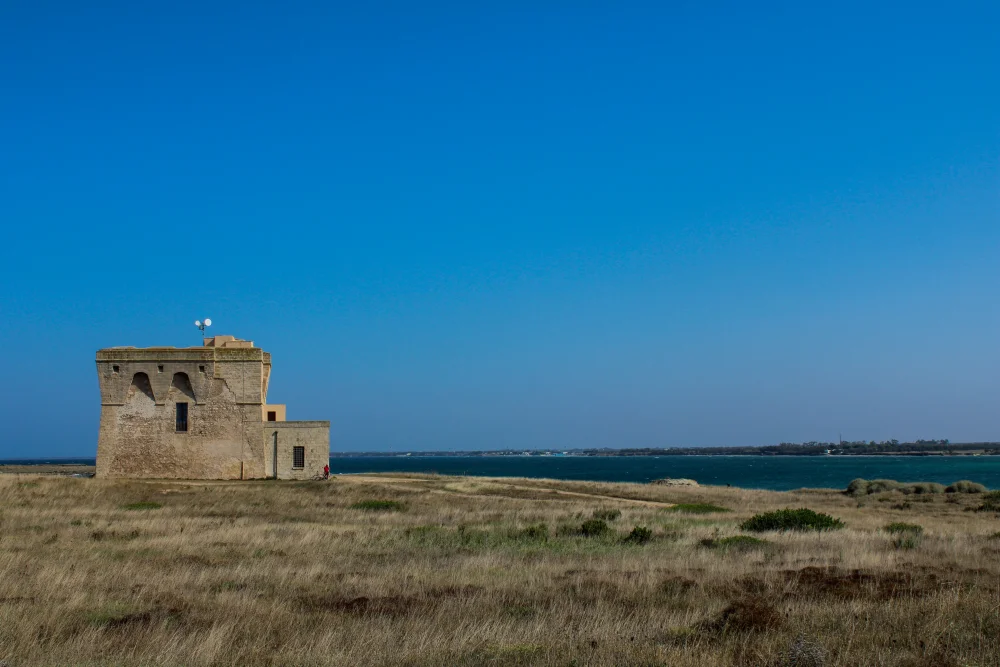
© Carovale3 / Wikimedia Commons — CC BY-SA 4.0
October often brings a pleasant surprise in Puglia: a still-warm sea, quiet villages and prices down by 40%. Italians call this late warm spell the ottobrata. Daytime air temperatures ease to around 22–24°C, while the sea retains the heat stored over summer. August's crowds have gone, leaving Torre Guaceto Nature Reserve and Polignano a Mare's coves to locals and visitors who know the season.
The main olive harvest begins from late October. The air carries the smell of freshly pressed oil, and green nets spread beneath trees bring the countryside to life. Book an olio novello tasting at a masseria to try the peppery, grassy new oil poured over toasted bread.
On Booking.com, this is often the time to enjoy a beautiful masseria with a pool for the price of a very ordinary hotel in August. From the first week of September, rates drop by 40–50% compared with the summer peak.
Winter: December to March
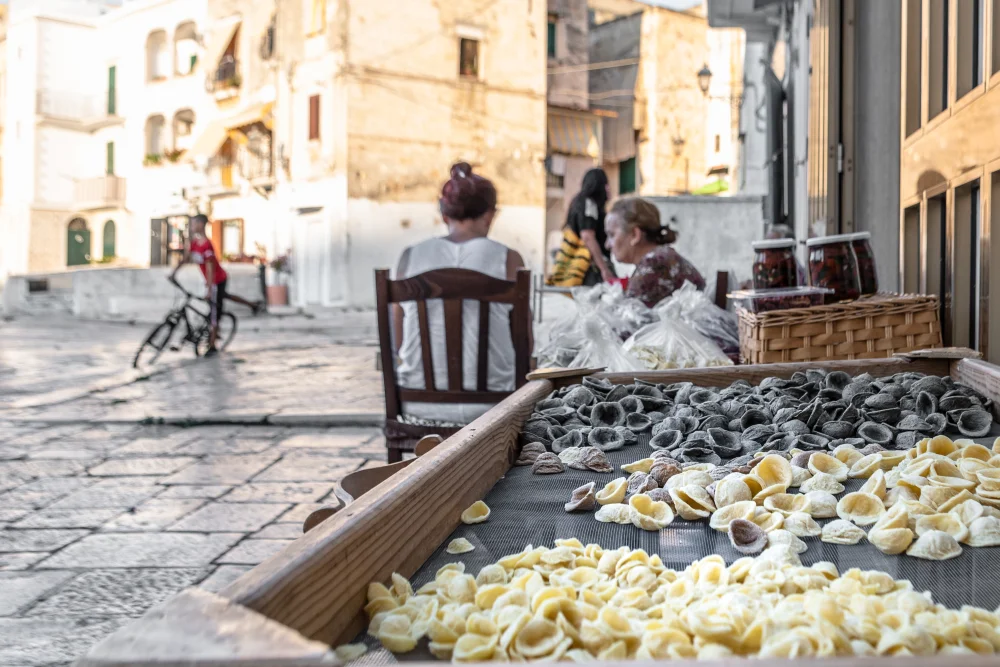
A winter visit to Puglia takes planning. The damp gets everywhere, and coastal towns such as Vieste and Gallipoli can feel like ghost towns, with hotels and lidos closed until Easter. Bigger cities such as Bari, Lecce and Brindisi remain full of life. In Bari Vecchia, the nonne still shape orecchiette in the lanes, now wearing thick woollen jumpers, while the smell of hot focaccia barese drifts past.
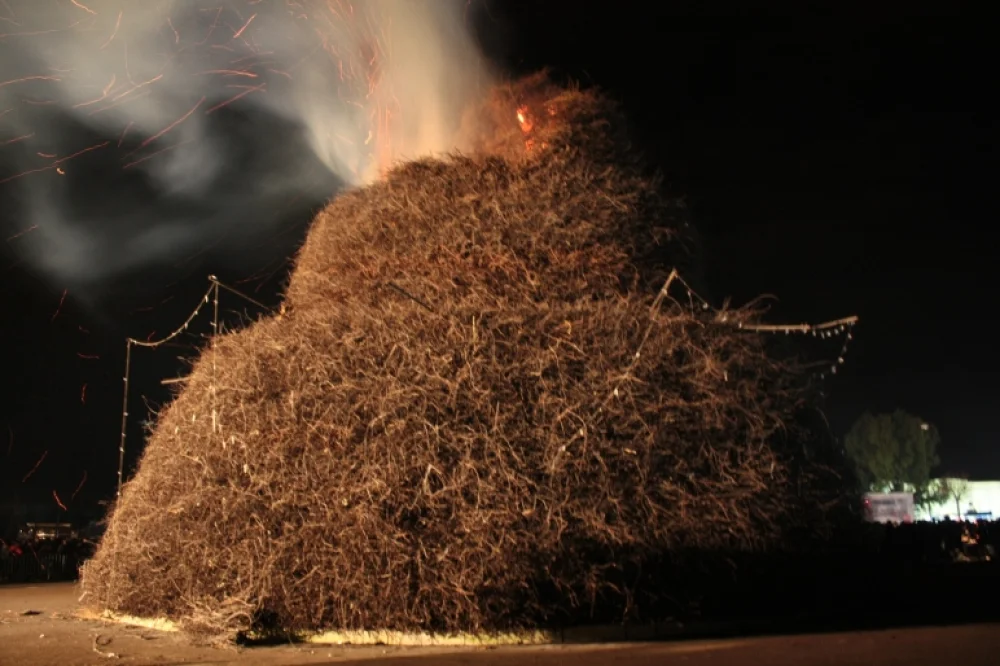
For a winter trip with a particular focus, aim for 16–18 January, when Sant'Antonio Abate celebrations bring the Fòcara di Novoli, the Mediterranean basin's largest bonfire. Combined with Romanesque cathedrals and long, warming dinners, winter offers a close look at everyday local life away from summer's familiar images.
- Novoli, a few kilometres north of Lecce
- The Mediterranean basin's largest bonfire
- Thousands of vine bundles burned over three days
- Music, a local market and community celebrations alongside it
- Free entry, with bus access from central Lecce
Sea temperatures: when can you comfortably swim in Puglia?
Look beyond air temperatures and check the map. Sea temperatures in Puglia depend a great deal on the coast you choose. The heel of Italy borders two seas that behave differently.
The Adriatic on the east coast, around Bari, Polignano, Monopoli and Otranto, is deeper, rockier and stirred by currents, so it warms more slowly. On the west coast, the Ionian Sea around Punta Prosciutto, Gallipoli and Pescoluse has broad, shallow sandy bottoms that warm quickly under the southern sun.
| Month | Ionian Sea (Gallipoli) | Adriatic Sea (Polignano) | Swimming |
|---|---|---|---|
| April | 16°C | 15°C | No |
| May | 20°C | 18°C | Hardy swimmers on the Ionian coast |
| June | 23°C | 21°C | Yes |
| July | 26°C | 24°C | Excellent |
| August | 27°C | 26°C | Excellent |
| September | 25°C | 23°C | Very good |
| October | 22°C | 20°C | Yes |
| November | 18°C | 17°C | No |
Puglia travel costs: flights, hotels and car hire by season
Your travel budget varies sharply with the month you choose. Prices peak between the last week of July and the third week of August. At that time, a masseria such as Masseria Cervarolo near Ostuni can easily cost €250–300 a night. Hire cars rise from around €30 a day in spring to €90 or even €100 a day in August.
| Period | Masseria / night | Car hire / day | Flights from your airport | Crowds |
|---|---|---|---|---|
| Winter (Jan–Mar) | €70–90 | €20–30 | Compare winter fares | Very low |
| Spring (Apr–May) | €120 to €160 | €30–45 | Compare spring fares | Moderate |
| June | €160–200 | €45–60 | Compare June fares | Fairly busy |
| July | €200–260 | €70–85 | Check summer fares | Busy |
| August | €250–300 | €90–100 | Check peak-season fares | Very busy |
| September | €140–180 | €35–55 | Compare September fares | Moderate |
| October | €100–130 | €25–40 | Compare October fares | Low |
- Brindisi: ideal for Salento, including Lecce, Gallipoli and Otranto, and the Ionian coast. It saves a long drive down from the north.
- Bari: the better choice for the Itria Valley, Alberobello and Polignano a Mare, or for heading north to the Gargano.
Aim for the first half of September or late May. You get a rewarding mix of summer warmth, inviting sea and lively Italian evenings, while avoiding August's rush and very high prices. Would you choose a quiet May beach or a Spritz among August's crowds? Leave your questions in the comments below.
Best time to visit Puglia: frequently asked questions
Is Puglia worth visiting in winter?
What is Puglia really like in October?
When are flights to Puglia cheapest?
Which coast is better for swimming: Adriatic or Ionian?
Can you swim in Puglia in May or October?
Alberobello: guided trulli tour