What to Buy in Puglia: Local Crafts and Food to Bring Home
Grottaglie ceramics, masseria olive oil and lightweight crafts: choose genuine local souvenirs and pack them for a smooth journey home.
Puglia has distinctive handmade crafts and exceptional food. Bringing a little of it home means knowing how to recognise quality and planning for airport security and customs.
The pumo of Grottaglie: Puglia's signature souvenir, and how to get it home intact
© FraPLGDonMilaniPertini / Wikimedia Commons — CC BY-SA 4.0
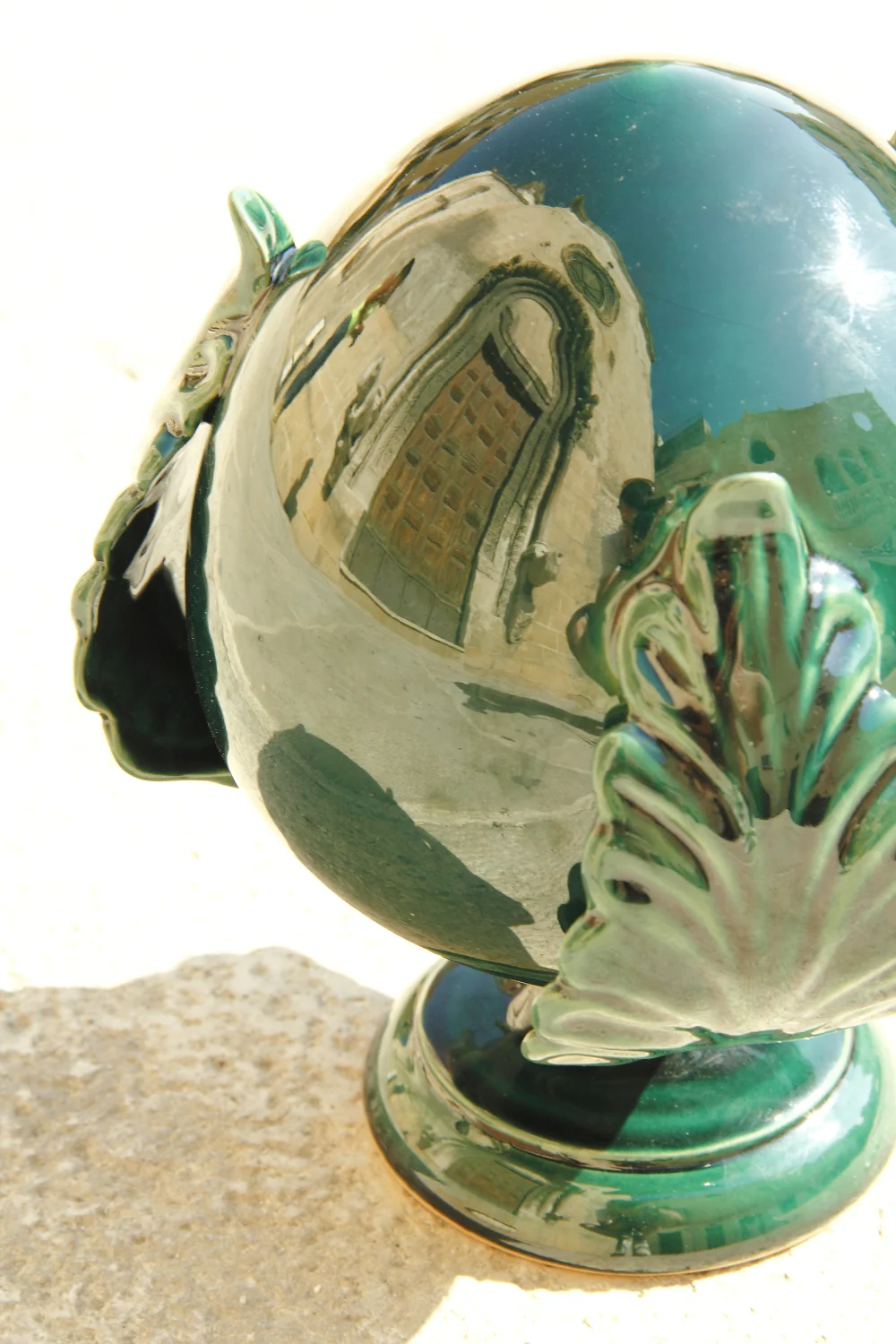
Look up as you walk around Puglia's towns and you will see it everywhere: at the corners of balconies, beside doorways or quietly decorating a B&B bedside table. This is the pumo di Grottaglie.
This distinctive rounded ceramic object, shaped like a rosebud, is one of the region's defining symbols. A centuries-old good-luck charm, it is traditionally given to newlyweds as a wish for prosperity.
The classic mistake is buying one in Alberobello's photogenic lanes. Hundreds of pumi sit on street stalls, often in bright colours and mass-produced far from here. Give those a miss.
Head instead to Grottaglie, the historic centre of the region's ceramics. Find the Quartiere delle Ceramiche, an entire district cut into the limestone. More than fifty artisans still work terracotta here using traditional methods.
Visit established workshops such as Enza Fasano or Marcello Fasano, where you can see artisans working the clay. A handmade pumo has small, appealing asymmetries, a rich glaze and the workshop's signature engraved beneath its base.
Ask the seller to pack your purchase properly for travelling, using pluriball, the Italian word for bubble wrap. Good Grottaglie artisans are used to international flights. Carry ceramics in your cabin bag where your airline's limits allow, cushioned between soft clothes. If they must go in checked baggage, wrap them well and pad them on every side: a 15cm pumo is heavy and fragile.
Lecce's cartapesta: a light souvenir for travelling with less
© Berthold Werner / Wikimedia Commons — CC BY-SA 3.0
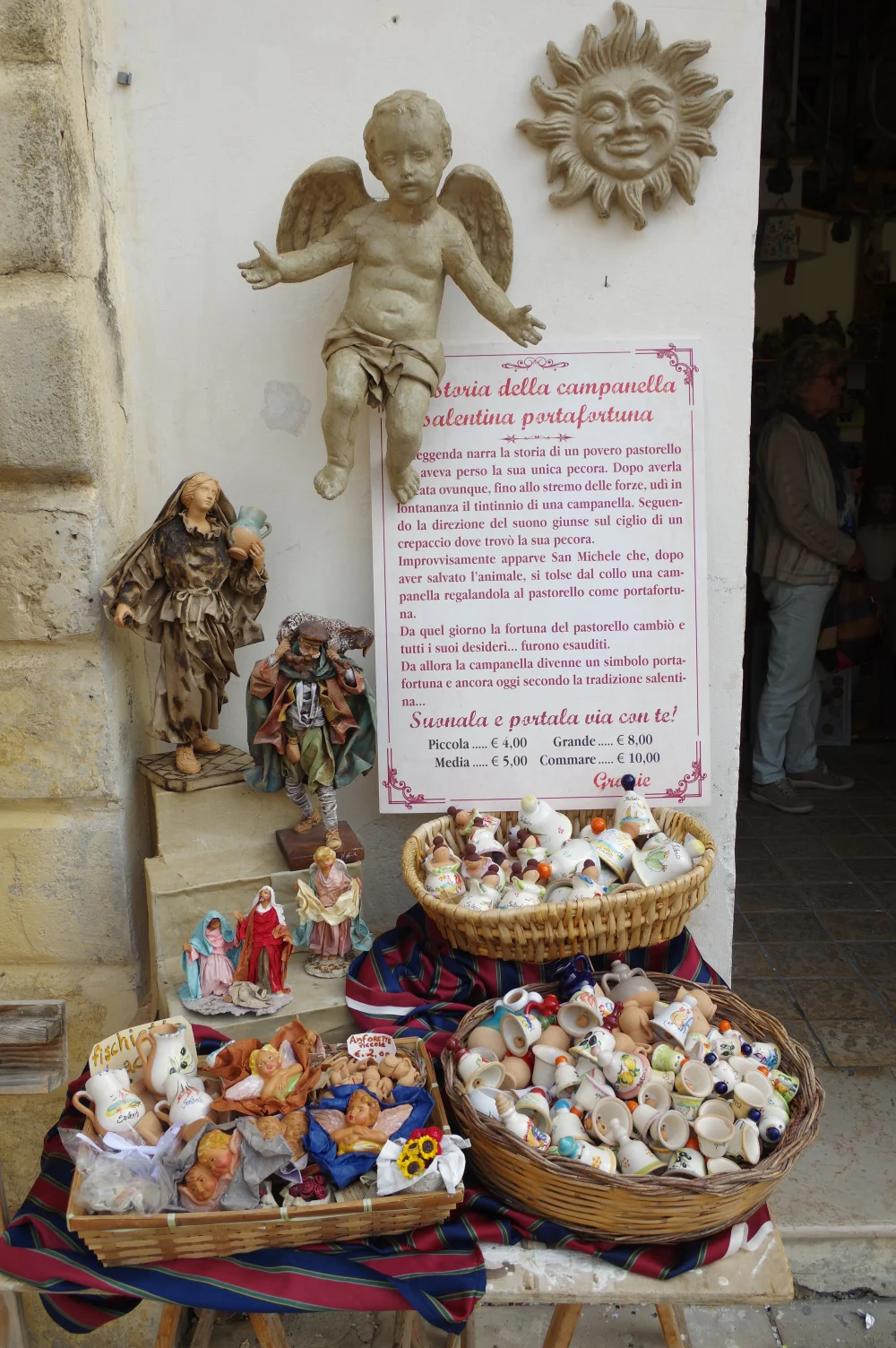
If carrying heavy, fragile terracotta worries you, Lecce has a striking alternative: cartapesta. In the 17th and 18th centuries, the Church commissioned enormous statues of saints for the city's many baroque churches. Unable to afford costly imported marble, local craftspeople began moulding paper, straw and plaster instead.
The result is a fascinating illusion. Once painted, cartapesta looks convincingly like stone or wood, yet weighs very little.
A few master craftspeople continue this painstaking tradition today. I recommend visiting the Cartapesta Riso workshop on Via Vittorio Emanuele II, where you can watch the whole process, from shaping the wire framework to the final patina.
Alongside imposing religious statues, you can now find miniature nativity scenes, the famous presepi, delicate allegorical figures and finely worked decorative pieces. A distinctive souvenir rooted in local history, it slips into a handbag with barely any added weight.
Olive oil and Primitivo: where to buy them and how to pack them for flying
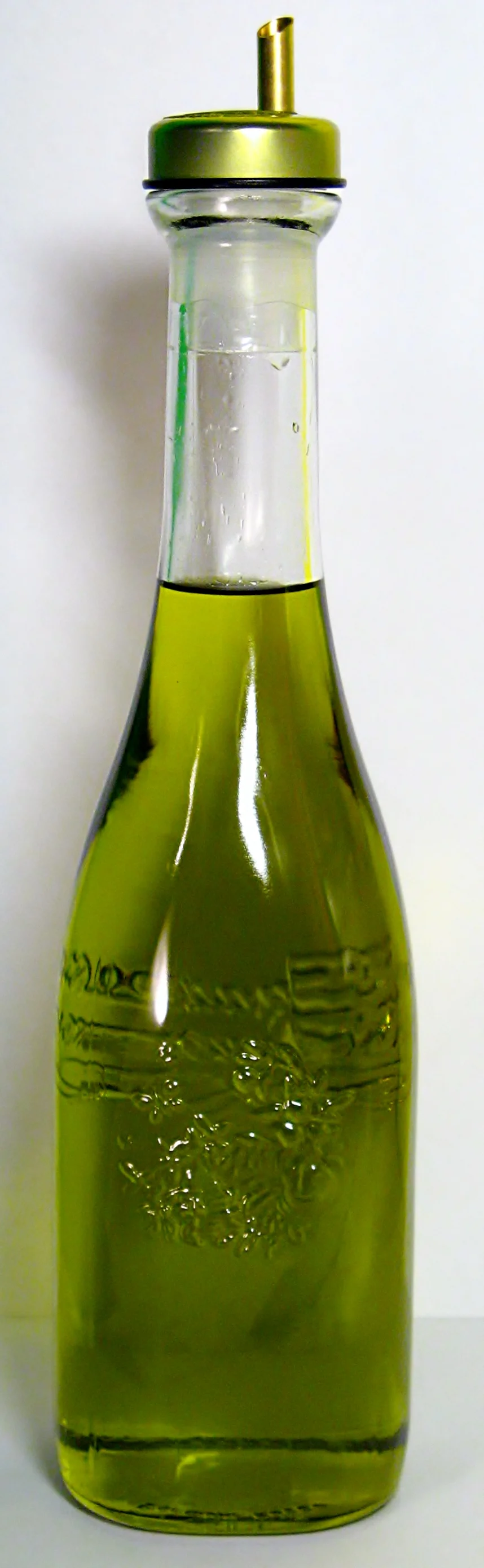
Puglia is one of Italy's great agricultural regions, producing nearly 40% of the country's olive oil. Often made from the twisted ancient trees known as ulivi secolari, this green oil has a peppery, sometimes fiery taste that brings food to life.
© my friend / Wikimedia Commons — CC BY 2.5
For olive oil, skip the supermarket: buying it is part of the experience. Drive to a real fortified farm. Masseria Brancati near Ostuni, for example, has protected olive trees said to be 3,000 years old and an ancient underground mill open to visitors.
These estates often stand at the end of tiny roads lined with dry-stone walls. A hire car is essential for reaching them at your own pace. Compare options from Bari and Brindisi airports on Rentalcars.
For wine, bring home a bottle of Primitivo di Manduria. Its power comes from its distinctive setting: Salento's iron-rich red earth and the Ionian sea breeze, which partially dries the grapes on the vine. Try Cantine San Marzano for excellent wines bought direct, allowing €15–25 for a good bottle.
Under the standard cabin security rule, liquid containers must hold 100ml or less and fit in a single transparent, resealable 1-litre bag. Check the rules at your departure and connecting airports before travelling. Larger bottles bought before security belong in checked baggage; airport purchases have separate sealed-bag requirements.
For olive oil, choose a latta rather than a glass bottle. This is an opaque tin, often attractively decorated, available in 1, 3 or 5 litres. Allow €35–45 for a 3-litre tin of artisan extra virgin olive oil.
It will not shatter, protects the oil from light that damages its aromas and fits neatly into the bottom of a rigid suitcase. For wine, use inflatable bottle sleeves or seal bottles in watertight bags between your thickest jumpers.
Buy a 3-litre latta of olive oil directly from the producer: it works out at around €12–15 a litre, compared with €25–35 in a delicatessen. That can mean half the price for oil that is often better. All serious producers sell this size.
Taralli and orecchiette: dry food gifts for your cabin bag
© Donald Trung Quoc Don / Wikimedia Commons — CC BY-SA 4.0
If you are travelling with only a backpack, dry foods are your friend. Some of the best local cucina povera weighs little, passes airport security easily and makes a welcome gift for colleagues.
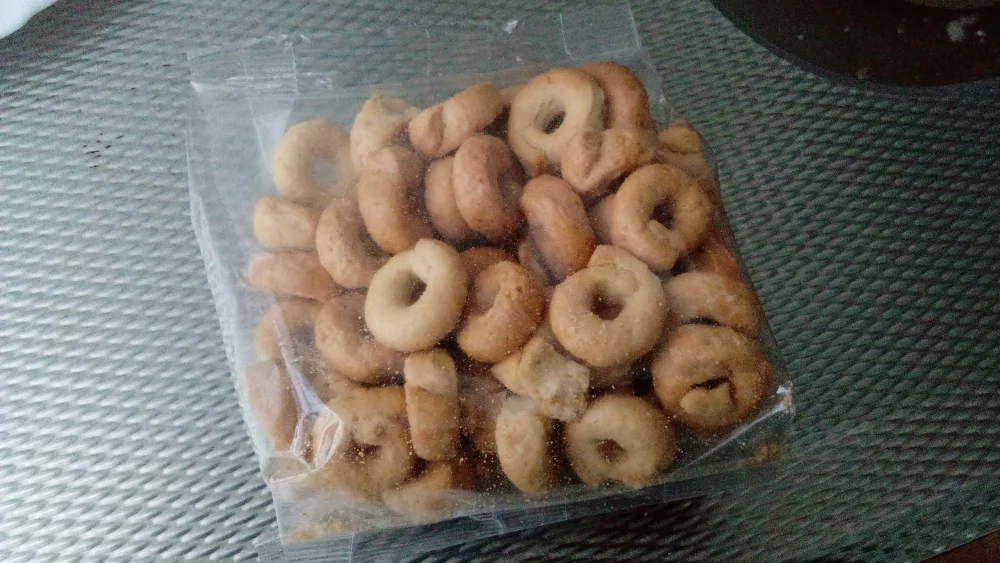
Start with taralli. These little rings of dough, made with olive oil and white wine, are boiled and then baked until irresistibly crunchy. Variations include fennel, chilli and onion. Skip the tourist shops and look for a proper panificio. In Bari, try the celebrated Panificio Fiore in the old town. A 500g bag of warm, fragrant taralli costs around €2–3.
© Maddy16869 / Wikimedia Commons — CC BY-SA 4.0
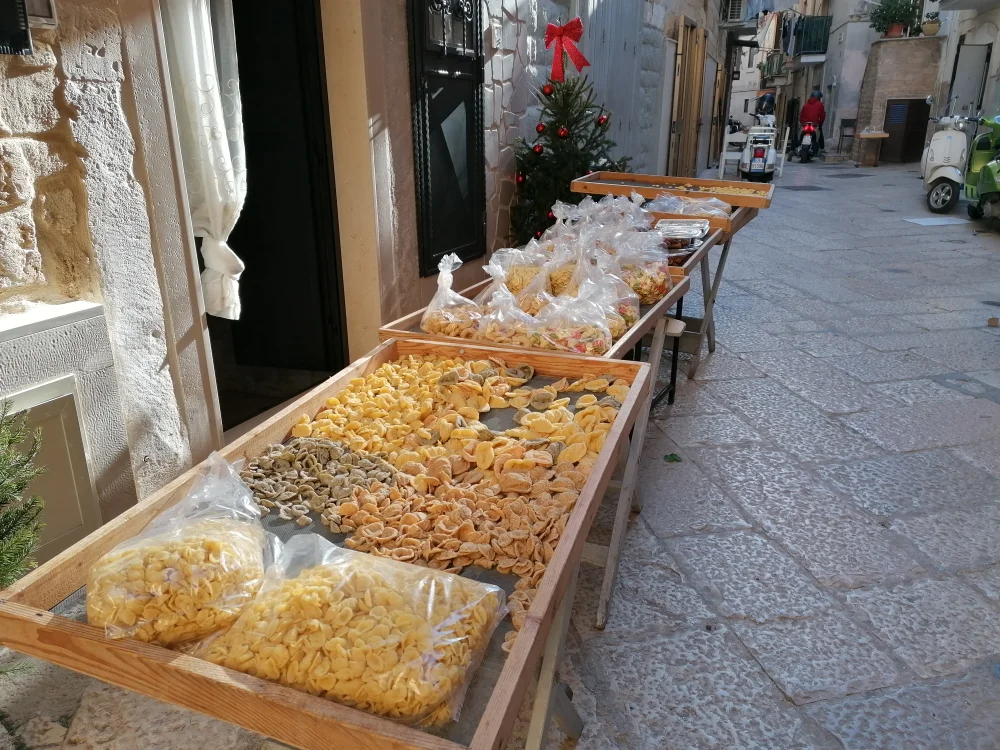
Add a few packets of orecchiette, the famous rough little ear-shaped pasta that holds sauce so well. In Arco Basso, women have been shaping the dough over their knives for decades. Here you will find traditional handmade pasta, dried in front of you and sold for €5–7 a kilo.
Avoid shops displaying green, white and red tricolour pasta. That is not Bari's traditional pasta. Handmade orecchiette are simply beige, rough and slightly irregular.
Learning to make pasta: a souvenir that lasts
Rather than filling your shelves with objects, bring home a skill. Recreating the age-old movements of Bari's pasta makers on a rainy November Sunday is a memory you can keep using.
Book a fresh-pasta workshop in Bari to learn without a language barrier. You leave with the technique, a full stomach and the memory of a meal shared around a large table.
What to leave on the shelves
© Benjamin Smith / Wikimedia Commons — CC BY-SA 4.0
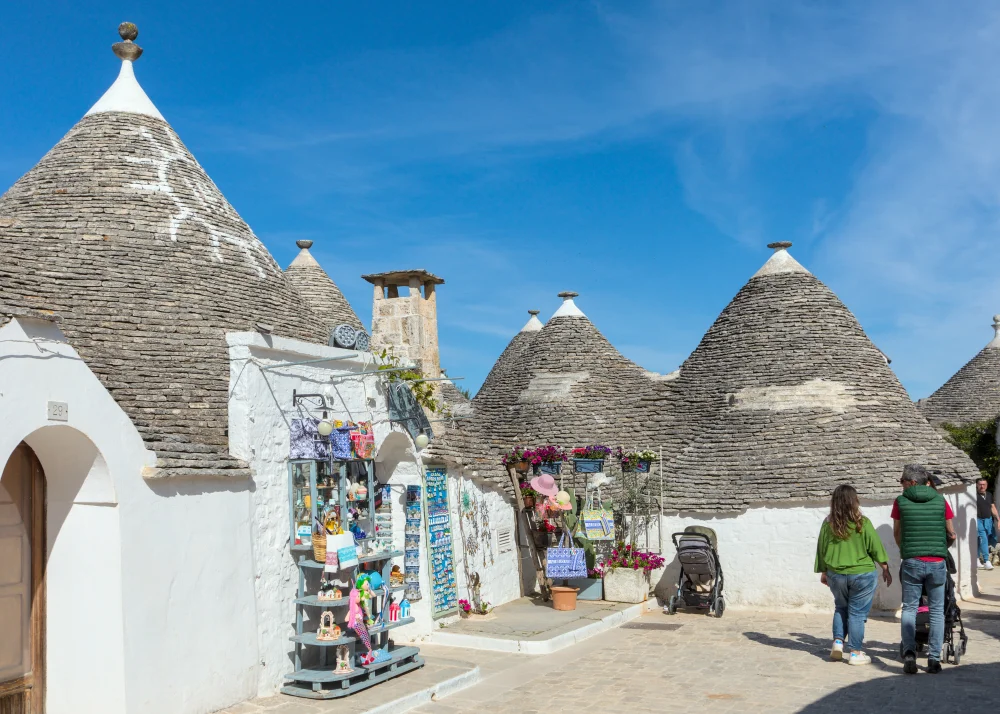
Puglia's rapid rise in popularity has brought plenty of low-quality souvenir shops. Miniature plastic or resin trulli are a typical example, mass-produced and sold by the dozen in Alberobello's lanes. For a souvenir of the town, choose an original drawing by a street artist or a small signed ceramic instead.
Be wary, too, of brightly coloured ceramics sold beside fluorescent plastic magnets and glazed bowls that look suspiciously uniform. Genuine craftsmanship is not usually displayed like cheap plastic souvenirs.
Limoncello is a Campanian speciality, rather than a Puglian one. Although good lemons grow here, the local digestifs are herbal amaro or Padre Peppe, an intense walnut liqueur that is an institution in Altamura. Limoncello on display in a tourist shop is a reason to look more carefully at the rest of its stock.
Packing Puglia souvenirs for the airport
Plan your purchases so that your final evening does not become a packing puzzle. Buying directly from local producers helps you choose genuine products. Keep light, dry items in your cabin bag where airline limits allow, and pack larger liquid containers in checked baggage. Protect ceramics carefully whichever bag they travel in. Before buying food or wine, check your arrival country's food and alcohol import rules as well as airport security rules.
| Item | Cabin baggage | Checked baggage |
|---|---|---|
| Ceramics, pumo | Recommended within airline limits, well wrapped | Only if wrapped and well padded |
| Cartapesta | Ideal: light and sturdy | Possible |
| Olive oil (tin) | Not for containers over 100ml under the standard rule | For larger containers bought before security |
| Wine (glass bottle) | Not for containers over 100ml under the standard rule | Use an inflatable sleeve |
| Taralli, dried pasta | Suitable; check destination food import rules | Possible |
-
Ceramics and fragile items Use your cabin bag where airline limits allow, wrapped in bubble wrap and cushioned. If checked, wrap well and pad on every side.
-
Olive oil For tins over 100ml bought before security, use checked baggage. A latta (metal tin) helps prevent breakage; check your destination's import rules too.
-
Wine Pack larger bottles bought before security in checked baggage, protected with inflatable sleeves or wrapped in thick jumpers. Check alcohol import allowances at your destination.
-
Pasta, cartapesta and taralli Light and easy to fit into the gaps in your cabin bag. Check your destination's food import rules before packing pasta or taralli.
Five days in Puglia: from Bari's alleyways to Lecce's Baroque, via the red earth of the Itria Valley.
Read more →Leave Alberobello's summer crowds behind and follow me through the lanes of four well-preserved villages to discover a different side…
Read more →Puglia souvenirs: frequently asked questions
Can you take a bottle of wine in your cabin bag if you buy it at airport duty-free?
Where can you buy metal tins, or latta, for carrying olive oil?
Does the pumo di Grottaglie come in colours other than white?
Masseria visit and olive-oil tasting in Ostuni