Alberobello Without the Crowds: When to Go and Which Areas to Explore
Dreaming of Alberobello's trulli but dreading the crowds? Here is how to explore this stone-built village at the hours when its atmosphere is at its best.
For a quieter visit to Alberobello, come early in the morning or return late in the day, and explore Aia Piccola when Rione Monti gets busy. The conical roofs and blue sky still look like a picture book; midday crowds are what can turn the walk into a headache.
Why Alberobello's trulli were built without mortar
Before looking at how to visit Alberobello and avoid the crowds, it helps to understand what you are seeing. The trulli continue a Mediterranean dry-stone building tradition far older than the present village.
Under the Kingdom of Naples, the Acquaviva counts required residents to build without mortar, using local limestone and small roofing slabs called chiancarelle. This made houses easier to dismantle and helped prevent them from being treated as a permanent town requiring royal permission. The idea of organised tax evasion and roofs systematically being pulled down whenever inspectors arrived is an appealing traditional story, but the practice is not fully documented.
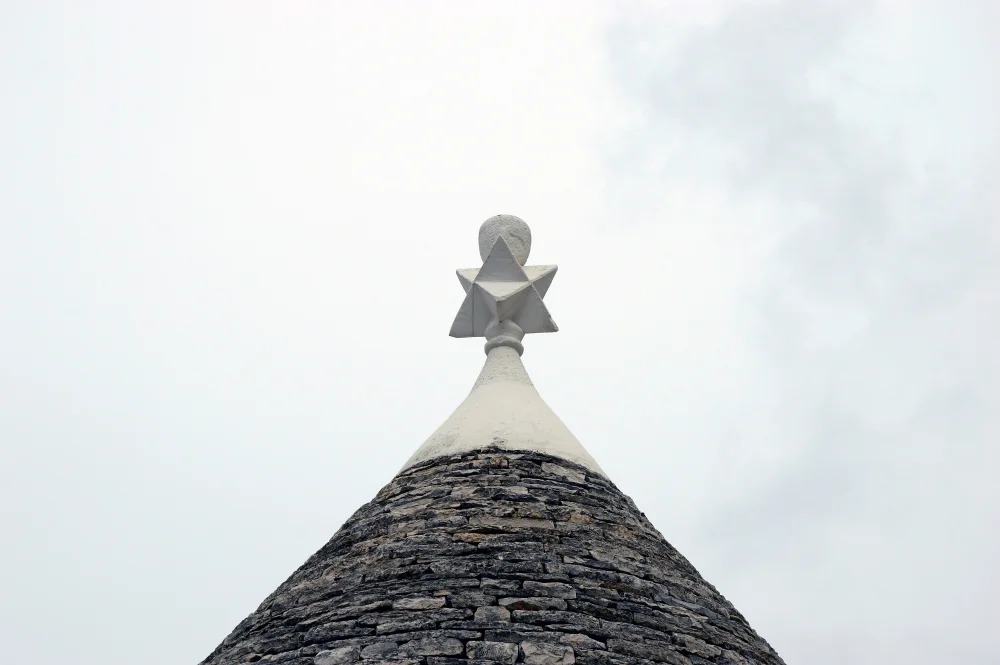
© Livioandronico2013 / Wikimedia Commons — CC BY-SA 4.0
Dry-stone building makes stones easier to replace and explains the roofs' distinctive shape. Thick walls help keep temperatures more stable between day and night. The lime-painted symbols mix Christian, astrological and protective motifs, but interpretations vary by source. The same caution applies to the pinnacles, in the form of spheres, stars or discs. They are sometimes described as the signature of the master builder, the trullaro, although their exact purpose remains debated.
When should you visit Alberobello to avoid the crowds?
In Alberobello, when matters as much as where. The village follows the daily rhythm of mass tourism: most coaches arrive around 9.30 am, with peak crowds lasting from 10 am to 4 pm in high summer.
| Time of day | Atmosphere | Crowds |
|---|---|---|
| 6–8.30 am | Soft light, shops still closed | Usually very quiet |
| 9–10 am | First shops opening, getting busier | Building up |
| 10 am–4 pm | Intense heat, a steady flow of groups | Peak crowds |
| 4–6.30 pm | Still hot, crowds easing slightly | Declining |
| From 7 pm | Soft light and aperitivo; summer evenings can stay lively | Often quieter |
Walking around Alberobello at about 7 am usually lets you see the districts before shops open and day-trippers arrive. White façades catch the rising sun, and the temperature remains pleasant. Peace is never guaranteed, especially on event days, but the contrast with midday is often marked.
The other useful window comes as the sun drops. After 7 pm, some groups leave and the light softens. In July, August and during events, however, the lanes can remain busy late into the evening. It is a good time to extend your walk with a glass of Puglian wine.
Rione Monti or Aia Piccola: Alberobello's two trulli districts
Alberobello has two main historic districts, on opposite sides of the central thoroughfare, Largo Martellotta. Understanding this layout helps you plan a well-balanced day.
- ✓ Around 1,000 trulli lining steep lanes
- ✓ The most photogenic district, with panoramic views from the Belvedere
- ✓ Sant'Antonio church, 20th-century architecture inspired by trulli
- ✗ Takes most of the high-season visitor traffic
- ✗ A strongly commercial feel on the main streets
- ✓ Around 400 trulli in a genuinely lived-in neighbourhood
- ✓ Far fewer tourist shops
- ✓ Still residential, so explore quietly and respectfully
- ✓ A maze of lanes to wander at your own pace
- ✗ Less visually dramatic than Rione Monti
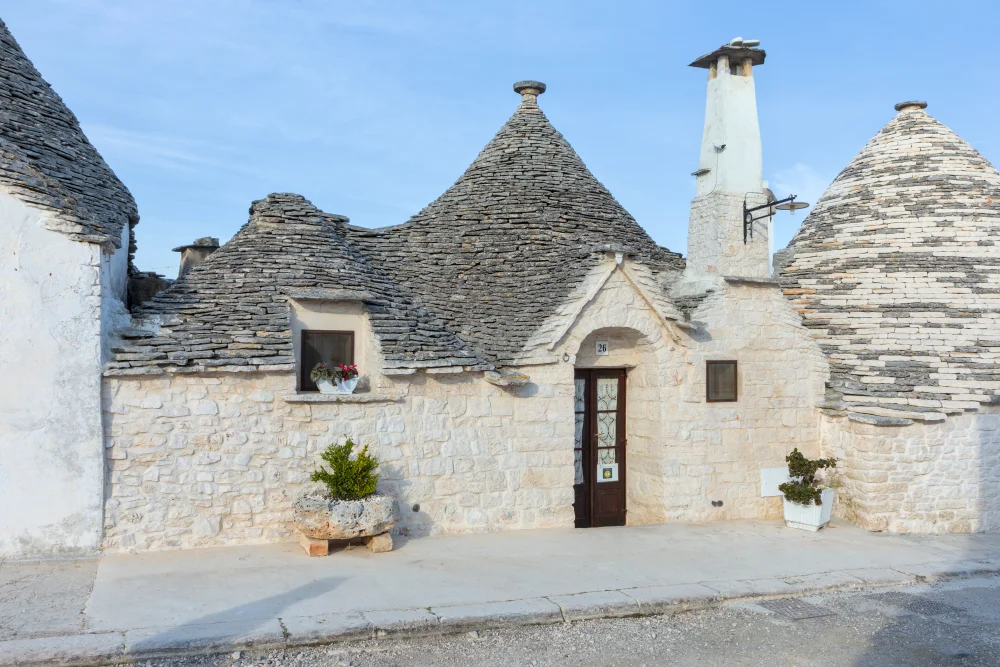
© Benjamin Smith / Wikimedia Commons — CC BY-SA 4.0
Rione Aia Piccola is the best place to retreat when crowds fill Rione Monti. Around 400 trulli make up this still-residential district. Walk quietly through its lanes, keep doorways clear and remember that these houses are homes.
In Rione Monti, climb to Sant'Antonio church on Via Monte Pertica. Built in the 20th century with a trullo-inspired outline, it has a Greek-cross plan and a dome reaching 21 metres. Then head to the Belvedere di Santa Lucia on the opposite slope for a view across the district's conical roofs.
Trullo Sovrano and Sant'Antonio church: two buildings to visit
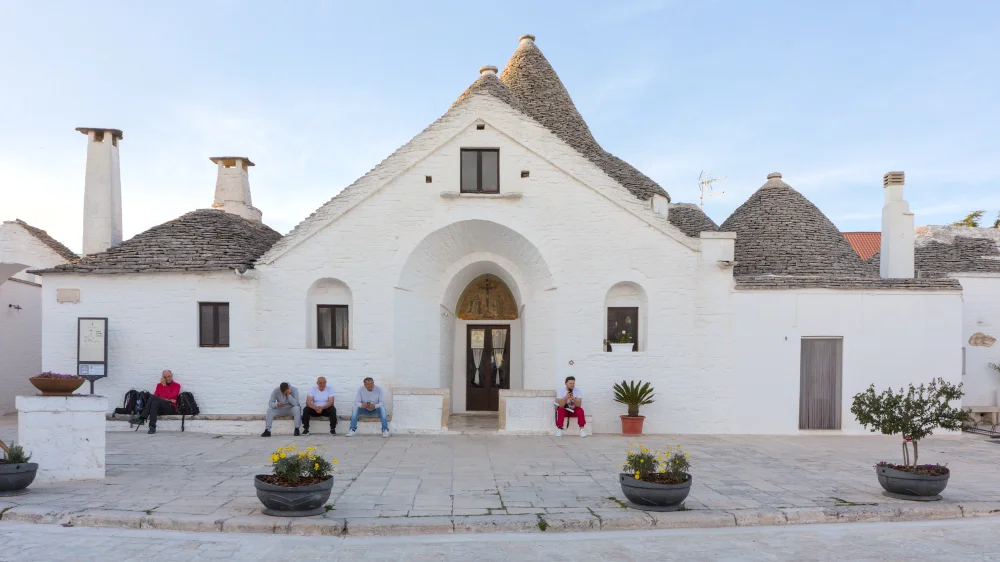
© Benjamin Smith / Wikimedia Commons — CC BY-SA 4.0
If you visit just one building's interior in Alberobello, choose Trullo Sovrano on Piazza Sacramento. Its oldest core dates from the early 17th century, while most of the building was constructed in the first half of the 18th century for the family of the priest Cataldo Perta. It is Alberobello's only trullo with a proper upper floor reached by an internal masonry staircase.
Furnished with old objects, the interior shows everyday life in the past, from breadmaking to grain storage. There is also a small garden behind the building. The single admission price is €2.50.
- 📍 Piazza Sacramento, 10/11 — 70011 Alberobello (BA)
- 💶 Single admission price: €2.50
- 🕒 November–March: 10 am–12.45 pm and 3.30–6 pm; April–October: 10 am–12.45 pm and 3.30–6.30 pm
- ⏱️ Suggested visit length: around 30 minutes
- 🚶 Around a 10-minute walk from Largo Martellotta
Guided tours in Alberobello: book an early start for quieter lanes
I usually favour exploring independently, but Alberobello's history can make a guide worthwhile. The geometry of the roofs, differing theories about the symbols and the engineering of underground rainwater cisterns are difficult to understand without explanation.
For fewer crowds, book a private or small-group tour and choose an early departure when the operator offers one. Check exactly what is included: do not assume access to a private interior or terrace unless it is listed in the activity description. A guide's main value is explaining the districts, cisterns and dry-stone building in context.
Sleeping in an Alberobello trullo: alberghi diffusi and places to stay
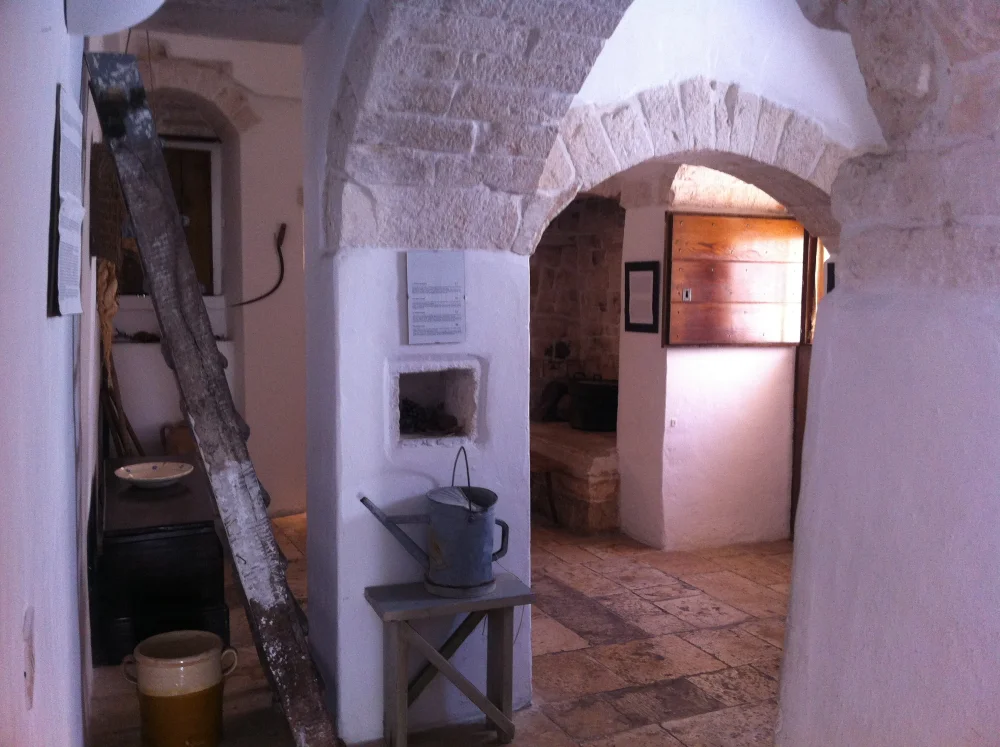
© Horcrux92 / Wikimedia Commons — CC BY-SA 4.0
Staying overnight in Alberobello lets you enjoy the districts before day-trippers arrive and after they leave. Sleeping in a trullo changes how you experience the space. Thick walls soften temperature swings, but comfort, damp and soundproofing depend greatly on the renovation.
Rather than a conventional hotel, consider an albergo diffuso, a hotel spread across several buildings. Reception is in a central building, while your room is a genuine trullo for your private use, tucked into the village lanes. After dark, you return with your key along quiet paved streets. On Booking.com, look for Trulli Holiday Albergo Diffuso or the particularly refined Le Alcove.
Where to eat in Alberobello: Pasqualino, Terra Madre and L'Aratro
On the busiest streets, a central location does not guarantee good food. Here are three local options, with prices to check on current menus.
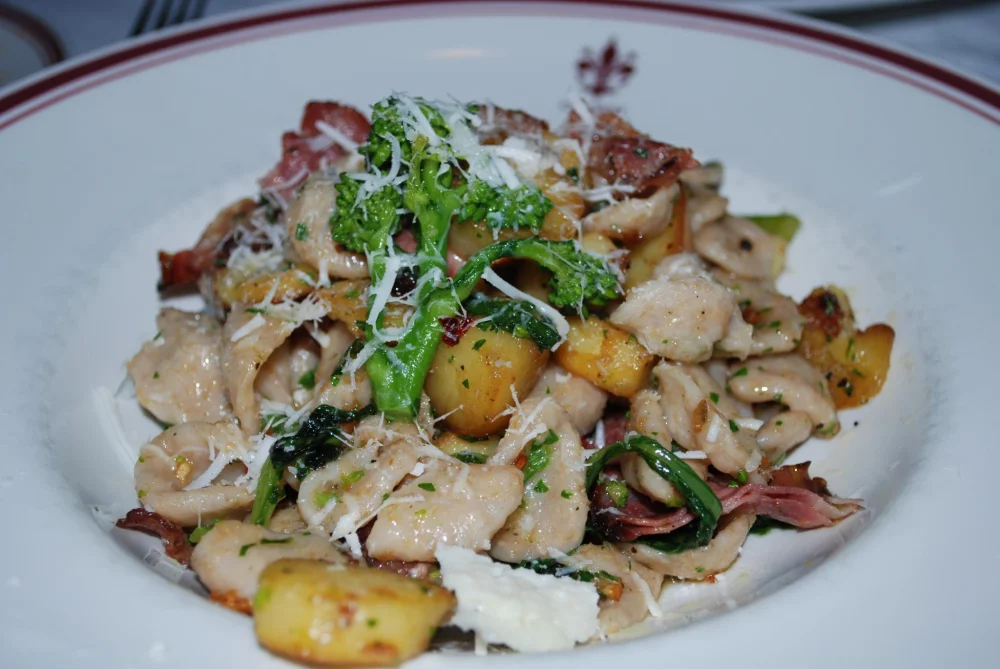
© Alpha from Melbourne, Australia / Wikimedia Commons — CC BY-SA 2.0
The local fast-food speciality is the Pasqualino. First appearing in the 1960s, this sandwich traditionally combines salami, stretched-curd cheese, tuna in oil and capers. Prices vary by shop and version. Profumi dal Ponte at Via Barsento 8 sells it alongside its other bakery and food products.
On Piazza Sacramento near Trullo Sovrano, this trattoria highlights produce from its kitchen garden and Puglian cooking centred on seasonal vegetables. The menu changes regularly, so check it and opening hours before booking.
Run by Domenico Laera, this Rione Monti restaurant offers a tasting menu devoted to Alberobello's cooking: assorted antipasti, two first courses, a main course and an almond dessert. Prices may change, so check the official menu before booking.
Save your sit-down meal for the evening and choose a Pasqualino or something from a bakery at lunchtime. This generally costs less than a full lunch on the main streets, though you should still check displayed prices before ordering.
Bari to Alberobello: buses, driving and parking
- Direct FSE buses leave from Via Capruzzi, just behind Bari Centrale station
- Journey time: some fast services take around 1 hour 5 minutes, but timings vary by departure
- Check the route for your travel date: works, replacement buses or connections can change the journey
- By hire car, allow around an hour from Bari via the SS172 dei Trulli. Compare availability, excesses and hire terms on Rentalcars
- → Include it in a 5-day Puglia itinerary
Do not try to drive right up to the pedestrian lanes, and follow local signs. Via Indipendenza is in municipal Zone B. The published rate is €2 an hour from 9 am to 10 pm, extended to midnight in July and August. Always check the meter, as rules can change.
If you arrive in Alberobello at peak time, continue roughly ten kilometres to Locorotondo and return later. The hilltop white centre is dominated by cummerse, houses with gabled roofs, while trulli are mainly found in the surrounding countryside. Come back to Alberobello towards the end of the day, remembering that summer evenings can also be busy.
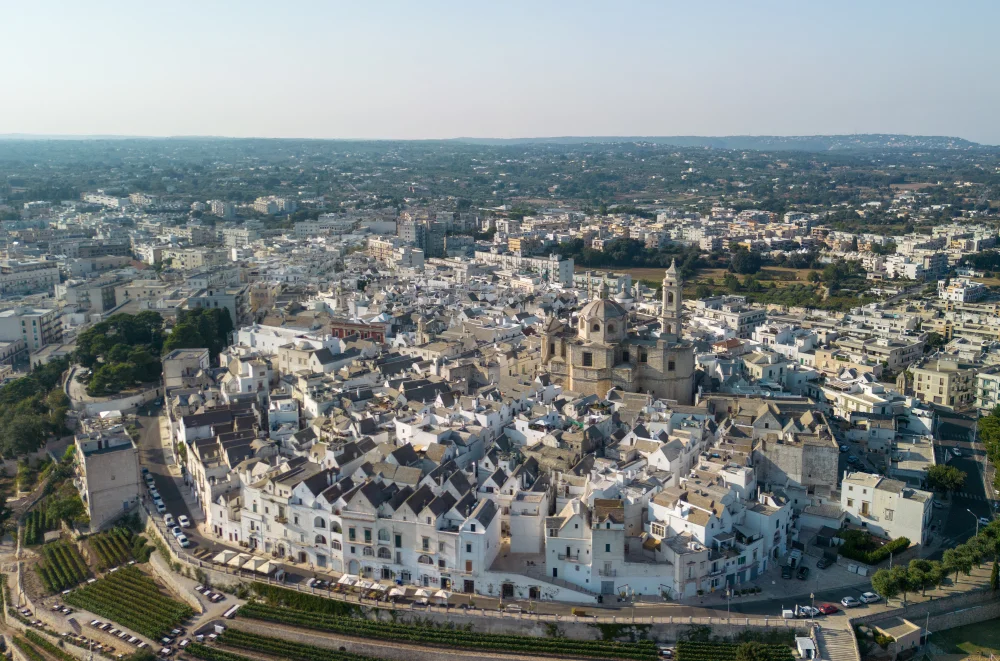
© ParisTaras / Wikimedia Commons — CC BY-SA 4.0
Alberobello without the crowds: frequently asked questions
How long do you need to visit Alberobello?
When is the best time to visit Alberobello without the crowds?
Can you visit the inside of a trullo for free?
Where is the easiest parking for visiting Alberobello?
Is Alberobello accessible with a pushchair or wheelchair?
Famous for conical roofs born from a tax dodge, Alberobello is Puglia's most striking stop. Find out how to avoid…
Read more →From white sand on the Ionian coast to rocky Adriatic coves, here are my tips for avoiding crowds and finding…
Read more →Alberobello: trulli tour with a local guide