10 Beautiful Towns and Cities to Visit in Puglia
From Baroque Lecce to Polignano's cliffs, compare ten towns and cities to choose your stops without spending the whole trip on the road.
A morning among Puglia's trulli and an evening at an old harbour offer very different experiences. I will help you choose which towns deserve a place in your plans, according to your interests and the time available.
Puglia's most beautiful towns and cities: which should you visit?
For a first trip, I would choose Lecce, Bari, Ostuni, Polignano a Mare, Monopoli and Alberobello. These six stops already offer very different experiences: Baroque stonework, lively old streets, white houses, harbours and trulli. Trani, Otranto, Gallipoli and Vieste round out the selection, depending on which part of Puglia you explore.
There is no need to see all ten at any cost. I prefer a day ending at a harbour to a schedule of photographing three squares before getting back in the car. Here is how to choose, with suggested visiting times and stops that work well together.
| City | Why choose it? | Time for sightseeing | Combine with |
|---|---|---|---|
| Lecce | Baroque architecture and city life | 1 day | Otranto or Gallipoli on another day |
| Bari | Old town and street food | 1 day | Trani or the coast to the south |
| Ostuni | White town and olive groves | 3–4 hrs | Alberobello or Monopoli |
| Polignano a Mare | Cliffs and viewpoints | 2–3 hrs | Monopoli |
| Monopoli | Old harbour and walks | Half a day to 1 day | Polignano a Mare |
| Alberobello | Trulli quarters | 2–4 hrs | Ostuni or the Itria Valley |
| Trani | Cathedral facing the sea | Half a day | Bari |
| Otranto | Mosaic, ramparts and sea | Half a day to 1 day | Lecce and Salento's east coast |
| Gallipoli | Island old town | Half a day to 1 day | Lecce and the Ionian coast |
| Vieste | Old town and Gargano scenery | 1 day, longer for the surroundings | Peschici and Gargano |
These times are for sightseeing, not the number of nights to book. You can discover central Lecce in a day; staying three nights can be useful for exploring Salento. Always allow for travel, beach breaks and indoor visits when planning.
For façades and monuments, I would choose Lecce. For white lanes, Ostuni. For sea views, Polignano a Mare. These are three different favourites, rather than an objective ranking of the most beautiful town.
Map of Puglia's towns and cities
North of Bari, Trani fits easily into a stay in the regional capital. To the south, Polignano and then Monopoli follow the coast, while Alberobello and Ostuni take you inland. Further down, Lecce, Otranto and Gallipoli form the main stops in Salento.
Vieste is separate, in Gargano. I would include it in a stay in northern Puglia rather than a day trip from Lecce. The map locates the towns; it does not plot a ten-stop driving itinerary.
The OpenStreetMap map loads only when you open it.
Lecce: Baroque architecture and golden stone
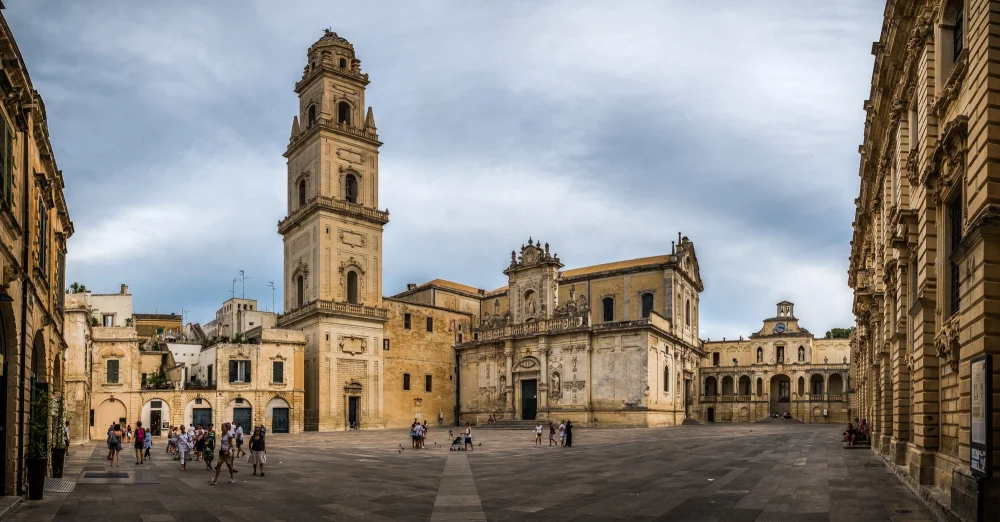
© Giuseppe Milo / Wikimedia Commons — CC BY 3.0
Lecce is defined by its pietra leccese, the soft limestone sculptors transformed into façades covered with fruit, cherubs and fantastical animals. The Basilica di Santa Croce is the most exuberant example. Continue to Piazza del Duomo and Piazza Sant'Oronzo: this is a city for looking up rather than rushing between churches.
In the evening, the pale stone turns amber. I would keep at least one evening here, even if you spend only a day visiting the main monuments. In the morning, a pasticciotto at Caffè Alvino, Piazza Sant'Oronzo, is another good reason to head out early. Allow around €2 each as a guide and check the price on arrival.
Bari: Bari Vecchia, San Nicola and focaccia

© Dolce Routes
Bari deserves more than a night between flights. In Bari Vecchia, lanes link the Basilica di San Nicola, San Sabino Cathedral and little squares where you will end up sitting down. On Via dell'Arco Basso, watching orecchiette being made is part of the walk.
I would allow a full day for a first visit. Two days leave more time for museums and breaks, but you do not need that long to appreciate the city.
For a simple lunch, stop at Panificio Fiore, 38 Strada Palazzo di Città, allowing around €3 for a slice of focaccia. Our Bari Vecchia street food guide takes the food walk further.
Choose it for: lanes, churches and an easy-to-plan city break. Combine with: Trani, or Polignano and Monopoli. If your priority is a quiet little harbour, Bari offers a different kind of stay.
Ostuni: the White City above the olive groves
You can spot Ostuni from a distance, standing above the olive groves. Start at Piazza della Libertà, then climb through the old-town lanes towards the cathedral and Arco Scoppa. The steps, vaulted passages and countryside views offer far more than a single photogenic doorway.
I would allow 3–4 hours, leaving time for a break and the detours you only spot once you are there. You will feel the hills, especially in midsummer. The Ostuni guide helps you plan a more detailed visit.
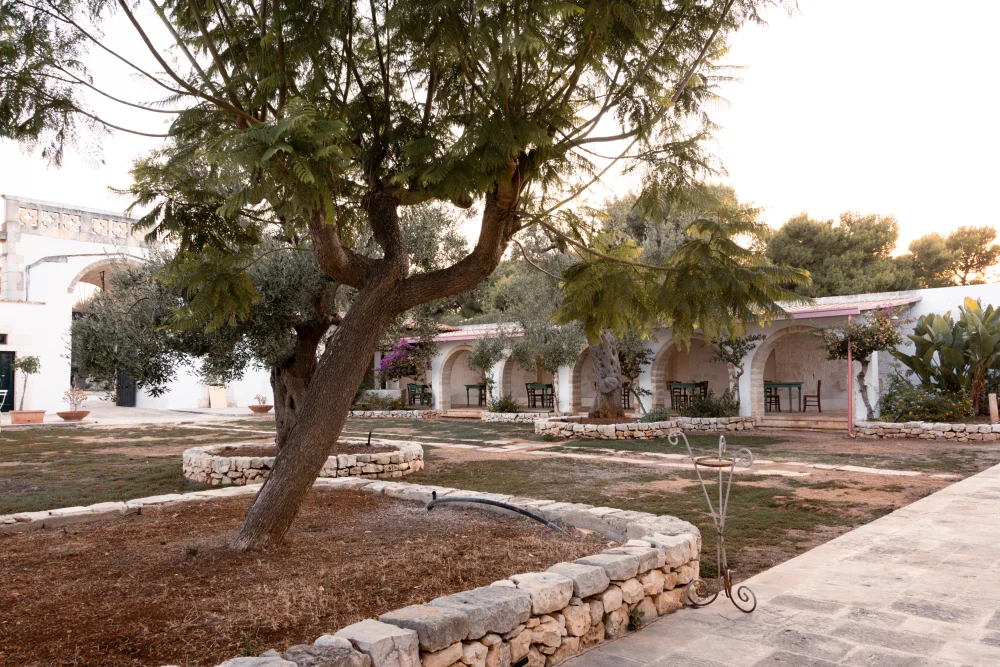
© Adriana Leo / Wikimedia Commons — CC BY-SA 4.0
Focus your sightseeing on the centre; a masseria offers a way to stay longer. With a car, sleeping among the olive trees can be very appealing. Without one, a central address avoids needing transport for every meal.
Combine with: Alberobello or Monopoli. I would choose Ostuni for its hilltop setting and views, rather than direct beach access from the old town.
Masseria Il Frantoio and Masseria Cervarolo are two options in our selection. Allow €150–250 per night as a rough budget to compare with rates for your dates, rather than a guaranteed price at these properties. Check dinner arrangements and the room type separately.
Polignano a Mare: cliffs and Adriatic viewpoints
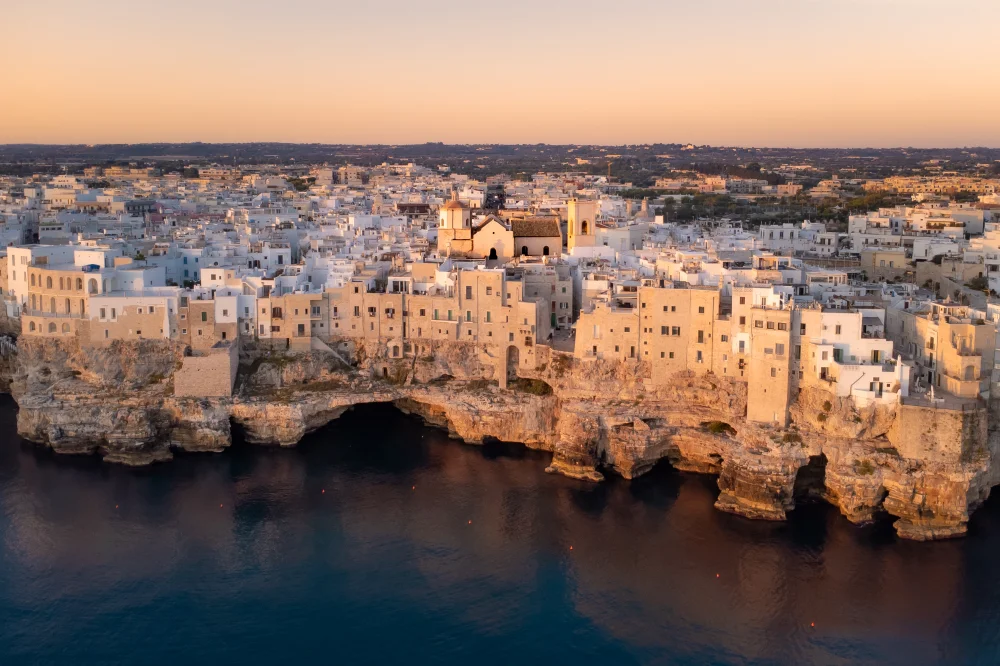
The bridge above Lama Monachile gives you the instantly recognisable view. Stay after taking the photo: walk into the old town and find the terraces overlooking the sea. Much of Polignano a Mare's appeal lies in this succession of viewpoints.
Allow 2–3 hours for the lanes and viewpoints, longer for swimming or a boat trip. In summer, I would come early or late in the day. The little cove will not be empty simply because you arrive at a supposedly perfect time.
Choose it for: spectacular coastal scenery. Combine with: Monopoli on the same day. Space is the drawback: a small, famous beach may not offer the peaceful swim its photograph suggests.
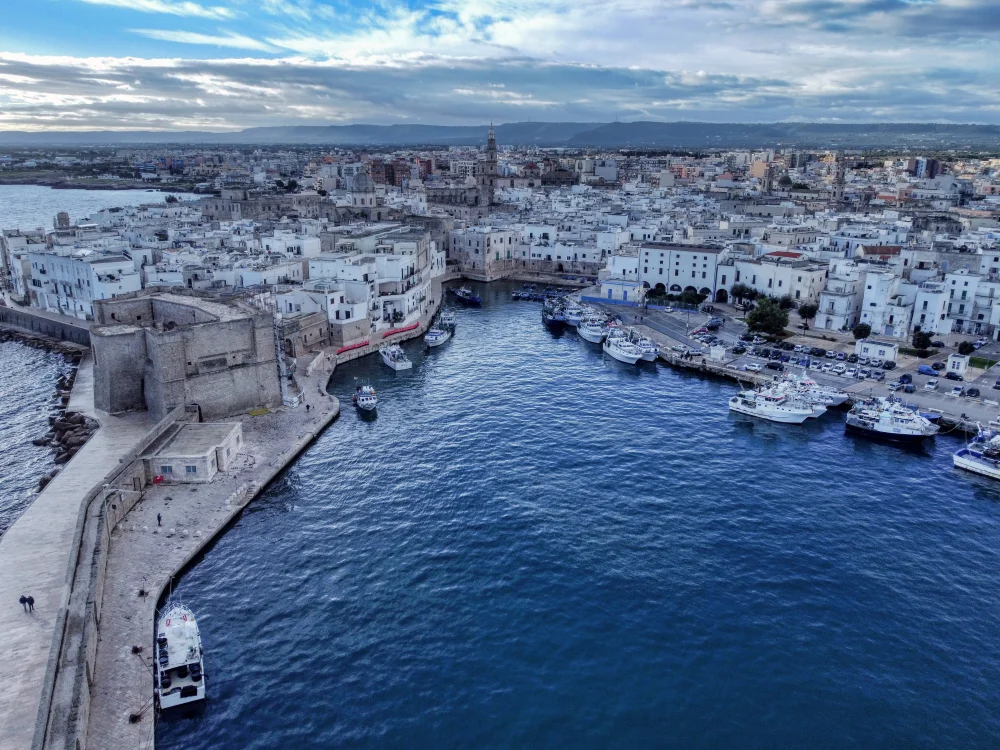
Monopoli: the old harbour and blue boats
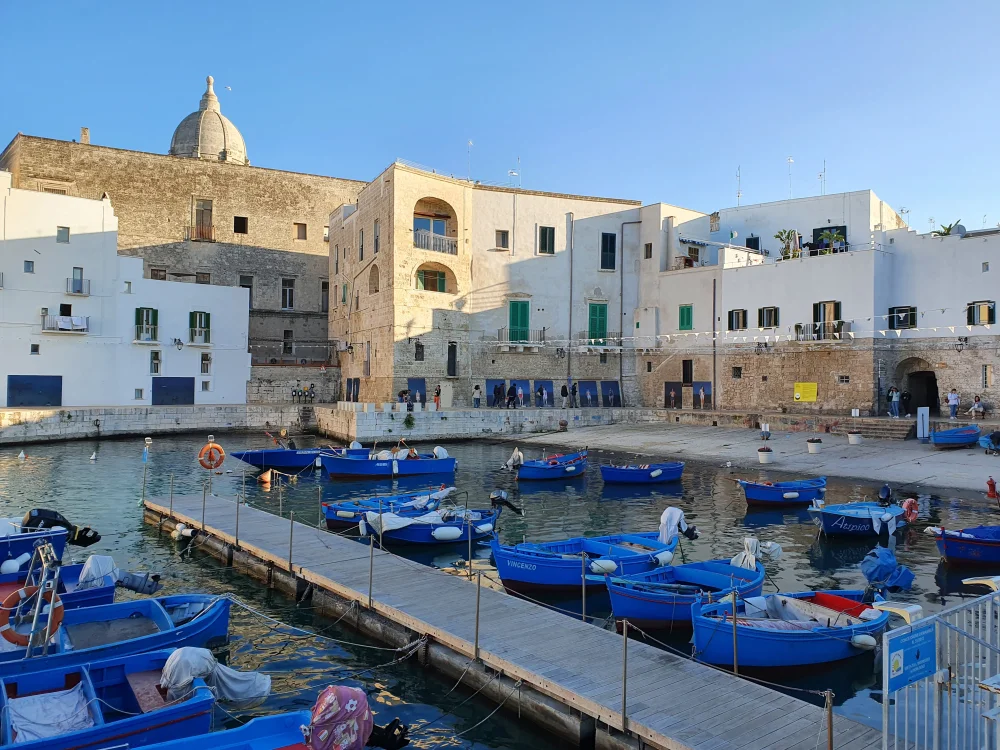
© MPhernambucq — CC BY-SA 4.0
South of Polignano, Monopoli has a different pace. The Porto Vecchio, its blue boats and waterfront façades make you want to linger. Continue to Charles V Castle, then return through the centre towards the cathedral. I would happily choose it for a walk that continues into dinner.
Half a day is enough for a first look around the centre; keep a full day if you add the beaches. At Osteria Perricci, 1 Via Orazio Comes, fried small fish is one option to try. Allow around €15–18 a plate and check the menu.
Polignano and Monopoli combine well; the train journey is short, around fifteen minutes depending on the service. Our Monopoli or Polignano a Mare comparison explains their different atmospheres to help you choose where to stay. Monopoli is still busy in summer.
Alberobello: visiting the trulli
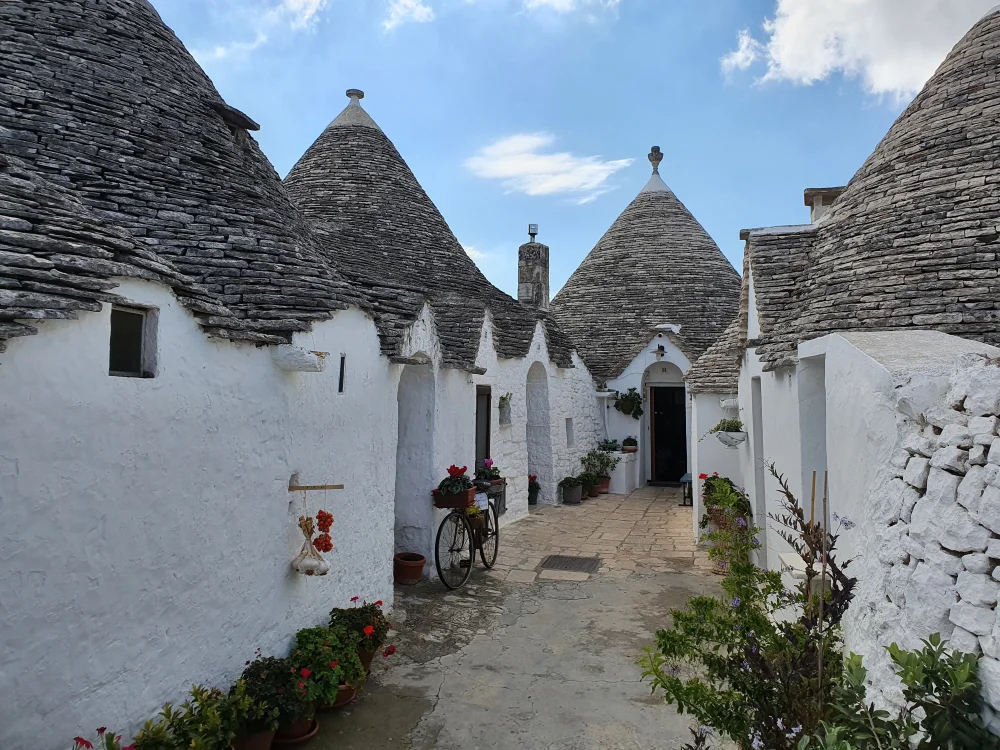
© MPhernambucq / Wikimedia Commons — CC BY-SA 4.0
Alberobello offers something no other stop here matches on the same scale: whole quarters of dry-stone trulli with conical roofs. The UNESCO listing includes Rione Monti and Aia Piccola. I would not leave Monti off the route simply because it is more touristy.
Start early in Monti, then take your time in Aia Piccola. Add an interior such as Trullo Sovrano to see more than the façades. Allow 2–4 hours, depending on the visits you choose.
Choose it for: distinctive architecture. Combine with: Ostuni or an Itria Valley village. In high season, arrive before the main tour groups or stay into the evening, without expecting a deserted village. Our guide to visiting Alberobello without the crowds explains which quarters and times to choose.
Locorotondo and Cisternino can add to a stay in this area. They are covered elsewhere: this page helps you choose the main stops, while our selection of Puglian villages offers more places for a stroll.
Trani: a cathedral facing the sea
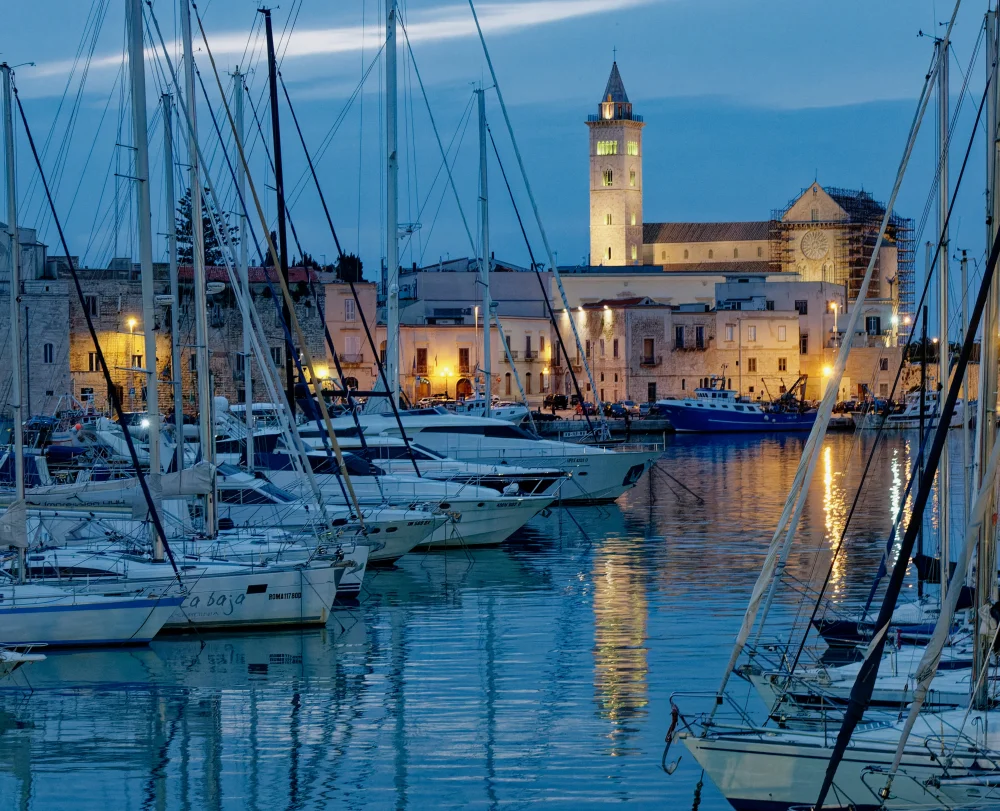
© Holger Uwe Schmitt — CC BY-SA 4.0
In Trani, I would begin at the harbour before heading to San Nicola Pellegrino Cathedral. Standing alone on its waterfront square, it offers a striking contrast to Lecce's and Bari's closely packed façades. From there, continue your walk to the Swabian castle and the old town.
Allow half a day for the town centre, longer with indoor visits and lunch. This is the stop I would add to a Bari-based stay for heritage and a harbour, without making a long detour towards Salento. For a day mainly at the beach, I would choose elsewhere.
Otranto: medieval mosaic and castle
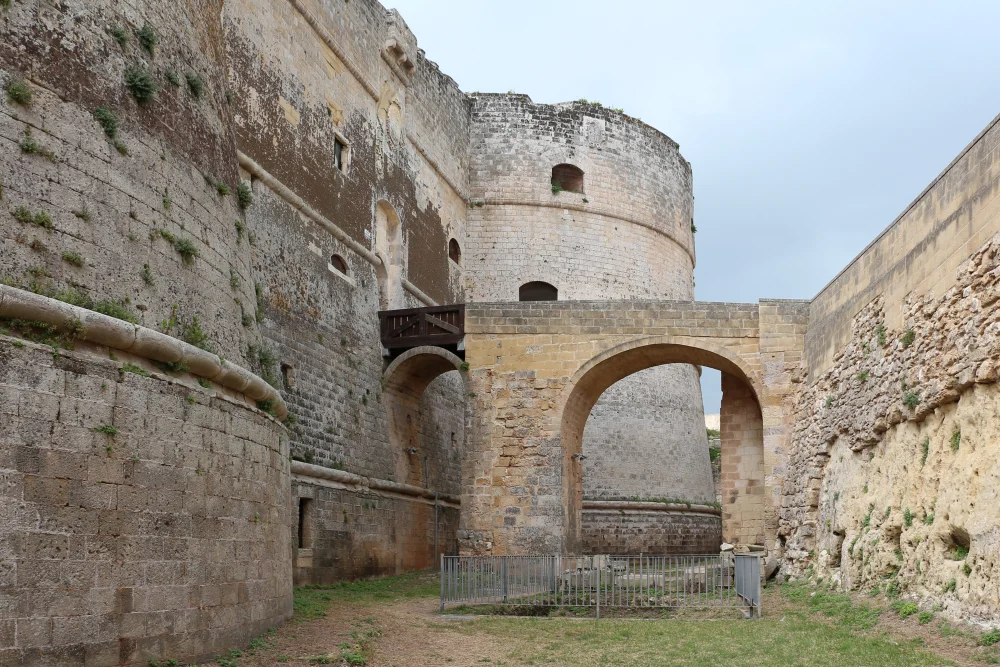
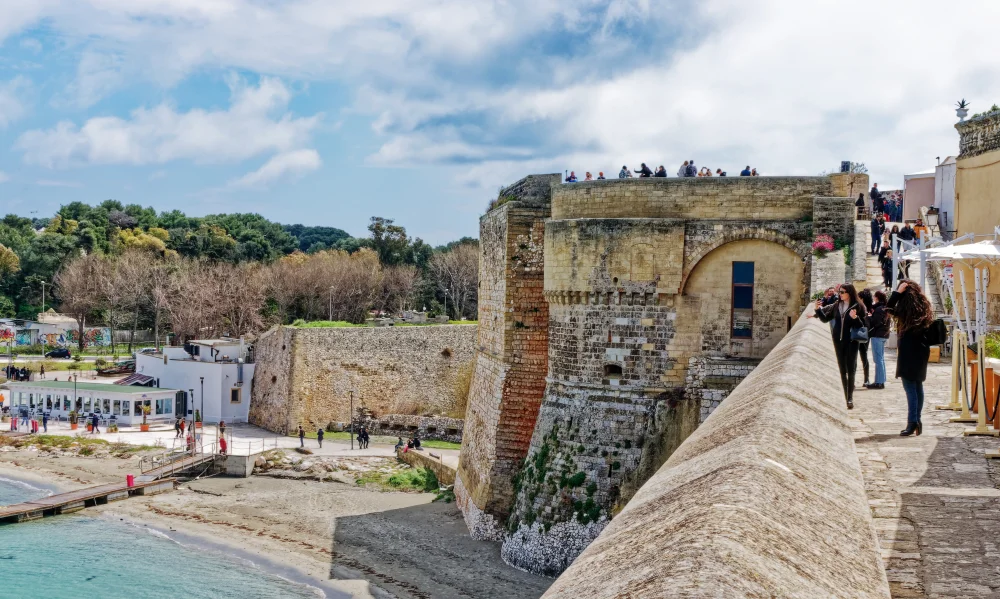
Otranto combines a fortified old town with substantial historic sights. Do not miss Santa Maria Annunziata Cathedral: its great floor mosaic arranges a world of scenes and figures around the Tree of Life. Continue to the Aragonese castle, then return towards the ramparts and seafront.
I would allow half a day to a full day, depending on the monuments you visit and how much swimming you include. It makes a lovely day trip from Lecce, on a separate day from Gallipoli. The two towns are on opposite sides of Salento: rushing through both does little for the sightseeing or the holiday.
Gallipoli: the island old town and the sea
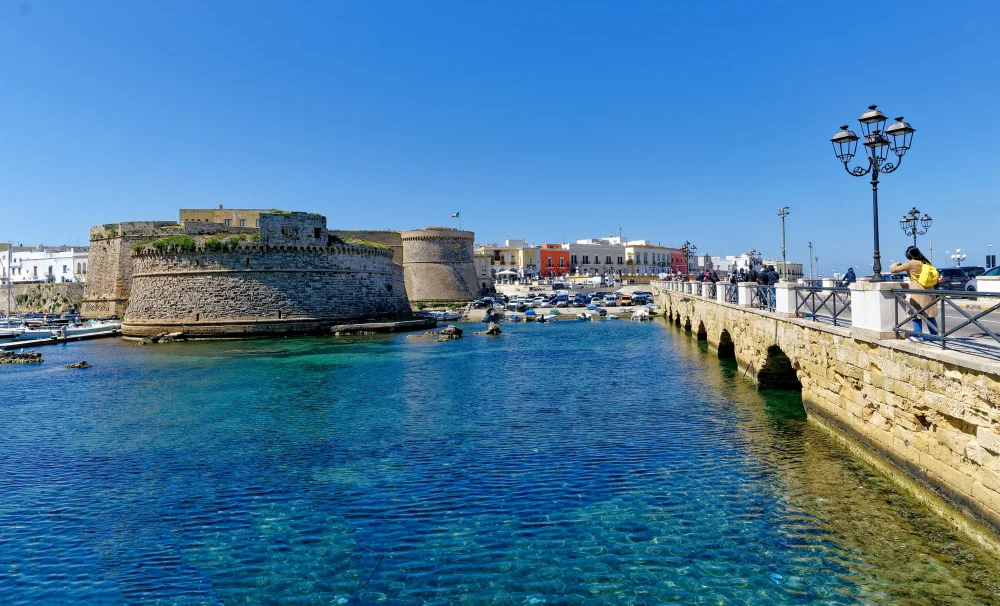
© Holger Uwe Schmitt — CC BY-SA 4.0
Old Gallipoli occupies an island linked to the modern town by a bridge. Behind the castle, lanes lead to Sant'Agata Cathedral, the Church of the Purità and walks around the ramparts. I would come as much for walking beside the water as for the monuments.
Allow half a day for the centre, or a full day with a beach and dinner. This is a different experience from the beach-resort atmosphere of Baia Verde: your choice of neighbourhood changes the stay. Our Gallipoli guide explains the difference. For a short Lecce-based trip, choose Otranto or Gallipoli according to which coast appeals most.
Vieste: in the landscapes of Gargano
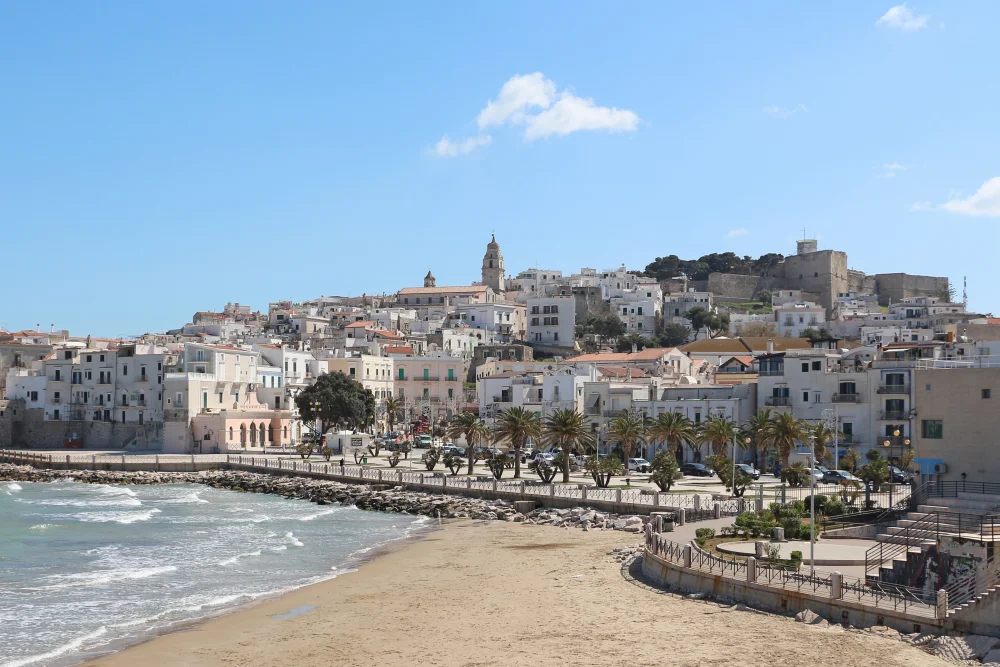
Bernard Gagnon — CC0
Vieste is worth setting aside time for in northern Puglia. Its old town overlooks the Adriatic, while the white rock of Pizzomunno beside the beach gives the landscape an instantly recognisable shape. This is a different stop from Salento's ports and towns.
I would allow a day for Vieste and ideally two or three nights in the area to add Peschici, beaches or more of Gargano. On a week already split between Bari, the Itria Valley and Lecce, I would save it for another trip rather than add hours of driving.
Which towns should you choose for 3, 5 or 7 days in Puglia?
The plans below assume full days in the region, excluding arrival and departure. These are suggestions for choosing stops, not a requirement to collect all ten towns. On a short holiday, dropping one visit is better than cutting every other one short.
Spend a day in Bari, one in Polignano and Monopoli, then one in Trani. If trulli are the priority, replace Trani with Alberobello and plan the journey. You do not need to go as far as Lecce for a rewarding first trip.
Bari, Polignano and Monopoli, Alberobello and Ostuni make a coherent route. Keep one lighter day for a beach, another walk or a longer visit. Without a car, plan connections inland in advance.
Spend around four days in Bari, on the coast and in the Itria Valley, followed by three in Lecce and Otranto or Gallipoli. I would leave Vieste out of this loop: Gargano needs its own stop.
For a detailed plan, our 5-day Puglia itinerary offers another way to organise the visits. Compare it with your flight times and preferred pace rather than adding more towns to an already full day.
Where to stay to visit these towns
For three days, one base is often enough. For a week split between the Itria Valley and Salento, two bases avoid unnecessary return journeys. Monopoli or the area around Ostuni can work for the first part; Lecce is well suited to the second.
Transport changes the choice. A remote masseria is appealing with a car, but less convenient if every outing requires a transfer. Without a car, I would first check the station, walking distance to the centre and evening connections.
Which Puglia towns can you visit without a car?
The regional Bari–Polignano–Monopoli–Ostuni–Lecce line provides a useful rail backbone. Arriving at a station does not always mean arriving in the old town, though: in Ostuni, allow for the onward journey. STP Brindisi publishes a connection between the station and centre.
For Alberobello, Otranto, Gallipoli or Gargano, plan each journey with the relevant operator and check the return in particular. A car makes combinations easier, but is not essential for every Puglia trip.
‘Puglia's riches lie beyond the postcard views, in the lanes nobody photographs.’Dolce Routes
Planning visits and journeys
The suggested times are our estimates for sightseeing, excluding transport. Prices for food stops, masserie and the excursion are indicative: check menus and availability for your dates.
For official tourist information, see Trani Cathedral, Otranto's heritage, Gallipoli and Vieste and Pizzomunno on Italy's national tourism portal, Italia.it.
For Alberobello and transport, see UNESCO's World Heritage listing for the trulli, Trenitalia regional connections and STP Brindisi's Ostuni station–centre service.