Naples Tap Water: Is It Safe to Drink?
From the tanks in old palazzi and Avellino's mountain springs to the coffee ritual: how and where to drink water in Naples.
Naples' mains water is safe to drink. At 35°C on Via Toledo in July, finding drinking water in Naples becomes the day's priority. Before filling your hotel room with plastic bottles, here is how the Neapolitan supply works, from the mountain spring to the glass served with your espresso.
Can you drink the tap water in Naples?
Yes. The city's supply network is managed by ABC, short for Acqua Bene Comune. It is entirely publicly owned, protected by a citizen referendum in 2011 intended to prevent privatisation.
Water supplied to Neapolitan homes is officially safe to drink and undergoes daily bacteriological and chemical tests.
Unlike coastal areas of Puglia or Calabria, where mains water often has a pronounced chlorine taste, Naples' water tastes mild. It also contains much less limescale than Rome's supply. To plan the rest of your stay, see our Naples travel guide.
The municipality publishes monthly test results by neighbourhood on its official website. You can drink the water in your holiday rental without digestive worries.
The only variable affecting taste lies outside the city's pipes: the last few metres of plumbing in the building where you stay.
Serino water: the source of Naples' water quality
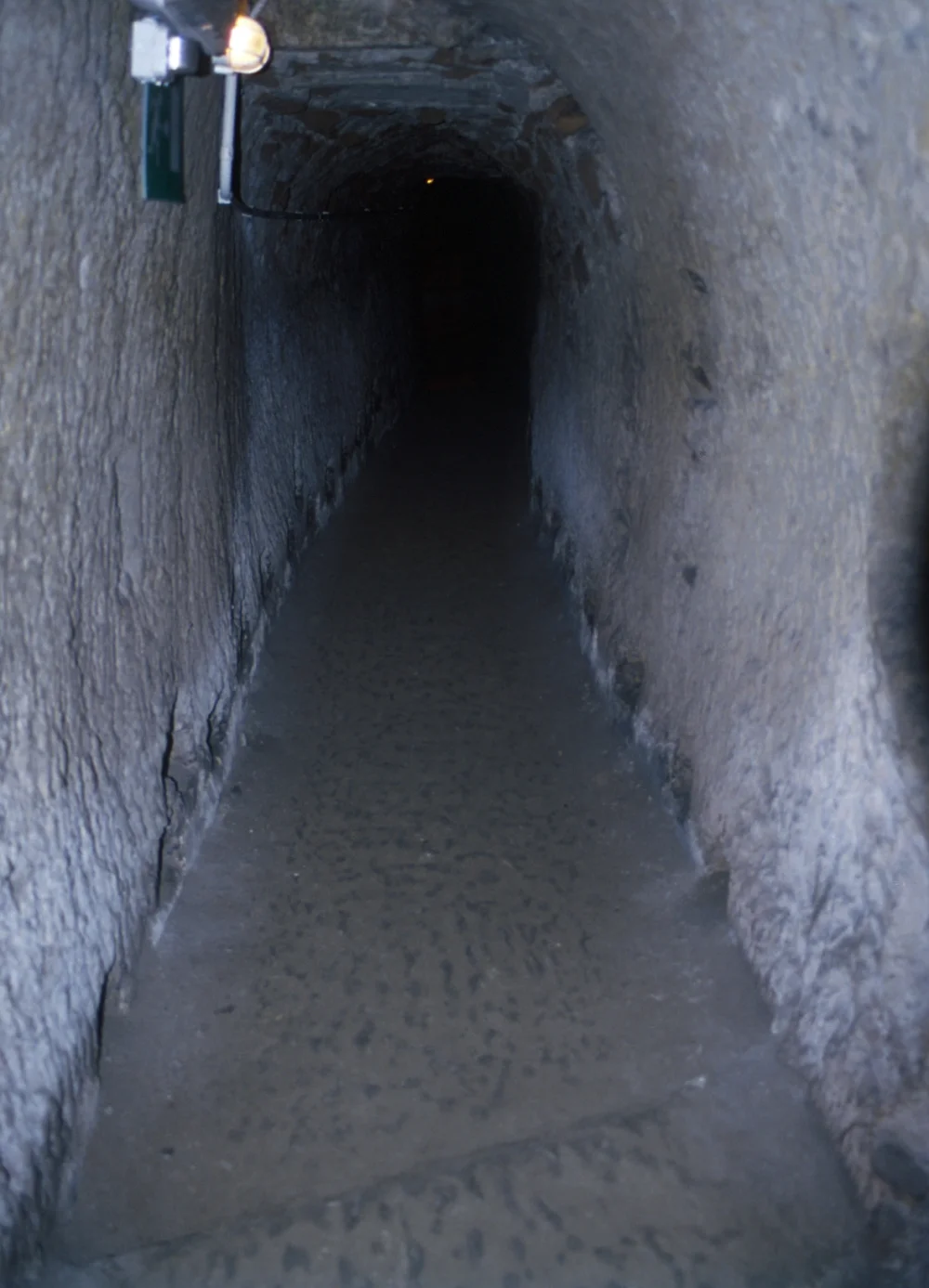
© Tyler Bell / Wikimedia Commons, CC BY 2.0
Naples' water quality has a precise geographical origin. It comes neither from groundwater beneath Vesuvius nor from the coast, but from the mountains of Avellino province, 80 kilometres inland.
Serino's springs, at the foot of Mount Terminio, have supplied the city with cold water since the late 19th century. Even today, when Neapolitans describe water as light on the palate, they mean 'l'acqua di Serino'.
This pressurised network replaces the old porous-tuff cistern system used in antiquity and the Middle Ages. On a Napoli Sotterranea tour, you descend forty metres to walk through vast Greek and Roman chambers that stored rainwater before the modern aqueduct was built.
Water pumps in the centre's old palazzi
In practice, the historic centre's buildings complicate the supply. Naples is built on steep hills: Vomero, Capodimonte and Posillipo.
Below, its dense centre packs five- or six-storey buildings into lanes barely reached by sunlight. ABC's mains pressure does not always push water to the upper floors of the Quartieri Spagnoli or Rione Sanità.
To compensate, almost all old buildings have a mechanical system called an autoclave. It combines an electric pump with a storage tank, the serbatoio. These large blue or green tanks are easy to spot on roofs, balconies and inside palazzo courtyards.
When you turn on the tap in your room or B&B, you hear a motor start a floor below. That is the autoclave switching on. The water coming from your tap has therefore been stored in this tank.
It remains completely safe for brushing teeth, rinsing fruit or cooking pasta. If a plastic tank heats up in August sunshine on a sheet-metal roof, the water may acquire a slightly earthy or artificial taste.
Run the cold tap for 30 seconds to clear the pipes before filling your glass.
The autoclave has another distinctly Neapolitan catch: it runs on electricity. In August, when everyone switches on air conditioning at 7pm after the beach, the local electrical network often overloads. The power trips.
Without electricity, the pump stops immediately. You may find yourself in the shower with soap on your arms and not a drop from the tap. It is a familiar story in Sanità Airbnb rentals.
Always keep a full water bottle in your room for these power cuts, common in old neighbourhoods in summer.
Water before espresso: the café rule
In Naples, water dictates how you drink coffee. Step into any historic café: Bar Mexico on Piazza Dante, Caffè Gambrinus or a little neighbourhood counter lined with Maradona shirts.
Pay for your espresso at the till first, between €1.20 and €1.50. Then place your receipt on the zinc counter in front of the barista. Two things will always arrive: a piping-hot cup of coffee and a small glass of very cold water.
There is a firm rule: drink the water before the coffee. It rinses your palate and prepares your taste buds for the intensity of Neapolitan espresso. This is a very short, deeply roasted coffee, often made with a high-robusta blend such as Passalacqua or Kimbo.
If you drink the water after your coffee, the barista will take it as an insult. In local café-counter language, rinsing your palate after espresso suggests the coffee was burnt or badly extracted and you want to remove its taste as quickly as possible.
Depending on the café, this complimentary glass contains chilled mains water or water filtered on site.
Acquafrescai and erupting bicarbonate lemonade
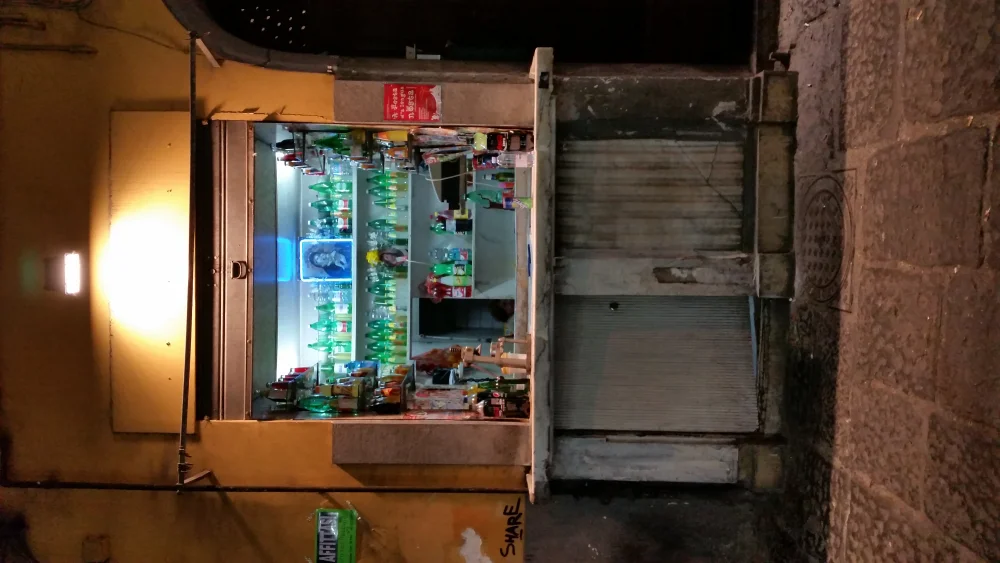
© Antonio Manfredonio / Wikimedia Commons, CC BY-SA 2.0
Along Via Toledo, near Porta Capuana or on Riviera di Chiaia, you will notice small round kiosks set into façades. They are decorated with nets of yellow lemons and ivy, often with a heavy marble counter.
These are chioschi degli acquaioli, or acquafrescai, a whole branch of Neapolitan street food devoted to refreshment. Historically, they sold fresh water from particular springs, kept in terracotta amphorae.
Today, people mainly stop for a 'limonata a cosce aperte'. Its literal translation gives fair warning: a legs-apart lemonade.
The vendor squeezes a large Sorrento or Amalfi lemon into a plastic cup of icy sparkling water. Just before handing it over, they add half a spoonful of bicarbonate of soda.
The chemical reaction is immediate. The mixture foams vigorously and overflows in a fraction of a second. You have to drink it in one go, legs apart to keep the sticky foam off your shoes.
Allow €2 to €3 for this decidedly fizzy after-meal drink. Neapolitans particularly enjoy it after a heavy lunch or a fried pizza eaten in the street.
Ordering water in a restaurant: forget the free jug
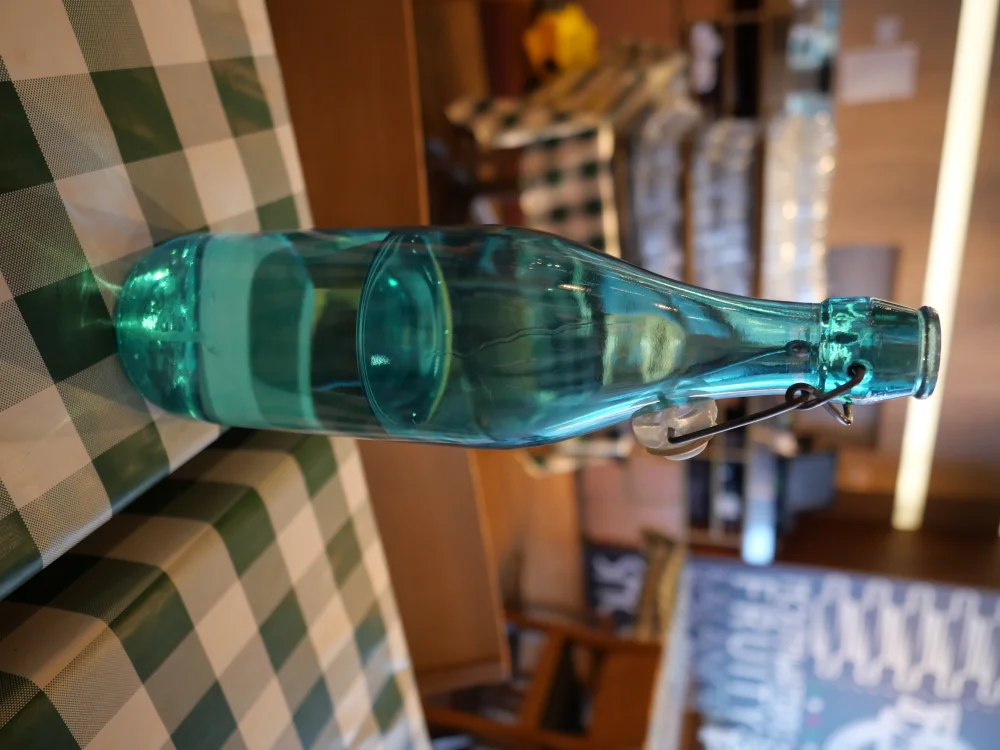
© Peachyeung316 / Wikimedia Commons, CC BY-SA 4.0
Do not assume that a free jug of tap water will be provided. At a restaurant, a Quartieri Spagnoli pizzeria or a Sanità trattoria, water is normally charged for.
Trying to order a jug of tap water with 'una brocca d'acqua di rubinetto' will attract confused looks. As soon as you sit down, the waiter approaches and asks: 'Acqua liscia o gassata?' Still or sparkling?
A one-litre glass bottle follows. More Neapolitan restaurants now have microfiltration systems at the counter. They purify, chill and carbonate mains water on site, then serve it in reusable glass bottles bearing the restaurant's name.
Whether mineral or filtered, the bottle costs €2 to €3.50. This is added to the coperto cover charge, which ranges from €2 to €3 per person depending on the venue.
Ferrarelle, Lete and Natia: bottled water
If a pizzeria has no filtration system, it serves conventional bottled mineral water. Across Campania, sparkling water is by far the favourite at meals.
The region's volcanic geology, bordered by Vesuvius, Campi Flegrei and the Roccamonfina massif, directly shapes this preference. Rainwater filters through mineral-rich underground rocks and naturally absorbs carbon dioxide.
This geological process produces 'effervescenti naturali', waters naturally sparkling at the spring. Ferrarelle, bottled in Riardo north of Naples, and Lete, sourced around Prata Sannita, are the two bottles you will see on tables. Their bubbles are fine and dense, and much less harsh on the throat than those of artificially carbonated water.
If you answer 'liscia' to request still water, you will often get Natia. It is Ferrarelle's counterpart, drawn from the same Riardo aquifers but from geological channels where the water is not carbonated by volcanic gases.
| Water | Type | Source |
|---|---|---|
| Ferrarelle | Naturally sparkling | Riardo |
| Lete | Naturally sparkling | Prata Sannita |
| Natia | Still | Riardo |
Refilling your bottle at Naples' public fountains
Naples has fewer freely accessible public fountains than Rome, but you can certainly refill a bottle for free during a day's sightseeing.
Simple green cast-iron fontanelle stand in the city's larger open spaces: on the pedestrian Lungomare promenade, inside Capodimonte park, at Villa Floridiana in upper Vomero, and near Piazza del Plebiscito.
Put an insulated stainless-steel bottle in your backpack before setting off. Metal will keep your Serino water cool for seven to eight hours, whereas plastic turns mineral water lukewarm within forty minutes.
The free Fontanelle d'Italia mobile app shows the locations of these drinking-water fountains. It is the quickest way to find the nearest one when you lose your way in the centre's maze of steep lanes.
Naples wears out your legs. Between the Pedamentina stairways climbing towards the Certosa di San Martino and the maze of Sanità lanes, a ten-kilometre walk in July requires at least three litres of water per person. Keep an insulated bottle in your bag, stop at lemon kiosks as the heat rises, then have a Ferrarelle at the pizzeria before afternoon sightseeing. To cover the neighbourhoods without repeated detours, see our 3-day Naples itinerary too.
From the historic centre to Vomero and the waterfront: three days in Naples with visits to book, transport and well-placed…
Read more →Naples hits you all at once. It is loud and crowded, scooters skim past pedestrians, and some of the world's…
Read more →