Pompeii in 3 Hours: An Essential Walking Route
A three-hour route through Pompeii, from the Forum to the amphitheatre, with advice on named tickets, arrival windows and getting there.
A three-hour walk through Pompeii takes you from Porta Marina to the Forum, baths, theatre and amphitheatre. Plan around the park's 2026 rules: named tickets and a daily cap of 20,000.
Pompeii in 2026: why you need a plan
The park now caps admission at 20,000 people a day. From 16 March to 14 October, that allowance is split into two arrival windows.
Up to 15,000 admissions are available from 9 am to 1 pm, then 5,000 from 1 pm to 5.30 pm. These limits cover Pompeii Express and Pompeii+ tickets together.
From 16 March to 14 October, the park closes at 7 pm, last entry 5.30 pm. From 15 October to 15 March, it closes at 5 pm, last entry 3.30 pm.
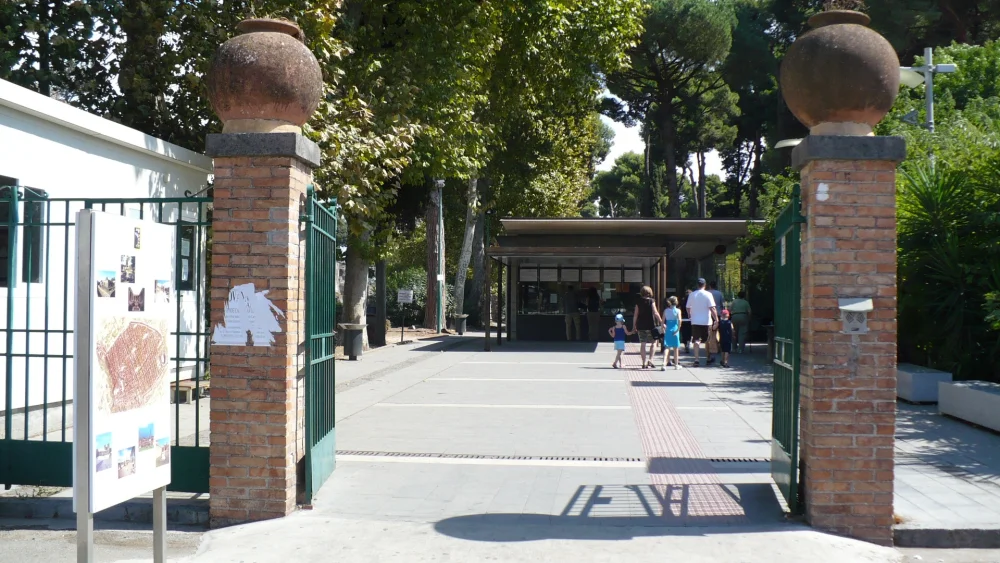
© Colin W / Wikimedia Commons — CC BY-SA 3.0
Tickets are issued in your name: enter it exactly as shown on your ID and bring that ID for checks. Once an arrival window reaches capacity, no further tickets are issued for it.
Since 2 March 2026, official online sales have been exclusively through Vivaticket. Print the PDF or show its barcode on your phone at the turnstiles. Compare options in our Pompeii Archaeological Park ticket guide.
Once you leave, you cannot re-enter on the same ticket, even after lunch in town. Choose your arrival time with your stamina in mind.
Pompeii Express or Plus: which ticket?
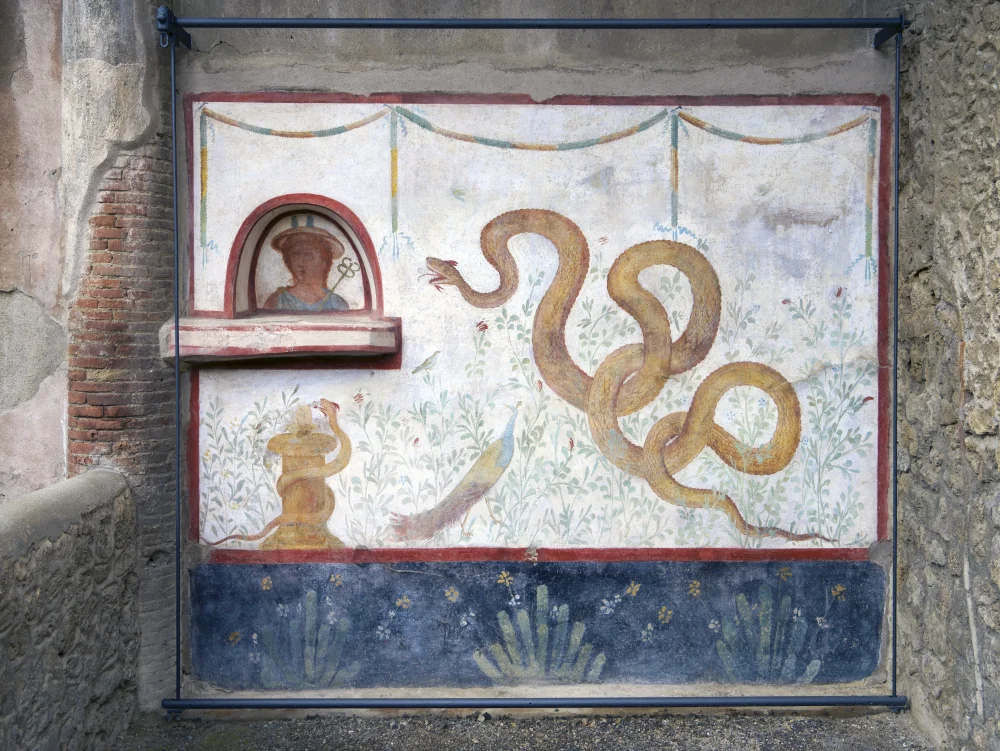
© Commonists / Wikimedia Commons — CC BY-SA 4.0
Pompeii Express costs €20 and covers the walled ancient town: forum, theatres, amphitheatre, restored houses and brothel. It is sufficient for a first 3–4-hour visit.
Pompeii+ costs €25, adding the Villa of the Mysteries, Villa of Diomedes, Villa Regina and Boscoreale Antiquarium, with a connecting shuttle. The Villa of the Mysteries is known for its great red frescoes associated with Dionysus.
Allow a generous half-day for Plus. The Villas of the Mysteries and Diomedes lie beyond Porta Ercolano; use the included shuttle for Villa Regina and Boscoreale Antiquarium.
| Ticket | Price | Admission |
|---|---|---|
| Pompeii Express | 20 € | Walled ancient town: forum, theatres, amphitheatre, brothel |
| Pompeii+ | 25 € | Ancient town + suburban villas + Boscoreale and shuttle |
| EU citizens aged 18–24 | 2 € | Reduced admission for eligible EU citizens, with official ID |
Admission is free on each month's first Sunday. No reservations or online tickets are offered then: enter directly at the turnstiles, subject to the 20,000 daily limit.
What to wear at Pompeii: shoes, heat and basalt
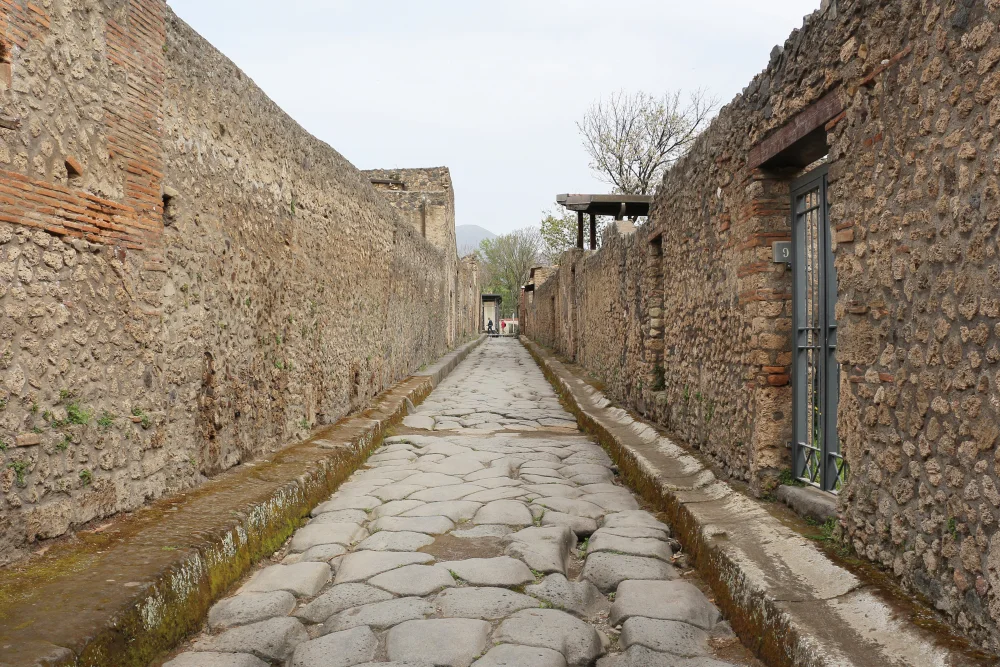
© Bernard Gagnon / Wikimedia Commons — CC BY 4.0
Around 44 hectares of Pompeii have been excavated. Raised stepping stones cross its paved streets, between deep ruts left by ancient vehicles.
Wear thick-soled trainers or light walking shoes on the uneven ground. Thin sandals offer little support or cushioning.
Dark paving absorbs morning sunshine and radiates it back in the afternoon. In summer, stones become very hot and midday visits are tiring.
Shade is scarce: bring sunscreen and a broad-brimmed hat.
A light umbrella doubles as a parasol. Drinking fountains are marked on the official map: carry a refillable bottle and turn taps off afterwards.
Distances are easy to underestimate. Porta Marina to the amphitheatre takes around 30–40 minutes without lengthy stops, longer with closures or crowds. If combining Pompeii and the volcano, use our Vesuvius crater guide to plan the second part of the day.
Choose three or four areas rather than chasing the entire map.
What to see in Pompeii in 3 hours: walking route
Start at Porta Marina. Alternatively, enter at Piazza Anfiteatro in the far east and follow the route backwards, passing groups instead of staying behind them.
From Porta Marina, climb the paved slope to the Forum, the city's political and financial centre. Jupiter's temple columns frame Vesuvius beyond.
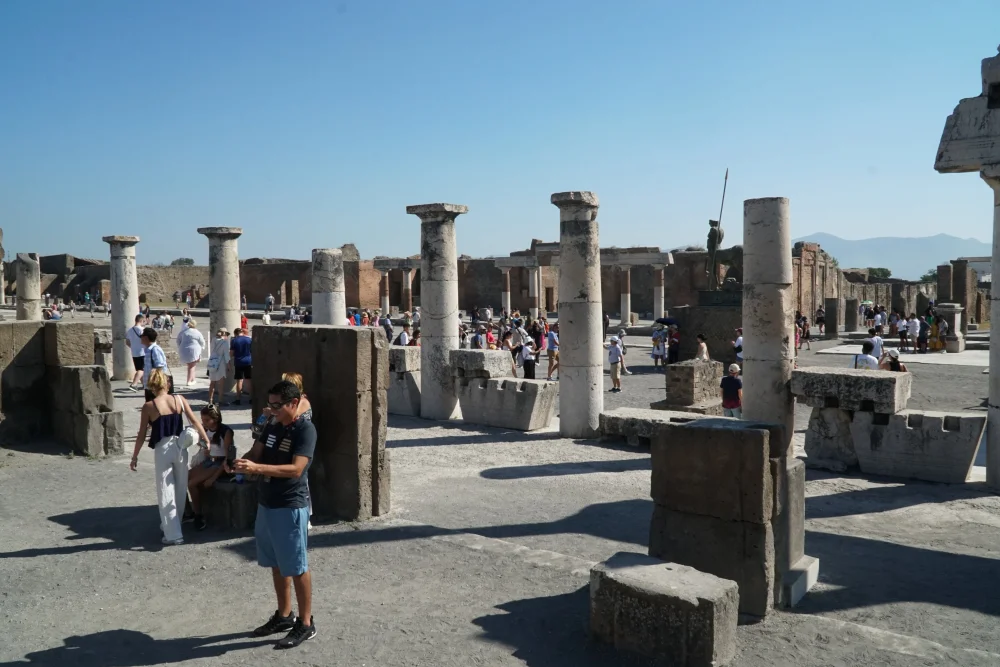
© Adam Harangozó / Wikimedia Commons — CC BY-SA 4.0
The Granaries beside the Forum usually display finds and victim casts. The park listed them as temporarily unavailable in July 2026: check the official open-buildings list for your visit.
Head north to the House of the Tragic Poet, currently viewed from outside. Its chained-dog mosaic, inscribed Cave Canem, remains an emblem of Pompeii.
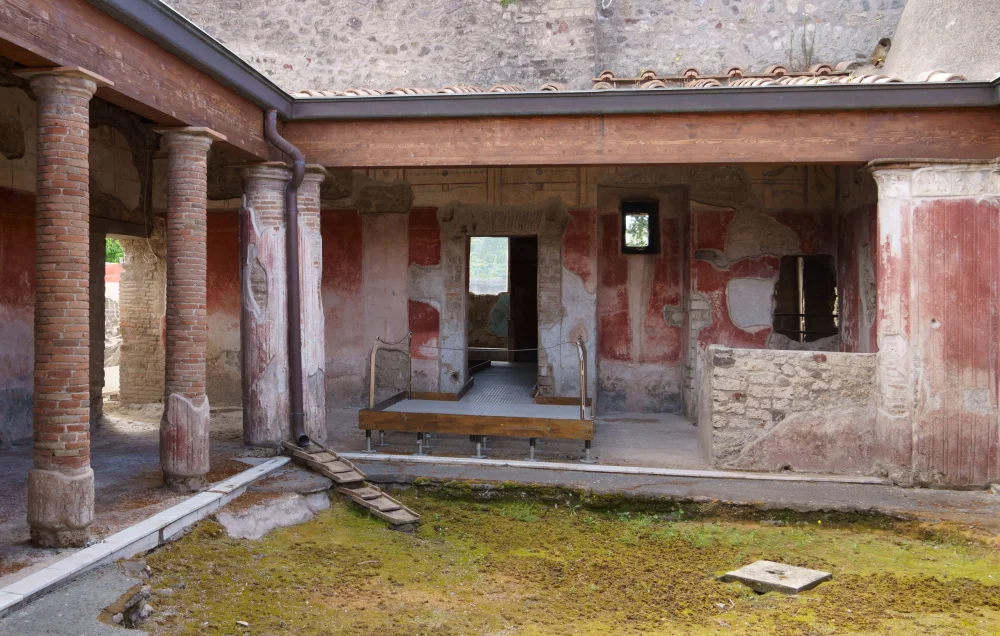
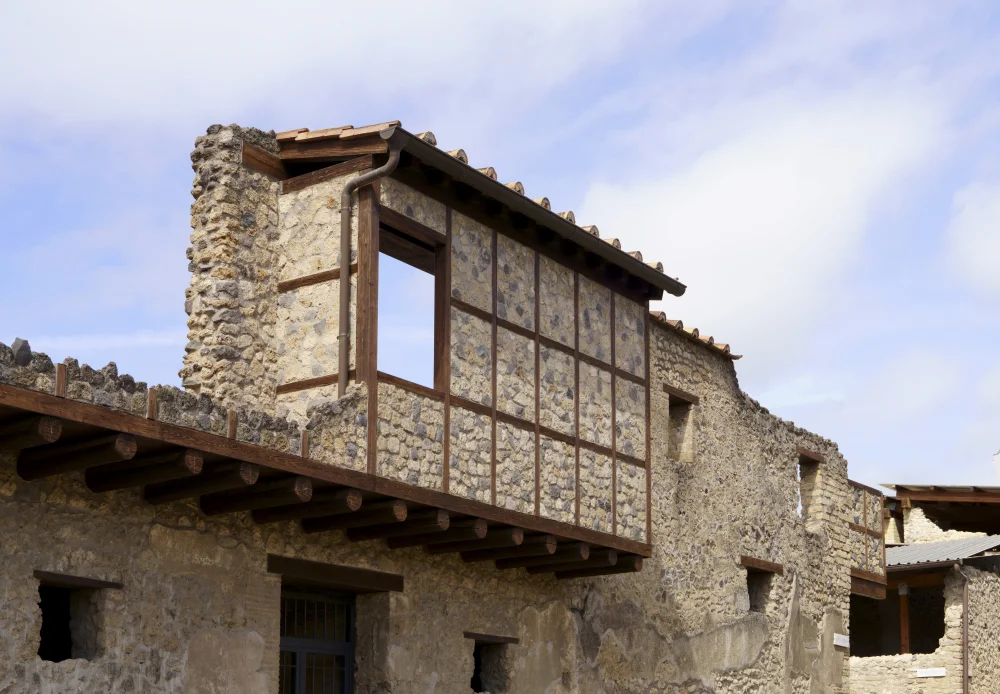
Head back down to the central lanes to find the Lupanar. A queue often forms outside this small building, so keep the order of your walk flexible and return later if the wait is long.
Tiny rooms retain masonry beds, with erotic frescoes above the doors. Their purpose remains debated; calling them a priced menu for sailors would be too definite.
Continue towards the Stabian Baths near Via dell'Abbondanza. The hypocaust underfloor heating and double brick walls remain visible.
Head south to the Large Theatre, built into the hillside, with views down over the stage and lower seating.
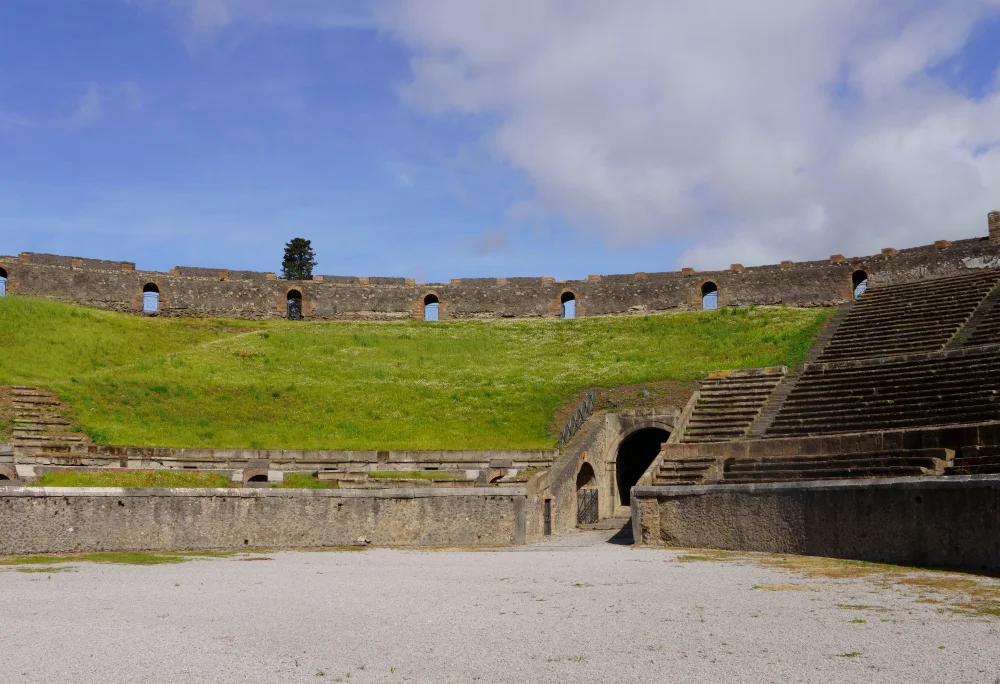
© Commonists / Wikimedia Commons — CC BY-SA 4.0
Finally, follow Via dell'Abbondanza east to the amphitheatre. Built in 70 BC, it held 20,000 spectators, matching today's visitor cap. It lacks the underground galleries later seen at Rome's Colosseum.
Do you need a guide at Pompeii?
The signs around the site provide useful context, but they do not always convey how the houses, shops and monuments were used in everyday life.
Download the official MyPompeii app and map before entering: mobile reception varies inside the excavations.
The official audio guide costs €9 per device at Porta Marina, Piazza Esedra and Piazza Anfiteatro. ID is required for hire.
A guide changes the way you read the ruins. They draw your attention to the mechanisms used to close shops, election slogans painted on façades, sexual motifs that are often interpreted too hastily, and lead pipes beneath the pavements. A two-hour guided tour gives you the context to understand how the town worked.
Pompeii and Herculaneum in one day: a good idea?
A morning at Pompeii and afternoon at Herculaneum is possible: both lie on the Circumvesuviana, about 20–30 minutes apart by train, depending on the service.
Pompeii needs at least three hours' walking. Herculaneum is more compact; pyroclastic flows and surges carbonised and preserved upper floors, roof timbers, doors and other organic material. Allow about two hours for a first visit.
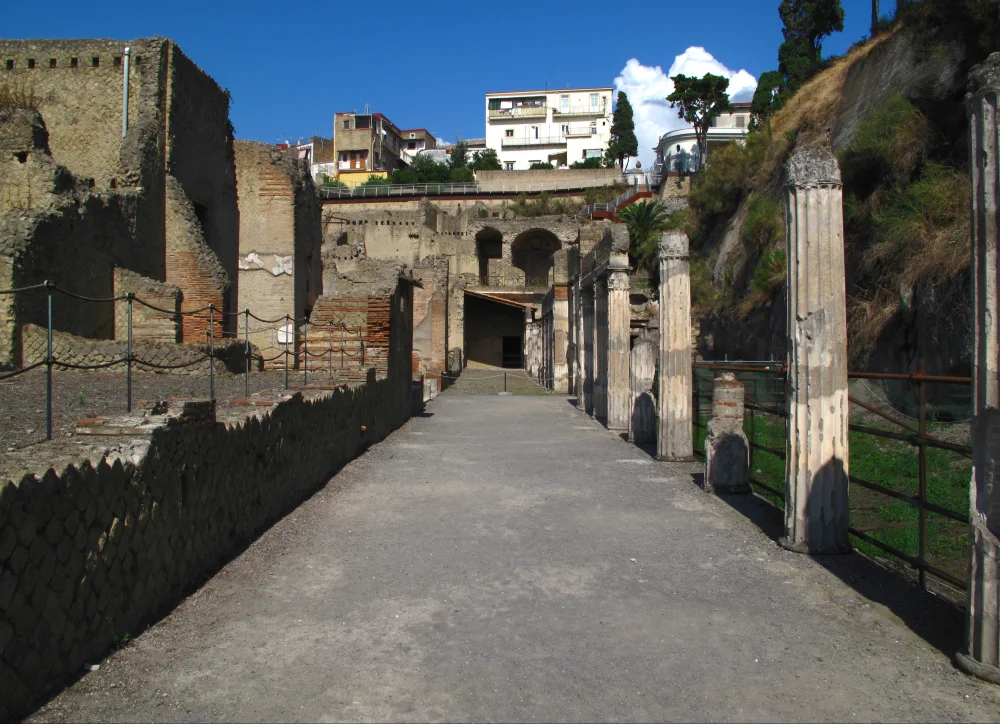
© Rutger van der Maar / Wikimedia Commons — CC BY 2.0
- A focused half-day at each site
- Combine Pompeii with Naples Archaeological Museum
- Combine Herculaneum with Vesuvius
- Requires an extra day
- Possible over a long day
- Intensive walking on hard ground in summer heat
- Physical and visual fatigue can set in halfway through the second site
How to get from Naples to Pompeii by train
The train is the simplest option from Naples. Our Naples guide helps plan the rest of a city-based stay. Choose the service for your intended park entrance.
For Porta Marina, use Napoli Garibaldi below Centrale station. Two options share the platforms.
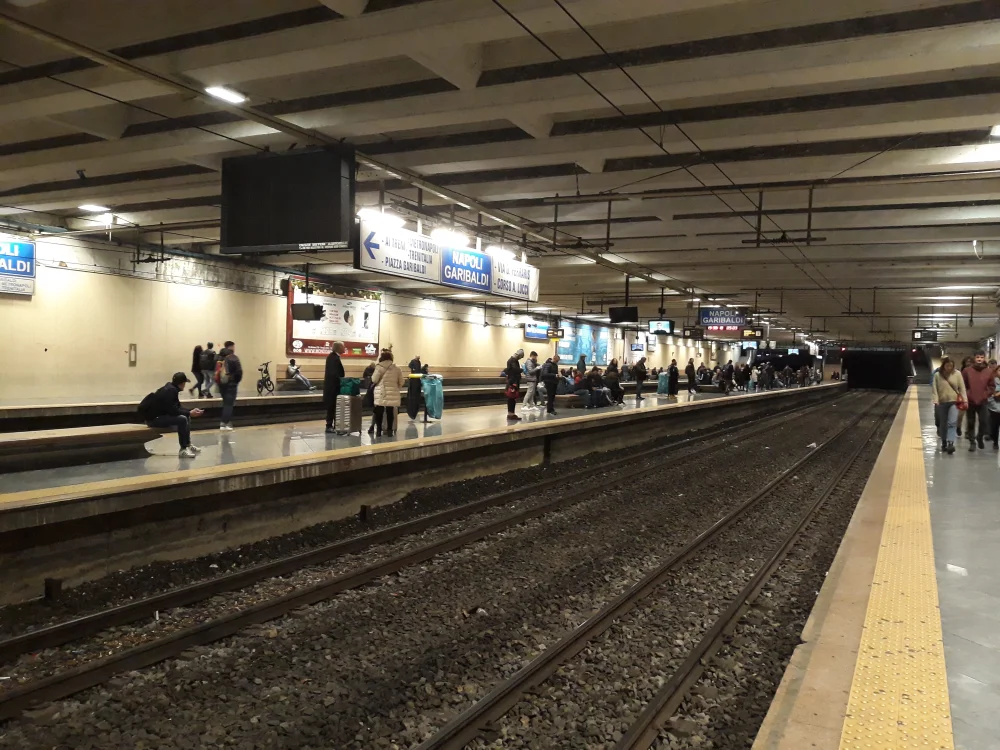
© Simon Burchell / Wikimedia Commons — CC BY-SA 4.0
| Train | Duration | Price | Comfort |
|---|---|---|---|
| Circumvesuviana | 35–40 min | Around €3–4 | Variable comfort; often crowded in high season |
| Campania Express | Around 33 min | €15 one way | Air-conditioned, reserved seat, four daily departures from Naples |
For either, get off at Pompei Scavi–Villa dei Misteri, fifty metres from the gates.
For Piazza Anfiteatro and an east-to-west route, take a Trenitalia regional train from Centrale's main platforms to modern Pompei station, ten minutes' walk from the entrance. The Circumvesuviana towards Poggiomarino also works: get off at Pompei Santuario.
- Parking: paid private car parks near Porta Marina and the station; compare displayed rates
- Bags larger than 30 × 30 × 15 cm are prohibited
- Paid luggage storage at Porta Marina and Piazza Anfiteatro
Where to eat in Pompeii: places and prices
Inside the park, Casina dell'Aquila is the main food stop, with a self-service restaurant and Café & Wine Bar serving bread, pizza, Campanian products, drinks and ice cream. Lunchtime queues can be long.
For a relaxed meal, eat outside before or after visiting. Restaurants cluster near the entrances, Pompei Scavi station and modern centre. Read displayed menus: prices vary considerably.
Mercato Pompeiano is on Via Sacra near the modern centre, about fifteen minutes' walk from Piazza Anfiteatro. Check the current menu before budgeting.
Choose three or four areas and accept that you will not see everything. Book named tickets as soon as high-season dates are fixed, especially for morning entry. The park opens at 9 am; arriving beforehand improves your chances of a quieter start, though groups may still be there.
From the chaos of Naples' historic centre to Ravello's overhanging terraces: five full days following regional railway lines and the…
Read more →Pompeii shows a Roman city's scale; Herculaneum reveals its intimate details, with surviving storeys and original carbonised beams.
Read more →