Positano
The vertical town
Hundreds of pastel houses cling to the cliff, with 400 steps to the beach and sweeping views over the Mediterranean.
Positano is a vertical town built into the rock. You need to enjoy steps, accept high prices and book months ahead to stay overnight. That is the price of one of Italy's most sought-after postcard views.
Things to see in Positano
In Positano, you walk down to the sea — then have to climb back up. Houses rise around the bay, terraces appear around corners and stairways offer shortcuts through the town. For a first day, stick to the centre, Santa Maria Assunta, the Roman villa and one beach. That gives you plenty of time for walking, sightseeing and lunch without rushing between stops.
Positano is in Campania, on the Amalfi Coast south of Naples. A day trip covers the centre; staying overnight lets you enjoy the evening after day visitors leave. Use a second day for walking or the sea, according to your interests. To include it in a wider trip, our 5-day Campania itinerary suggests stops to combine.
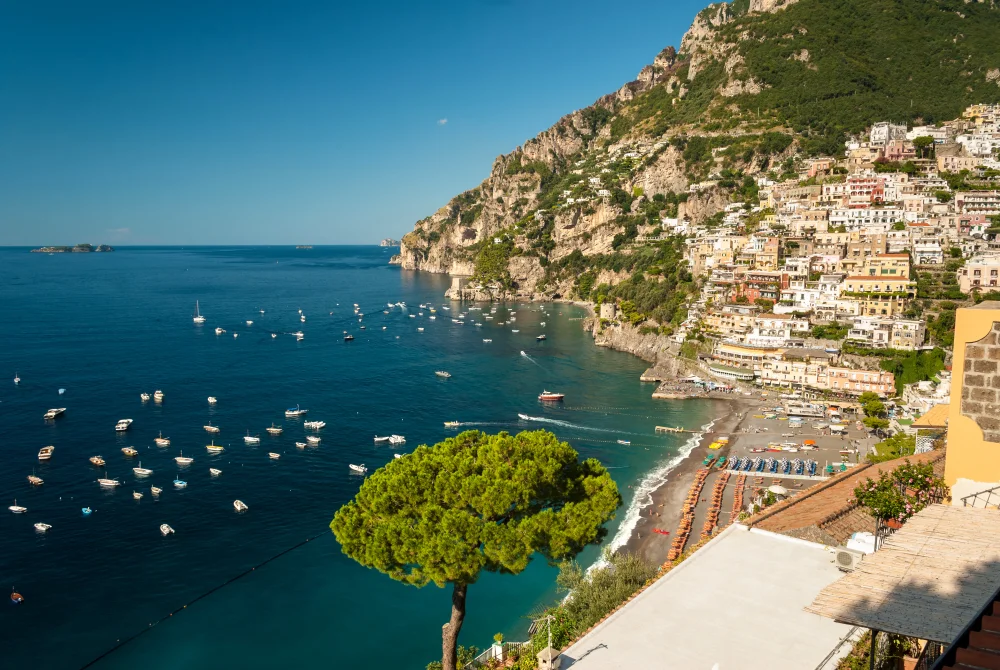
© Mihael Grmek / Wikimedia Commons · CC BY-SA 4.0
Spiaggia Grande
Walk down to the main beach, then turn around: pink, cream and ochre façades cover the slope, with the church dome in front. It is one of Positano's defining views. The jetty, restaurants and parasol rows make it a lively place. Come for the atmosphere and panorama rather than a secluded cove.
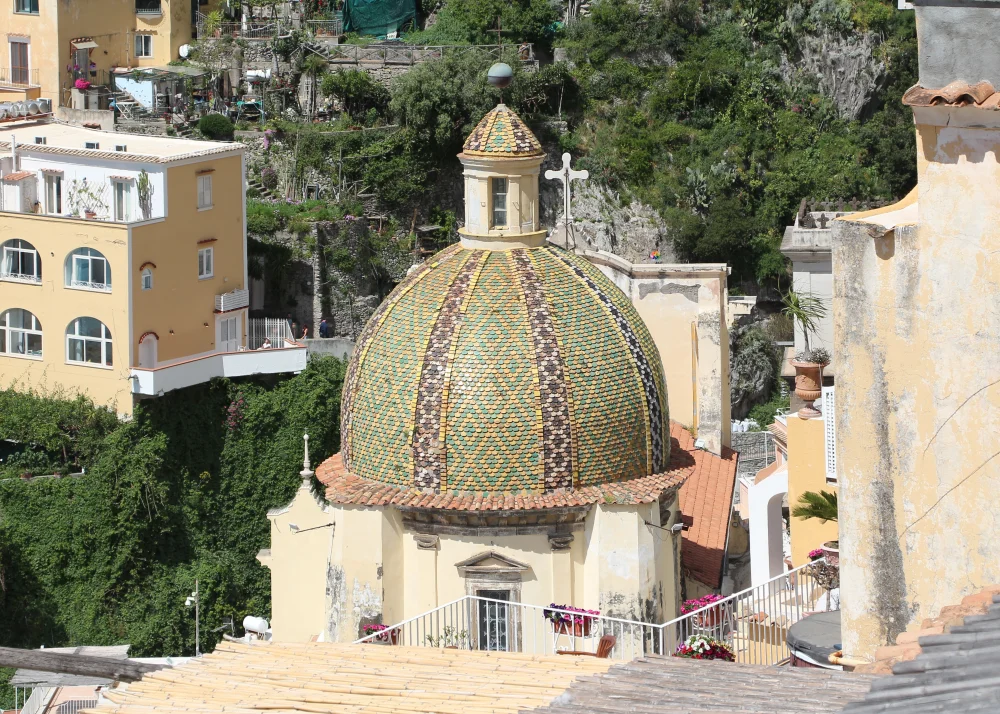
© Bernard Gagnon / Wikimedia Commons · CC BY 4.0
Santa Maria Assunta: beyond the dome
The majolica dome is a landmark from the beach, but go inside too. After admiring the roof's colours, look for the icon of the Virgin above the high altar. The site dates to a medieval abbey; its present appearance owes much to 18th-century changes. It is a short stop, easily combined with the archaeological museum below. Outside, the forecourt leads back to streets descending towards the sea.
© Mykola Swarnyk / Wikimedia Commons · CC BY-SA 3.0
Shops, ceramics and sandals
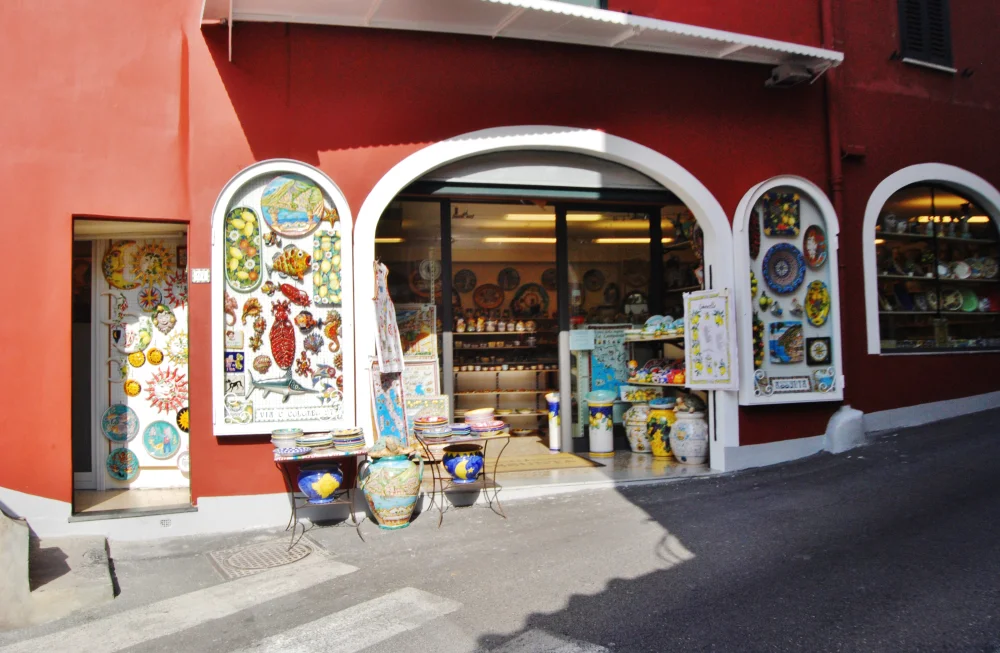
As you walk down Via dei Mulini, shop windows display light dresses, linen, painted ceramics and sandals along the passageways. Stop if something appeals, without needing to devote an afternoon to shopping. Look at the plate patterns, compare fabrics and ask where pieces are made. Before ordering made-to-measure sandals, ask the price and how long they take.
© Mihael Grmek / Wikimedia Commons · CC BY-SA 4.0
Fornillo beach
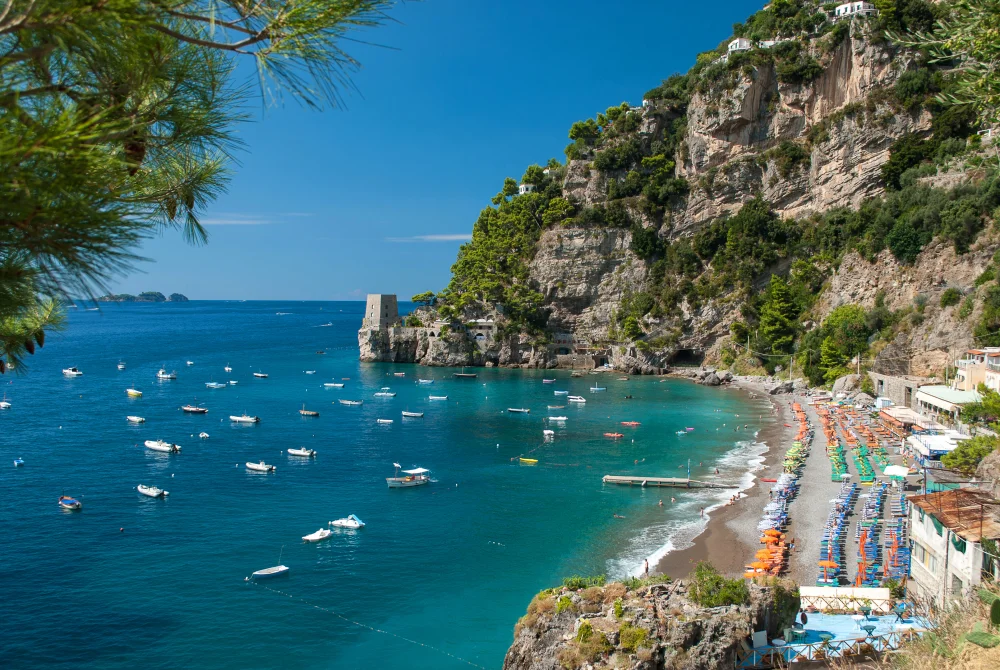
West of Spiaggia Grande, a coastal path leads to another bay. The passage beside the rock is part of the pleasure: leave the busy jetty behind for Fornillo, its beach clubs and watchtowers. The atmosphere is different, though it is far from deserted in summer. Choose it to extend your walk and swim after seeing Positano from the main beach.
The Roman villa: another history beneath the church
MAR, the Museo Archeologico Romano, adds history to the shops and beaches. Beneath Santa Maria Assunta, the route reveals a room from a Roman villa buried by the eruption of AD 79. Frescoes retain their colours and decoration just below today's town. The guided visit connects the remains with religious spaces later built on the same spot. It is the best complement to the waterfront if you want to understand Positano a little better.
Full-price admission is €15 for a guided visit of around thirty minutes. Book a slot on the MAR website if your day depends on a boat. The on-site ticket office accepts cards, not cash. Leave a margin before and after rather than squeezing it between tight departures.
1 or 2 days in Positano
A full day covers the centre, Roman villa and time on the beach. With two days, keep this first route, then choose between the Path of the Gods and a quieter coastal day. The times of day below are a guide: journeys, breaks and your return time determine the actual pace.
The centre and one beach
Down towards the Mulini
From La Sponda, follow Via Cristoforo Colombo, then the centre's shopping streets. Stop to look over the bay before heading down towards the church.
Depending on arrivalSanta Maria Assunta and MAR
Enter the church if open to visitors, then join your museum group at the booked time. On Sundays, work around services: church and museum hours differ.
MAR: €15A waterfront break
Choose according to your appetite and the menu: one dish may be enough if you plan dinner later. At Buca di Bacco 1916, the upper restaurant is separate from the establishment at beach level.
Eat at your own paceFornillo or Spiaggia Grande
Walk to Fornillo for a change of scene. Stay on the main beach to avoid an extra journey. You can put your towel on the free beach or pay for a sunbed.
One beach is enoughShops, a terrace or a boat
Leave time for shopping or a drink. A sunset cruise can replace aperitivo on a terrace, especially if staying overnight. Check your last transport before extending the evening.
According to your return plansDinner if staying overnight
Choose a table near your area or book Da Vincenzo on Viale Pasitea. Allow time to climb back and return at leisure, without adding another sight.
If staying overnightThe Path of the Gods, if you wish
Reach Bomerano
Check the bus connection via Amalfi, which involves two buses, or book a transfer so you can choose when to start. Buy water and food before leaving. Plan your connections in advance.
Arrange access in advanceWalk to Nocelle
Follow your chosen route according to the day's conditions. Allow time for breaks and views. The walk takes up the morning; allow extra time for getting there and back.
Around 3–4 hours with breaksA break in Nocelle
Take time for lunch or rest in Nocelle before the bus back.
Check local return servicesBus back to Positano
The bus lets you finish in Nocelle without the long descent to Arienzo. Keep the rest of the day free, especially if leaving Positano that evening.
No compulsory descentRest or one last stroll
If you still want to go out, stay near your accommodation or the waterfront. The non-hiking option below can replace this whole second day.
According to your energyHalf a day, two days without hiking or a rainy visit
With half a day, focus on central streets, the church and Spiaggia Grande. Depending on time, add MAR or the walk to Fornillo. Above all, leave a margin to find your bus stop or boat.
For a second day without hiking, start slowly, walk to Fornillo and allow time for lunch. A boat trip can replace an afternoon on the beach. With children, this avoids adding a mountain hike to the village steps.
If it rains, MAR, the church and a leisurely meal can fill part of the day. Positano has few major indoor sights: do not try to fill two days with museums. Skip trails in poor conditions and check boat services before walking down to the quay.
Walks and excursions
From La Sponda to the waterfront
From La Sponda bus stop, follow Via Cristoforo Colombo towards the centre, past Le Sirenuse. Gaps between buildings reveal the bay: stop for photographs without standing in the road. The street leads towards the Mulini, where shops become more frequent. It is a useful route if arriving by road and wanting a gradual descent to the beach.
Continue along Via dei Mulini to Santa Maria Assunta. Shopfronts draw closer, and steps gradually replace the street. Browse if something appeals, or pause before continuing. The centre is compact, but a short map distance can conceal a substantial climb: identify the return route too.
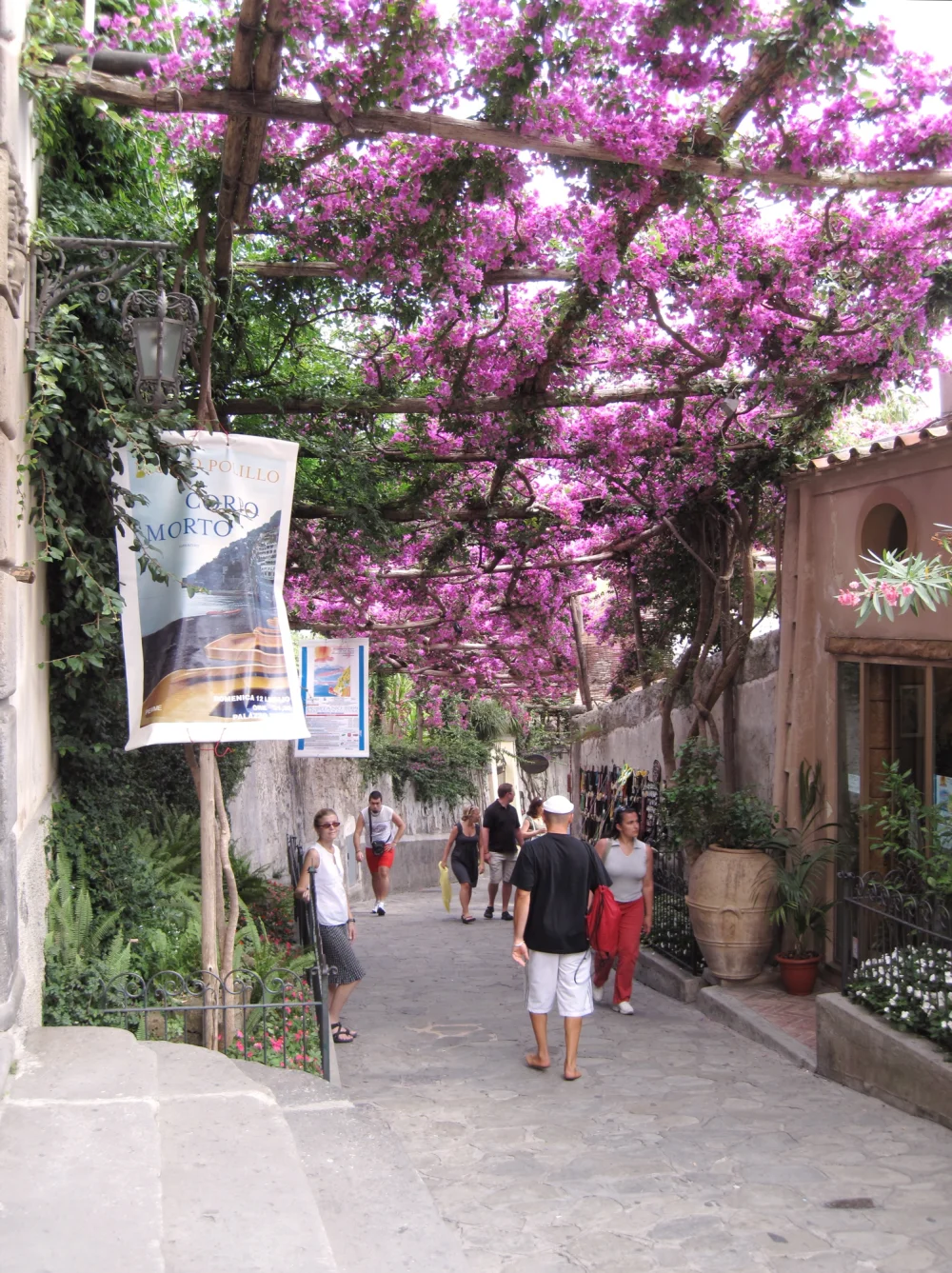
Under the bougainvillea in central Positano · © trukdotcom / Wikimedia Commons · CC BY-SA 3.0
Below the church, the final steps reach the waterfront. Walk to the shore to see the town head-on, then choose swimming, lunch or the Fornillo path. Allow one to two hours with stops, excluding the museum and beach. If arriving by boat, start at the jetty to shorten the walk.
Towards Fornillo and its neighbourhood streets
From Spiaggia Grande, follow Via Positanesi d'America west. The seaside path makes a pleasant continuation after the centre's steps. At Fornillo, pause before choosing whether to climb into the neighbourhood or return the same way. You do not need a circular route to enjoy the walk.
The climb towards Via Pasitea reveals another Positano: hotel entrances, terraces and steps leading to houses. Save this detour for when you want more walking. In summer, go early or wait for cooler temperatures. A restaurant or drink stop can give the climb a simple purpose.
Nocelle and Montepertuso without a full hike
Nocelle and Montepertuso are not just neighbourhoods a few steps above the port. They lie high above the centre and need a separate journey. Nocelle offers coastal views even without walking the Path of the Gods. Montepertuso makes a hilltop lunch destination. Allow a flexible half-day and check return services before heading up.
Local services are separate from coastal SITA buses. Check which local bus serves the hamlet from your departure point, then avoid adding too many journeys once you arrive.
Path of the Gods: plan transport before the hike
Between Bomerano and Nocelle, the Path of the Gods crosses hills above the coast, among rocks, terraces and sea views. On CAI trail 327, this section is around 5.3 km. Allow three to four hours with breaks, then add transport. Climbs, uneven ground and exposed stretches make it more demanding than a beachside stroll. Suitable shoes, water and an early start matter more than a minute-by-minute schedule.
Walking Bomerano–Nocelle finishes on the Positano side. The reverse is possible, with different return arrangements. From Positano, buses to Bomerano usually involve changing in Amalfi. For an early start, compare this with a booked transfer. Our Path of the Gods guide adds practical detail. Check trail conditions before leaving.
From Nocelle, take a local bus back to Positano. The long descent of around 1,700 steps leads to Arienzo: it does not reach Fornillo. Walking to the centre then adds a stretch of road. Going via Montepertuso is another extension to plan. After the hike, the bus leaves more time and energy for the town.
See the coast from the sea
From a boat, you can see how the houses cling to the slope. Terraces and gardens stack above beaches, then buildings thin out along the coast. A ferry arrival offers a first glimpse; a dedicated trip mainly gives you time to enjoy the scenery.
This 1½-hour cruise on a shared boat leaves Positano and follows the coast towards Praiano and Furore fjord. Prosecco and soft drinks are included. The skipper speaks Italian or English. Scenery and late-afternoon light are the focus; any swimming depends on conditions.
Amalfi or Capri: set aside a proper excursion day
Amalfi complements a Positano stay with its cathedral and a different centre to explore. Take a boat or coastal bus according to connections, and keep several hours free there. This can replace the second day's hike. Give it half a day rather than squeezing it between appointments.
Capri needs more organisation: crossing, island transport and return boat. Give it a full day if timetables allow. With just two days, choose between exploring Positano further and visiting the island. Either is more rewarding than two rushed visits.
Where to eat in Positano
Lunch can be a proper break if you read the menu before choosing a terrace. Pasta, fish and citrus flavours invite lingering, but views cost extra. Decide whether you want a full meal, one dish or a pastry. Going uphill does not guarantee a smaller bill.
Delizia al limone
Sponge and lemon cream make a generous dessert after a meal or during a break. At La Zagara on Via dei Mulini, it is among the house pastries. Consider granita or gelato too, according to your appetite.
Spaghetti alle vongole
Clams provide the flavour, with a sauce coating the pasta. It is a good seaside lunch choice. Buca di Bacco 1916 lists it at €32, plus a €3 cover charge. Keep that total in mind before adding a starter or wine.
Fish of the day
A whole fish can be shared, but ask how it is charged: per portion or by weight. Confirm the price of the fish and side dishes before it is cooked. This is more useful than a generic budget when the cost depends on the catch and fish size.
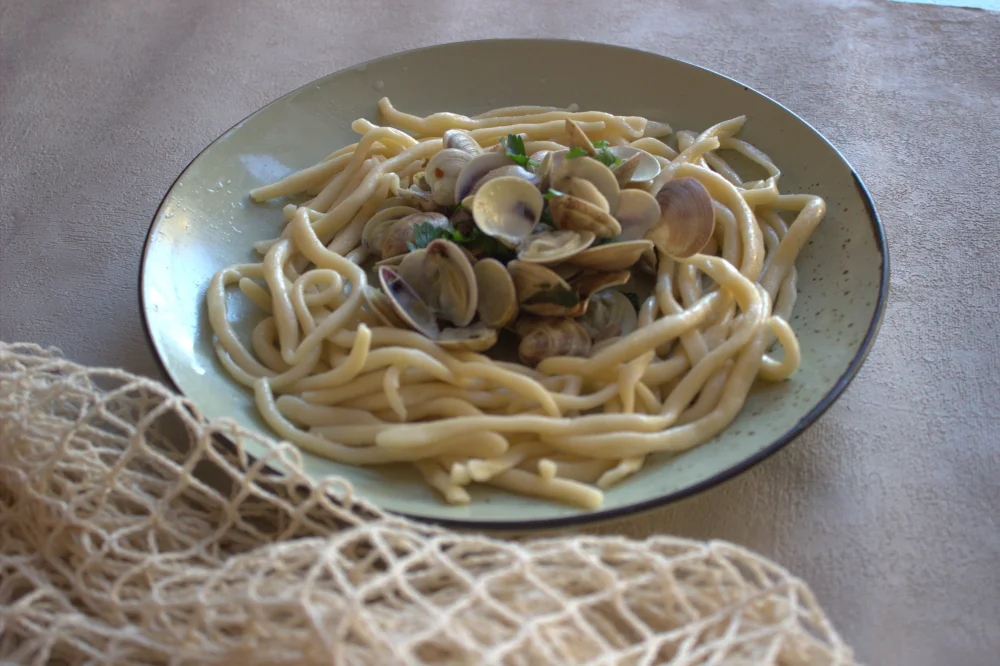
Pasta alle vongole, an example of Italian seafood cooking · 8w9d / Wikimedia Commons · CC0
Three restaurants for different moments of your stay
| Restaurant | What to expect | Plan ahead |
|---|---|---|
| Da Vincenzo | Regional cooking at 172 Viale Pasitea, convenient for an evening in this area. | Check the menu and book in season. Returning to the beach or your room may involve steps. |
| Buca di Bacco 1916 | The historic restaurant at 4 Rampa Teglia, with a veranda above Spiaggia Grande. | Separate from the establishment at beach level underneath. One dish and a cover charge are not a full set menu. |
| La Tagliata | In Montepertuso, for homemade pasta, vegetables and grilled food when you have time to linger. | Ask about the menu format, price and transfers when booking. Plan your return to Positano too. |
At Buca di Bacco 1916, spaghetti alla Nerano and the cover charge total €27, excluding drinks. Check the restaurant menu to plan your meal.
A drink with a view, if you fancy a terrace
Franco's Bar on Via Cristoforo Colombo is known for its bay views. It does not take bookings and gives priority to Le Sirenuse guests: be prepared to wait and check the day's hours. If you have a boat to catch, a stop near the jetty is often simpler.
Where to stay in Positano
A night in Positano lets you dine without watching the last ferry time and go out before the first excursions arrive. When booking, check the actual route between the stop, quay and room. A beautiful view says nothing about the steps you must climb with luggage. Compare rooms on the same dates, with suitable cancellation terms and breakfast arrangements.
Near the beach, uphill or in a hamlet?
Around Spiaggia Grande and the lower centre, you are close to boats and waterfront restaurants. This suits a beach-focused stay, but arriving by car or bus may still end with a walk. The Colombo area has dome views, and some properties are closer to the road; the beach remains below.
Around Via Pasitea, Fornillo and Chiesa Nuova, check the property's elevation. Two hotels in the same area may involve very different amounts of climbing. Montepertuso and Nocelle suit travellers seeking higher ground who accept planning their transport. For one night before a boat trip, proximity to the quay may matter more than terrace size.
| Property | Why choose it | What to check |
|---|---|---|
| Le Sirenuse | The Sersale family's historic property, a hotel since 1951, near Via Cristoforo Colombo. | The precise room category, balcony and view included in your booking. |
| Il San Pietro di Positano | A stay outside the centre, with sea-facing terraces and lift access to a guest-only beach. | How the shuttle to the centre works and whether its timetable suits your plans. |
| Casa Albertina | A family-run three-star hotel with several room categories and a breakfast terrace. | Check the steps from the street and the view from your chosen room: some rooms face a courtyard or have only partial sea views. |
These three properties are not in the same price bracket. The best choice depends on your stay and the room offered. If Positano exceeds your budget, compare a base in Sorrento or Salerno with a day trip. You gain transport options but lose part of the evening here.
Getting there, budget and practical tips
How do you get to Positano?
Positano has no railway station. The last leg is by road or sea, often from Sorrento or Salerno. Choose your arrival route by starting point and timing, then check return options immediately. A late flight, a large suitcase or a tight connection between your train and ferry can change the best route.
From the airport, the Alibus also serves Naples' central station and port. If travelling as a group, arriving late or carrying bulky luggage, compare a booked transfer with the full chain of connections. Request a quote for your group and exact drop-off point. Compare Naples flights on Skyscanner. Before booking a flight, check that landing time allows a realistic journey to your accommodation.
Coastal buses, local buses and boats
SITA buses link Sorrento, Positano and Amalfi. La Sponda and Chiesa Nuova are different stops: ask your accommodation which suits you. The COSTIERASITA pass costs €10 for twenty-four hours after first validation. It may help with several SITA journeys, but compare it with singles. It includes neither ferries nor every local service.
For Nocelle, Montepertuso and travel within Positano, check the local service listed by the municipality. For coastal routes, use SITA timetables. Published journey times exclude waits for space on a bus and road delays.
Boats avoid road traffic and arrive at the bottom of the village. Check Travelmar connections or compare departures on Ferryhopper. Services are seasonal and depend on sea conditions. Leave a margin before a connecting train or flight, and check luggage terms: a large suitcase may cost extra.
Cars, parking and luggage
You can visit Positano without a car. If it is part of a road trip, reserve a garage through your accommodation and ask for the permitted approach route before arrival. Some car parks keep keys to move vehicles. Request a price for your exact hours: a daily rate may not explain charges after midnight or on leaving and returning.
With luggage, the last stretch matters as much as the transfer from Naples. Ask how many steps separate the drop-off point from reception and whether porter service can be arranged. A hotel lift does not necessarily remove street steps. With a pushchair or reduced mobility, confirm access to each place; MAR can arrange adapted access on prior request.
How much should you budget for a day?
Walking and time on a free beach cost nothing. Transport, restaurants, sunbeds and accommodation drive most budget differences. This example is for one person arriving from Salerno by boat, visiting MAR and having a pasta dish. It helps plan the day without assuming every traveller spends the same.
| Item | Amount | What is included |
|---|---|---|
| Travelmar boat, Salerno–Positano | 34 € | Return trip at the standard €17 each-way fare. |
| MAR | 15 € | One full-price admission with guided visit. |
| Spaghetti alla Nerano at Buca di Bacco 1916 | 27 € | €24 dish plus €3 cover charge, without a drink. |
| Example total | 76 € | Boat transport, museum and one dish with cover charge. |
Add drinks, any luggage fees, shopping and travel to Salerno. Sunbeds, a cruise and an overnight stay are separate. For accommodation in Positano, compare the room price on your dates rather than treating it as a per-person budget.
When should you visit Positano?
Spring and early autumn make walking and terrace stops easier. May, June and September remain popular: early booking may offer more choice, without guaranteeing quiet. In October, check boat timetables and seasonal opening dates more carefully.
In July and August, save climbs and hikes for cooler hours, take breaks and avoid constant journeys. In winter, some businesses and ferries pause their season, but Positano does not close completely: MAR also lists November–March hours. Come for the village and scenery, keep your plans flexible and check road connections before setting off.
Keep a little time unbooked. Walk to the sea, find a spot facing the houses and watch boats pass. Positano can be expensive, but that memory begins with a simple pause on the shore. Staying overnight also lets you rediscover the lanes the next morning before leaving.— The editorial team · Positano, Amalfi Coast
From the chaos of Naples' historic centre to Ravello's overhanging terraces: five full days following regional railway lines and the…
Read more →A practical base for exploring the Bay of Naples and Amalfi Coast without exhausting your budget.
Read more →