Amalfi
The former maritime republic
A former naval power at the foot of a ravine. You come for its Byzantine cathedral; you stay for covered passages and terraced lemon groves climbing the mountain.
Amalfi gives its name to the entire coast. It is the only town in the area with a flat urban centre: a broad main square, marble stairways and a network of lanes reaching inland. Early in the morning, the echo of bells bounces off the cliffs of the Ferriere valley, and the wind carries the scent of salt beneath the archways.
How long do you need in Amalfi?
One day works well for Amalfi itself. The centre is compact: you can visit the Duomo, see one or two museums and walk to Atrani. Two days let you add an excursion without rushing between the town, Ravello's gardens and the valley paths.
| Time available | Suggested plan | Save for another visit |
|---|---|---|
| Half a day | The Duomo, lanes and one museum: the Arsenale or Paper Museum. | The Ferriere hike and a long beach break. |
| One day | All three central sights, lunch and a walk to Atrani or along the waterfront. | Ravello, which deserves its own half-day. |
| Two days | The first day in Amalfi; the second in Ravello, in the valley or at sea, as you prefer. | Trying to cover the whole coast in a single excursion. |
On a short stop, choose one museum rather than rushing through several. The Duomo provides the town's most familiar backdrop; the Arsenale explains its maritime past, while the Museo della Carta demonstrates a craft still visible in the paper shops. To plan the rest of your trip, see our Campania travel guide.
The best things to see in Amalfi
The first three sights are in the centre and can be visited on foot. The valley needs more time: do not squeeze it between two museums if you want to reach the reserve.
© J.T. 羅德生 / Wikimedia Commons — CC BY-SA 2.0
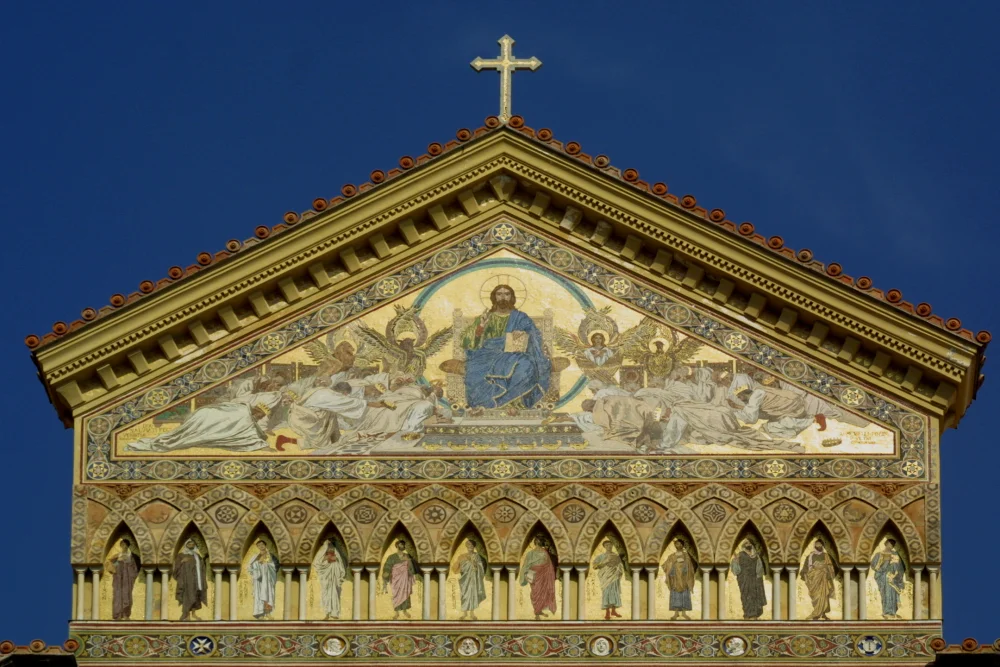
The cathedral overlooks Piazza Duomo from the top of a broad staircase. Its colourful façade catches the eye first, but there is more to the visit: the Cloister of Paradise, the Basilica of the Crucifix and its museum, then the crypt trace centuries of history. The bronze doors from Constantinople date to 1060; the cloister, a former 13th-century cemetery, has a different atmosphere, with columns and interlacing arches.
© Derbrauni / Wikimedia Commons — CC BY-SA 4.0
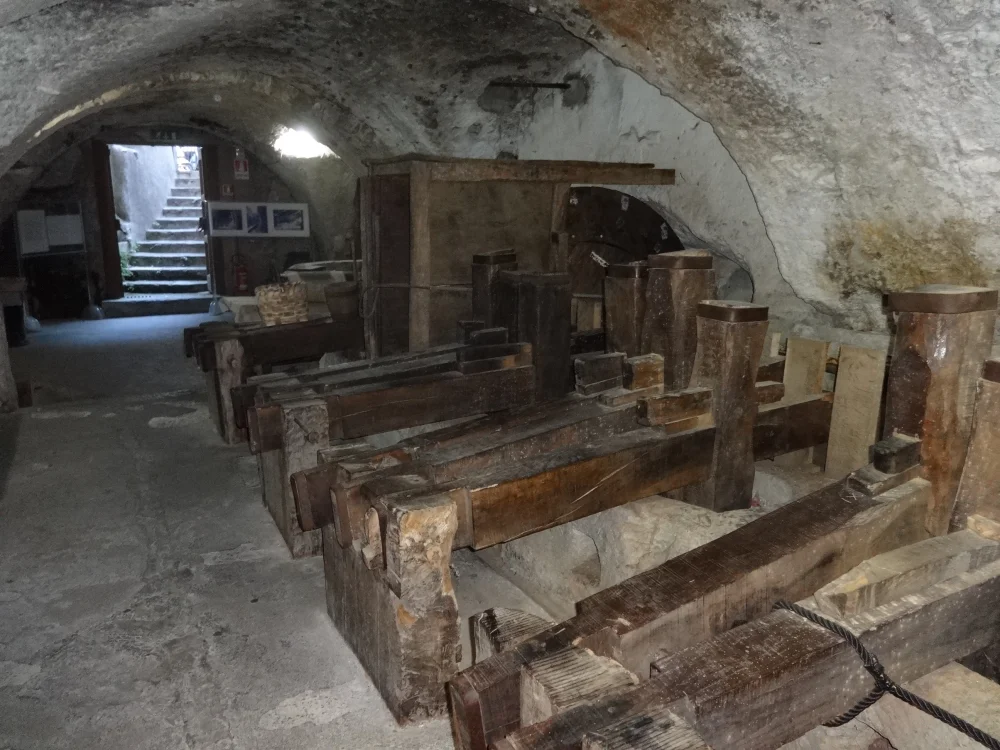
Heading up towards Via delle Cartiere reveals another side of Amalfi's history: paper made from rags. The museum occupies an old paper mill, with vats, presses and machinery powered by water from the Canneto stream. A guided tour demonstrates the process and explains how a sheet takes shape. It is a good stop with children, or a change of scene after the cathedral.
© Centro di Cultura e Storia Amalfitana / Wikimedia Commons — CC BY-SA 3.0
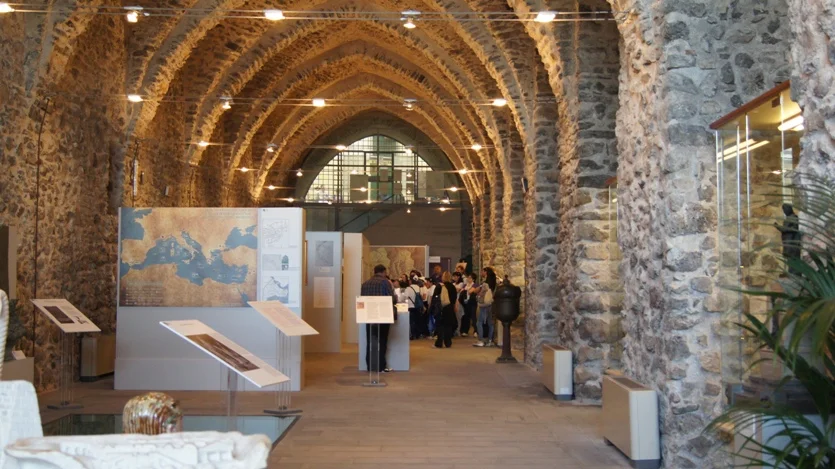
Steps from the port, the old arsenal's stone vaults recall Amalfi's past as a maritime republic. The museum brings together navigational instruments, coins and documents about Mediterranean trade. The Tabula de Amalpha, a collection of maritime rules, gives a sense of the town's importance long before tourists came to the coast. The visit is short and complements the Duomo well.
© LuciaPuzziello / Wikimedia Commons — CC BY-SA 4.0
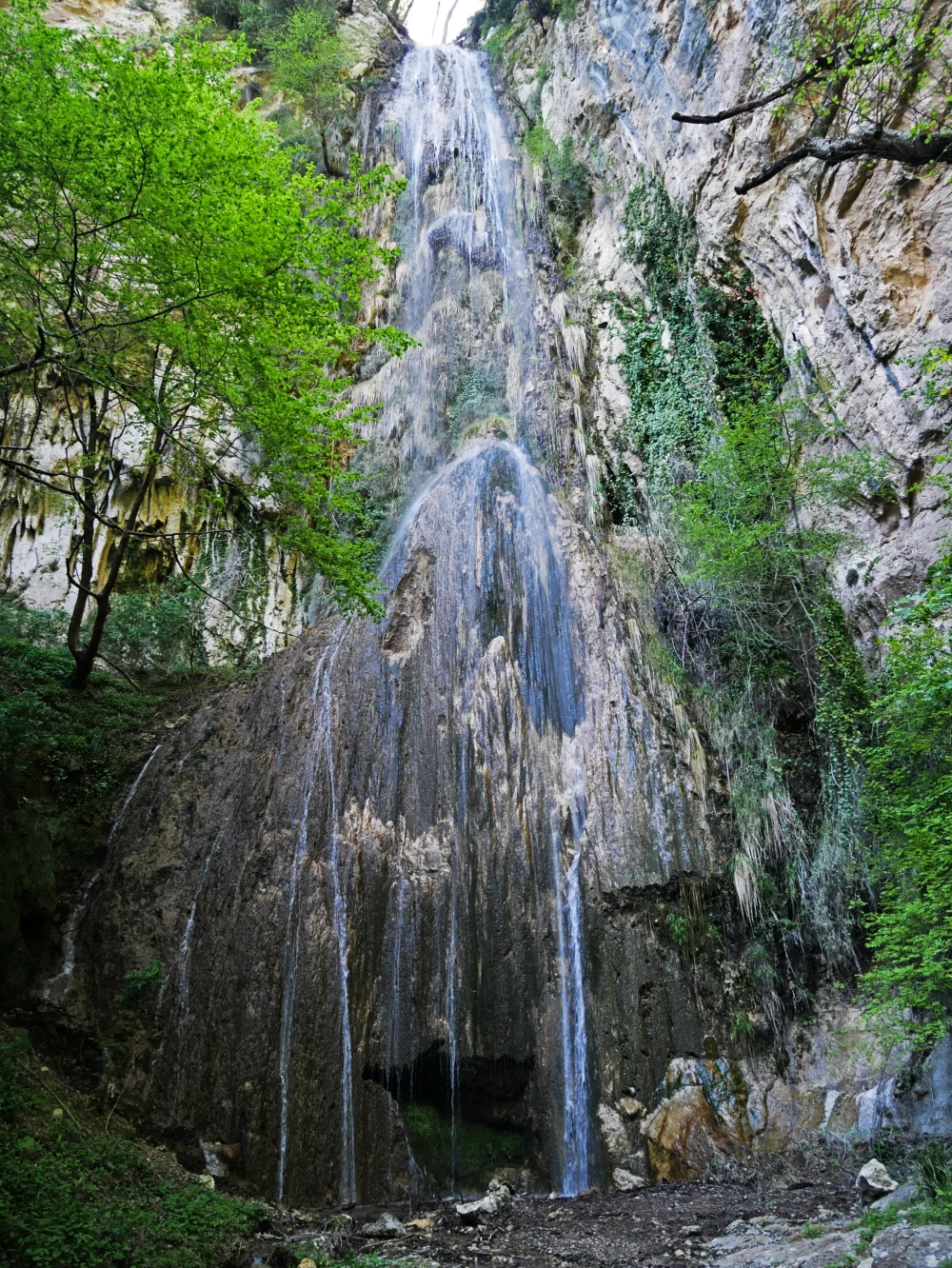
Behind Amalfi, the Canneto stream runs through lemon groves and the remains of old paper mills. The lower stretch, called Valle dei Mulini, extends the walk inland. Higher up, the Valle delle Ferriere leads towards waterfalls, old ironworks and damp vegetation where the fern Woodwardia radicans grows. This upper section is a hike, with a protected reserve whose access needs arranging ahead.
Add Atrani if you have another hour. Reach this neighbouring village via the Luna Rossa pedestrian passage near Piazza Municipio. Its small square, arcades and beach make a pleasant stop without taking a bus or moving accommodation.
Amalfi in 1 day: a walking itinerary
This route starts at the port, heads up to the Paper Museum and returns to the sea. Six to eight hours leave time for sightseeing, lunch and detours through the lanes. If you are leaving by ferry or bus, keep your departure time in mind before adding Atrani.
Start along the waterfront, then step into the old arsenal. Its broad vaults and collections bring Amalfi's history into focus before you explore the streets behind the beach.
A 30- to 45-minute visitThe square is close by. Climb the staircase to visit the cloister, museum and crypt, then return to the cafés below. For a sweet break, Pansa is right on Piazza Duomo.
45 minutes to an hourLeave the main street for the covered passages and Piazza dei Dogi. Lunch in the centre fits easily into this day. Save Fore Porta, higher up the valley, for a day when you plan to walk there.
Lanes and a lunch breaknoon
Follow Via Pietro Capuano uphill towards Via delle Cartiere. Inside the old mill, vats and presses tell the story of papermaking. The guided visit follows the process from pulp to a finished sheet.
45 minutes to an hourReturn towards Piazza Municipio and take the Luna Rossa pedestrian passage. Allow around ten to fifteen minutes to reach Atrani, then time for its square and beach. Use the pedestrian passage, not the SS163 road tunnel.
Around an hour, including the walkHead back to the port for your departure. If you are staying overnight, extend your walk and have dinner later: a night in Amalfi lets you enjoy the town without planning the whole evening around a connection.
Adjust to suit your transportAmalfi in 2 days: which excursion should you choose?
Keep the first day for Amalfi and Atrani. For the second, choose one main outing: Ravello for gardens, the valley for walking, or the sea for a different view of the coast.
Ravello: gardens and coastal views
Above Amalfi, explore Ravello around its square and the gardens of Villa Rufolo. Get there by bus or taxi, then walk on to Villa Cimbrone and its sea-facing terrace. Both gardens, lunch and a few breaks will fill much of the day.
With only half a day, choose one villa. Ravello is reached by road, not by ferry.
The valley: a day focused on walking
For a short outing, walk up towards the Valle dei Mulini and the old paper mills, then return the same way. To reach the Ferriere and the reserve, plan a hike with steps and rocky ground. One route starts at Pontone, above Amalfi; bring water and wear suitable shoes.
Entry to the protected reserve requires advance authorisation, and groups must be accompanied. See the Valle delle Ferriere access conditions. Allow at least half a day, including the journey to the start.
The sea: a beach, boat trip or another village
Spend the day at a beach accessible from Amalfi, on a boat trip or in Positano when ferry services are running. Choose between swimming and exploring a village: travel quickly eats into your time on the ground.
On a longer stay, combine Minori and Maiori with the Sentiero dei Limoni, a path through cultivated land with stairways. The Path of the Gods requires a separate start in the hills above the coast. Our 5-day Campania itinerary helps you divide your time between Amalfi, Naples and other stops.
Lanes, Atrani and beaches around Amalfi
Via Lorenzo d'Amalfi and Via Pietro Capuano form the centre's main axis. For a different walk, turn into the supportici, covered passages beneath the houses, then return via Piazza dei Dogi. Side stairways let you climb higher but are not essential on a first visit.
Atrani is on a smaller scale: Piazza Umberto I sits almost beside the beach, with arcades and tightly packed houses around it. Its proximity makes it an easy detour on foot. Just allow time to return to Amalfi if your boat or bus leaves from Piazza Flavio Gioia.
Marina Grande is the easiest beach to fit into a visit, at the foot of the town between the port and road. For Duoglio, around a kilometre and a half from the centre, access from the road involves some 400 steps: remember the climb back up. Boats also provide access. Santa Croce can only be reached by sea.
From a boat, villages and terraced lemon groves come into view above the cliffs. Some trips include swimming stops: see the boat trip.
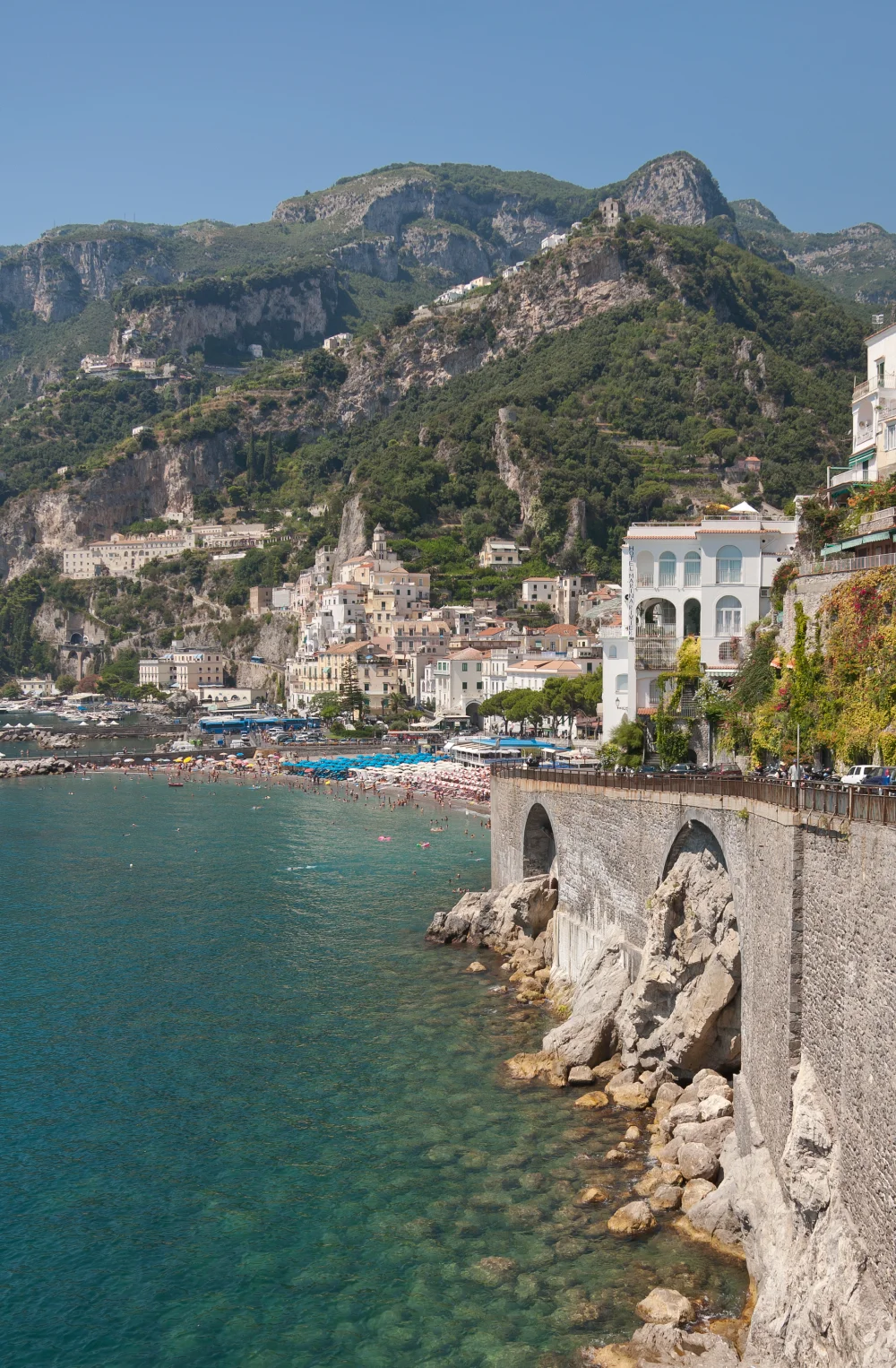
Amalfi seen from the sea · Amalfi Coast · © Paolo Costa Baldi / Wikimedia Commons — CC BY 3.0
Where to eat in Amalfi
In Amalfi, lemons are used for much more than limoncello. They appear in pastries, sauces and dishes at the valley's farm restaurants. For lunch during your visit, stay in the centre; if you want to eat surrounded by farmland, allow time to walk to the restaurant.
A sponge-cake dome filled and covered with lemon cream, eaten with a spoon. Pansa, on the cathedral square, is easy to work into your walk.
These short, thick pasta strands are an Amalfi speciality. You will find them with shellfish and other seafood; the accompaniments vary between restaurants.
A paper cone of fried fish and seafood to take away for a quick lunch.
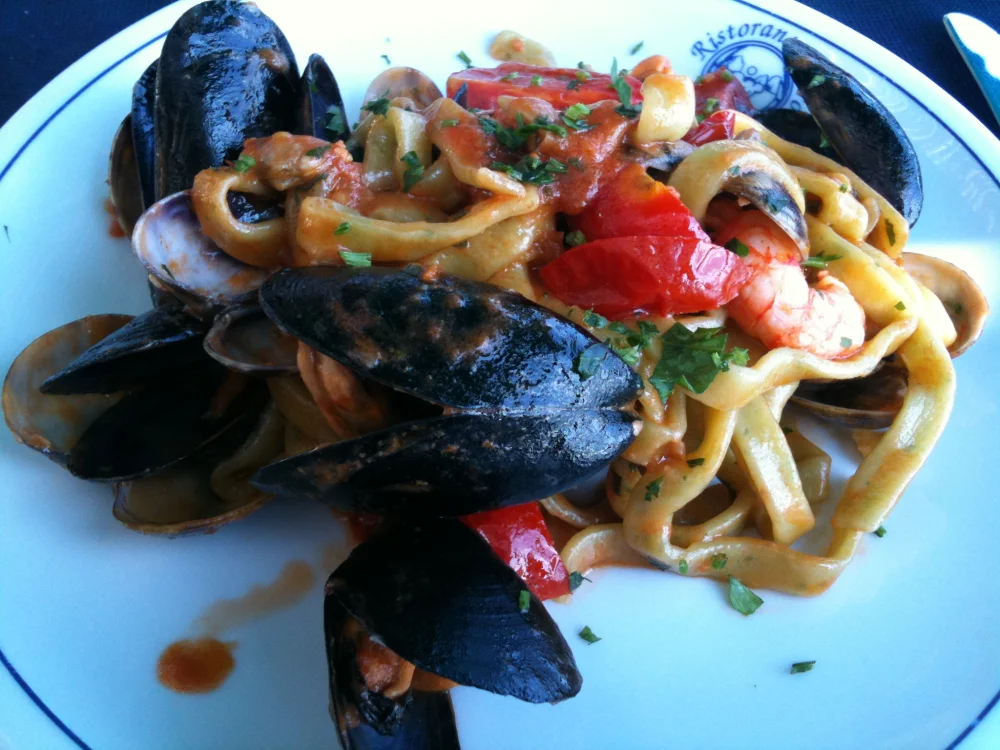
Seafood scialatielli · © Coso / Wikimedia Commons — CC BY 2.0
| Restaurant | Why go? | Where and how? |
|---|---|---|
| Taverna Buonvicino | Pasta with Cetara colatura, scialatielli and seafood. | Largo Santa Maria Maggiore, a few steps from the Duomo. |
| Agricola Fore Porta | Farm cooking, vegetables and lemon-based recipes. | In the valley, around 1.7 km from the Duomo, with nearly 300 steps. Access on foot only. |
| Trattoria da Gemma | Scialatielli and seafood for a leisurely meal. | Via Fra Gerardo Sasso, near the cathedral. |
To keep costs down, alternate restaurant meals with quick lunches. The coperto, a per-person cover charge, is often added to the bill. For Fore Porta, work the climb into your day, especially with children or in hot weather.
Where to stay in Amalfi
The centre suits travellers who want to walk to restaurants, the port and buses. Check access to your room too: an address near the Duomo may be several flights of steps up. Atrani keeps you close to Amalfi in a smaller village; hotels outside the centre offer more space but involve extra travel.
| Property | Best for | What to know |
|---|---|---|
|
Residenza del Duca Rooms & apartments in the centre |
Staying near the Duomo and sightseeing on foot. | Access involves around 70 steps. Bear this in mind with heavy luggage or difficulty climbing stairs. |
|
B&B Atrani Rooms Rooms in Atrani, including family rooms |
Staying in the neighbouring village and walking to Amalfi. | Breakfast in a lemon garden. Reaching Amalfi's bus and ferry departures means walking between the two villages. |
|
Hotel Santa Caterina 5-star hotel above the sea |
A stay where the hotel and swimming are a major part of the trip. | Outside the centre, with a beach club, a seawater pool for guests and a shuttle to Amalfi. |
Staying overnight lets you have dinner in Amalfi before heading to Ravello or the valley the next day. For the centre alone, a day trip from Salerno may be enough. With a pushchair, choose accommodation without long flights of steps.
How to get to Amalfi and get around
Amalfi has no railway station. From Naples, travelling via Salerno lets you combine a train with a ferry or bus. The SS163 coastal road is another option, but bends and traffic make journey times variable.
In Salerno, check the pier shown on your ticket: Concordia and Molo Manfredi are separate departure points. Sea connections from Naples depend on the season. Check Travelmar sailings and SITA Sud buses for your journey. In rough seas, the bus remains an option, subject to traffic.
Where can you park in Amalfi?
The Luna Rossa car park between Amalfi and Atrani is one option during your visit. Others are near the port, including Berma and Darsena. Budget for paid parking; the centre is not a place to look for a free space at the last minute.
Luna Rossa does not accept LPG or methane-powered vehicles, or vehicles over two metres high. The Luna Rossa car park information lists rates and conditions. The coastal road may also have traffic restrictions: the getting around Amalfi page helps you plan an arrival by car.
Amalfi or Positano: where should you stay on the coast?
Amalfi works well for combining monuments, trips to Ravello and outings by sea. The main sights, port and buses are within a small area, although there are still stairs. Positano appeals more for its hillside setting and views from above. In both places, the hotel's exact location matters when moving around with luggage.
Spring and early autumn are often more pleasant for walking and sightseeing than the hottest months. In Campania in August, save climbs for cooler hours and leave room for breaks. Amalfi is a practical base for exploring several villages; Salerno is also worth considering to reduce accommodation costs and use the train.
For two days in Amalfi, I would stay one night and choose just one major outing the following day. On day one, the Duomo, a paper mill and a detour to Atrani already offer several changes of scene. On the second day, take your time in Ravello's gardens, on a hike or out at sea.— The DolceRoutes editorial team
From the chaos of Naples' historic centre to Ravello's overhanging terraces: five full days following regional railway lines and the…
Read more →Hundreds of pastel houses cling to the cliff, with 400 steps to the beach and sweeping views over the Mediterranean.
Read more →