Naples
A city with volcanic energy
Naples hits you all at once. It is loud and crowded, scooters skim past pedestrians, and some of the world's best pizza costs five euros.
I hated my first two hours here. Naples takes a little preparation, and this guide helps you find your feet amid the horns, broken pavements and heat. Then I ate my first pizza on Via dei Tribunali and saw the sea at the end of Via Toledo. You do not come here to rest. You come to feel the pulse of a city that never stops, where washing dries above shrines to Maradona.
Things to do in Naples: the essential sights
For a first visit to Naples, start with Spaccanapoli and the lanes of the Centro Storico, then walk down towards Via Toledo and the waterfront. Add sights to suit your interests: the Veiled Christ for sculpture, Santa Chiara for its cloister, MANN for ancient collections or Sant'Elmo for the views. Pompeii and Vesuvius are accessible from Naples, but require time outside the city.
© TatsuoTabei / Wikimedia Commons — Public domain
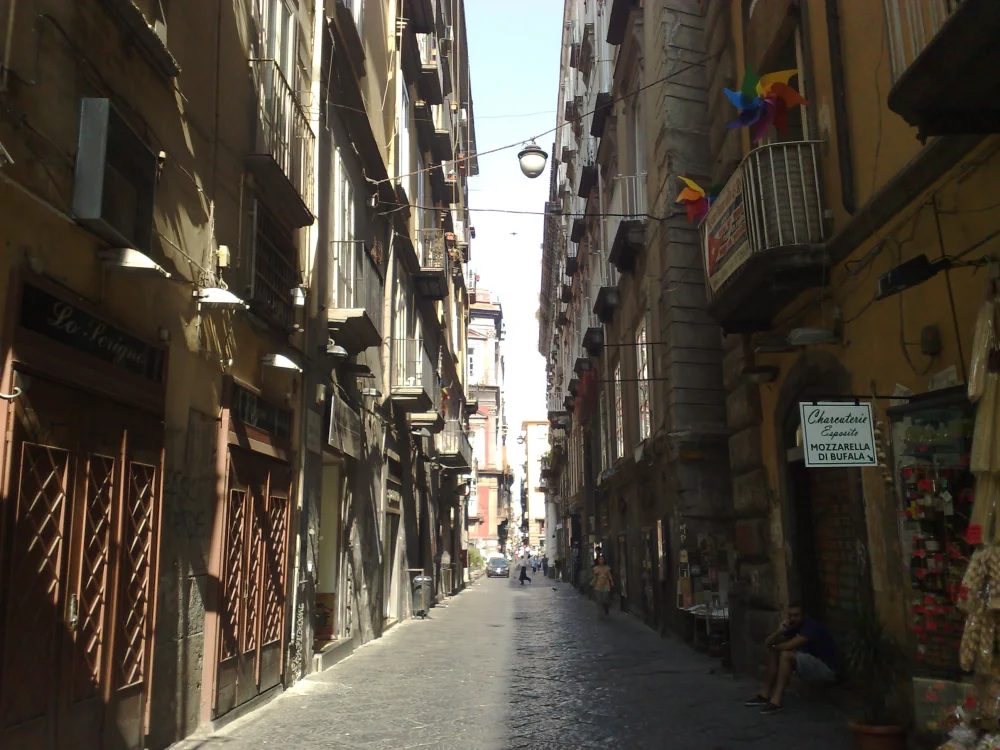
Spaccanapoli and the Centro Storico
Spaccanapoli runs through the old heart of Naples, past church façades and small shops, with detours at every junction. At Via San Gregorio Armeno, leave the main street to explore the workshops making nativity figures and scenes, which stay active outside the Christmas season too. Our San Gregorio Armeno guide helps you plan the stop.

© Zaiar95 / Wikimedia Commons — CC0
Toledo station and Piazza del Plebiscito
At Toledo station, you descend to the platforms past blue-and-white mosaics. Back at street level, follow Via Toledo to Galleria Umberto I, then continue to Piazza del Plebiscito. The Royal Palace and San Francesco di Paola's broad colonnade frame the square.
© David Sivyer — CC BY-SA 2.0
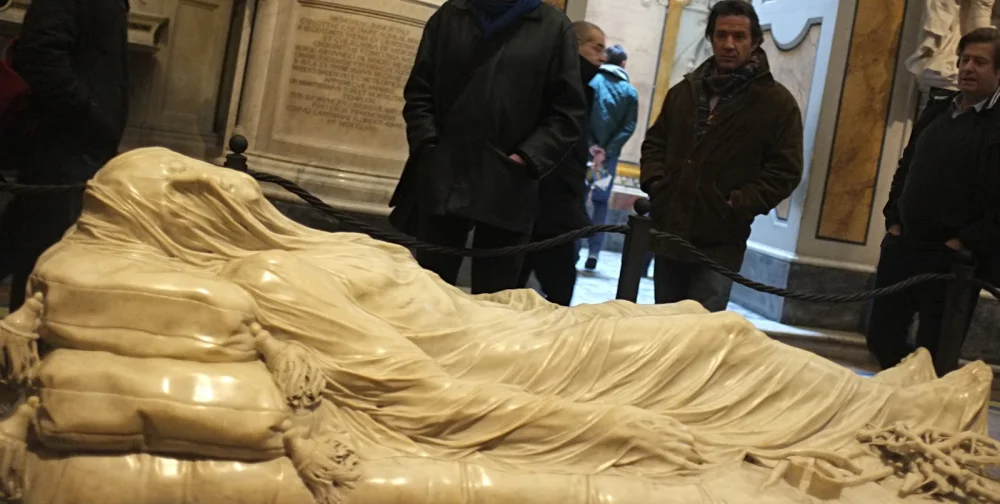
Sansevero Chapel
Get close to the Veiled Christ to appreciate the marble carving: the fabric seems to follow the body's contours, yet the whole work is carved from stone. Take time for the chapel's other sculptures too, particularly Modesty and Disillusion.
Basilica interior · © Luca Aless — CC BY-SA 4.0
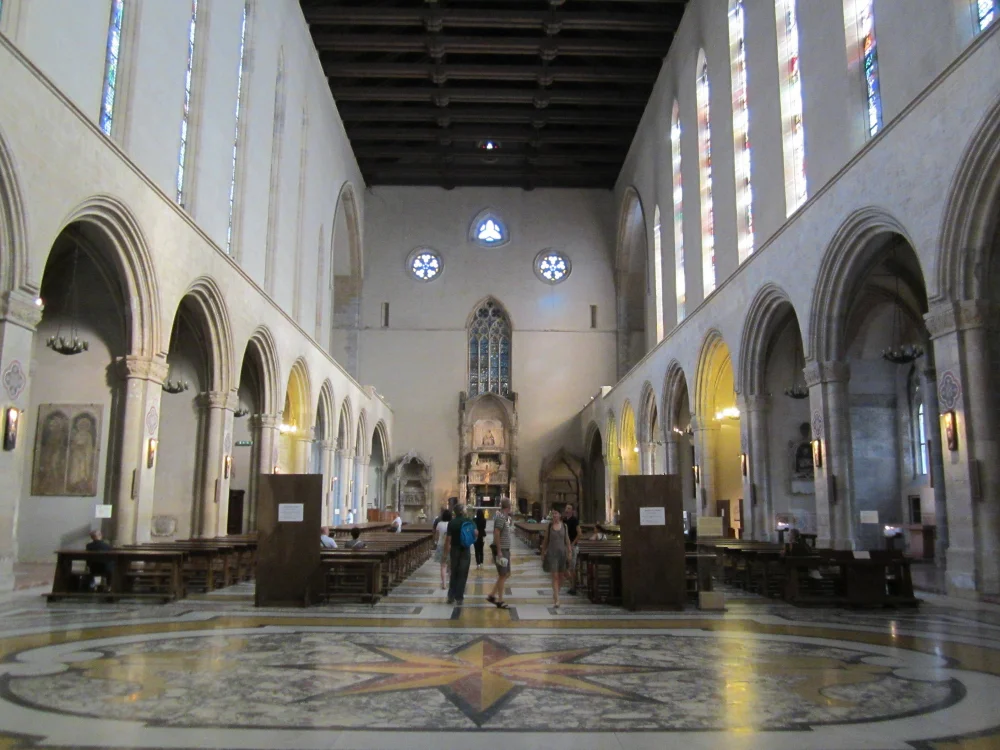
Santa Chiara
Santa Chiara's cloister changes the mood of the walk: pillars and benches covered in colourful majolica surround a garden near Piazza del Gesù Nuovo. Look at the scenes painted on the tiles and the gallery frescoes. It is easy to combine with Spaccanapoli's churches and lanes.
© Photo2023 — CC BY 4.0
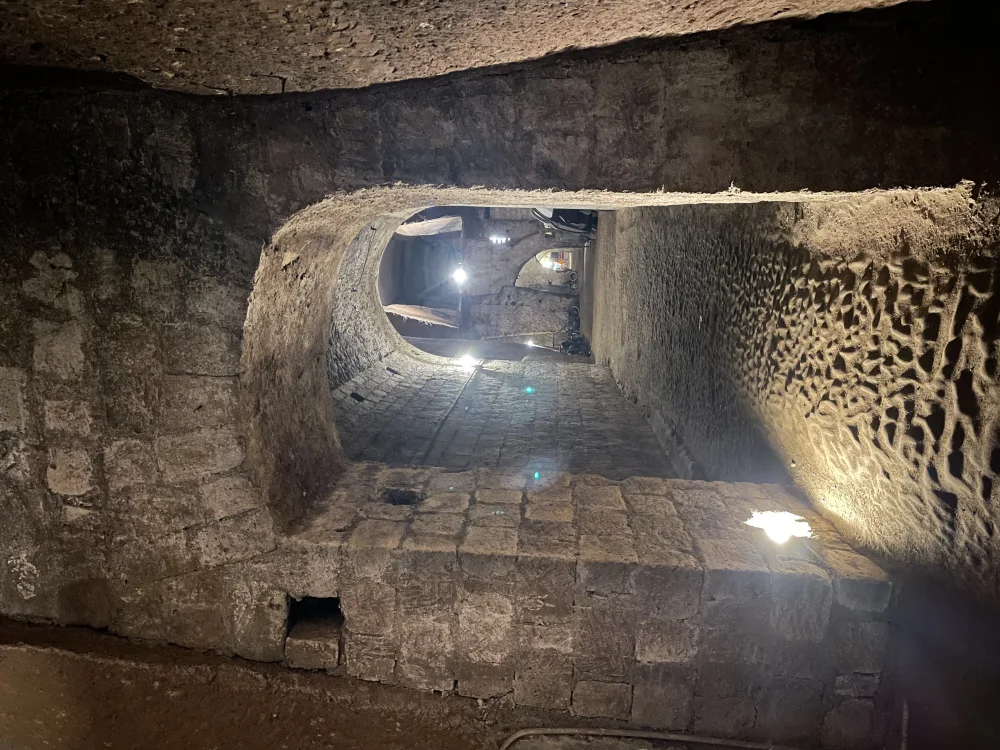
Napoli Sotterranea
Beneath the central lanes, cisterns and tunnels tell another Naples story: tuff quarrying, water supply and Second World War shelters. Napoli Sotterranea's route starts at Piazza San Gaetano in the historic centre. Allow around an hour and a half for the tour, including the theatre remains.
Van Der Meulen Christofle — CC0
Archaeological Museum (MANN)
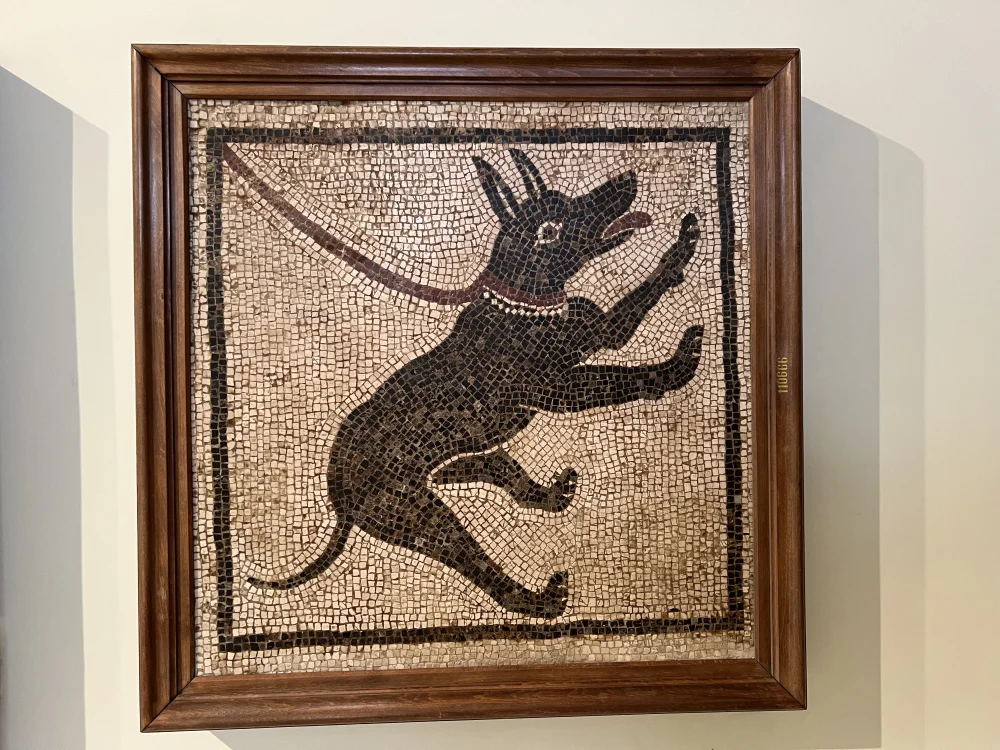
MANN lets you examine frescoes, mosaics and objects recovered from the Vesuvian towns. It complements Pompeii or Herculaneum particularly well. You will also see the large ancient sculptures of the Farnese collection.

© Ra Boe / Wikipedia — CC BY-SA 3.0 de
Castel Sant'Elmo
From Castel Sant'Elmo, you can pick out the historic centre, bay and Vesuvius. The view helps make sense of Naples: Spaccanapoli's straight line, neighbourhoods descending towards the sea and hills surrounding the city. The viewpoint beside the Certosa di San Martino makes another hilltop stop.
© Catacombe di Napoli — CC BY-SA 4.0
San Gennaro Catacombs
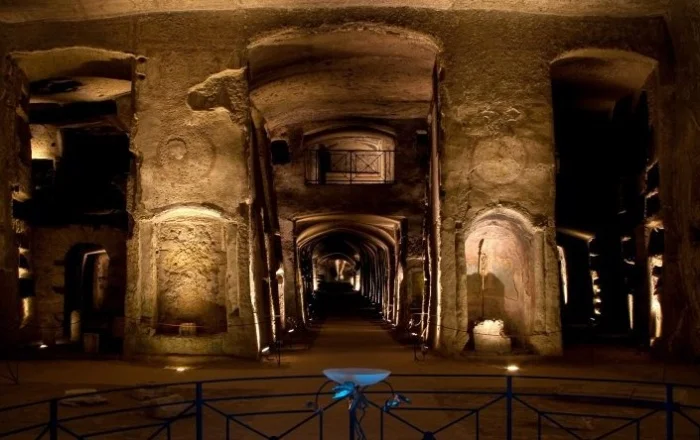
San Gennaro's catacombs reveal the beginnings of Christianity in Naples through galleries, paintings and mosaics. They also take you to another part of the city, near Sanità and Capodimonte. The guided visit lasts around an hour.
From Naples: Pompeii and Vesuvius
These two excursions are major attractions of a stay in the bay. Give them proper space in your itinerary: the train alone does not reach Vesuvius' crater, and Pompeii deserves at least three to four hours on site. On a short stay, prioritise the excursion that appeals most.
© Gary Todd from Xinzheng, China / Wikimedia Commons — Public domain
Pompeii
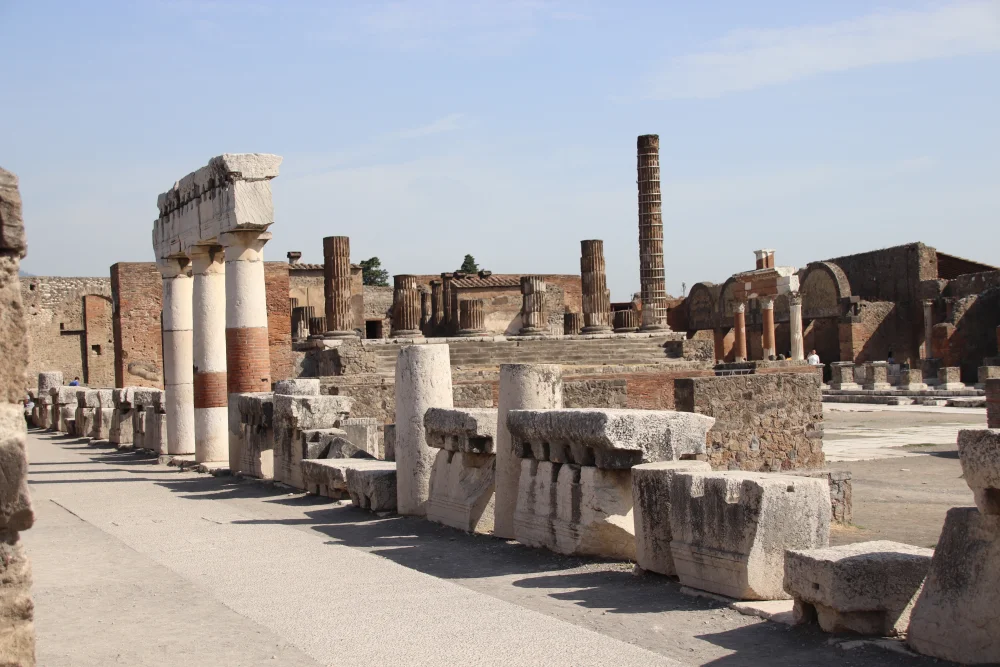
Pompeii's paved streets, houses and frescoes convey life in a Roman town before the eruption of AD 79. The €20 Pompei Express ticket covers the ancient town. To include suburban villas, including the Villa of the Mysteries, choose the €25 Pompei Plus ticket. Tickets are issued in your name.

© Ingo Mehling / Wikimedia Commons — CC BY-SA 4.0
Vesuvius
The Gran Cono trail climbs to Vesuvius' crater rim, overlooking the Bay of Naples and Sorrento peninsula. From the upper car park, continue on foot over volcanic ground. Supportive shoes will be more comfortable than sandals.
How many days do you need in Naples?
Three days offer a good balance for discovering Naples without rushing: two in the city and a third for more neighbourhoods, museums or an excursion. With just two days, concentrate on the Centro Storico, Quartieri Spagnoli and waterfront. From four days onwards, Pompeii, Vesuvius, Herculaneum or Capri fit much more easily.
Naples essentials
Gesù Nuovo, Santa Chiara, Sansevero, Via dei Tribunali and the historic centre's lanes. End the day around Piazza Bellini or in the Quartieri Spagnoli.
Toledo station, Galleria Umberto I, Piazza del Plebiscito, then the Lungomare. Head up to Vomero in the late afternoon if you want to end with panoramic views.
A comfortable pace
Keep the first two days for the historic centre, major sights, Quartieri Spagnoli, waterfront and Vomero.
The Archaeological Museum, catacombs, Napoli Sotterranea or a first excursion, depending on your priorities. For an hour-by-hour plan, see our 3-day Naples itinerary.
Naples and the bay
Add Naples Archaeological Museum for frescoes and objects from the Vesuvian towns, or the San Gennaro Catacombs for early Christian galleries and decoration. Sansevero and other underground sites can complete the itinerary.
If staying four days or more, keep a day for an excursion from Naples. The Royal Palace of Caserta combines Bourbon apartments, park fountains and the English Garden. Allow a full day for everything, returning to Naples for the evening.
Naples on foot: Spaccanapoli to the waterfront
From Piazza del Gesù Nuovo, cross the centre along Spaccanapoli and detour into San Gregorio Armeno. Then head back towards Via Toledo: this major shopping street links the historic centre with the Quartieri Spagnoli, Galleria Umberto I and Piazza del Plebiscito.

Quartieri Spagnoli, Naples · © Argo Navis / Wikimedia Commons — CC BY-SA 4.0
In the Quartieri Spagnoli, streets climb the hillside. The district was built in the 16th century to house Spanish garrisons. Today, visitors also come for Maradona murals, small shops and trattorias. Scooters use the narrow lanes: leave room for them when stopping for photographs.
From Piazza del Plebiscito, continue towards Santa Lucia and Borgo Marinari, below Castel dell'Ovo. The walk follows the Lungomare, with the bay and Vesuvius ahead. Allow half a day to link these neighbourhoods at an easy pace, longer if entering monuments. Vomero is easier on a separate walk, going uphill by funicular or metro.
Where to eat in Naples: pizza, fried snacks and coffee at the bar
Work a few food stops into your walk through Naples: a sit-down pizza, a paper cone of fried snacks in the street, then coffee at the counter. Start with the three specialities below; addresses are spread between the historic centre, station area and Via Toledo.
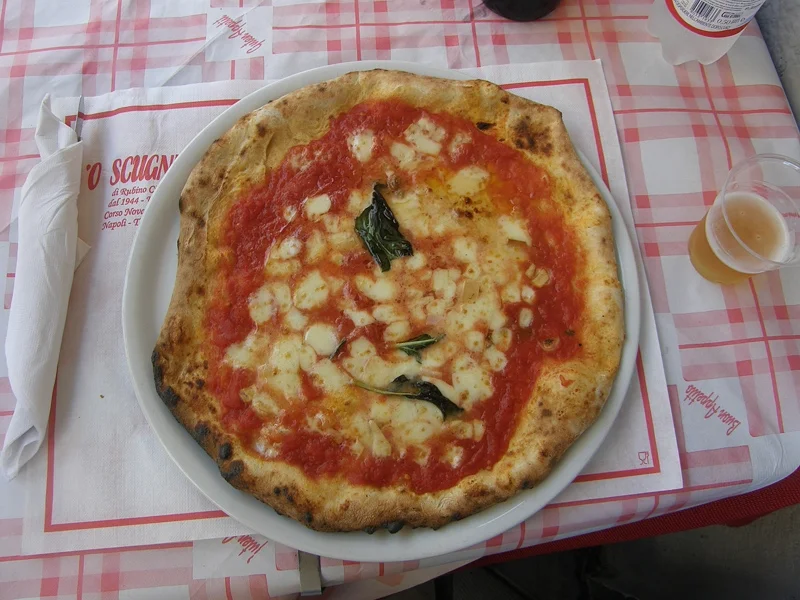
Neapolitan pizza has a puffed rim and soft centre. The brief bake leaves a few charred marks on the dough. Margherita combines tomato, fiordilatte and basil; marinara uses tomato, garlic and oregano.
A frittatina is a patty of cooked bucatini mixed with béchamel, peas and minced meat, then breaded and fried. Eat it standing up or as you walk. The crust cracks open to reveal a soft centre.
A sfogliatella riccia is shell-shaped, made from dozens of crisp pastry layers. Inside, warm ricotta is flavoured with candied orange and cinnamon. Try one warm from the oven.
Neapolitan pizza · Naples, Campania · © Ra Boe / Wikimedia Commons — CC BY-SA 3.0
| Restaurant | Speciality | Budget | Our view |
|---|---|---|---|
| L'Antica Pizzeria da Michele | Wood-fired Neapolitan pizza | €6.50 per pizza + €1 cover charge | A short menu focused on margherita and marinara. The historic Via Cesare Sersale restaurant does not take bookings; waits can be long at mealtimes. |
| Trattoria da Nennella | Traditional Neapolitan cooking | around €20 for the set menu | Pasta e patate with provola, singing and lively service at 22 Piazza Carità. Booking is now available on the restaurant website; some places remain for walk-ins. |
| Sfogliatelle Attanasio | Neapolitan pastries | 1–4 € | Warm sfogliatella riccia from opening time, near Garibaldi station. Stop here before taking the train to Pompeii. |
At Da Michele, give your name to eat in, or choose takeaway to continue your walk. Nennella, on Piazza Carità, now takes reservations on its website. Choose elsewhere for a quiet meal: the lively dining room is part of the experience.
For more ideas, see our guide to what to eat in Naples and our Neapolitan street-food selection.
Where to stay in Naples: Centro Storico, Chiaia or Vomero
The Centro Storico is convenient for exploring churches, museums and lanes on foot. Noise varies greatly by street and room: a courtyard-facing room can make a difference. Chiaia suits those who enjoy going out near the sea and shops. In Vomero, you stay in the hills, using the metro or funicular to reach the lower city.
| Property | Double room / night | Our view |
|---|---|---|
|
Relais San Severo B&B · Centro Storico |
60–100 € | A historic-centre address, convenient for walks around Spaccanapoli and Sansevero Chapel. |
|
Palazzo Alabardieri 4-star hotel · Chiaia · Naples |
120–180 € | In Chiaia, close to shops and the waterfront. Consider it if you prefer to stay outside the Centro Storico's lanes. |
|
De Bonart Naples, Curio Collection by Hilton 5-star hotel · Corso Vittorio Emanuele · Bay views |
150–300 € | On Corso Vittorio Emanuele, with bay views and an on-site spa. Allow travel time for historic-centre visits. |
The ranges above are indicative double-room prices, shared between occupants. Dates, room type and booking terms can change the price. De Bonart is a more upmarket option.
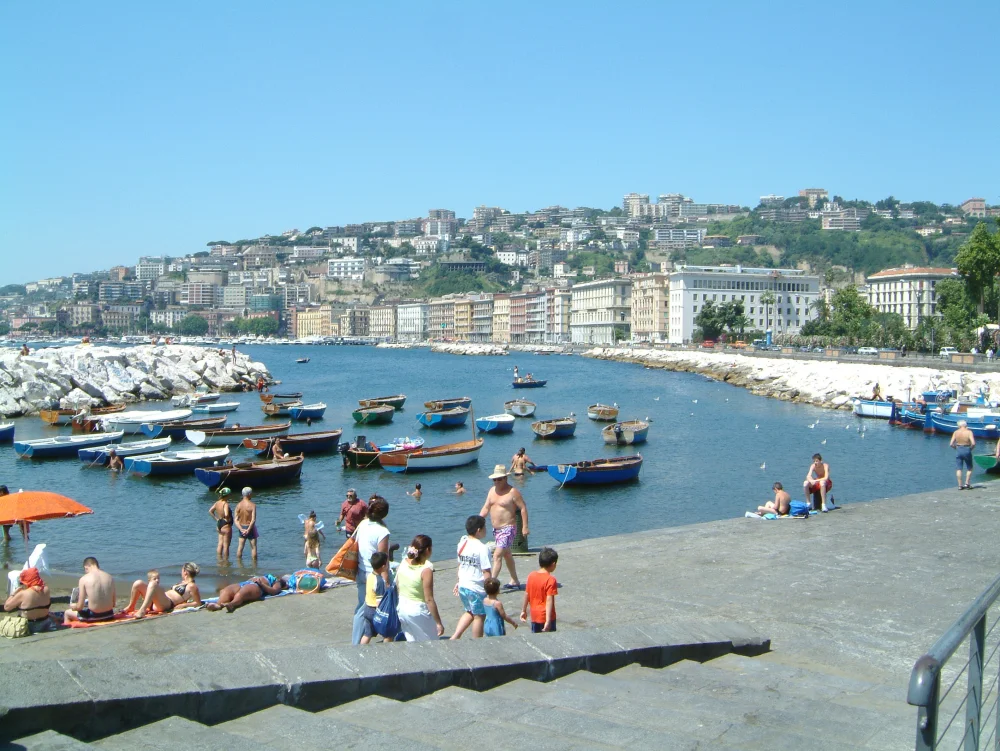
Bay of Naples seen from Posillipo · © Francesco Russo / Wikimedia Commons — Public domain
If driving, arrange parking before entering the centre: several areas are ZTL restricted-traffic zones, with access depending on street and time. For accommodation inside these areas, follow the property's arrival instructions. Our guides to where to stay in Naples with children and hotels near Naples port can also help you choose a base.
Getting to Naples and travelling around
From Naples Capodichino airport, the Alibus serves Napoli Centrale station, then the port. A ticket costs €5. ANM gives journey times of around 15 minutes to the station and 35 minutes to the port, excluding delays. Official taxis also offer fixed fares by destination: request the fixed fare at the start of the journey.
Within Naples, metro line 1 complements walking, while funiculars climb to Vomero. A single ANM journey on metro line 1 or 6 costs €1.50. The integrated 90-minute ticket costs €1.80: these are different tickets. At Garibaldi, follow EAV/Circumvesuviana signs for trains to Pompeii and Sorrento.
Leave room for stops without tickets or schedules: coffee at the counter, a warm sfogliatella or a few minutes facing the sea. These moments reveal Naples as much as its museums. Many bars ask you to pay at the till before ordering coffee; watch how service works when you arrive.
— The editorial team
From the historic centre to Vomero and the waterfront: three days in Naples with visits to book, transport and well-placed…
Read more →From pizza ovens and Sunday sauces to fried-food counters and pastry windows: flavours that make you want to stay longer…
Read more →