What to Buy in Naples: Local Souvenirs, Food & Crafts
Historic crafts, local food or a terracotta good-luck charm: choose something that tells the city's story, and spot mass-produced tourist souvenirs.
Spaccanapoli hits the senses immediately: a scooter horn, strong coffee drifting from bars and a tide of little red horns hanging from shopfronts. Amid it all, deciding what to bring home from Naples soon becomes a puzzle.
What to bring home from Naples: prices and packing at a glance
On Spaccanapoli, local crafts with a documented origin share stalls with imported plastic masks. To choose well, look for a workshop name, a DOP or IGP seal and the material named on the receipt. If still planning your stay, our Naples guide covers neighbourhoods, essential sights and practical advice.
This table summarises budgets and packing considerations for each souvenir category.
| Souvenir | Origin | Budget | Transport | What to check |
|---|---|---|---|---|
| Cornicello | Naples | €5–150 | Easy | Material and maker |
| Nativity figurine | Naples | €25–200 | Fragile | Handmade or mass-produced |
| Pulcinella | Naples | €10–50 | Easy to moderate | Imported resin |
| Coffee or cuccumella | Naples | €8–40 | Easy | Where it was roasted |
| Pasta di Gragnano IGP | Province of Naples | €3–6 | Very easy | IGP logo |
| San Marzano DOP | Campania | €3–5 | Heavy | Full DOP designation |
| Neapolitan taralli | Naples | €5–10 | Easy | Shelf life |
| Tombola and Smorfia | Naples | €10–25 | Very easy | Print quality |
| Cameo | Torre del Greco | €80–500 | Easy | Receipt and certificate |
| Capodimonte porcelain | Naples | €50–300 | Very fragile | Workshop, provenance and receipt |
Five handmade Naples souvenirs to consider
The Neapolitan cornicello
The Neapolitan cornicello hangs from taxi mirrors and beside grocery tills. It is the city's good-luck charm against the evil eye. Local tradition says it brings more luck when given as a gift; you can still buy one for yourself.
Skip shiny plastic horns sold on the street. Seek Via San Biagio dei Librai workshops firing and painting terracotta. For jewellery, Borgo Orefici brings together makers working solid silver, gold and red coral. Ask for the exact material on the receipt before paying.
The cornicello, a good-luck charm against the evil eye.
A San Gregorio Armeno nativity figurine
San Gregorio Armeno smells of hot glue, wood and sawdust. The presepe napoletano recreates the Nativity alongside street trades: pizza makers, butchers and fishmongers. Historic workshops such as Marco Ferrigno and Di Virgilio work with their doors open.
Look at how the figurines are made: a wire frame wrapped in tow, hand-painted terracotta extremities and clothes tailored from San Leucio silks. A simple figurine costs €30–60. Protect it in a rigid cardboard box and keep it with you in the cabin.
A Neapolitan presepe, a tradition of San Gregorio Armeno's workshops.
A handmade Pulcinella
A central commedia dell'arte character, Pulcinella wears a loose white tunic and black half-mask with a beaked nose. Hundreds of imported cast-resin copies line the streets.
For local work, look for embossed-leather or papier-mâché masks near Piazza San Domenico Maggiore. Terracotta sculptures signed underneath by the maker cost €15–40.
Neapolitan tombola and the Smorfia
This game links its ninety numbers to images in the Smorfia napoletana dream dictionary. Number 1 means Italy, 47 the talking dead, 71 a worthless man and 90 fear.
Central stationery shops sell complete game sets. Via Tribunali sellers offer graphic posters showing all ninety symbols: flat, light souvenirs available for under €20.
A piece of Capodimonte porcelain
The royal factory founded under Charles of Bourbon made porcelain one of 18th-century Naples' great decorative arts. Today, Capodimonte covers work of widely varying quality and origin: compare workmanship, workshop and documentation rather than relying on style alone.
Turn the object over and look for the workshop name and address, plus a detailed receipt or certificate for an expensive piece. The widely copied crowned N alone does not guarantee origin, age or value. For an antique, request a written assessment from a qualified professional.
Food souvenirs from Naples: coffee, pasta, tomatoes and taralli
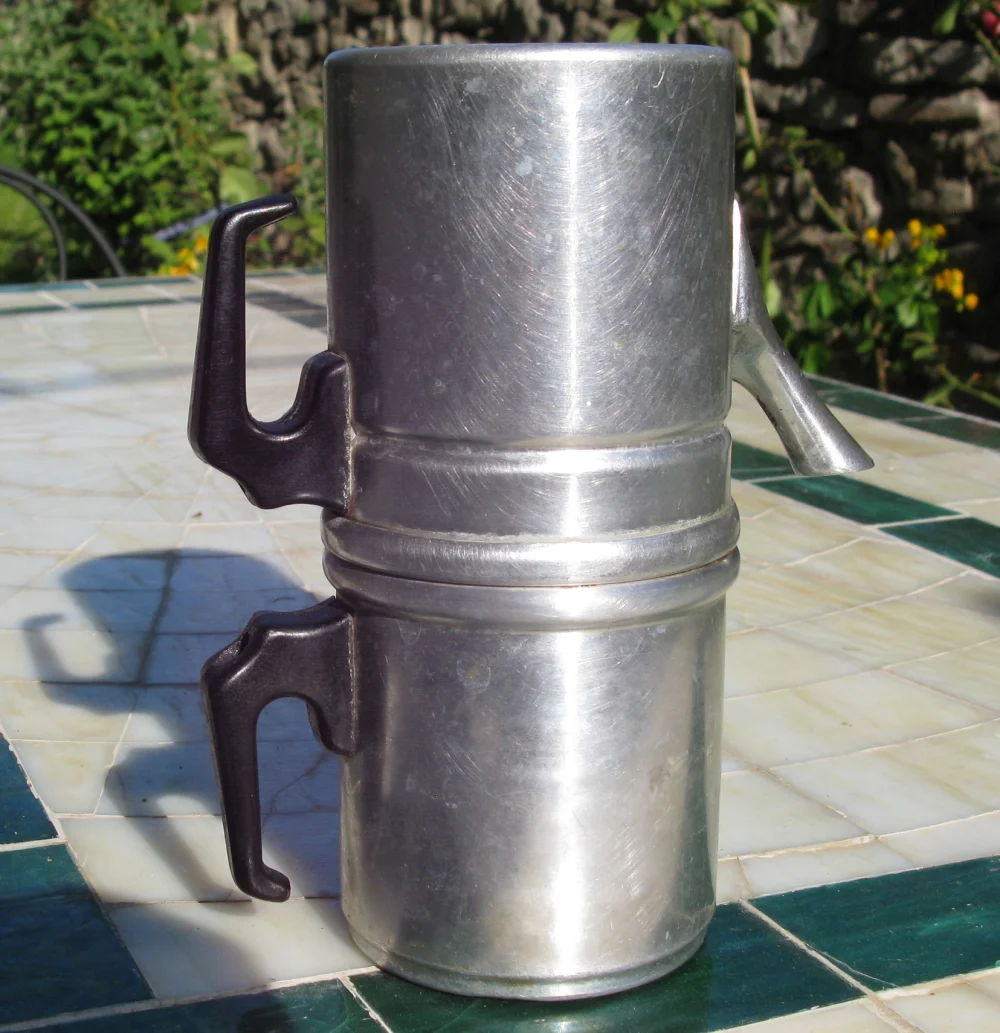
A cuccumella and Neapolitan coffee
© Toni Pecoraro / Wikimedia Commons — Public domain
Before the Bialetti moka, Naples filtered coffee with the cuccumella. This metal coffee pot has two compartments: water boils below, then the pot is removed from the heat and turned over. Gravity draws the water slowly through the coffee.
A cuccumella costs around €30 in Via Toledo hardware shops. Add deeply roasted, dark, glossy coffee beans. Local brands such as Passalacqua sell vacuum-packed blends in neighbourhood groceries.
Pasta di Gragnano IGP
Gragnano sits beside the Lattari Mountains in the province of Naples. Makers use bronze dies that roughen the pasta's surface, helping thick sauces cling. Half a kilo costs under €5.
If hiring a car to explore the coast, compare Capodichino airport offers on Rentalcars before leaving: Gragnano's factory shops can be visited along the way. Packaging should display 'Pasta di Gragnano IGP' and the yellow-and-blue European logo.
Bronze-die Pasta di Gragnano IGP.
Tinned San Marzano DOP tomatoes
The Agro Sarnese-Nocerino has black volcanic soil associated with Vesuvius' eruptions. The elongated, thin-skinned tomato grown here has a low water content and is a foundation of Neapolitan pizza.
Look beyond labels saying only 'San Marzano'. Seek the full legal designation 'Pomodoro San Marzano dell'Agro Sarnese-Nocerino DOP'. A 400-gram tin costs around €3.
Neapolitan taralli
Tarallo sugna e pepe is a dense, savoury dough ring packed with black pepper, whole almonds and lard. Bakeries sell them individually, warm from the oven, for around €1.50.
For the flight home, ask for sealed, protective-atmosphere packs. Otherwise humidity can make them soft within forty-eight hours. Check your destination's food-import rules, particularly because traditional taralli contain lard.
Torre del Greco cameos: recognise the craft and avoid plastic
Reachable by train from Napoli Garibaldi, generally in around thirty minutes depending on service and stop, Torre del Greco has many specialist cameo workshops. They carve marine shells, mainly sardonyx shells, to reveal a white profile against a brown background.
Ask to examine the piece: small variations in depth may indicate handwork, but a magnifying glass alone cannot authenticate a cameo. For an expensive piece, request a receipt naming the material, maker and place of manufacture; ask for a certificate when the seller offers one.
A workshop visit helps explain carving before any purchase. This GetYourGuide coral and cameo workshop in Torre del Greco demonstrates the craft and can complement a Pompeii excursion.
Torre del Greco, a historic centre of coral and cameo carving.
Where to shop in Naples: Pignasecca market and Spaccanapoli
© Fiore Silvestro Barbato / Wikimedia Commons — CC BY-SA 2.0
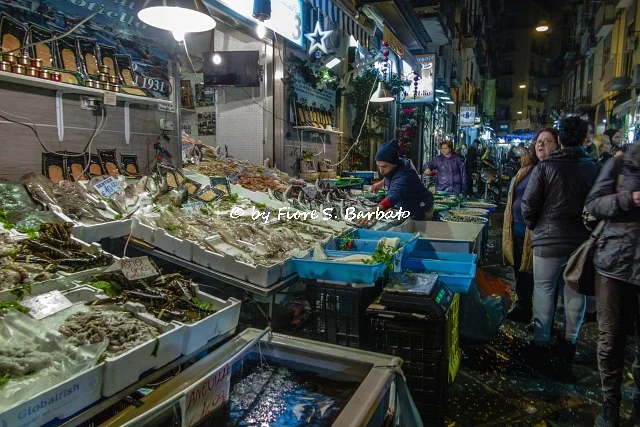
Here, fishmongers call to one another in dialect over eighty-kilo swordfish. Tripe hangs from hooks, scooters brush past stalls and water wets the paving.
Visit the alimentari at Pignasecca market to compare IGP pasta, salted capers and DOP tomatoes in shops less focused on tourist souvenirs.
Spaccanapoli and Via San Biagio dei Librai
The street cutting across the historic centre is full of workshops. Come early: lanes are usually quieter, craftspeople begin opening and coffee mingles with hot glue and wood. San Gregorio Armeno fits easily into day one of our 3-day Naples itinerary.
It is often the best time to watch someone working without peak-hour crowds. Still, check whether each shop actually makes its pieces on site.
How to check an object's origin before paying
Terms such as 'stile napoletano', 'tradizione campana' or 'design italiano' describe a style, not proof of manufacture or maker. Look for an explicit country of manufacture, workshop name and address, and a signature or identifiable producer's mark on ceramics and terracotta.
For protected foods, European DOP and IGP logos indicate compliance with a geographical specification. They do not replace airport security, liquids or destination import rules.
Hand luggage or checked baggage: Capodichino airport rules
© Alpha 350 from Hungary / Wikimedia Commons — CC BY 2.0
Dry goods such as pasta and ground coffee, along with a cuccumella, are generally straightforward at security. Taralli are also dry, but traditional recipes contain lard: security screening and permission to import food at your destination are separate matters.
Tins containing liquid, sauce or oil may be treated as liquids or gels at security. A container exceeding the permitted cabin limit may therefore be refused. Put larger tins in checked baggage and check current airport and airline rules.
Fresh mozzarella travels in preserving liquid, which can cause cabin refusal if the container exceeds the permitted limit. First check whether your destination allows dairy imports at all: current Great Britain rules prohibit bringing cheese and other dairy products from Italy for personal use. Where import is permitted, use leakproof chilled packaging and follow airline rules. Buying after security does not override import restrictions.
Limoncello, Vietri ceramics and mozzarella: Campanian rather than uniquely Neapolitan
Spaccanapoli displays walls of yellow bottles. Limoncello is Campanian, but its historic production area and PGI lemons belong to the Sorrento peninsula and Amalfi Coast.
Large plates decorated with fish and lemons come from Vietri sul Mare in the province of Salerno. Neapolitan traders resell them, but the clay is shaped and painted fifty kilometres south.
Hand-painted ceramics from Vietri sul Mare.
The production area for mozzarella di bufala campana DOP spans several authorised territories, notably in Campania, rather than Naples alone. Naples groceries sell it very fresh; the DOP label and producer name identify its precise origin.
Getting fragile objects home intact takes planning. Staying at a hotel around Via dei Tribunali lets you buy terracotta figurines or porcelain when workshops open at 9am, then pack them away a few minutes later.
From the chaos of Naples' historic centre to Ravello's overhanging terraces: five full days following regional railway lines and the…
Read more →Naples hits you all at once. It is loud and crowded, scooters skim past pedestrians, and some of the world's…
Read more →FAQ: what to bring home from Naples
Which souvenir is typical of Naples?
Where can I buy a locally made cornicello in Naples?
What can I buy in Naples for under €10?
Which coffee should I buy in Naples?
Can I take limoncello on a plane?
Can I bring mozzarella home from Italy?
How do I recognise Pasta di Gragnano IGP?
Is everything in San Gregorio Armeno handmade?
What is the difference between a Neapolitan and a Campanian souvenir?
Coral and cameo workshop in Torre del Greco