Cursi: A Quiet Village of Stone and Craft in Puglia
The village where the Salento's golden stone comes from. A handy base away from the crowds of Lecce and the coast.
When you look at the façade of Lecce's Basilica di Santa Croce, you are also looking at stone from beneath Cursi. This village's life has long revolved around its open-air quarries.
Visiting Cursi in Puglia: what to see and how long to stay
Blocks cut from the ground, an oil mill beneath a palazzo, houses opening onto a courtyard: stone is part of every stop in Cursi. This Puglian village lies inland in the Salento, in the province of Lecce, near Maglie. It is one of the areas that supplied the stone for Lecce's Baroque monuments.
Stop in Cursi if you are interested in quarries, stoneworking and the small streets of the Salento. The centre is fairly quick to explore. For a closer look, the ecomuseum runs guided visits. I would allow half a day for a stone-themed tour, a walk around the centre and a break on Piazza Pio XII.
Allow 1–2 hours for the centre alone, depending on your stops and which churches are open. Leave longer if you add a guided visit or the standing stones. In summer, avoid walking in the countryside during the hottest hours.
If time is short, start with the square and Palazzo De Donno. With half a day to spare, book an ecomuseum tour first, then walk around the centre. You can also visit Melpignano or Maglie on the same day. Combining these nearby stops makes more sense than crossing the whole Salento for a single stroll.
Pietra leccese: Cursi's quarries and ecomuseum
The pale limestone used for the façades and carved decoration of Lecce is called pietra leccese. It is easy to carve, which allowed craftspeople to create intricate ornament. In Cursi and the neighbouring towns, you can discover where it comes from and how it is worked, through the extraction sites, tools and quarrying trades.
Between Cursi and Melpignano, you will see pits, cut rock faces and former quarry walls where stone was extracted. Some sites are still worked; others have been abandoned and now form part of cultural routes.
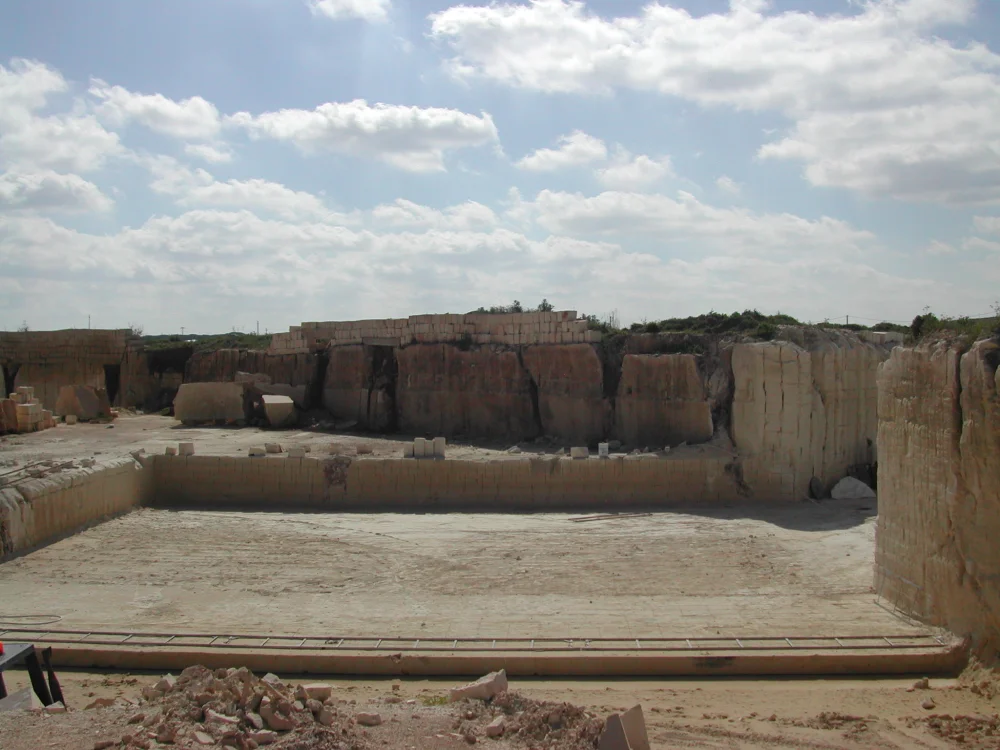
© Wikimedia Commons — CC BY-SA 3.0
The quarry in the photograph is in Melpignano, in the same stone-producing area as Cursi. Take a guided visit to explore this area: a guide can explain the marks in the rock, traditional cutting methods and how these places are used today.
The Parco delle Cave brings together several sites. Start with the ecomuseum's route so that you know where to go and what you are looking at. A former quarry, an art installation and a working extraction site each call for a different kind of visit.
Active quarries are workplaces. To explore former sites, ask the ecomuseum about its routes and where visitors are allowed. Do not climb down into a pit or enter a quarry you have spotted from the road.
The Ecomuseo della Pietra Leccese in Palazzo De Donno
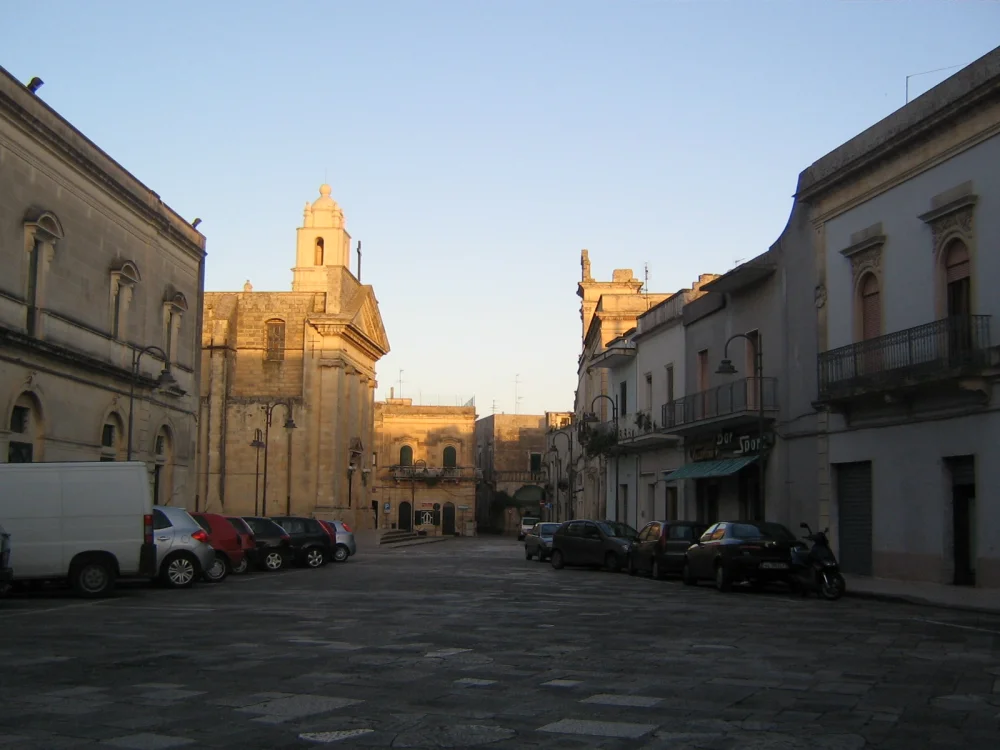
© Colar / Wikimedia Commons — CC BY-SA 3.0
Beneath Palazzo De Donno at Piazza Pio XII 41, the ecomuseum occupies a former underground oil mill, or frantoio ipogeo. Before exploring the quarries, you discover another activity that helped shape the village's history: farming.
The displays introduce quarry workers and the uses of pietra leccese. The ecomuseum also organises outings in the village and surrounding area. Contact it if you would like to add a visit focused on stoneworking to your walk around the centre.
Choose the quarry route to explore the landscape and the history of stone extraction. The contemporary route takes in the underground mill, public art and stoneworking. You can also cycle around Cursi, Melpignano and Castrignano de' Greci.
- Parco delle Cave: 90 minutes, €10 per person
- Contemporary route: 90 minutes, €10 per person
- Cycle ride between Cursi, Melpignano and Castrignano de' Greci: 90 minutes, €15 per person
- Tour languages: Italian and English
- Starting point: Palazzo De Donno, Piazza Pio XII 41, Cursi
- For the programme, prices and bookings, browse the ecomuseum's routes or message WhatsApp +39 327 877 3894
Before booking the cycle ride, ask whether a bicycle is provided. If you would like to try carving stone yourself, say so: a visit about craftsmanship does not necessarily include a workshop. Ask about access to the underground mill too if stairs are difficult for you.
What to see in Cursi's centre
Start on Piazza Pio XII, near Palazzo De Donno, then explore the surrounding streets. You do not need a long route to discover the centre. Instead, take time to notice a carved doorway, a vault or an entrance opening onto a courtyard.
Palazzo Maramonte and San Nicola church
The Palazzo feudale, also known as Palazzo Maramonte, now houses Cursi's town hall. It dates from the second half of the 15th century, but the façade has been altered over time. What you see is therefore not all from the feudal period.
Continue past the main church of San Nicola, rebuilt in the 19th century, and the clock tower opposite. You can walk freely around the square and outside the palazzo. To enter the church, work around opening times and services.
Sant'Antonio Abate, the Augustinian church
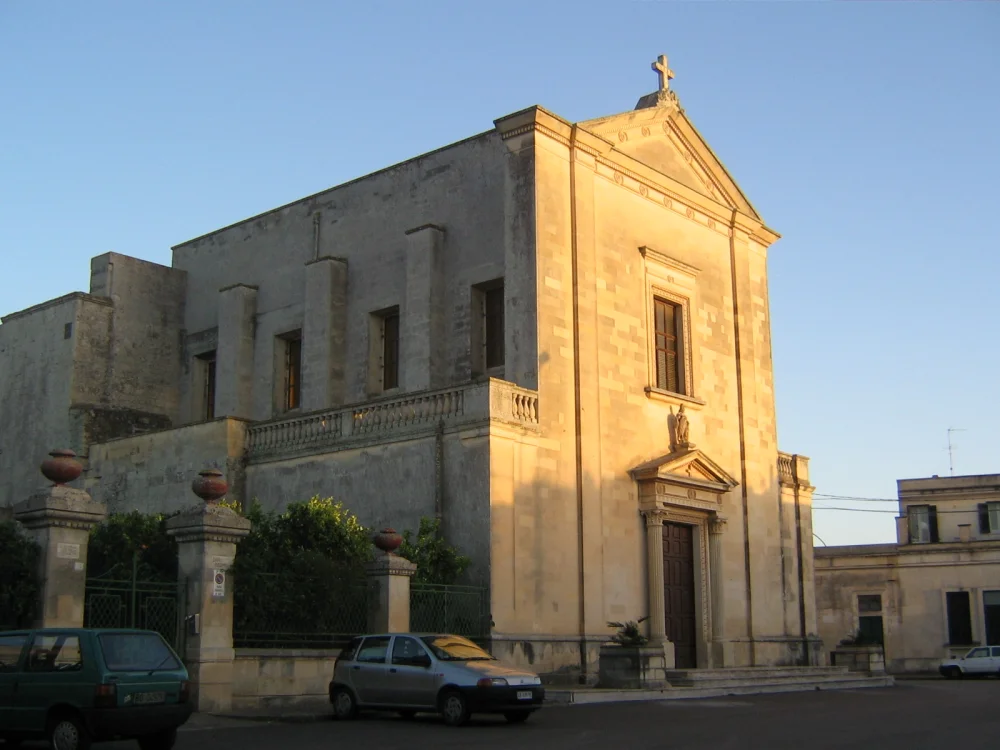
© Colar / Wikimedia Commons — CC BY-SA 3.0
The church in the photograph is Sant'Antonio Abate, associated with the former Augustinian convent. Include it in your walk around the centre. If it is open, look at its Baroque altar, where you can recognise the decorative stonework introduced at the ecomuseum.
On Via Roma, look out for the courtyard houses typical of the Salento. A passage leads to a space once shared by several families. After the palazzi and churches, these houses give you a sense of everyday village life.
The crypt of San Giorgio and Santo Stefano is part of the religious heritage left by the Salento's Greek past. Before planning a visit, ask the ecomuseum whether it is accessible during your stay.
Cursi's standing stones and the Salento landscape
Two menhirs survive within Cursi's boundaries: Croce di Bagnolo and Croce delle Tagliate. These standing stones are out in the countryside, beside roads or near field boundaries. Their original purpose is not known for certain.
Croce di Bagnolo stands on the road between Cursi and Bagnolo del Salento. Croce delle Tagliate is west of the village, built into a boundary wall near a junction of tracks. Ask locally for precise directions, using their names, to avoid searching at random between fields.
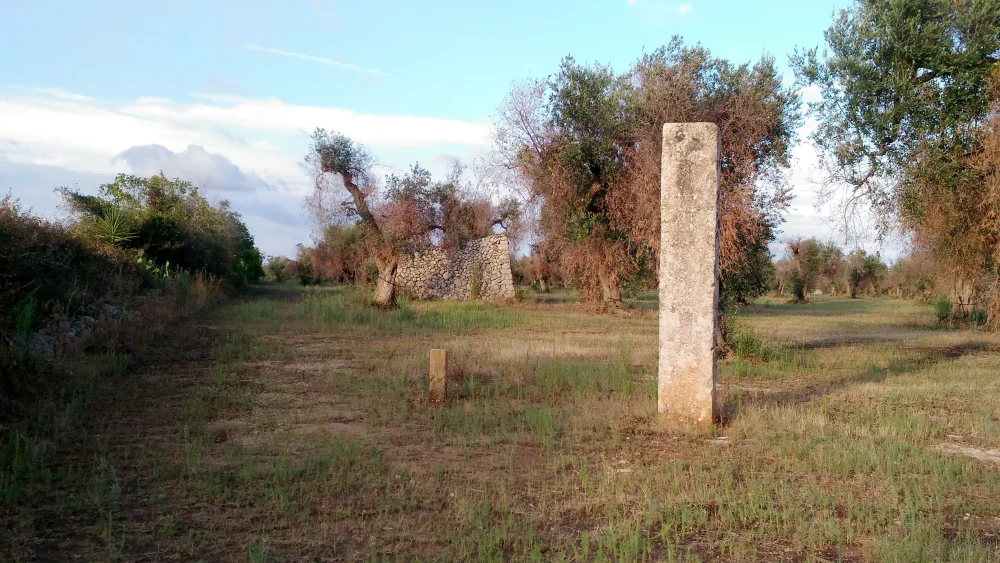
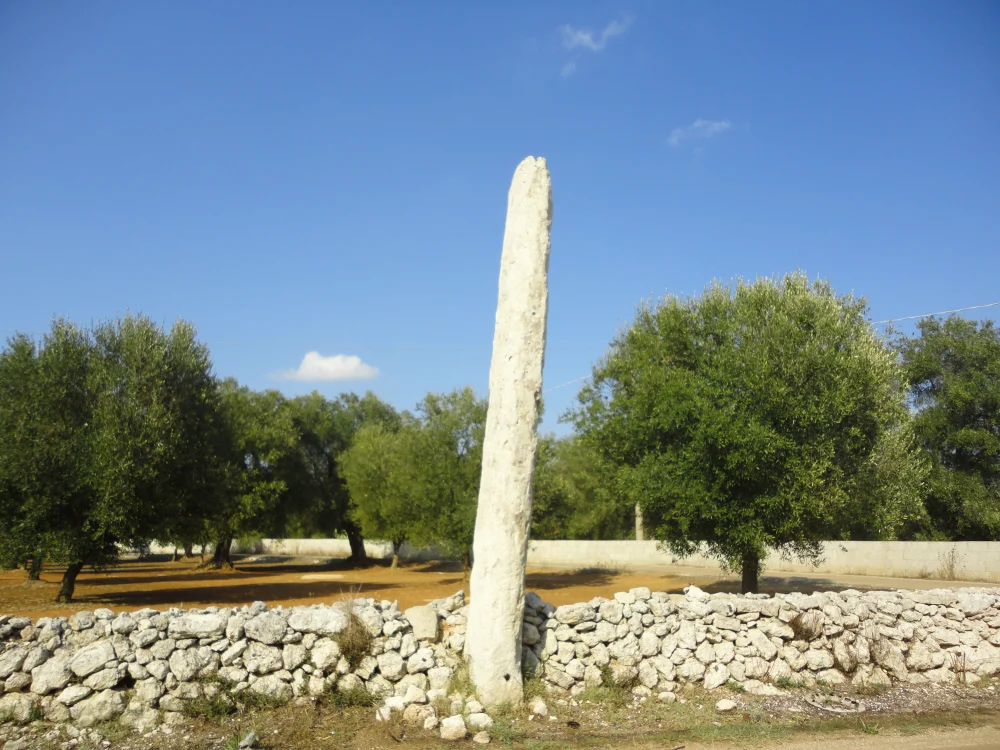
In the photographs, the stone on the left is Spruno, in Maglie; the one on the right is Croce di Bagnolo, in Cursi. Standing stones are found throughout the Salento. Start with Cursi's two monuments if you want to stay close to the village.
This outing will particularly appeal to anyone interested in small rural monuments. Find somewhere to stop without obstructing traffic, and keep to permitted paths. With children or in hot weather, a guided route may be easier than searching for standing stones beside the roads.
From quarries to olive groves
Around Cursi, quarries sit alongside fields, olive trees and dry-stone walls. Xylella has profoundly changed many of the Salento's olive groves: depending on the area, you may see dried-out trees or new planting. The countryside does not look the same everywhere.
Staying in Cursi and exploring nearby
Cursi can make a good base if you enjoy returning to a small village after a day out. From inland Salento, you can alternate between villages, cultural visits and trips to the coast while staying in the same accommodation.
For evening walks and more places to eat nearby, also consider Lecce or Maglie. If swimming is your main priority, staying near a beach will save daily journeys. Cursi is better suited to a trip combining several villages, Lecce and a few days by the sea.
B&B or courtyard house: what to check
In a casa a corte, several homes open onto a shared courtyard, which might once have held a well and an oven. It is a traditional form of Salento housing. If you want to stay in one, look at the property's photographs and location: not every Cursi B&B occupies a historic courtyard house.
In summer, give the facilities as much thought as the décor: air conditioning, parking and outdoor space. Check whether breakfast is included and whether the bathroom is private. Compare the total price for your dates, taking the facilities and booking terms into account.
B&B Il Ritrovo nel Salento in Cursi is on Viale Po. It lists air conditioning, a kitchenette and rooms with shared bathrooms. Read the room description before booking if you want a private bathroom.
What can you combine with a visit to Cursi?
Continue to Melpignano to explore the stoneworking heritage and villages of the same area. In Maglie, you can extend the day with a walk or dinner. I would allow Lecce a full day rather than squeezing it between several village stops.
For the sea, consider Otranto, the Alimini beaches and Torre dell'Orso on the Adriatic, or Gallipoli on the Ionian coast. When choosing your beach in Puglia, consider the day's conditions and what you feel like doing: swimming from sand, exploring a rocky cove or walking around a coastal town.
Plan the journey as far as your destination's car park. A driving time to Otranto may not include getting to your chosen beach, finding a space and walking to the sand. Our selection of lesser-known Puglia villages will also help you group nearby stops and avoid driving back and forth.
Getting to Cursi: driving, buses and parking
A car lets you visit the quarries, try different beaches and have dinner in neighbouring towns. It also makes days with several small stops easier. Once in Cursi's centre, park and continue on foot.
On arrival, follow the signs and use a permitted parking space. If you are staying in Cursi, ask your accommodation where to drop off luggage and leave the car. A narrow street outside the property may not be suitable for parking all week.
Traffic and parking arrangements can change during local festivals. For trips to Lecce or coastal towns, also check routes into the centre and any ZTL restricted traffic zones. Choose a car park before setting out so that your satnav does not lead you into a restricted street.
Can you visit Cursi without a car?
Check FS Sud Est bus services in the timetable search for your visit date. Look at the outward journey, return and bus-stop locations. If you plan to have dinner in Cursi, make sure you can get back afterwards.
For a day visit, arrange transport first. For a longer stay without a car, compare Cursi's connections with those from Lecce, for example. Our guide to Puglia without a car will help you plan stops around the transport available.
When to visit and how to plan your days out
Spring and early autumn are best for walking around the villages and countryside. In high summer, go out during the cooler hours and take water for the quarries and standing stones. Our guide to when to visit Puglia will help you choose your dates.
Before a day at the beach, check the wind and sea conditions on your chosen coast. From Cursi, you have several destinations to choose from. Do not select a beach based only on the wind's name: the way it faces matters too when looking for calm water.
Cursi's sanctuary, festival and places to eat
The sanctuary of Madonna dell'Abbondanza
About a kilometre from the village, the sanctuary of Madonna dell'Abbondanza stands away from the centre. Include it in your walk or stop before continuing to neighbouring towns.
Local tradition says the sanctuary was founded after an apparition of the Virgin Mary during a drought in 1640. The story tells of rain returning and abundant harvests, hence the name Abbondanza. Inside, look for the high altar carved in 1650 by Giovanni Donato Chiarello, an example of Salento craftsmanship. Check opening times before making a special trip to see it.
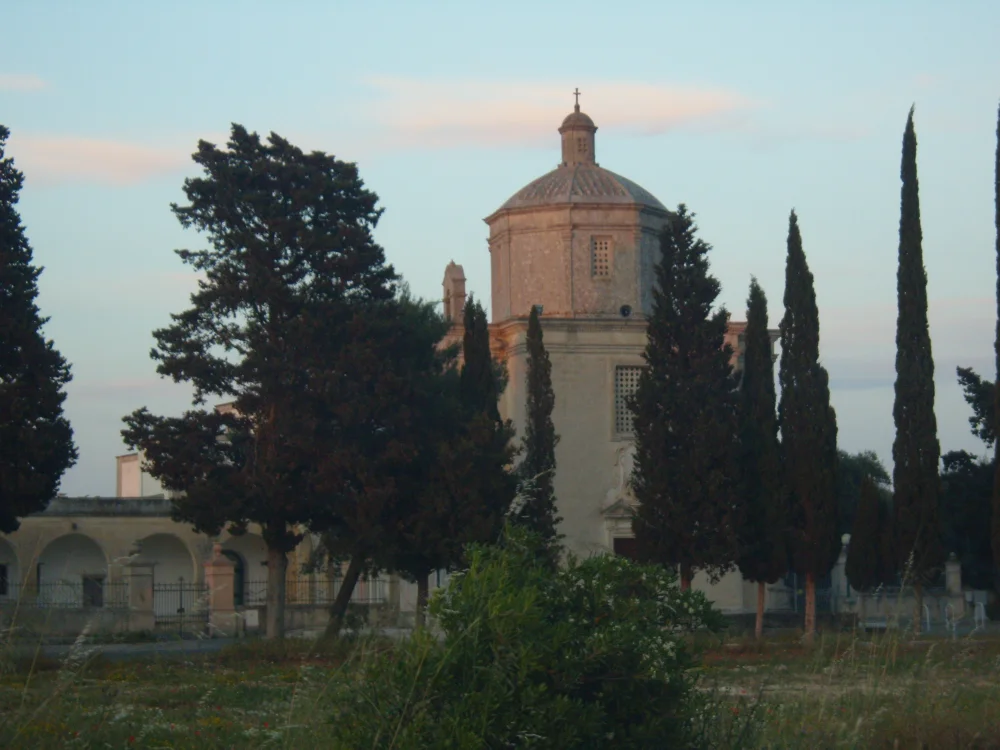
© Freddyballo / Wikimedia Commons — CC BY-SA 3.0
The patronal festival in July
In July, around the second Sunday of the month, Cursi celebrates the Madonna dell'Abbondanza. Religious celebrations are accompanied by illuminations and entertainment. Ask the council or festival committee for that year's programme: festivities can last several days.
The village is livelier during the festival. If you are staying in the centre, ask how to reach your accommodation and where to park. For quiet evenings, check the festival dates before booking.
Where to eat in Cursi and Maglie
For a break in the village, have a coffee and a pasticciotto, the Salento's small shortcrust pastry filled with custard. See what the bars and pastry shops open during your visit are serving, without planning a long breakfast detour.
For a pizza at dinner, look at the menu at Pizzeria Conacanà, Via Trioti 9, Cursi. Check opening hours before going.
Maglie has a wider choice of restaurants for dinner. Stay there for the evening after a walk, rather than going back to Cursi in between. At local festival stalls, look out for cupeta to try: this Salento speciality is made with almonds and caramel.
Visiting Cursi in Puglia: frequently asked questions
Where is Cursi in Italy?
What is there to see in Cursi?
How long do you need to visit Cursi?
Can you visit Cursi's quarries?
Which standing stones can you see in Cursi?
Is Cursi near the sea?
Do you need a car to stay in Cursi?
Is Cursi worth visiting on a trip to Puglia?
Leave Alberobello's summer crowds behind and follow me through the lanes of four well-preserved villages to discover a different side…
Read more →Dreaming of Alberobello's trulli but dreading the crowds? Here is how to explore this stone-built village at the hours when…
Read more →