4 Lesser-Known Puglia Villages: Specchia to Castro
Leave Alberobello's summer crowds behind and follow me through the lanes of four well-preserved villages to discover a different side of Puglia.
Southern Italy has plenty of famous postcard views, but some of its most rewarding places lie beyond the reach of tour buses. Away from the bustle of the coast, let me show you some of the quieter corners of Italy's heel.
| Village | Area | Nearby town | Suggested time | Do not miss | Typical budget | Bear in mind |
|---|---|---|---|---|---|---|
| Specchia | Salento | Lecce · 50 km | At least 1 night | Caffè in ghiaccio · Palazzo Risolo | €110–180 / night | Limited accommodation: book early |
| Cisternino | Itria Valley | Brindisi · 40 km | Evening + overnight stay | Bombette at the fornelli pronti | €15–20 / meal | Ovens are lit from 7.30pm only |
| Vico del Gargano | Gargano | Manfredonia · 50 km | Half a day | Vicolo del Bacio · Paposcia | €5–7 (street food) | Winding roads from the coast |
| Castro | Adriatic Salento | Otranto · 20 km | A full day | Grotta Zinzulusa · Aragonese Castle | €20–25 (boat trip) | Strict summer ZTL: cars banned from the upper town |
Puglia's lesser-known villages: why take a detour?
Exploring Puglia's lesser-known villages means travelling slowly: parking at the edge of a village, putting aside a timed itinerary and following the golden stone streets or the bell tower of the chiesa madre.
There are practical reasons, too. In high season, the Adriatic coast and the busiest parts of the Itria Valley become so crowded that they can feel overwhelming. To explore the area on two wheels, our Puglia cycling itinerary includes the valley.
Heading inland or choosing less-publicised fortified villages often brings more comfortable evening temperatures thanks to the higher ground.
It also means gentler trattoria bills and a more personal welcome from locals who still take time to chat.
We will start in the far south, in Salento, before heading up to the Itria Valley and into the hills of Gargano.
These four villages do not form a straightforward weekend circuit. Scattered from the north to the south of the region, they take time to reach. Do not try to visit them all in quick succession: driving from Vico del Gargano in the far north to Castro in the far south takes close to four hours, for example.
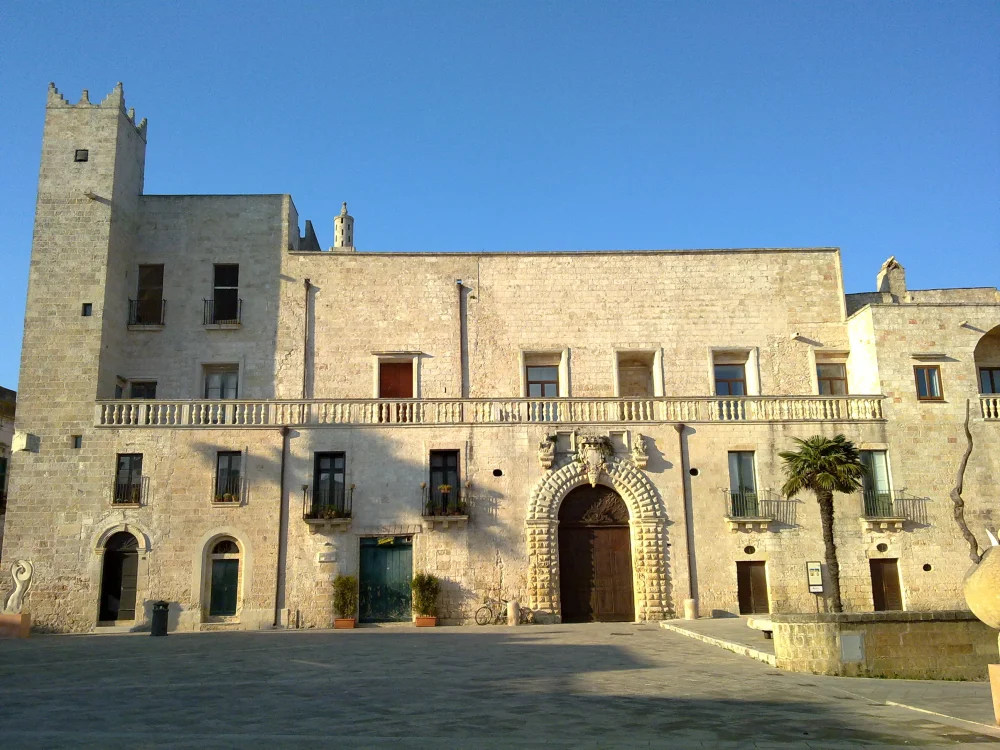
Specchia: a medieval Salento village, Piazza del Popolo and Palazzo Risolo
© Lupiae / Wikimedia Commons — CC BY-SA 3.0
Driving south from Lecce towards the tip of Italy's heel, most travellers head straight for Otranto's beaches or Gallipoli's ramparts.
That is a familiar missed opportunity. On a small hill in the Salento Murge, Specchia is one of the region's best-preserved medieval villages.
Exploring Specchia's old town
As soon as you cross the old town boundary, the harmony of its streets is striking. Narrow lanes lead past steps worn smooth over centuries and courtyards hidden behind heavy wooden gates.
The architecture leaves behind Lecce's exuberant Baroque in favour of an elegant restraint: smooth whitewashed walls, discreet wrought-iron balconies and shaded courtyards.
Wealthy 16th-century palazzi stand beside modest farmers' houses, all united by the local limestone that turns golden as the sun drops.
A caffè in ghiaccio on Piazza del Popolo
Piazza del Popolo is the centre of Specchia's social life. Come in the late afternoon, around 6pm, as the village slowly stirs after its long summer lull.
Take a seat outside the central café and order a caffè in ghiaccio con latte di mandorla: iced coffee with almond-milk syrup, a Salento institution costing just €2.50.
From your seat, the imposing Palazzo Risolo naturally catches the eye. A former fortified castle converted into a noble residence, it dominates the square. Take time to watch the generations mingle as locals gather for the evening passeggiata.
Staying in a historic house in Specchia
Ideally, stay at least one night to enjoy the quiet of the night and the low early-morning light, when only the street sweepers are out.
I recommend spending the night at Palazzo Coluccia, a 17th-century palazzo in the heart of the old town, or somewhere similar. Allow €110–180 per night for a double room in this kind of historic house, depending on the season.
Sleeping beneath vast, 400-year-old star vaults, with thick walls that stay cool even in midsummer, is a good reason to stay in this village rather than hurry through in an hour.
Cisternino: bombette, fornelli pronti and the lanes of L'Isola
© Benjamin Smith / Wikimedia Commons — CC BY-SA 4.0
Everyone seems to gather in Alberobello to photograph the trulli, or in Locorotondo for the viewpoint.
A short distance away, Cisternino offers the same immaculate architecture while fiercely preserving its local identity.
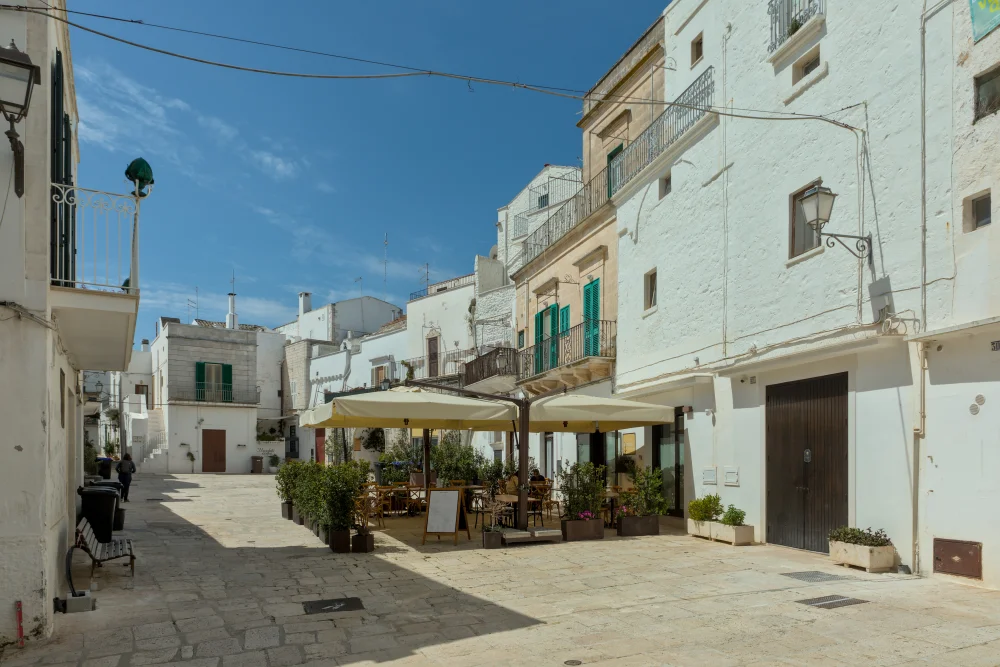
Wandering the white lanes of L'Isola
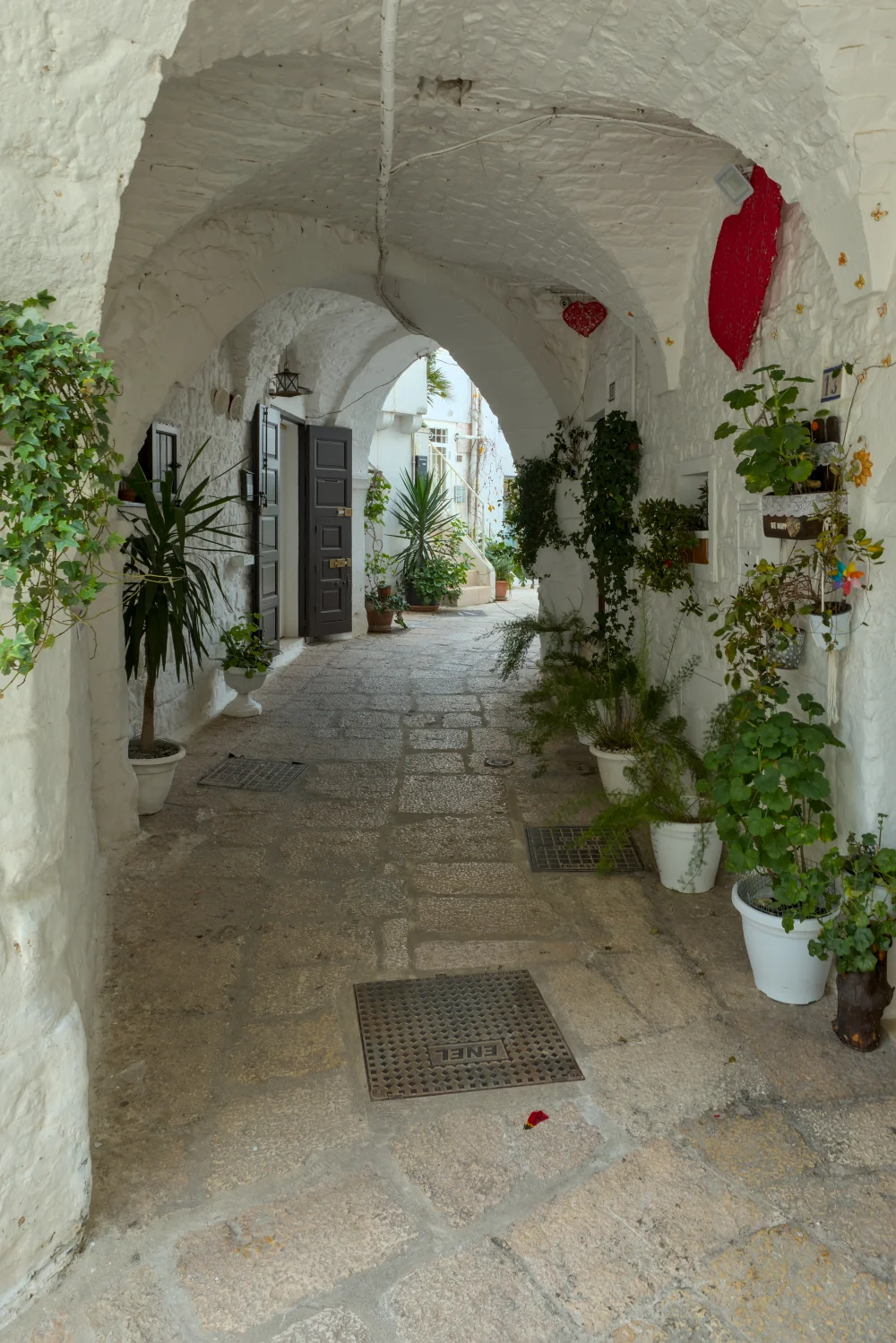
Repeatedly whitewashed walls dazzle in the midday sun. The old town, affectionately called ‘L'Isola’ by locals, is a maze of lanes so narrow that two people struggle to pass.
You will find tiny squares, known as slarghi, and outdoor arches typical of its Eastern-influenced architecture.
Cisternino has held on to its character more firmly than its better-known neighbours. The centre is more than a continuous row of souvenir shops. Red geraniums spill over balconies, clean laundry scents the air and grandmothers chat in dialect from their doorsteps.
Where to eat bombette in Cisternino
Come to Cisternino for the architecture, but bring an appetite too. The town's great culinary tradition is the fornelli pronti.
The idea is simple: in the evening, old-town butcher's shops turn into rustic restaurants. Step inside and choose your meat from the chilled display, where prices are shown by the kilo, at €22–28.
The speciality to try is bombette: little pork rolls stuffed with cheese, often melting caciocavallo, sometimes wrapped in crisp pancetta. The butcher threads them onto a large iron skewer and roasts them vertically in an imposing wood-fired oven.
You then sit at simple bistro tables set out in the lane. Try Al Vecchio Fornello or Bère Vecchie. It is noisy and convivial, and the bill rarely exceeds €15–20 per person for a feast of grilled meat with a litre of house Primitivo.
Arriving before the crowds and finding parking
The butchers only light their wood-fired ovens from 7.30pm or 8pm. Do not expect traditional bombette at lunchtime, when the town is still half asleep.
To avoid the rush, arrive around 6.30pm. Park near Via Basiliani, watch the sun set over the Itria Valley from the town's panoramic terraces, then follow the smell of woodsmoke.
Vico del Gargano: Vicolo del Bacio, paposcia and the old town
© Pakycassano / Wikimedia Commons — CC BY-SA 4.0
While most summer visitors crowd onto the beaches of Vieste or Peschici, a few winding kilometres inland take you uphill to cooler air and Vico del Gargano.
At almost 450 metres above sea level, the village feels immediately cooler than the coast.
Exploring Vico del Gargano's old town
Orange trees, fragrant lemon trees and groves of centuries-old olive trees surround the village. The air is distinctly cooler, with the scent of orange blossom in spring.
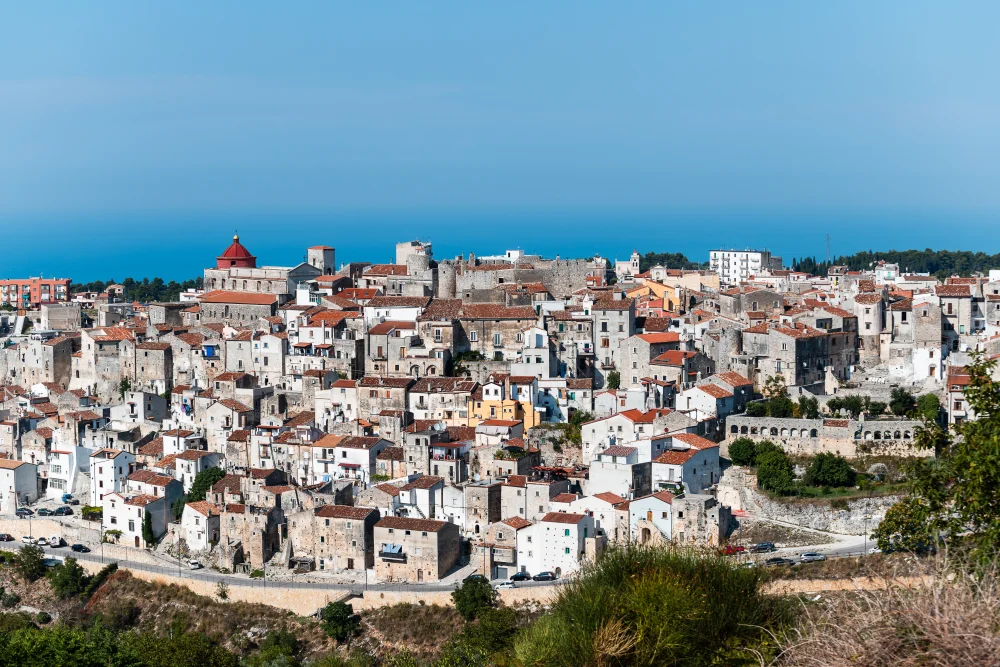
The old town is divided into three very old quarters, Terra, Civita and Casale, which tumble down the natural slope.
The dark stone houses seem stacked on top of one another for shelter from the wind, linked by steep steps and topped with old, massive chimneys. This feels far removed from the seaside postcard: it is Italy's quiet, mountainous interior.
A kiss in Vicolo del Bacio
The town's patron saint is St Valentine. Vico del Gargano honours this romantic connection with its famous Vicolo del Bacio, the ‘kissing alley’.
The lane is so narrow, barely fifty centimetres wide in places and around thirty metres long, that two people passing in opposite directions have to brush against each other, or even kiss to get through.
Afterwards, continue through the Rione Terra quarter just behind it, which leads to the remains of the old Norman-Swabian castle.
Where to eat paposcia in Vico del Gargano
You should not leave Gargano without trying paposcia. This is the local street food: an elongated pizza-style bread whose slipper-like shape gives it its name, baked to order in a wood-fired oven.
It is then generously stuffed with melted caciocavallo, wild rocket, sun-dried tomatoes and olive oil from the region.
Head to Il Mago della Paposcia or one of the old town's long-established paposcerie. Allow €5–7 for a substantial paposcia, ideal for eating on the go as you wander the lanes.
Castro: the fortress, Grotta Zinzulusa and parking restrictions
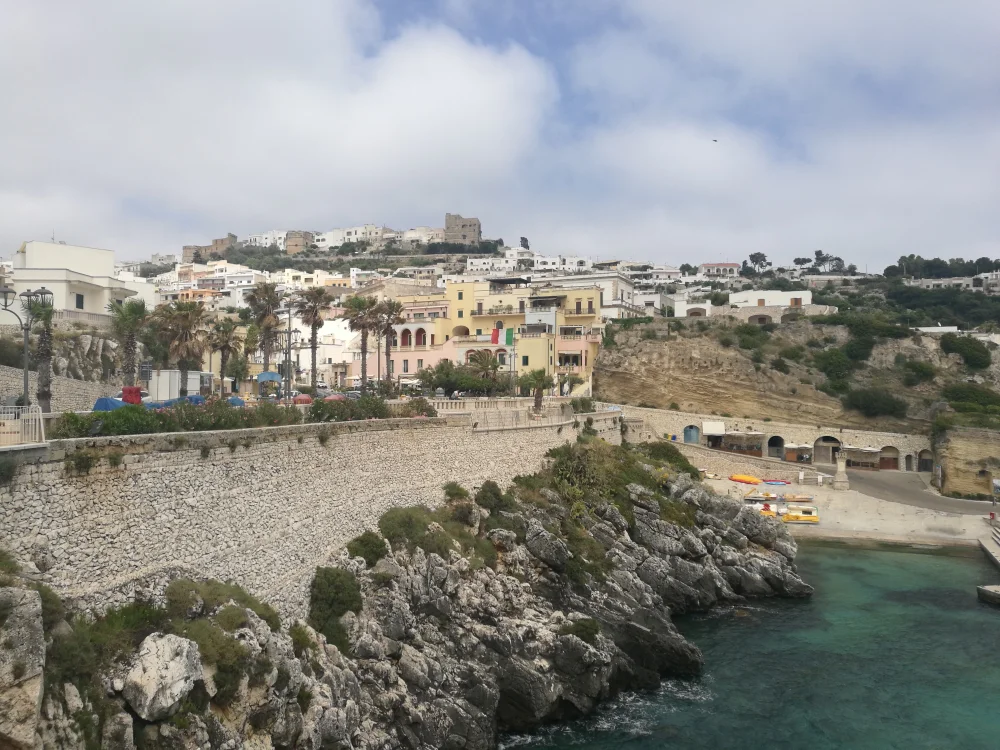
© Patrice78500 / Wikimedia Commons — CC BY-SA 4.0
Polignano a Mare is Puglia's best-known cliff-top town, but Castro is its smaller, wilder and more historic sibling.
Geography has split the town in two: below lies Castro Marina and its fishing harbour; above, Castro Superiore and its medieval fortress stand on a rocky promontory almost 100 metres above the sea.
Visiting the fortress of Castro Superiore
Allow time for both sides of Castro. Down below, Castro Marina has colourful little boats, rocky coves and clear water that invites an immediate swim. Above it, the medieval fortress seems suspended over the coast.
From the upper town's ramparts, the view drops straight to the deep blue Adriatic. On a clear morning, you can see the mountains of Albania on the horizon.
Booking a boat trip to Grotta Zinzulusa
Castro's history lies above the sea, but its natural treasures are hidden beneath the rock. Make time for Grotta Zinzulusa, an immense natural cave decorated with stalactites and stalagmites. You enter on foot along a path cut into the cliff.
To appreciate the scale of these sheer limestone cliffs and explore other caves unreachable by land, such as Grotta Azzurra and Grotta Palombara, book a boat trip with a local skipper. Expect to pay around €20–25 per person.
Seen from the sea, the Aragonese castle stands directly above the waves.
Parking outside Castro's ZTL
Castro Superiore, the upper town, has a very strict ZTL in summer, monitored by number-plate cameras. Do not try to drive up to the castle between June and September or you risk a hefty fine. Use the paid car parks below near the marina, then take the small shuttle train or walk up if you have the stamina: the slope is extremely steep.
Puglia's lesser-known villages: a final thought
Making time for these lesser-known villages gives you the luxury of slowing down in a region that moves at full speed in summer.
I particularly remember driving back from Castro at dusk. The road wound through centuries-old olive trees, the sky shifted from pink to purple and the only sound was the insistent song of cicadas.
If you plan to explore these villages, choosing the right vehicle matters. Country lanes lined with dry-stone walls, the famous muretti a secco, and the maze of streets in villages such as Cisternino or Specchia leave little room for error.
Choose a small hire car, such as a Fiat 500 or Fiat Panda. You will appreciate its manoeuvrability when passing a tractor or squeezing into an old-town car park.
Five days in Puglia: from Bari's alleyways to Lecce's Baroque, via the red earth of the Itria Valley.
Read more →Dreaming of Alberobello's trulli but dreading the crowds? Here is how to explore this stone-built village at the hours when…
Read more →Frequently asked questions: Puglia's lesser-known villages
Do you really need a car to visit these four villages?
When is the best time to visit without the intense heat?
Can you find food in these villages in the afternoon?
Salento cave boat trip from Castro