Alberobello
The capital of the trulli
Famous for conical roofs born from a tax dodge, Alberobello is Puglia's most striking stop. Find out how to avoid the crowds and discover more of the capital of the trulli.
With cobbled lanes lined by thousands of small whitewashed buildings topped with grey stone cones, Alberobello is Puglia's most photographed stop.
A UNESCO World Heritage Site since 1996, the town reveals more to visitors who venture away from the main streets, explore its quieter neighbourhoods and, above all, stay after the tour buses have headed back to the coast.
4 things to see in Alberobello
Before deciding what to see, it helps to understand what you are looking at. Trulli (the plural of trullo) are more than picturesque houses. They are the result of a 15th-century tax dodge. The Kingdom of Naples levied heavy taxes on every new urban building. The local Acquaviva counts therefore required their peasants to build dry-stone homes without mortar.
When the tax inspectors were on their way, removing the keystone brought the roof down into a pile of stones. Once the inspection was over, the trullo could be rebuilt in a few days. There are now more than 1,500 trulli in the town, which earned Alberobello its UNESCO World Heritage listing in 1996.
© Benjamin Smith / Wikimedia Commons — CC BY-SA 4.0
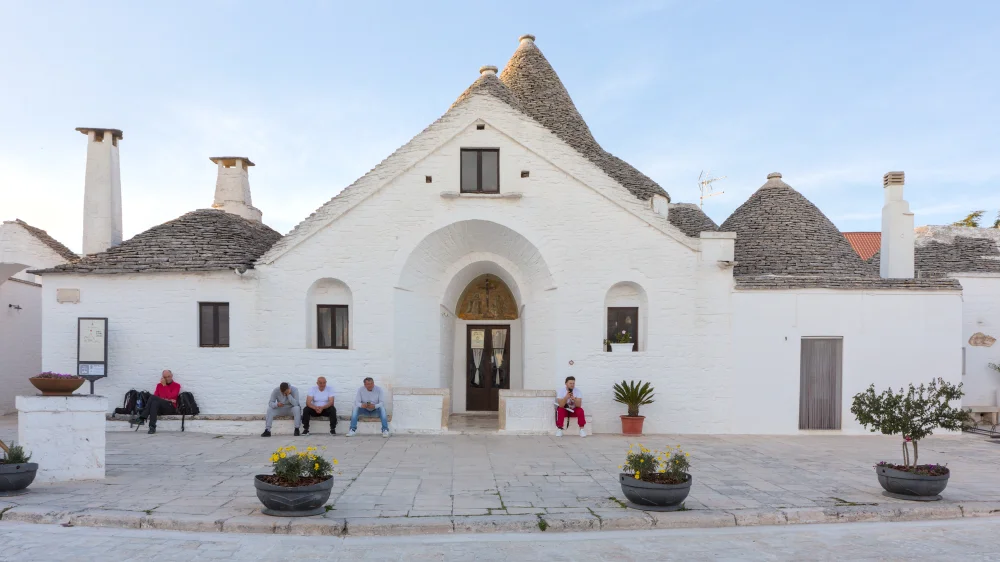
This is the only trullo with an upper floor, built in the first half of the 18th century for a wealthy family of priests. Now a museum, it preserves a traditional interior: a large central hearth, solid wood furniture, niches set into the thick walls and a masonry staircase. Entry costs just €2.50.
© Istvánka / Wikimedia Commons — CC BY-SA 3.0
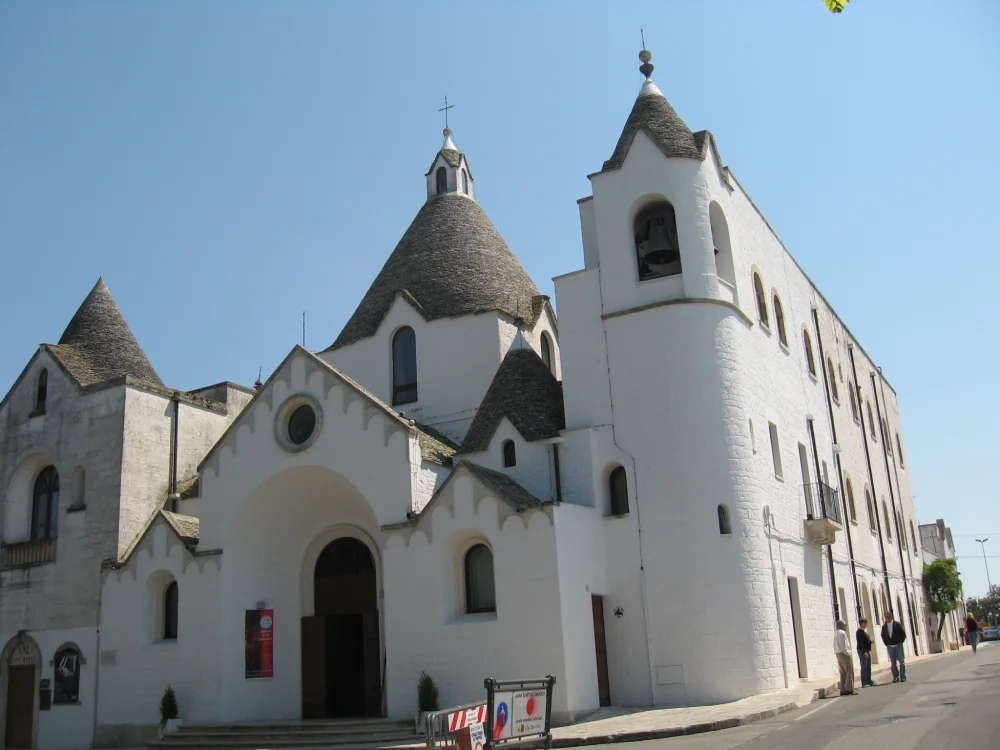
Completed in 1927, this church was built using trullo construction techniques. Its central dome rises to 21 metres, beside a bell tower with the same conical shape. The interior is entirely whitewashed: voices sound different beneath the cone-shaped vault.
© Benjamin Smith / Wikimedia Commons — CC BY-SA 4.0
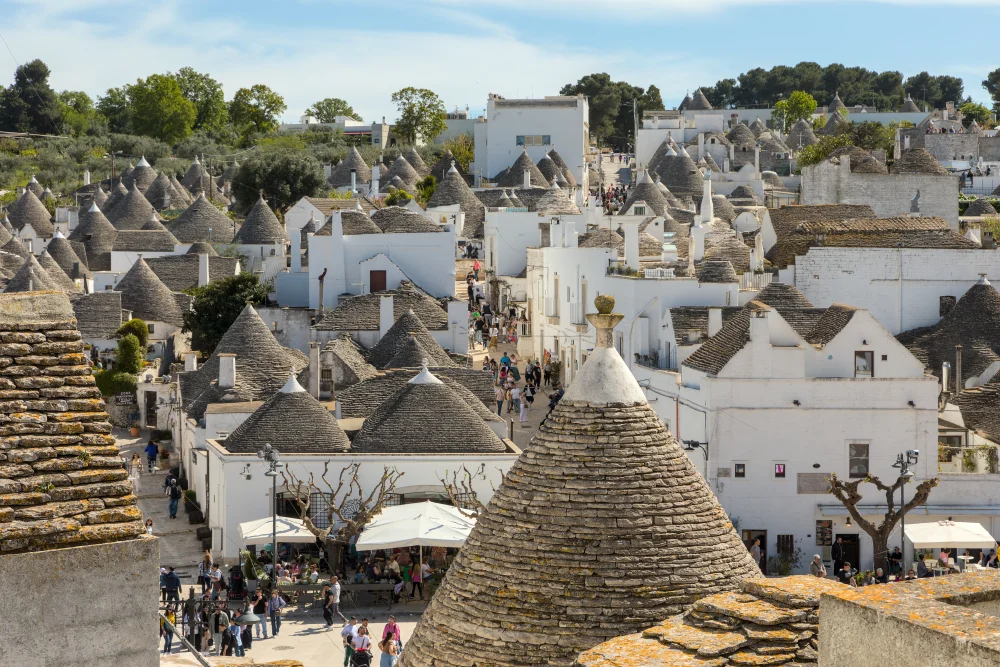
On Piazza Gian Girolamo D'Acquaviva, this terrace looks down over Rione Monti in the view reproduced in almost every Puglia guide. The contrast between the white walls and grey stone cones changes completely in the golden hour: dull grey at midday gives way to gold and pink towards evening.
© Benjamin Smith / Wikimedia Commons — CC BY-SA 4.0
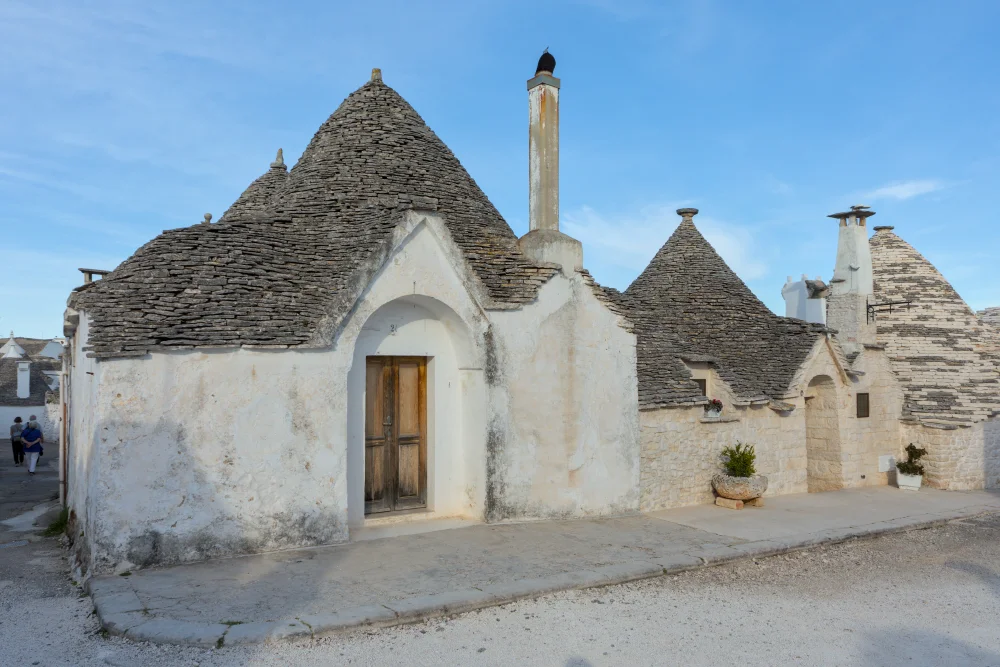
Across Largo Martellotta, this neighbourhood has around 400 trulli that are still used solely as homes. With no shops or restaurants, it offers a less staged view of Alberobello and a sense of its former farming life. Wander along Via Duca Degli Abruzzi and Via Verdi.
Timing makes all the difference if you want to avoid the busiest crowds. Arrive around 4pm, as the heat starts to ease, and walk up through Rione Monti. Have an aperitivo overlooking the sunset from Belvedere Santa Lucia around 6pm.
Stay overnight in a trullo to enjoy the lanes lit up after dark. Get up early the next morning and explore Aia Piccola in near silence, before the first groups arrive.
Rione Monti or Aia Piccola: which neighbourhood should you visit?
Alberobello is divided in two by its central thoroughfare, Largo Martellotta. The trulli cover the two historic hills on either side. The lanes are steep, paved with limestone slabs polished by time and millions of footsteps.
In sunshine or wet weather, the paving can be very slippery. Wear comfortable shoes with grippy soles rather than flat sandals.
Rione Monti: views and bustle
This is the largest and best-known neighbourhood, spread across the southern slope, with more than 1,000 trulli lining seven steep lanes. Almost every trullo has become a souvenir shop, craft workshop, bar or restaurant. Look up: this is the best place to see the whitewashed symbols painted on the roofs, from ancient motifs to Christian and magical signs, intended to protect the home. Notice the pinnacoli too, the carved stones crowning each cone: spheres, discs, stars or pyramids. They served as the master builder's signature (the trullaro) or indicated the owning family's social standing.
Aia Piccola: quiet streets and everyday life
On the north-eastern slope, Aia Piccola has around 400 trulli carefully preserved as homes. There are no shops or restaurants here. As you wander through the lanes, you will pass residents, smell meals cooking and hear quiet conversations from the courtyards.
An overnight visit to Alberobello: a suggested itinerary
The key to Alberobello is timing: arrive in the middle of the afternoon as the group coaches leave, watch the sunset over the trulli, stay overnight and explore Aia Piccola at dawn before continuing into the Itria Valley.
The heat is easing and the day-trip crowds are starting to thin out. Walk up Rione Monti's steep lanes, looking for the whitewashed symbols on the roofs and the pinnacoli crowning each cone. Shoes with grippy soles are essential: the polished paving is slippery.
🅿 Viale Indipendenza car park: €6–10/dayThe only two-storey trullo, with a large central hearth, solid wood furniture and niches cut into thick walls. An hour here gives you the background to what you will see around town. The ticket office closes at 12.45pm, so this visit falls within its afternoon opening hours.
🎟 €2.50 · Closed 12.45–3.30pmA church built using trullo construction techniques, with a 21-metre conical dome. It is a useful landmark at the top of the shopping streets. Take a breather before heading downhill to the viewpoint.
🎟 Free entryPiazza Gian Girolamo D'Acquaviva. The view over Rione Monti appears in every Puglia guide, but the golden and pink light only comes towards evening. You can stop for an aperitivo here.
🎟 Free · Best after 4pmTerra Madre for dishes made with its garden produce (book 2 weeks ahead; closed Tuesdays). L'Aratro for orecchiette alle cime di rapa (€12–20; closed Tuesdays). Macelleria Braceria for bombette pugliesi cooked to order (€10–18).
🍽 €10–55, depending on the restaurantLow sunlight lights the limestone a pure white, and the lanes are empty. The smell of fresh coffee drifts from open windows as residents hang out their washing. Explore Via Duca Degli Abruzzi and Via Verdi.
🎟 FreeDrive out of Alberobello before the tour groups arrive. The Itria Valley is only a few minutes away in every direction.
🚗 Aim to leave before 9amA white hilltop town reached via the SS172. The viewpoint on Via Nardelli overlooks the whole Itria Valley. Stop on a terrace for a glass of Locorotondo DOC, the dry, floral white wine made here.
🚗 10 min · FreeCarved palaces, wrought-iron balconies and Porta Santo Stefano. Try Capocollo di Martina Franca: pork cured with cooked wine and smoked over oak bark, protected by the Slow Food label.
🚗 15 min · Free25 minutes from Martina Franca. Go into a macelleria, choose your uncooked bombette and watch the butcher cook them in a vertical wood-fired oven. Have dinner at rustic tables in the adjoining lane.
🍽 €10–18 · Evenings onlyWhen is the best time to visit Alberobello?
The capital of the trulli feels the full force of its popularity in July and August. Heat trapped between the limestone walls and constant queues can make a visit stifling.
The best periods are May–June and September–October: the days are long, the light is good for photography and you can walk the lanes without squeezing through crowds.
Festa dei Santi Medici (25–28 September)
This is the town's main event, celebrating its patron saints, Cosmas and Damian. Thousands of pilgrims arrive from across southern Italy. The streets are decorated with luminarie, the towering wooden arches covered in lights that are typical of patron-saint festivals in the south.
Solemn processions cross town accompanied by local brass bands, and the funfair stays open late into the night. Book your trullo several months ahead if you want to attend. If you prefer peace and quiet, avoid this final week of September.
What to eat in Alberobello
Despite the large numbers of visitors, Alberobello remains proud of the Itria Valley's food. Local cooking has its roots in farming traditions: vegetables, pulses, handmade fresh pasta and good-quality cured meats.
Step away from Rione Monti's busiest streets to avoid standard tourist menus at inflated prices.
This sandwich is unique to Alberobello, invented in the 1950s by local grocer Pasquale Dell'Erba. A round rosetta bread roll holds an unexpected combination of tuna, capers, salami and provola cheese. The sharp capers balance the richness of the salami and cheese.
These small ear-shaped pieces of fresh pasta are served with slightly bitter turnip greens, plenty of garlic, local olive oil and an anchovy fillet melted into the sauce for extra flavour. You will find them on tables almost everywhere in Puglia.
Small pork rolls stuffed with melted caciocavallo cheese and herbs, threaded onto skewers and cooked slowly over embers. Originally from neighbouring towns, they are found everywhere in Alberobello and served as soon as the macellerie open in the late afternoon.
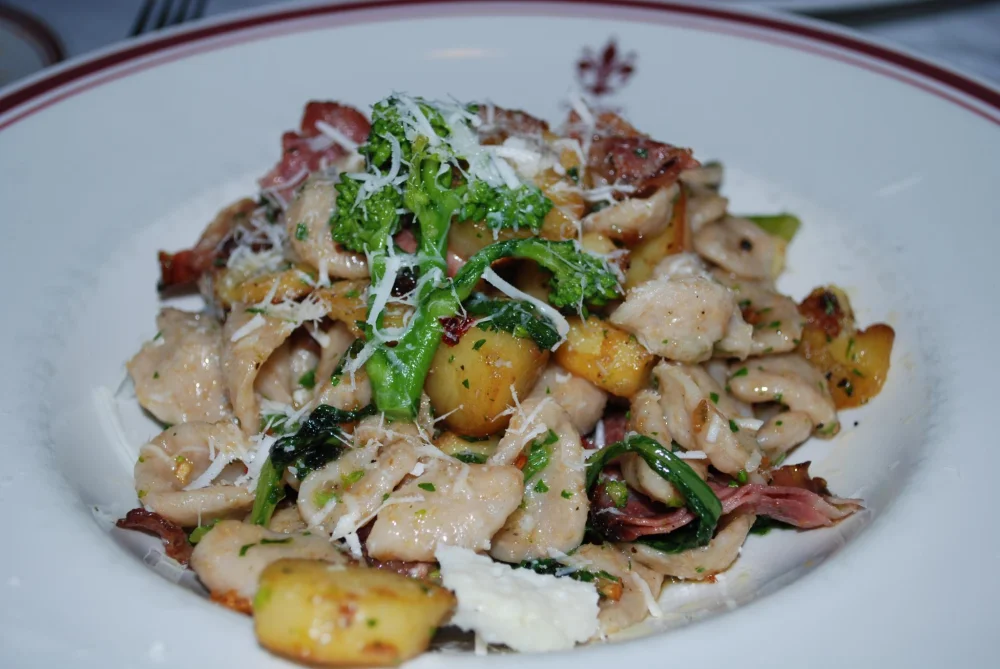
Orecchiette alle cime di rapa, Puglia's signature pasta · Alberobello, 2026 · © Alpha from Melbourne, Australia / Wikimedia Commons — CC BY-SA 2.0
| Restaurant | Speciality | Budget | Our view |
|---|---|---|---|
| L'Aratro | Traditional Puglia cooking | 12-20 € | A reliable choice for orecchiette alle cime di rapa. Simple, welcoming surroundings. Closed Tuesdays. |
| Macelleria Braceria Centro Storico | Fornelli pronti, grilled over embers | 10-18 € | Bombette pugliesi cooked to order and served in a neighbourhood butcher's shop. |
| Terra Madre | Garden-grown cooking and organic vegetables | 30-55 € | A kitchen garden adjoins the restaurant. Booking is essential in summer, at least two weeks ahead. |
For an excellent dinner, book Terra Madre, just behind the Trullo Sovrano square. The restaurant grows its own organic vegetables in the adjoining gardens. Try the white broad bean purée with bitter chicory, or plates of oven-roasted heritage vegetables from Puglia.
The restaurant is generally closed on Tuesdays, and sometimes Wednesdays depending on the season. In summer, book at least two weeks ahead for a chance of an outdoor table in the vegetable garden.
What to buy in Alberobello
As you walk around Rione Monti, shopkeepers will call for your attention from every side. Look for these locally made items if you would rather bring home something from Puglia than fill your suitcase with mass-produced souvenirs.
Terracotta fischietti: small handmade clay whistles painted in bright colours. Typical of the region, particularly nearby Rutigliano, they often take the form of roosters, carabinieri or satirical figures. A cheerful, humorous piece of local folk craft.
Linen and woven textiles: Puglia has a long textile tradition. Look for small independent shops still selling loom-woven household linen, tea towels or natural linen table runners, often finished with delicate embroidery.
Pumo di Puglia: this glazed ceramic flower bud is placed on balconies or on either side of doorways. It is Puglia's most widespread good-luck charm, believed to ward off misfortune. Check that it was made in the region, ideally in Grottaglie, rather than imported.
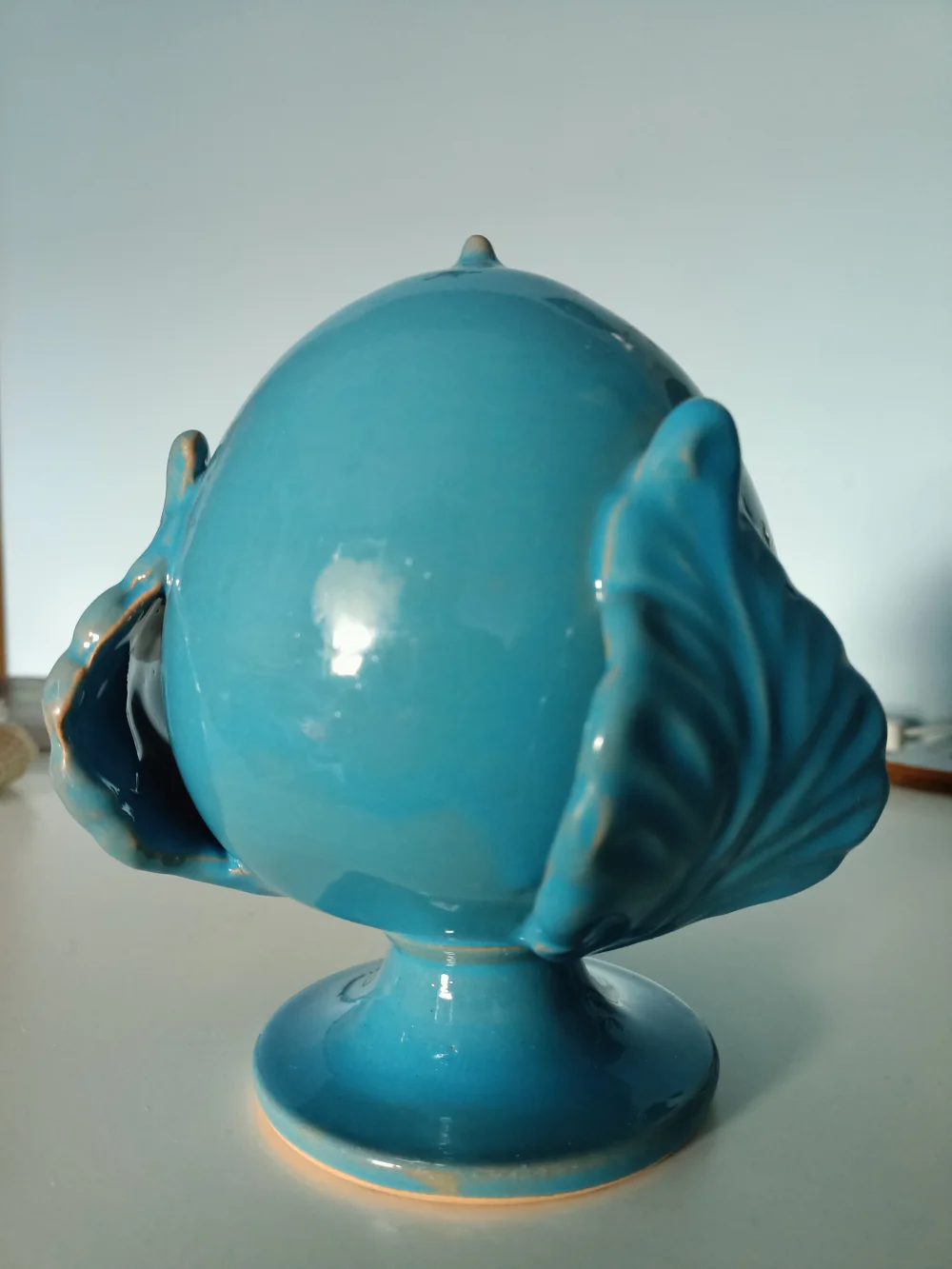
© W2k2 / Wikimedia Commons — CC BY 4.0
Where to stay in Alberobello
A night in a trullo is reason enough to stay in Alberobello. The interiors hold a few surprises: very thick limestone walls provide natural cooling even in August, bare stone vaults muffle outside noise to give near silence, and cosy little alcoves have been turned into bedrooms.
Bear in mind that some trulli have little natural light, as the windows are tiny, and bathrooms can be compact.
| Type | Price / night | Our view | Link |
|---|---|---|---|
| Trulli Holiday Albergo Diffuso | 90-150 € | This albergo diffuso offers a wide choice of carefully restored homes, with breakfast in a central building. A good option for your first night in a trullo. | View → |
| Le Alcove Luxury Hotel nei Trulli | 180-280 € | High-end accommodation right on the main square. A well-regarded choice for travellers seeking extra comfort. | View → |
| Trullo with a pool (countryside) | 120-200 € | A private rental in the countryside around Locorotondo. More space, more peace and a swimming pool beneath ancient olive trees. | View → |
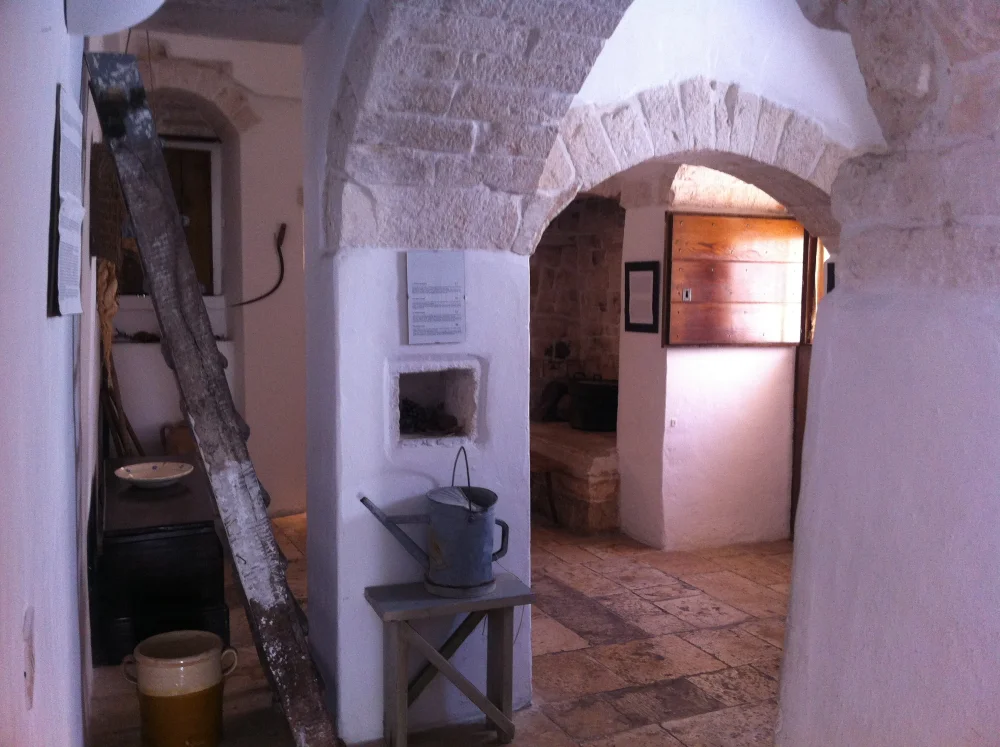
Inside Trullo Sovrano: the stone vault and niches cut into the walls · Alberobello, 2026 · © Horcrux92 / Wikimedia Commons — CC BY-SA 4.0
Accommodation often follows the albergo diffuso model: reception and breakfast are in a central building, while the rooms are in real trulli scattered around the neighbourhood.
Book several months ahead, especially for the Festa dei Santi Medici at the end of September. If you want more space, renting a trullo with a swimming pool in the countryside around Locorotondo is a good alternative.
What to do near Alberobello
After an overnight stay and an early walk around Aia Piccola, you still have a full day ahead. Leave Alberobello as the first tour buses arrive and drive into the Itria Valley, a stop on most classic Puglia itineraries.
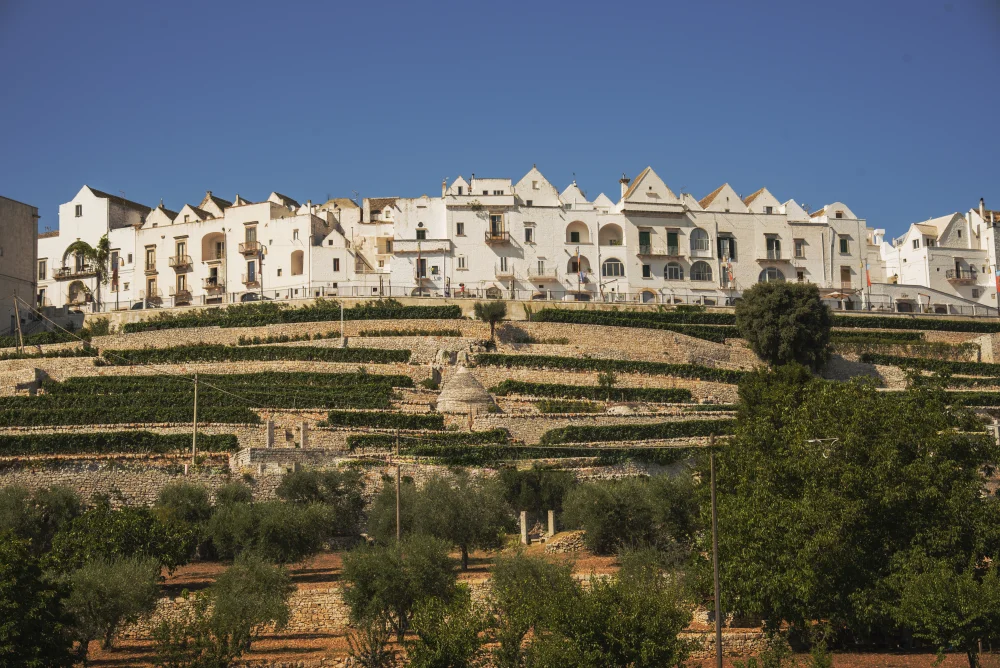
Locorotondo, the balcony of the Itria Valley, a 10-minute drive from Alberobello · © Cinzia astorino / Wikimedia Commons — CC BY-SA 4.0
Locorotondo (10 min): a whitewashed hilltop town reached via the SS172. Its distinctive buildings are the cummerse, white houses with steep roofs of grey stone slabs. Walk along the viewpoint on Via Nardelli for a panorama of the whole Itria Valley, then stop on a terrace for a glass of Locorotondo DOC, a dry, floral white wine.
Martina Franca (15 min): a town of carved palaces, intricate wrought-iron balconies and 18th-century Baroque churches. Walk through imposing Porta Santo Stefano and explore the pale streets. Try the town's speciality, Capocollo di Martina Franca: pork cured with cooked wine and smoked over oak bark, protected by the Slow Food label.
Cisternino (25 min): its pristine historic centre is pleasant to explore, but the main reason to come after dark is a local food tradition, the fornelli pronti. Go into a butcher's shop (macelleria), choose your uncooked meat, such as bombette, and the butcher cooks it straight away in a vertical wood-fired oven. You then eat at rustic tables set out in the adjoining lane.
How to get to Alberobello
Alberobello is in the heart of the Itria Valley, 70 km south-east of Bari and 75 km north-west of Brindisi. A hire car remains the most practical way to reach the town and explore the surrounding area at your own pace.
If you hire a car, check that the damage cover is adequate: secondary roads in the Itria Valley can be very narrow, hemmed in by stone walls. The SS100 and then the SS172 take you from Bari in just under an hour, through a landscape of dry-stone walls, red soil and groves of centuries-old olive trees.
Once you arrive, you can cross the whole historic centre on foot in under 20 minutes. Bear the terrain in mind: Rione Monti's lanes are steep, and the limestone paving, polished over time, becomes slippery in rain or intense heat. Wear shoes with grippy soles.
For free parking, there are white-lined spaces on Via Nino Rota and Via Paolo Pasolini, a 10–15-minute walk from the centre, provided you arrive early in the morning.
If I could give you just one piece of advice for Alberobello, it would be this: set your alarm for 6.30am. Wander into Aia Piccola as the sun is rising. At that hour, low sunlight lights the limestone a pure white and the lanes are empty. There is just you, the smell of fresh coffee drifting from open windows and the silence of these old farming homes.— DR, Alberobello · Itria Valley