Sorrento
Gateway to the coast
A practical base for exploring the Bay of Naples and Amalfi Coast without exhausting your budget.
Sorrento clings to a volcanic-tuff cliff fifty metres above the Bay of Naples. Strictly speaking, it is outside the Amalfi Coast, but it is one of the most practical bases for exploring it.
Things to do in Sorrento and nearby
Sorrento occupies two levels: the upper town on the cliff and two harbours at the water's edge. The four suggestions below include visits in town and the two excursions that make it such a useful base: Capri by sea and Pompeii by train.
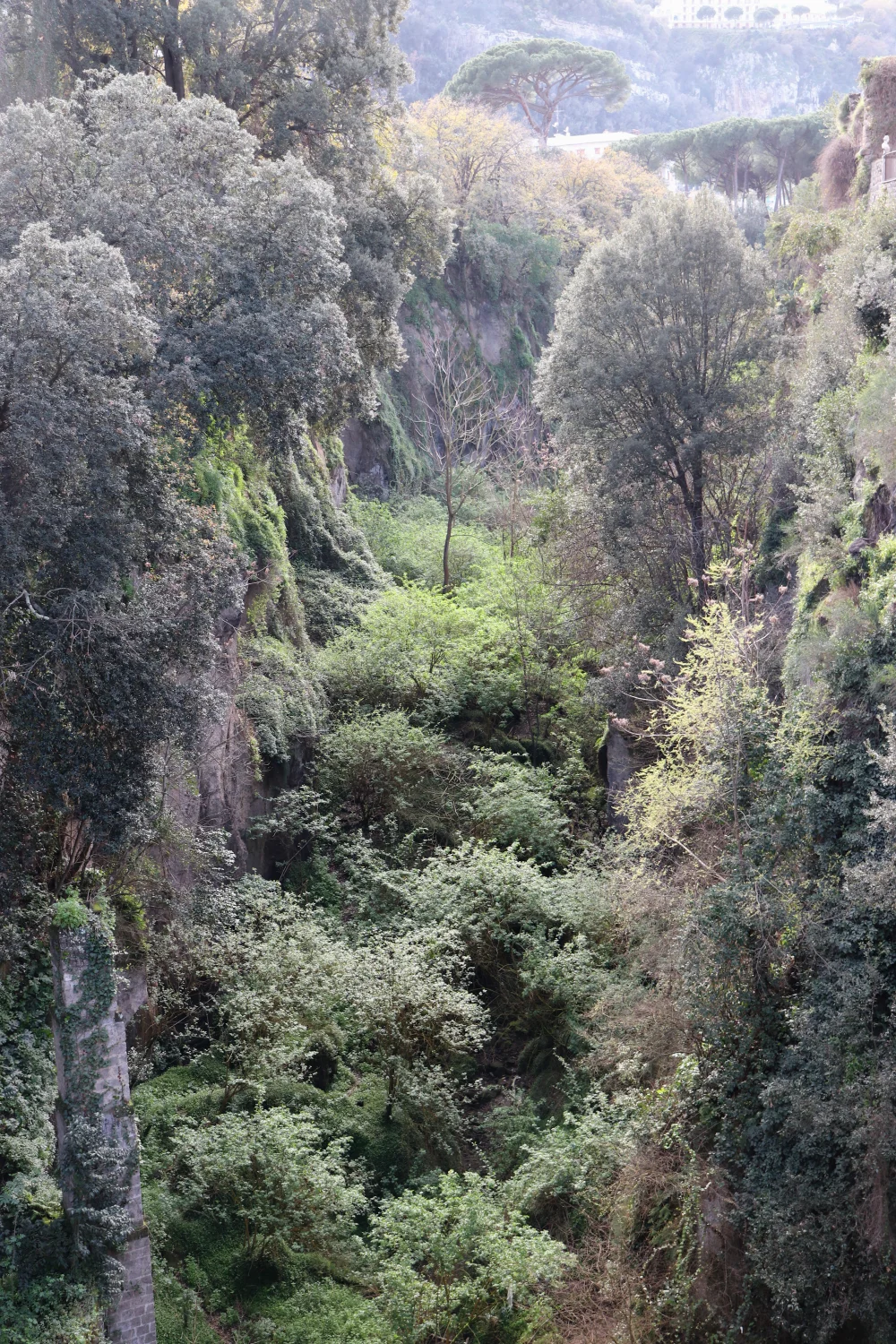
Close to Piazza Tasso, the ground opens into a 35-metre volcanic cleft. At the bottom are the ruins of a 13th-century flour mill, abandoned in 1866 when infilling the square raised humidity levels. Pteris vittata ferns have covered the stone.
© KaiBorgeest / Wikimedia Commons · CC BY-SA 4.0
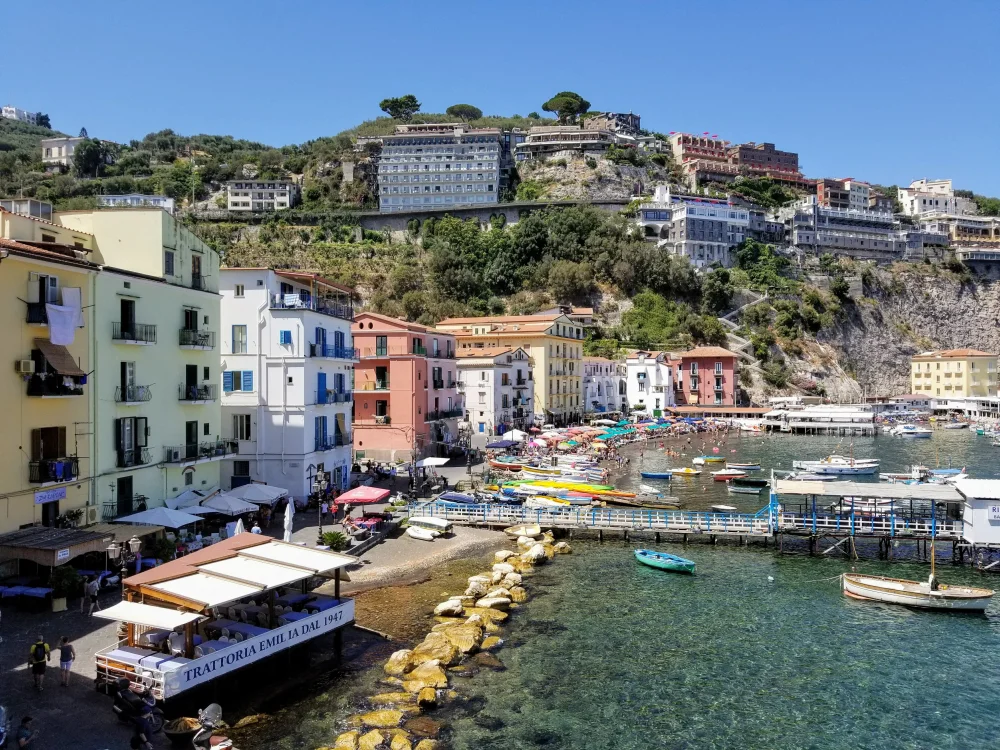
Sorrento's smaller, older harbour is reached by a long flight of steps from the centre. This fishing neighbourhood sits below the cliff, away from the large ferries at Marina Piccola. Blue nets lie on the paving, and fish is frying by 11am.
© Davidhermanns / Wikimedia Commons · CC BY-SA 4.0
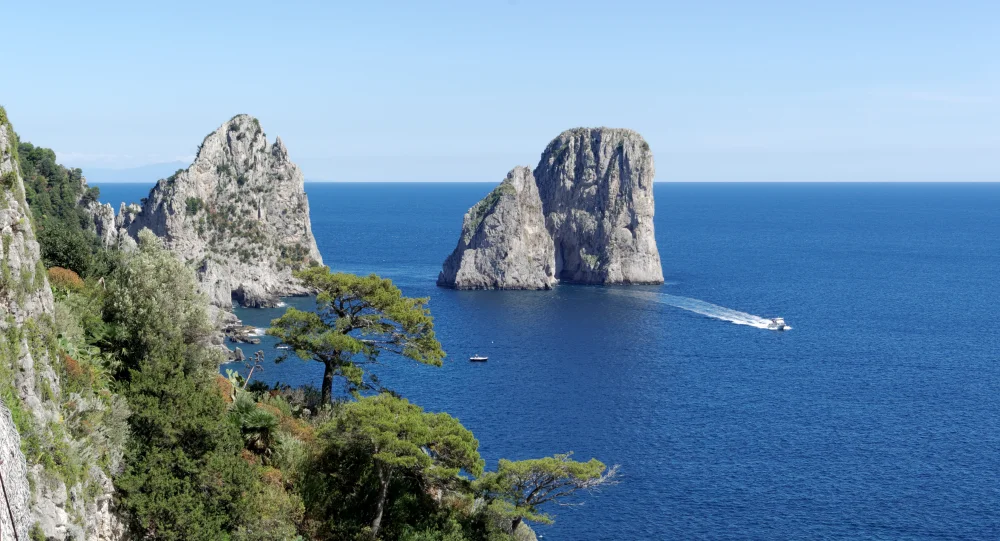
Sorrento offers the shortest crossing to Capri: 25 minutes direct. Instead of a 300-passenger ferry, a small traditional gozzo boat excursion circles the island, stops by sea caves and passes through the Faraglioni arch, before four hours of free time ashore. If you specifically want the Blue Grotto, check access before leaving: sea conditions can close it.
© Berthold Werner / Wikimedia Commons · CC BY-SA 3.0
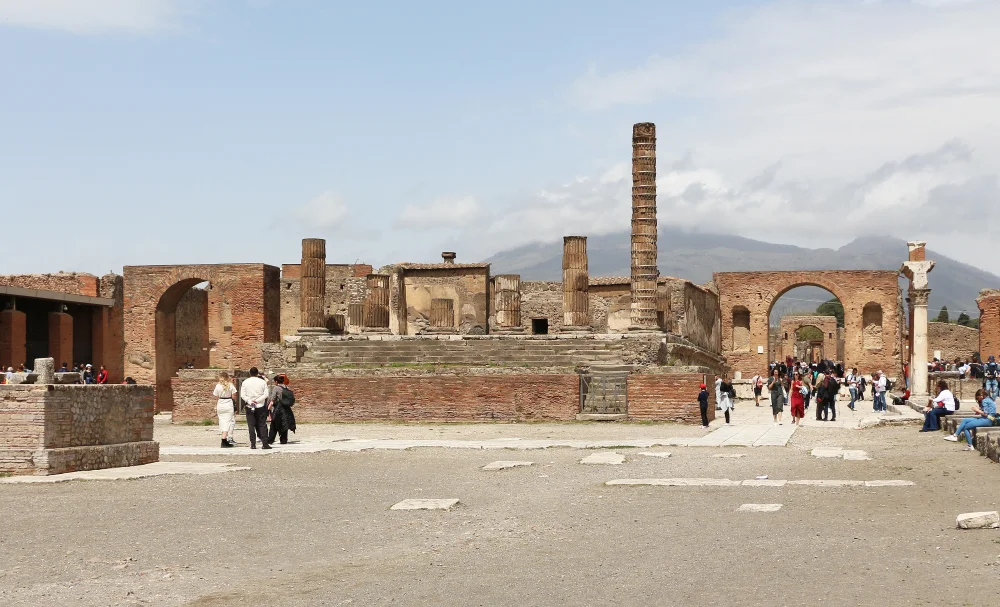
Sorrento station is the Circumvesuviana's southern terminus. A 30-minute, €3.20 train ride brings you to Pompeii's Porta Marina entrance. You avoid A3 traffic and expensive private parking.
© Bernard Gagnon / Wikimedia Commons · CC BY 4.0
The first two sights are free and walkable from Piazza Tasso. Book the Capri and Pompeii excursions in advance; departures are from Marina Piccola harbour and the station, less than ten minutes apart.
3 days in Sorrento: a practical itinerary
Three days balance Sorrento itself, a Capri excursion and Pompeii. The plan keeps travel manageable: a day on foot in Sorrento, a day at sea and a morning train journey into the ancient world.
Start in the town centre. Look down into the Vallone from Via Fuorimura to spot the ruins below.
FreeAn intact lemon grove in the town centre. Walk beneath black protective nets and tall wooden pergolas.
Free access · paid tastingsFollow the paved slope of Via Marina Grande. Have lunch at Trattoria Da Emilia, a longstanding family restaurant on the wooden quayside.
€25–35 per mealTake the municipal lift back up. The 14th-century cloister has volcanic-tuff columns and interlaced arches. Nearby Villa Comunale offers open views over the bay and Vesuvius.
Free · lift €1.30The main street closes to cars late in the day. It is time for the passeggiata, as residents come out to stroll and window-shop.
FreeArrive 30 minutes before the boat departs. Have an espresso at the harbour bar counter before boarding.
Outbound ferry around €24Take the funicular straight to Capri town, or the little orange bus to Anacapri, to get ahead of the groups.
Funicular €2.40The quiet ride on individual chairlift seats takes 13 minutes, passing close to terraced vegetable gardens. At the 589-metre summit, the Bay of Naples lies on one side and Gulf of Salerno on the other.
€16 returnHead back down towards Capri's Piazzetta. Follow Via Tragara to the Faraglioni viewpoint.
€15–20 for a caprese sandwichThe light fades over the Sorrento peninsula's cliffs during the return crossing.
Return ferrySettle in at Enoteca Puro with a glass of Falanghina, a dry, mineral white from Campania's volcanic slopes.
€8–12 per glassTake a Circumvesuviana train towards Naples. Sit on the left for sea views after Castellammare.
Ticket €3.20Arrive at Pompei Scavi–Villa dei Misteri station. Enter when the site opens at 9am for cool air over the large basalt paving stones.
Admission €22The afternoon sun makes the site oppressive as the stone stores heat. Take the train back.
CircumvesuvianaA patrician palace surrounded by citrus trees, with a fine collection of Capodimonte porcelain and 17th-century paintings.
Admission €8Visit the historic Gargiulo & Jannuzzi shop on Piazza Tasso. It is known for intarsio, the wood-inlay craft associated with Sorrento since the 19th century.
FreeWalking around Sorrento
A walk through the centre reveals an immediate contrast. On one side is Corso Italia: a straight main street lined with shops selling linen clothes, café terraces with waiters in black waistcoats and bow ties, and freshly painted yellow or salmon façades. This is the town's polished face. On the other are back lanes such as Via San Cesareo, narrower and paved with uneven grey slabs, keeping out the sun.
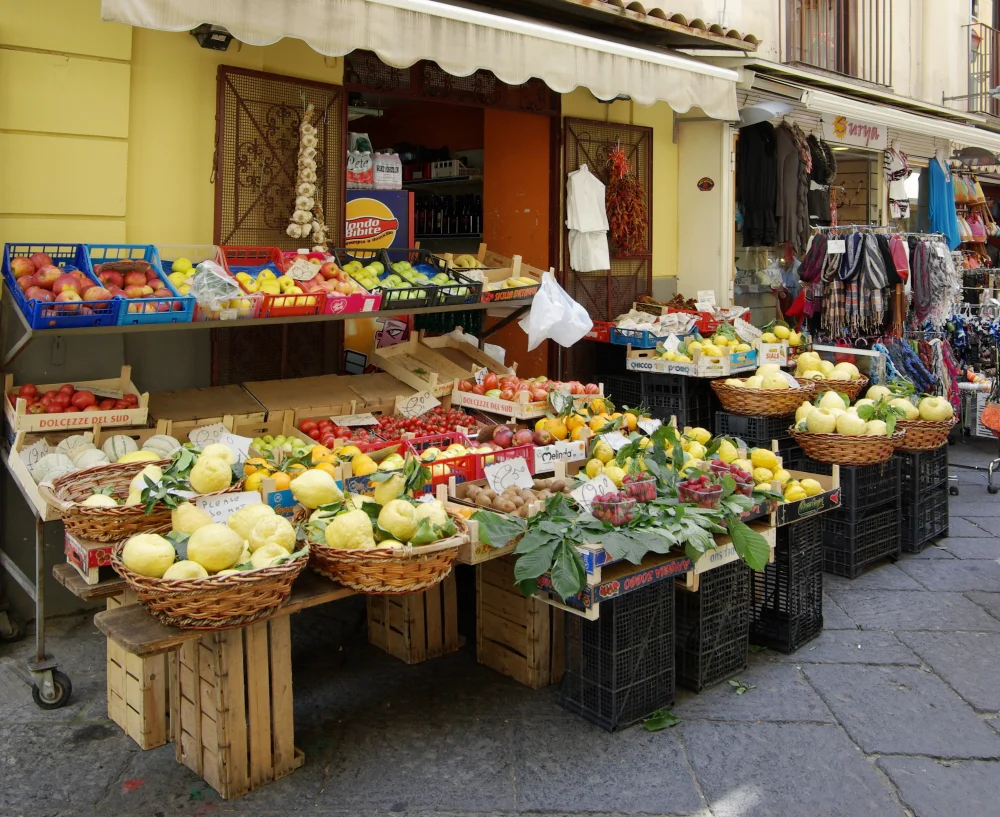
Via San Cesareo lane, Sorrento · © Berthold Werner / Wikimedia Commons · CC BY-SA 3.0
Here, traders put out wooden crates of enormous lemons. Limoncello bottles stack from floor to ceiling in shops thick with the scent of zest. Stop at Gelateria Raki, at number 48: try Bronte pistachio or local lemon gelato as you walk. Allow €3.50 for two scoops served with a spatula.
Sorrento does not slope gently towards the sea: it stops abruptly at the cliff edge. From Villa Comunale's terrace, shaded by holm oaks and maritime pines, you look down on beach life fifty metres below. There is no long sandy beach here. Swimming is from stabilimenti balneari, large wooden platforms on stilts above deep water, covered with orange and blue sunbeds. Reach them by the municipal lift at Piazza San Francesco (€1.30 each way) or steep ramps cut into the rock. In the evening, the flow reverses: people head uphill to Piazza Tasso for aperitivo, and the pavements stay busy until 10pm.
Where to eat in Sorrento
Local cooking rests on three ingredients: PGI lemons (Limone di Sorrento, with thick, oil-rich skins), peninsula walnuts and fresh dairy produce from the Lattari Mountains above town. To find fair lunchtime prices, move away from Piazza Tasso. Marina Grande retains excellent family trattorias.
PGI lemon peel steeps in pure alcohol for several days before a water-and-sugar syrup is added. Served ice-cold after a meal. A cloudier liquid indicates a higher concentration of essential oils.
Soft potato gnocchi with thick tomato sauce, local mozzarella, grated Parmesan and large basil leaves, baked in a round earthenware dish.
A dome of sponge soaked in limoncello syrup, filled and covered with lemon custard. The peninsula's signature dessert, created by chef Carmine Marzuillo in the 1970s.
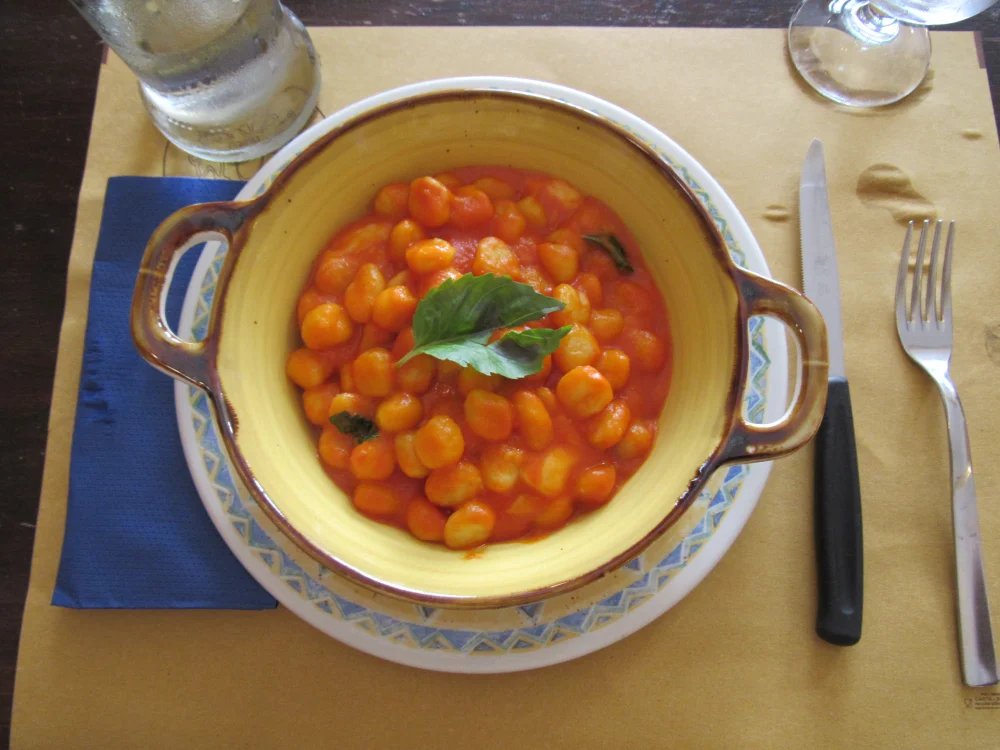
Gnocchi alla sorrentina in an earthenware dish · Sorrento, 2026 · © Super nabla / Wikimedia Commons · CC BY-SA 4.0
| Restaurant | Speciality | Budget | Our view |
|---|---|---|---|
| O'Parrucchiano La Favorita | Sorrento cooking, cannelloni | 45–60 € | Dine in a courtyard turned conservatory, covered with century-old lemon trees. The restaurant claims to have invented cannelloni in 1887. |
| Trattoria Da Emilia | Pasta and fish by the harbour | 25–35 € | A family restaurant on Marina Grande's wooden quayside. Gnocchi alla sorrentina baked in an earthenware dish. |
| Enoteca Puro | Campania wines by the glass | €8–12 per glass | An aperitivo stop on Via San Cesareo, with a good selection of Falanghina and volcanic whites. |
For dinner after a day in Pompeii's ruins, book O'Parrucchiano La Favorita on Corso Italia: eat beneath a conservatory of lemon trees and hanging lamps. Elsewhere, settle into a central osteria and let the waiter guide your order.
Where to stay in Sorrento
Location determines how smoothly your days run. Around the station (Via Marziale and eastern Corso Italia), you can take morning trains to Pompeii, Herculaneum or Naples, or SITA buses to the Amalfi Coast, without dragging luggage through crowded pedestrian streets. Near the port (Piazza Sant'Antonino and Via Luigi De Maio), hotels sit on the ridge five minutes from the lift to Marina Piccola: useful if Capri and boat trips dominate your plans.
| Property | Price / night | Our view |
|---|---|---|
| Palazzo Starace Guesthouse · rated 8.9/10 on Booking |
150–210 € | Twenty metres from Piazza Tasso, between station and harbour. Homemade breakfast and a family welcome. Stairs only, as in many older southern Italian buildings. |
| Hotel Alpha 4-star hotel in Sant'Agnello · rated 8.6/10 on Booking |
100–160 € | A 19th-century villa with two pools and a citrus garden, five minutes from Sant'Agnello station, one stop from Sorrento. The best-value choice, especially with a car. Parking €20/day. |
| Maison La Minervetta 4-star boutique hotel · Marina Grande views |
from €450 | Thirteen glass-fronted rooms above Marina Grande, Vietri ceramics and a terrace with a hot tub. Book several months ahead. |
For walking everywhere, choose the historic centre or ridge above the harbour: the area is safe and lively in the evening. For lower costs without losing train access, Sant'Agnello, immediately east, has neighbourhood grocery prices and is one Circumvesuviana stop or twenty minutes' walk away. Book early for June–September: the best places fill quickly.
Getting to and around Sorrento
The train is the most efficient and cheapest option from Naples. At Napoli Centrale, go down to Garibaldi station: Circumvesuviana trains leave every thirty minutes, taking 1 hour 10 minutes and costing €5.30. Trains are older, without air conditioning, and fill quickly. From March to October, Campania Express serves the same line with seats and air conditioning, taking fifty minutes for €15.
For the Amalfi Coast, blue SITA Sud buses leave the station forecourt for Positano (1 hour) and Amalfi (1 hour 40 minutes), around €2.40 per section. Buy tickets before boarding; drivers do not sell them. The SS163 has many hairpin bends: if prone to travel sickness, choose a ferry from Marina Piccola. For a wider trip, see our 5-day Campania itinerary. ZTL restrictions and parking make a car inconvenient day to day. If hiring one, limit it to days when you leave the peninsula for inland areas.
For Positano or Amalfi from Sorrento between mid-June and mid-September, ferries are preferable to SITA buses. Coastal roads clog, buses get stuck at bends, and you may wait an hour in the sun for space. Local ferries from Marina Piccola cost €16 and take forty minutes on a fixed timetable, unaffected by road traffic. Seeing Positano rise vertically from the sea justifies the extra cost.— The editorial team · Sorrento, Campania
Capri takes some effort to discover. The challenge is geographical rather than financial: the island's real life begins 250 metres…
Read more →Hundreds of pastel houses cling to the cliff, with 400 steps to the beach and sweeping views over the Mediterranean.
Read more →