Ischia
The green island
Larger and quieter than neighbouring Capri, this island off Naples invites you to unwind in natural hot springs and settle into a slower rhythm.
Ischia is Capri's down-to-earth counterpart. Larger and more lived-in, it draws Neapolitans escaping the city heat. Come for thermal pools overlooking the sea and slow-cooked rabbit in the inland villages.
Things to do in Ischia: 5 experiences beyond the beaches
Five experiences stand out on the island, each with its own practicalities and pace.
Here are the first four, starting with the oldest.
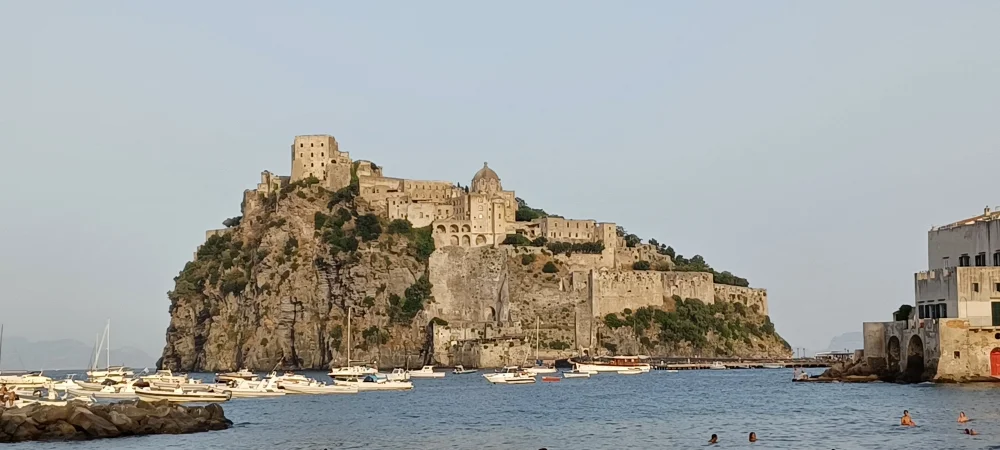
A rocky islet linked to the village of Ischia Ponte by a 220-metre stone causeway, built in 1441 by Alfonso V of Aragon. Reach it by a lift cut into the rock or a brick-paved tunnel.
At the top, the site feels like an abandoned village: cathedral walls shattered by British cannonballs in 1809, terraced vineyards and a Poor Clares convent. The convent contains an underground cemetery where deceased nuns were placed on perforated seats to decompose, a practice documented in the 16th century.
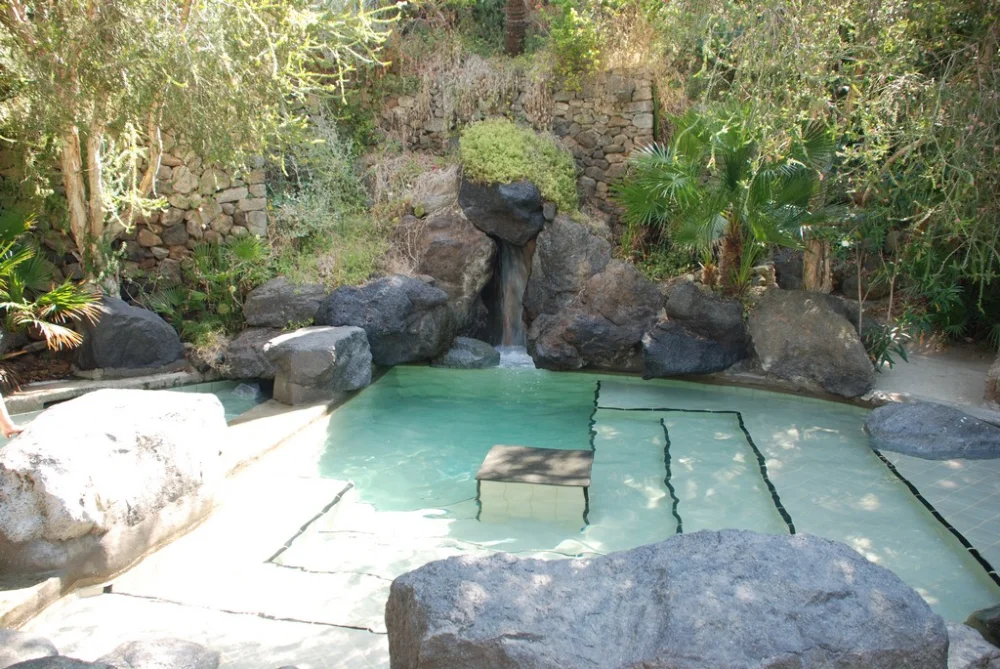
The island's largest thermal complex, at the end of Citara Bay in Forio. Twenty pools step down the hillside to the sand, with temperatures ranging from 28°C to 40°C.
The Kneipp circuit alternates a hot pool with a channel of water at 15°C. Children under 12 cannot enter pools above 30°C.
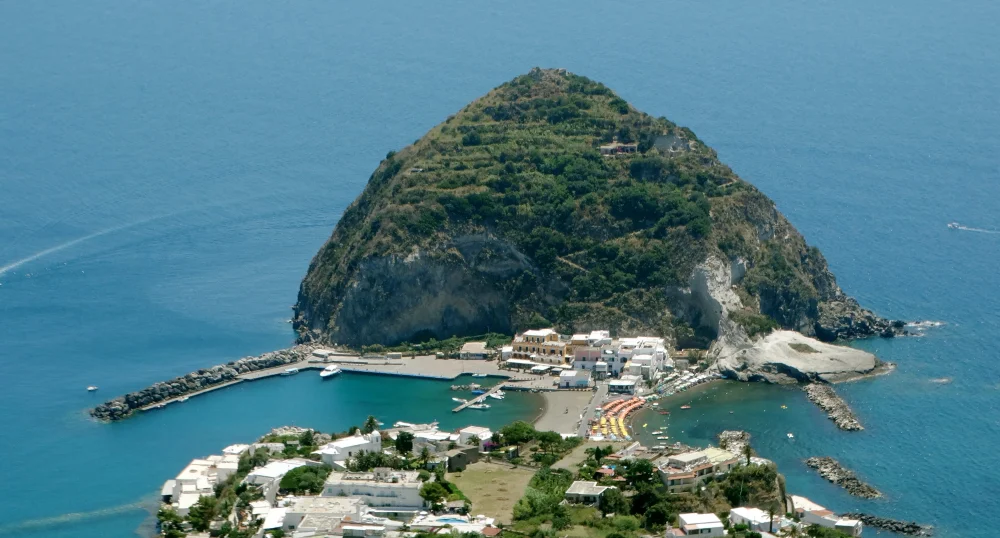
An old fishing village on the island's southern tip, where cars are not allowed down to the waterfront. Leave your vehicle in the paid Cava Grado car park above the village, then walk to the harbour or take an electric buggy (€5 each way).
The small marina is lined with cubic pastel houses and café terraces. Water taxis to Maronti beach leave directly from the harbour, at €4 each way.
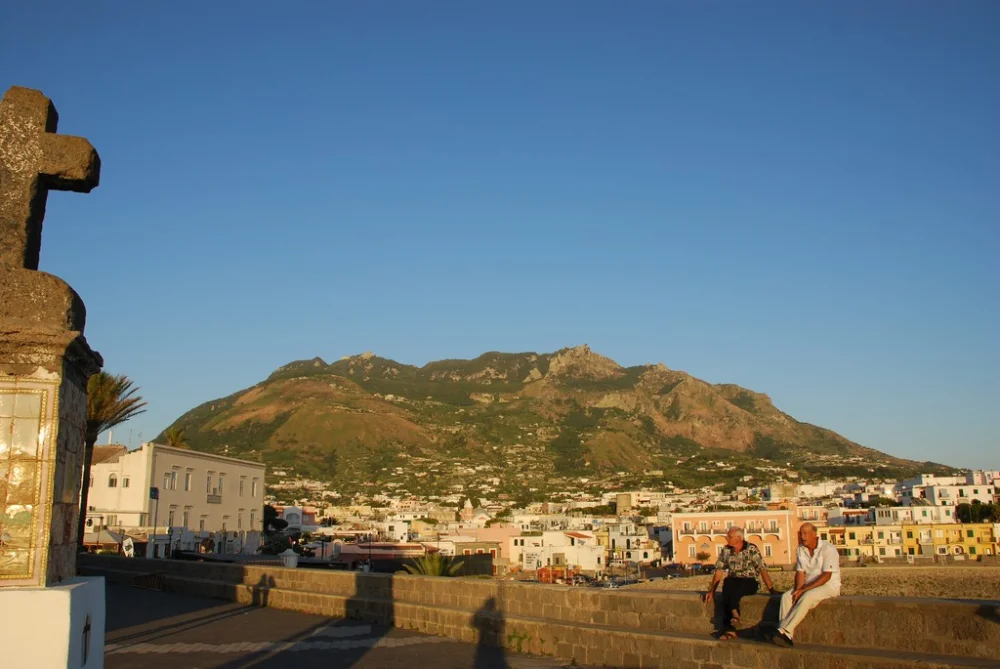
789 metres above sea level. The climb starts in Fontana's main square: chestnut woods at first, before the shade disappears.
The scent of wild fennel replaces that of damp earth. The ground turns dusty, and the final fifteen minutes over exposed green rock leave your calves burning. At the top, the 360-degree view takes in the Bay of Naples, Procida and Vesuvius.
Giardini La Mortella completes the list. In 1956, British composer William Walton and his wife Susana began turning a barren lava flow in Forio into a botanical garden.
The visit begins in a shaded valley, with tree ferns and the glasshouse containing Victoria amazonica, the giant water lily. It ends on Mediterranean terraces higher up, overlooking the sea. Admission: €12.
5 days in Ischia: a practical itinerary
In summer, allow almost two hours by bus to travel right around this 46 km² island.
This itinerary therefore keeps journeys down by focusing each day on a different part of the island.
Go in as soon as it opens. Allow two hours to climb to the top and explore the ruined churches and Poor Clares convent.
🎟 12 €Follow Corso Vittoria Colonna, the main, partly pedestrianised shopping street, from the old village towards the modern harbour at Ischia Porto.
Free accessRistorante da Assuntina or one of the trattorias along Riva Destra. Pasta with clams (vongole), overlooking the ferries.
€20–30A small cove of black sand and pebbles, reached by a footpath from Ischia harbour. Sheltered from the wind, it cools down in the late afternoon.
Free accessAn Ischia Porto institution. A Spritz comes with several portions of cold pizza and peanuts. Online reviews have slipped in recent years, particularly for service: come for the croissant rather than a warm welcome.
around €10In Forio. This whitewashed church stands on a headland facing the sea. Sailors left votive offerings here before setting sail.
Free accessAt the end of Citara Bay. Work your way through pools ranging from 28°C to 40°C.
🎟 40 €Caffè Poseidon, the park's own restaurant. Prices are high, but the caprese salad with Ischia tomatoes is decent. A cheaper option: buy a Zingara sandwich from a grocery shop in Forio before entering.
High pricesWalk or take the bus to the lanes of the west coast's main town.
Free accessForio faces west: this is where the sun sinks into the sea. Watch from the harbour breakwater or the terrace at Il Saturnino, with a Peroni in hand.
around €5Leave your vehicle in the upper car park. Walk down to the fishing village and along the sandy isthmus.
Parking around €10Take a wooden water taxi from Sant'Angelo harbour to Maronti, the island's longest beach.
€4 each wayAt the western end of Maronti. Volcanic steam heats the sand to almost 100°C in places. Locals sometimes bury chicken or eggs here to cook them slowly.
Free accessBack to the harbour for an iced coffee (caffè freddo) overlooking the yachts.
around €3Head inland to Casamicciola or Serrara Fontana for traditional rabbit at a rustic inn.
around €20Start in Fontana's main square. The steep path takes an hour to reach the highest point, at 789 metres. Morning temperatures make the climb more manageable.
Free accessLa Grotta da Fiore, carved out beneath the summit. Bruschetta with local tomatoes and a glass of white wine before walking back down.
around €15Take the bus to Panza. A steep stepped path from the cemetery leads to this cove, framed by banded volcanic cliffs.
Free accessTrattoria Da Peppina di Renato. Pork roasted in a wood-fired oven rewards the day's efforts.
approx. €25Get to Forio early, before the humidity becomes oppressive under the midday sun.
🎟 12 €Swim and have fried calamari for lunch on the light sand of the north-west coast.
Free accessStroll through this historic spa town. The mushroom-shaped Fungo rock stands in the harbour, surrounded by hotels dating from the 1950s.
Free accessIn Casamicciola. A small red funicular descends towards the sea for one last warm-water dip in the park's ten pools.
approx. €30Walking in Ischia: pine woods and tuff canyons
The name 'green island' makes sense as soon as you leave the coastal ring road.
Ischia offers varied walking terrain, from flat, shaded paths to volcanic slopes.
Pineta Mirtina links Ischia Porto to Ischia Ponte. These dense umbrella-pine woods were planted around 1850 by the Bourbon dynasty to stabilise the most recent lava flow, from the eruption of 1302.
You walk over a thick layer of dry needles. The ground is flat, temperatures drop by five degrees beneath the canopy, and the scent of resin replaces the exhaust fumes from the nearby road.
Allow around thirty minutes to walk through.
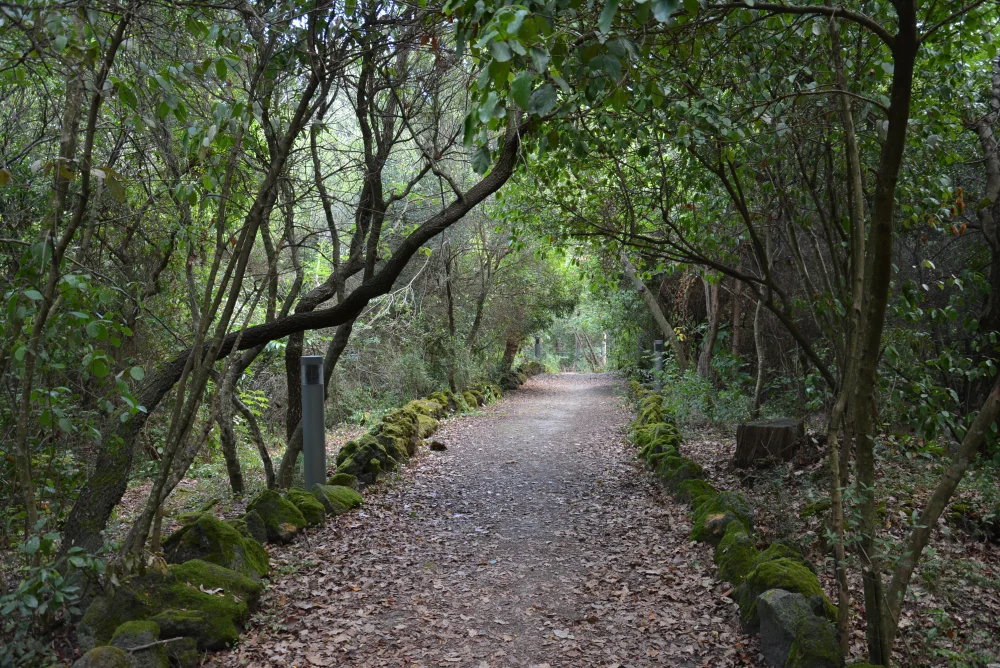
Pineta Mirtina, planted by the Bourbons around 1850 · Ischia, 2026 · © Mentnafunangann / Wikimedia Commons, CC BY-SA 4.0
For Baia della Pelara, take a CD or CS bus and get off at Panza in the south-west of the island.
Walk through the village to the cemetery: a wooden sign marks the start of the trail. The path drops steeply into a canyon cut into volcanic tuff, among holm oaks, wild fennel and agaves.
You need proper walking shoes: steps made from wooden logs descend a steep slope. After forty minutes, you reach a large-pebble cove enclosed by high, banded cliffs.
For experienced walkers, the Pizzi Bianchi trail starts in the small village of Noia, reached by bus from Fontana. It crosses pure white pinnacles of pumice, sculpted by rain and wind.
The ground is very slippery and the slope steep. The trail emerges on the long Maronti beach, so you can return by water taxi or bus rather than climb back up the rocky hillside.
Where to eat in Ischia: local classics
Fear of pirates long kept island life inland, so its cooking is firmly rooted in the land. Expect produce from the volcano's slopes.
Rabbit traditionally raised in a pit, jointed and slowly simmered in an earthenware pan with whole garlic cloves, cherry tomatoes, white wine and wild thyme. The rich sauce dresses a plate of bucatini served as a first course.
The classic quick lunch. A hot sandwich made with two slices of crisp country bread, filled with fior di latte, prosciutto crudo, lettuce, tomatoes and mayonnaise.
The local breakfast favourite. A pastry combining crisp puff pastry with soft brioche dough, filled with custard or amarena cherries.
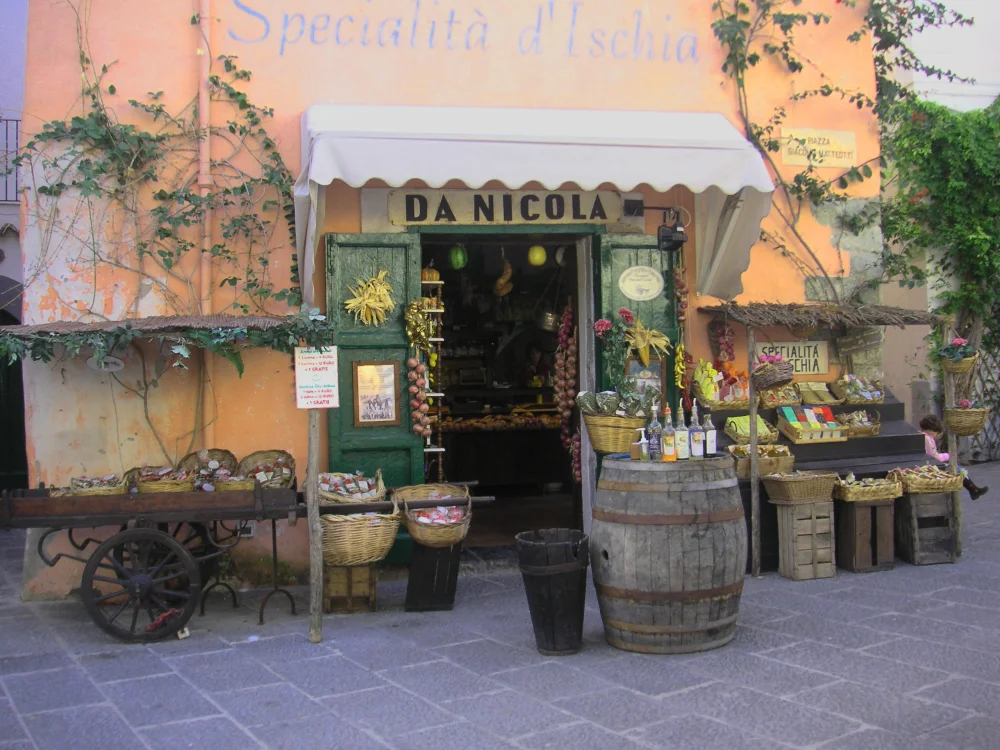
Shopping lane in Forio · Ischia, 2026 · © Marek Gehrmann / Wikimedia Commons, CC BY-SA 3.0
| Restaurant | Speciality | Budget | Our view |
|---|---|---|---|
| Ristorante da Assuntina 4.3/5 on Google | Pasta with clams, fish | €20–30 | A simple setting on Riva Destra, facing the ferries. |
| La Grotta da Fiore 4.8/5 on Google | Rock-cut restaurant, bruschetta | around €15 | Carved into the rock below the summit: a welcome stop after the climb. |
| Trattoria Da Peppina di Renato 4.4/5 on Google | Pork roasted in a wood-fired oven | around €25 | In Panza, for dinner in the hills away from the coast. |
Across Ischia, tables feature Biancolella, a dry, straw-yellow white wine grown on steep volcanic terraces.
Roots reach into ancient ash, giving the wine a pronounced mineral edge. Order a bottle from Casa D'Ambra or Cenatiempo, around €18 in a restaurant.
To finish, Rucolino takes the place of limoncello: a dark, bitter, herbal liqueur made by steeping the wild rocket leaves that grow freely on the island.
Where to stay in Ischia: the best areas for your trip
Where you stay makes a big difference to getting around. This is a sizeable island, with bus journeys between opposite ends taking over forty minutes.
Ischia Porto and Ischia Ponte make the simplest bases: ferries arrive here, and you can put down your bags ten minutes after stepping ashore.
In the evening, the area has late-opening bars, the restaurants of Riva Destra and the shops along the Corso.
| Property | Price / night | Our view |
|---|---|---|
| Hotel Floridiana 4-star hotel · private thermal pools |
from €140 | On the pedestrianised Corso, ten minutes from the ferries. Thermal pools at the back make it convenient if you are not hiring a vehicle. |
| Hotel Tritone Resort & Spa 4-star resort · private beach, Forio |
from €152 | On San Francesco beach, with outdoor pools and a spa. West-facing for sunset views. |
| Botania Relais & Spa 5-star retreat · adults only, Lacco Ameno |
from €300 | Separate rooms in three hectares of botanical grounds. Children under twelve are not accepted. |
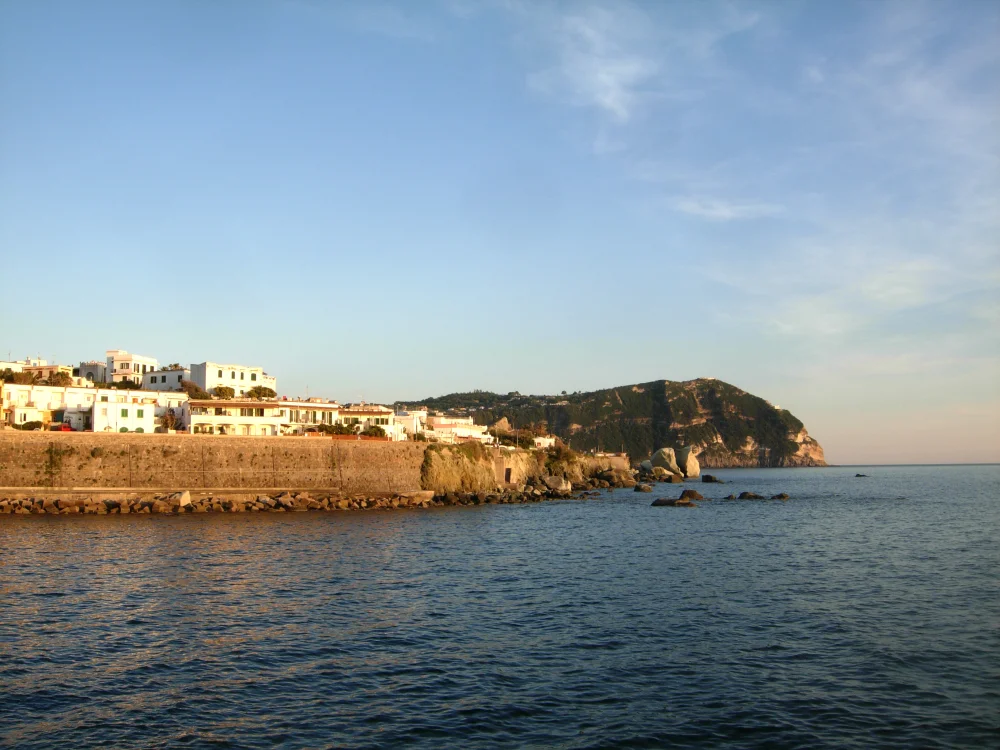
Sunset over Forio · Ischia, 2026 · © Acediscovery / Wikimedia Commons, CC BY 4.0
Forio is the main base on the west coast, with the quickest access to the large sandy beaches.
Sant'Angelo offers a motor-free setting and quiet after dark. Lacco Ameno hides its five-star hotels among wooded slopes.
Getting to Ischia and practical information
You can reach the island from Naples by hydrofoil or conventional ferry. If Ischia is one stop on a wider trip, it fits naturally into our one-week itinerary around Naples. Once here, Ischia boat tours offer a choice of time ashore, swimming stops, lunch on board or a private boat.
Hydrofoils (aliscafo) leave from the central Molo Beverello harbour: a 50-minute crossing, around €22 one way, for foot passengers only. Alilauro and SNAV run frequent summer services.
Conventional ferries (traghetto) leave from Porta di Massa, east of Molo Beverello. They carry vehicles and foot passengers: the crossing takes 1 hour 30–40 minutes, with foot-passenger fares of €15 on Caremar and Medmar.
On the island, regional operator EAV runs two circular bus routes: CD (clockwise) and CS (anticlockwise). For a shorter trip combining Naples, Pompeii, Capri and the Amalfi Coast, see our 5-day Campania itinerary.
A single ticket costs €1.50, or around €5.10 for a day pass. Buy it at a tabacchi, newsstand or bar: drivers hardly ever sell tickets on board, and inspectors issue fines without discussion.
To avoid the paperwork and harbour queues, the most straightforward approach is to arrive as a foot passenger and collect a vehicle booked in advance in Ischia Porto.
In summer, local rental desks can be fully booked by 10am.
Sorgeto Bay, near the hamlet of Panza, hides a volcanic spring that emerges at sea level. Large rounded rocks form natural pools, where thermal water cools as it mixes with the waves. A flight of 214 steps descends the cliff; access is free. On summer days, it fills with holidaymakers. Wait until dark, then head down with a head torch. The sea air cools, and the pools steam beneath the stars.The editorial team · Ischia, Bay of Naples
From the chaos of Naples' historic centre to Ravello's overhanging terraces: five full days following regional railway lines and the…
Read more →Capri takes some effort to discover. The challenge is geographical rather than financial: the island's real life begins 250 metres…
Read more →