Capri, Ischia or Procida: Which Island Should You Choose?
Three islands reached from Naples' port. Each needs a different budget and a different travel plan.
Choose Capri for cliff walks and ancient villas, Ischia for thermal baths and a longer stay, or Procida for a day exploring on foot. Your choice sets the pace of the trip; compare prices, distances and ferry connections before deciding.
When to visit the Bay of Naples
The bay's islands change dramatically with the month. In April and May, the water barely exceeds 18°C, but the lanes are easy to navigate and accommodation prices are at their lowest. You can explore Capri's steep paths and Procida's villages without breaking a sweat.
Getting around becomes harder in July and August. Heat hangs over the tarmac, temperatures climb beyond 33°C and ferries sell out days ahead. Capri becomes a bottleneck from 10am as groups disembark continuously. Café and hotel prices reach their annual peak.
September and October are a lovely time to visit. The Tyrrhenian Sea retains summer's warmth, with water around 24°C. Day-tripper numbers fall, locals reclaim their terraces and accommodation rates become more reasonable.
Capri: Anacapri, the Piazzetta and a substantial budget
Capri is the Bay of Naples' showpiece. The island is small: 10 square kilometres of limestone dropping sheer into the sea. Tourist pressure is palpable as soon as you step off the boat at Marina Grande. In high summer, thousands of day-trippers crowd around the funicular ticket offices. A €2.40 ticket takes you up to Capri town in a few minutes.
The Piazzetta is the centre of gravity. Its café terraces charge around €7 for an espresso and more than €15 for a spritz. The architecture is polished, designer shops line the lanes, and clean paving contrasts with Naples' bustle.
To halve the bill, ignore hotels in the lower town. Search for a guesthouse in Anacapri on Booking.com, or a family B&B away from the shopping streets.
To find space, leave the main thoroughfares. The walk to Villa Jovis, Emperor Tiberius' former residence, takes 45 minutes of steady climbing on paved paths. The final stretch is very steep and entirely unshaded. Buy water before leaving the Piazzetta: prices soar along the way. Site admission costs €6.
Alternatively, take an ATC minibus to Anacapri, the island's second town on a higher plateau. From there, a chairlift climbs Monte Solaro for €14 return. The ride lasts 13 minutes above vegetable gardens, pines and white roofs.
Capri's classic trap is the Blue Grotto. The excursion involves an hour's queue in small boats under full sun for five minutes inside, with admission costs exceeding €30 per person.
If your budget allows, hire a gozzo, a traditional wooden boat, at Marina Piccola instead. Allow around €150 for two hours with a local sailor. If you are watching costs, walk to the Gardens of Augustus (Giardini di Augusto). Admission is under €2, with the most iconic view of the Faraglioni rocks.
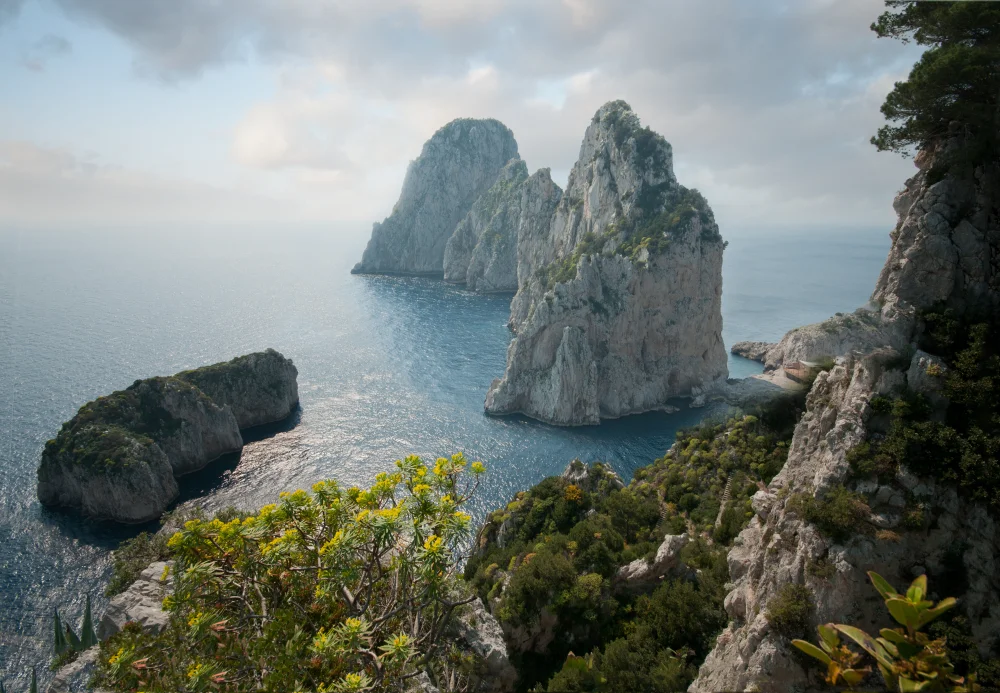
© sneakerdog / Wikimedia Commons — CC BY 2.0
Ischia: thermal baths, volcanic beaches and restricted traffic zones
Ischia is not an island to cover in a day. With 46 square kilometres and 60,000 year-round residents, it feels like a piece of mainland set adrift. Volcanic, green and steep, it rewards hiring a small car if you stay several days and need to cover the distances.
To discover the coast from the sea, compare Ischia boat tours: free time in Sant'Angelo, swimming stops, a day with lunch or a private boat. Trips leave from the island; departure dates depend on the tour.
The centres of Ischia Porto and Forio are camera-monitored ZTL restricted traffic zones, and visitors receive plenty of fines for entering. Make sure your hotel has private parking, or the car becomes a burden. From Easter to October, a prefectural decree bans non-resident vehicles from landing: you must hire on the island.
The local hire fleet is limited, so reserve your vehicle months ahead.
Without a car, EAV's public bus network includes the circular CD and CS routes. A ticket costs €1.70 at a kiosk.
Ischia is volcanically active and has dozens of natural hot springs. Finding accommodation on Booking.com with private thermal access included is often the best financial choice.
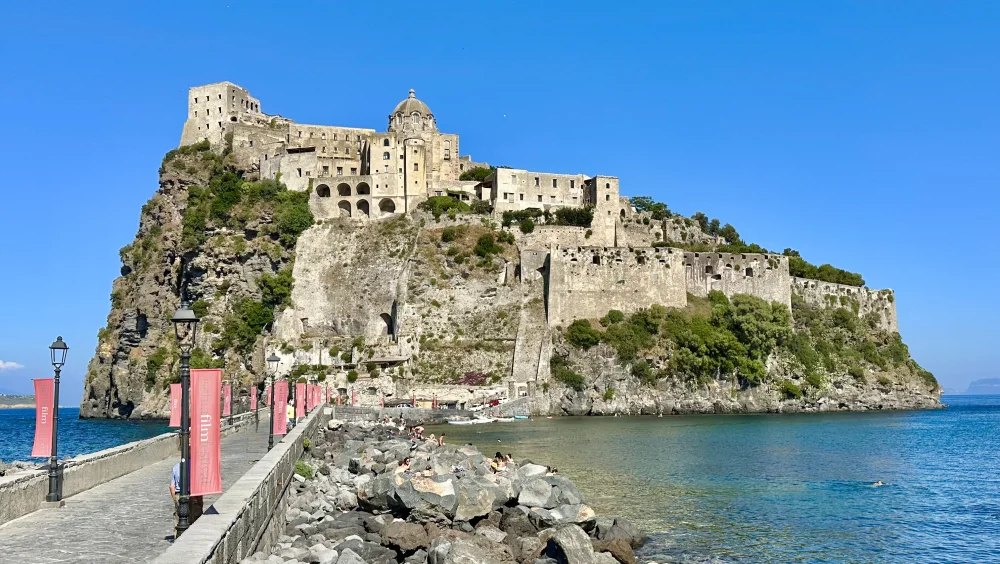
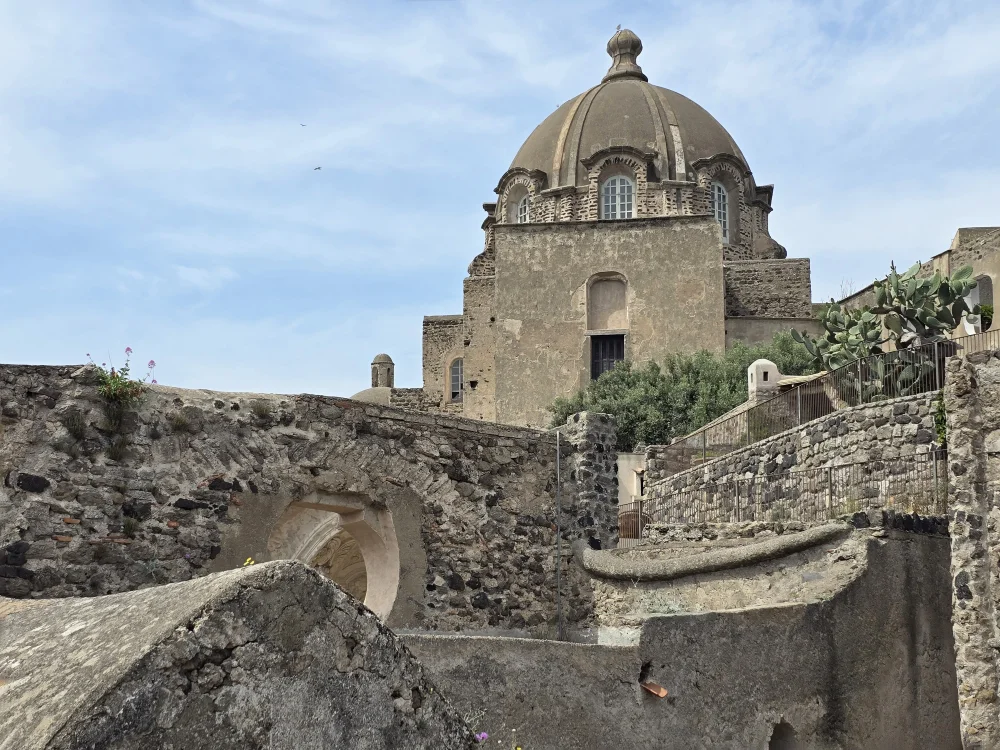
The historic landmark is the Aragonese Castle at Ischia Ponte. The stone bridge leads to a route through churches, a former convent, gardens and viewpoints. Allow at least an hour and a half, longer with breaks. Our castle guide brings together prices, access details and the winter maintenance schedule.
The local food speciality is rabbit: coniglio all'ischitana, simmered with tomatoes, garlic and white wine. Head uphill to Trattoria Il Focolare in Barano, run by the D'Ambra family. Expect a bill of around €35 to €45 per person.
Procida: Marina Corricella's cinematic appeal
Procida is the smallest of the three islands. Its four square kilometres can be explored entirely on foot or by electric bike. There are no large hotel complexes or luxury boutiques. The island retains a 1950s atmosphere, the same setting used for Il Postino and The Talented Mr Ripley. This unpolished charm also earned it the title of Italian Capital of Culture.
You arrive at Marina Grande, where scooter-hire shops and minibus stops cluster. Walk a little way along Via Roma to buy a lingua di bue at Bar Roma or Bar Dal Cavaliere. This oval, lemon-cream-filled puff pastry costs around €2.50.
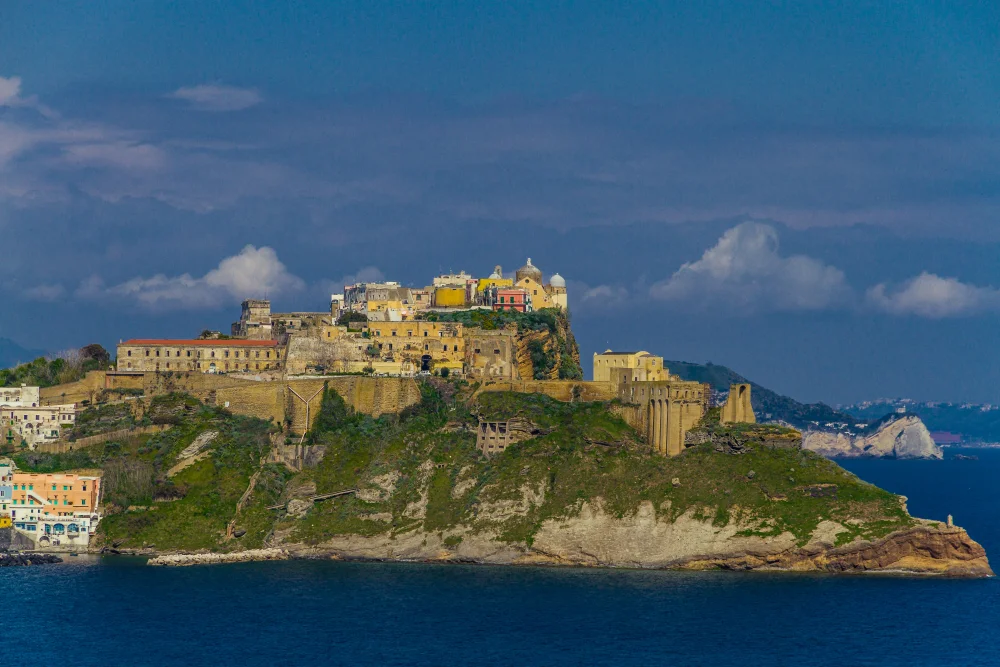
© Matthias Süßen / Wikimedia Commons — CC BY-SA 3.0
Marina Corricella is the visual heart of the island, a sheltered fishing harbour reached only by steps. House fronts are painted yellow, pink, sky blue and red. These colours once helped sailors identify their homes from offshore. Sit down at La Gorgonia, where spaghetti with sea urchins costs around €18.
Above Corricella stands the fortified village of Terra Murata, the island's highest point at 91 metres. The climb is steep. The former Palazzo d'Avalos, turned into a prison in the 19th century and closed in 1988, overlooks the sea. The viewpoint gives the clearest view of the Bay of Naples, with Capri to the south and the Miseno peninsula to the north.
Travelling by boat: hydrofoils, seats and luggage
Caremar, SNAV and Alilauro operate from Naples. There are two types of vessel. Hydrofoils, or aliscafi, are fast and carry foot passengers only, departing from Molo Beverello. Conventional ferries, or traghetti, are slower and carry authorised vehicles, departing from Calata Porta di Massa, a 15-minute walk further east. A free shuttle bus links the terminals.
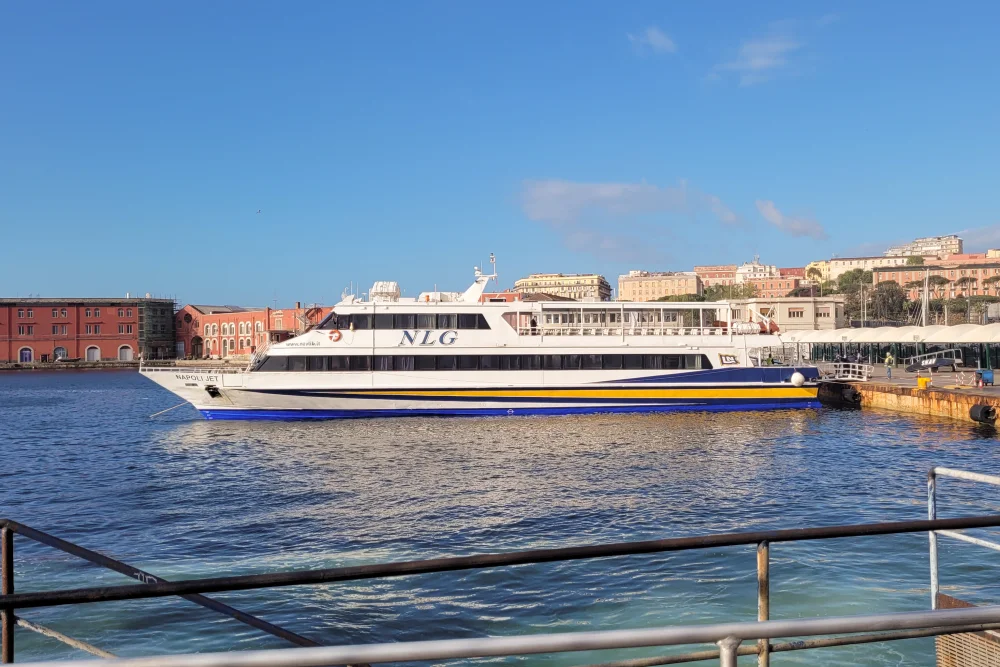
© Bernard Gagnon / Wikimedia Commons — CC BY 4.0
For Ischia, especially popular in summer, secure a skip-the-line ticket through GetYourGuide: it saves 45 minutes overheating outside Molo Beverello's crowded ticket offices.
Ticket prices vary by season:
| Route | Duration | One-way fare (hydrofoil) |
|---|---|---|
| Naples → Procida | 40 min | Around €20 |
| Naples → Ischia | 1 hour | Around €22 |
| Naples → Capri | 50 min | Around €25 to €28 |
If you travel with large hard-shell suitcases, operators charge a luggage supplement at the desk, around €2.50 per item. For a day trip, use the Deposito Bagagli luggage storage inside the Molo Beverello or Porta di Massa ferry terminal. It costs around €6 per suitcase per day, leaving you free to board without bags.
Sit on the left side of the hydrofoil when leaving Naples to keep Vesuvius in view during the crossing. Choose the right on the return.
Combining the Bay of Naples islands
With more than a week, Procida and Ischia are the most logical combination. They are neighbours, with regular 15-minute sailings from Ischia Porto or Casamicciola costing around €10. Stay on Ischia for beaches and thermal baths, and cross to Procida for a day trip.
Capri combines better with the Sorrento Peninsula. From Sorrento's Marina Piccola, the crossing to Capri takes just 20 minutes, with frequent departures. You can stay on the mainland to cut accommodation costs significantly while enjoying a long day on the island.
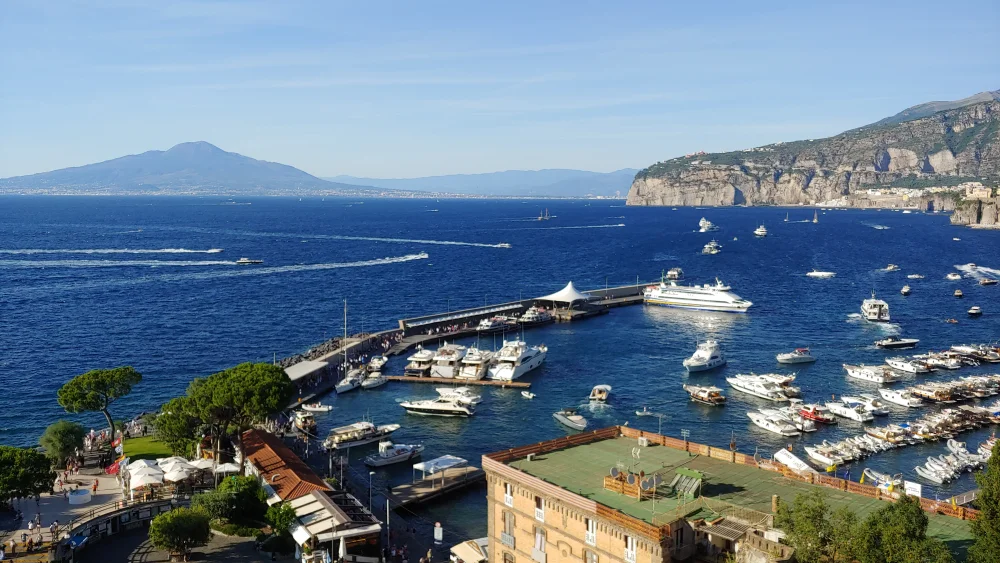
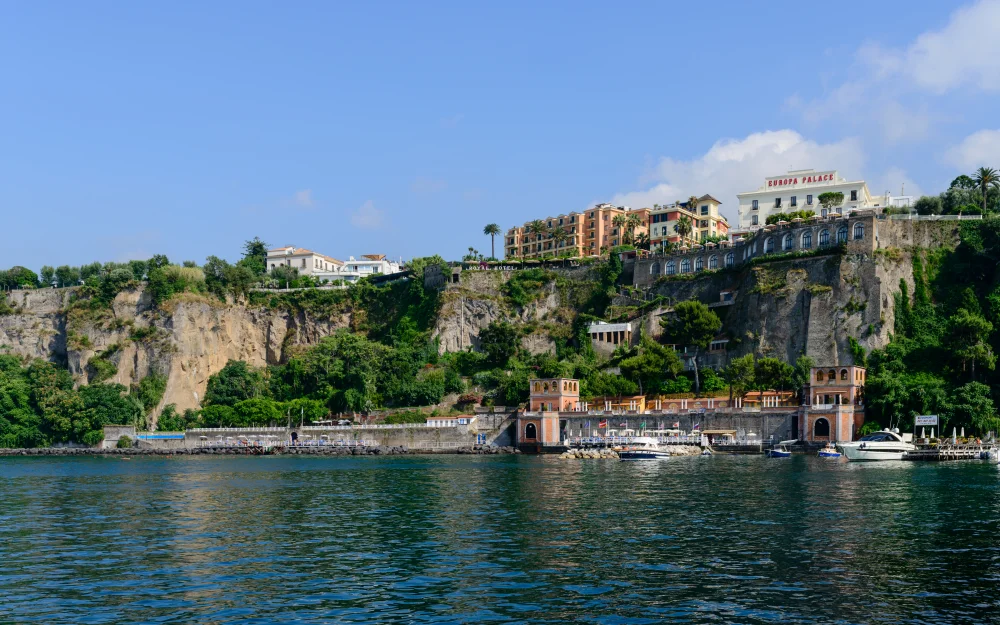
You want to walk along cliffs 300 metres above the water and discover ancient villas, and budget is not a constraint.
You have four days or more, plan to hire a vehicle and want to soothe your joints in 38°C water.
You want a compact walkable area, peace and unpolished Mediterranean scenery.
Skip the hydrofoil on the outward journey. Take the slow ferry from Calata Porta di Massa. The outdoor deck lets you photograph Vesuvius and the Naples skyline in the open air, something impossible through a fast hydrofoil's scratched, tinted windows.
Capri takes some effort to discover. The challenge is geographical rather than financial: the island's real life begins 250 metres…
Read more →Larger and quieter than neighbouring Capri, this island off Naples invites you to unwind in natural hot springs and settle…
Read more →