Gole del Sagittario: hiking routes, access and villages
Between Anversa degli Abruzzi and Villalago, the Sagittario River has carved a steep-sided rocky gorge. These vertical landscapes inspired a celebrated M.C. Escher lithograph in the 1930s.
White limestone walls close around a ribbon of emerald water and a narrow road. At the edge of Abruzzo, Lazio and Molise National Park, the Sagittario River cuts through the mountain.
Start your visit to the Gole del Sagittario at Sorgenti del Cavuto, near Anversa degli Abruzzi. Trail 15 is a short riverside walk. For Castrovalva, follow the loop on trails 18 and 19 and allow half a day: the descent requires sure footing.
Reserve entry is free. A car makes it easier to reach the starting point and continue to Lake San Domenico, but the gorge itself is best explored on foot. Choose a few stops among the springs, cliffs and hill villages, with time to leave the car behind.
Which Gole del Sagittario walk should you choose?
| Route | Starting point | Distance | Time to allow | Terrain and difficulty | Map |
|---|---|---|---|---|---|
| Trail 15 · Sagittario and Ponte delle Fornaci | Cavuto visitor area car park | 925 m each way; around 1.9 km return | 45 minutes to 1 hour, with stops | Mostly flat, with footbridges; the easiest option for a short walk | Trail 15 |
| 18 + 19 · Castrovalva loop | Sorgenti del Cavuto | About 6.3 km, excluding extensions from Anversa or towards Colle San Michele | 3–5 hours, including the hamlet | Steep ascent and descent; elevations from 505 to 815 m; around 800 m on a road | Gorge loop |
| Trail 17 · Monte Miglio and Monte Mezzana | Anversa degli Abruzzi’s main square | Depending on the variant chosen | Around 7 hours for the circuit over the summits | Long mountain walk reaching 1,791 m; for experienced walkers | Trail 17 |
With young children or little time, I would choose trail 15 and the springs. For the Castrovalva loop, you should be comfortable on uneven ground and descents. Trail 17 takes a full day: save the lake and villages for another outing.
Map, access and parking at the Sorgenti del Cavuto
In your navigation app, search for Sorgenti del Cavuto, rather than just the gorge’s name. The Cavuto visitor area car park serves the springs and trailheads. Walking from central Anversa adds to the route.
To drive to the springs, follow thesignposted reserve access from the SR479After heavy rains, check with the reserve that your chosen trail is open.
Getting here by car or bus
Leave the A25 Rome–Pescara motorway at Cocullo, then continue around five kilometres to Anversa. Sulmona makes a convenient nearby base for a day trip. From Scanno, you approach from the south of the valley.
The SR479 winds through the gorge, with tight bends and narrow sections. Leave room for oncoming traffic and stop only where you can pull off safely. For car hire in Pescara, a compact car makes these roads easier to negotiate. Compare options on Rentalcars.
Without a car, check TUA services on the Sulmona–Anversa–Scanno route and plan the return before committing to a long walk. The TUA timetables and journey planner show services for your travel date.
For a longer trip around Abruzzo, Rome and Pescara are two possible arrival points. Compare flights on Skyscanner , allowing for the onward journey to your accommodation.
Cavuto springs and the walk along the Sagittario
The SR479 runs between limestone cliffs, with the river below. At Anversa degli Abruzzi, leave the road to explore the landscape at river level.
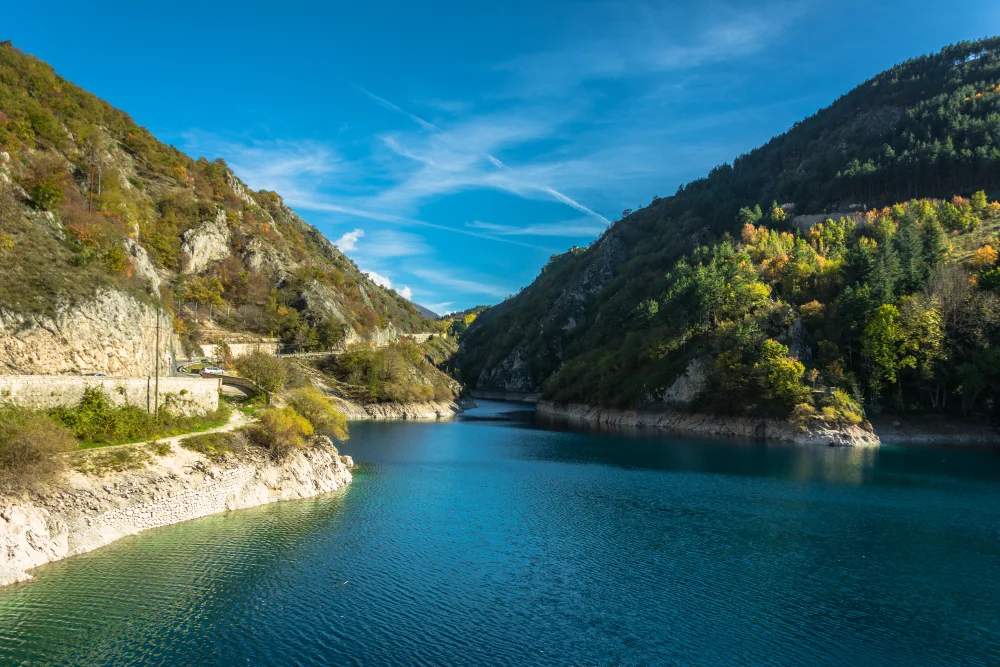
© Fabio Ciminelli / Wikimedia Commons · CC BY-SA 4.0
Near the springs, flowing water accompanies the walk. Pale rock contrasts with the wooded valley floor. A few steps away from the winding road, the atmosphere changes.
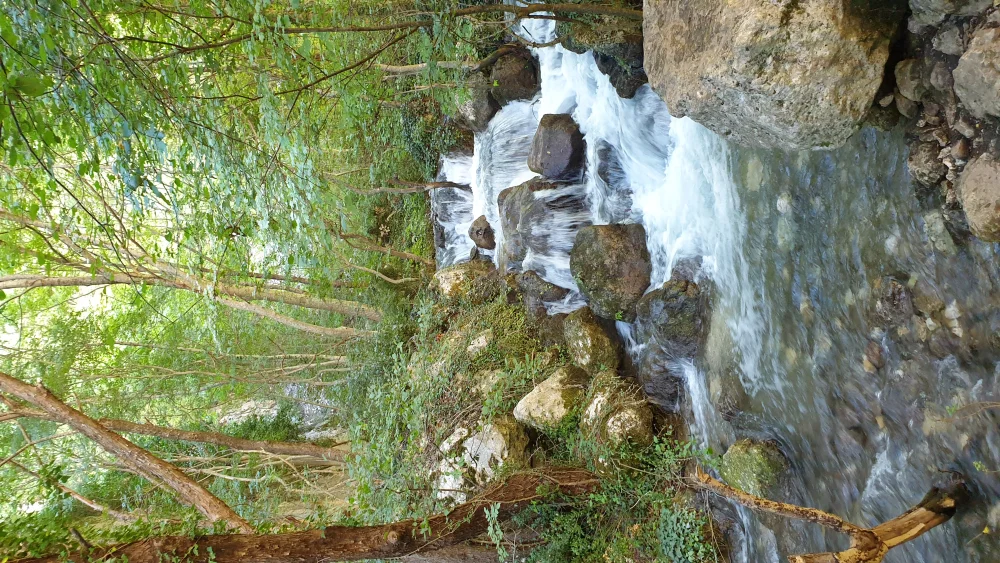
Trail 15 follows the Sagittario towards Ponte delle Fornaci, crossing wet ground on footbridges. Turn back whenever you like: it is an easy way to see the gorge without climbing to the villages above.
© Inviaggiocommons / Wikimedia Commons · Domaine public
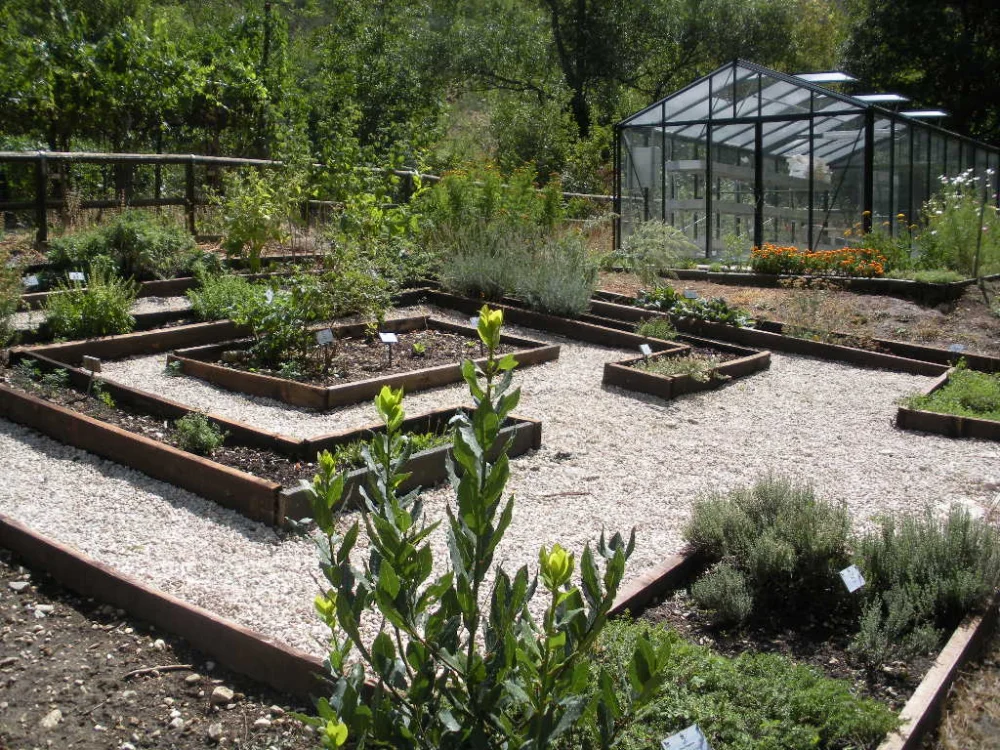
Linger by the clear water and plants in the Sorgenti del Cavuto botanical garden. The springs are worth a stop even without a long walk.
Allow one or two hours for the springs and a short walk, longer for a picnic or guided visit. Keep children close on the footbridges.
The Castrovalva loop: walking to Escher’s village
The gorge loop climbs along trail 18, then follows approximately 800 metres of paved road before rejoining the path to Castrovalva. Traffic may be light, but you are still sharing the road with vehicles.
Return along trail 19, beyond the village and cemetery. The second half has some demanding downhill sections. Place your feet carefully, especially on wet ground.
The approximately 6.3 km circuit starts at Sorgenti del Cavuto. Adding Anversa’s centre or Colle San Michele makes it longer: allow three to five hours for the loop and stops in the hamlet.
Stop in Castrovalva
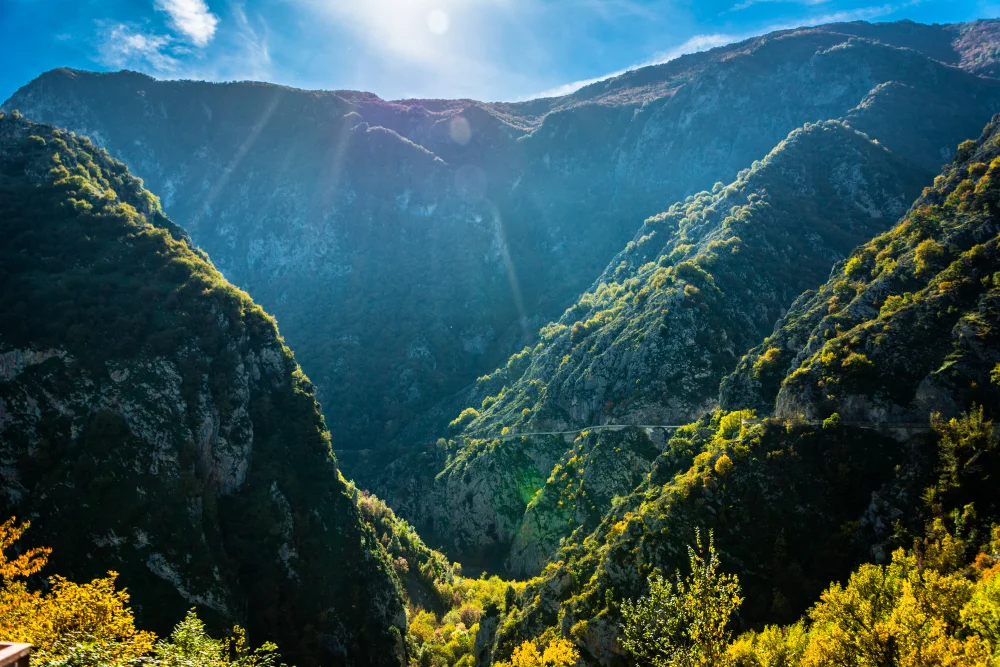
Perched on a rocky spur, Castrovalva overlooks the gorge. Its houses seem to extend the ridge. Walk through the hamlet to move between stone walls and open valley views.
M. C. Escher discovered this landscape in 1929 and made a lithograph in 1930. He rearranged some elements: there is no single viewpoint that reproduces the image exactly. The mountains and village explain its appeal, long before his famous impossible staircases.
You can also drive to Castrovalva and park at the entrance, space permitting. Leave time for its lanes and viewpoints, rather than stopping only for a photograph from the car.
Wear suitable walking shoes and carry enough water. Rain can make the descent slower and more difficult. If that does not suit you, choose the springs and trail 15 from the outset; you can visit Castrovalva separately by road.
Lake San Domenico and Villalago
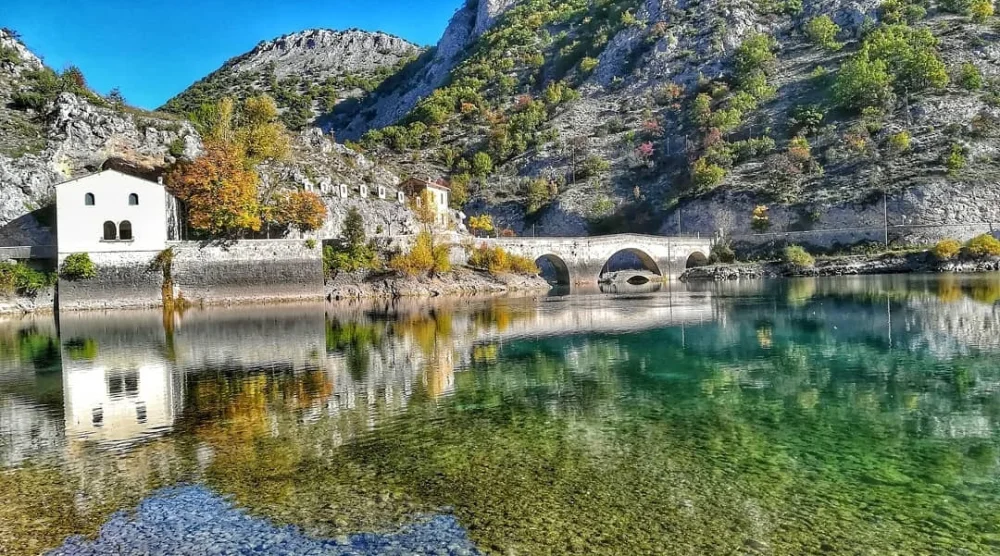
Continue south along the valley to Lake San Domenico, close to VillalagoThis man-made lake is a separate stop: return to the road to reach it from Cavuto springs.
Parking is beside the SR479 near the bridge entrance. Use authorised spaces, then walk to the hermitage. Allow around an hour to enjoy the waterside setting and the small religious complex.
© Collalti86 / Wikimedia Commons · CC BY-SA 4.0
From the bridge, the white walls ofEremo di San Domenico stand out above the green water. Domenico withdrew to this valley in the early 11th century; the small church visible today is later.
The portico looks out over the lake. When open, the chapel and cave associated with the saint add to the visit.
Swimming is prohibited in Lake San Domenico. Walk beside the water and use the designated picnic areas if you want to stop for lunch.
Villalago’s stone houses rise up the hillside and make another possible stop. After the Castrovalva loop, you may prefer to finish at the lake rather than climb into another village.
A day trip from Sulmona or Scanno, with village stops
With a short walk
Start with the Cavuto springs and trail 15, then return to Anversa for lunch and a walk through its lanes. Continue to San Domenico in the afternoon if you wish. To include Castrovalva, drive there and reduce the time at the other stops.
The ruins of a Norman castle survive in upper Anversa. The village also inspired the setting of Gabriele D’Annunzio’s La Fiaccola sotto il Moggio.
For a food stop, the agriturismo La Porta dei Parchi makes sheep’s-milk ricottina, cold-smoked over juniper wood. Its dark rind surrounds a creamy centre. Check the shop’s opening hours before planning a lunch stop here.
With the Castrovalva loop
Allow the morning and part of the afternoon for the walk, including a village stop. Afterwards, choose either Anversa or Lake San Domenico if continuing towards Scanno. The loop, lake, Villalago and a full visit to Scanno make an overfull day.
For somewhere to stay or a longer visit, see our Scanno guide. The B&B Il Palazzo occupies a historic-centre palace; its rooms are on the second floor, without a lift.
From Sulmona, set aside a day for the gorge instead of adding the long loop to a full city visit. Our seven-day itinerary in Abruzzo helps spread these stops across your trip.
Cocullo and Frattura Vecchia, for another day
Near the motorway exit, Cocullo is known for the Festa dei Serpari, held each 1 May. The statue of San Domenico Abate is carried in procession with live snakes. Check parking and shuttle arrangements on the Cocullo municipality website.
Above Scanno, the ruins of the Frattura Vecchia, destroyed in the 1915 earthquake, offer another walking option. Save this for a separate outing if you are already doing the gorge loop.
Frequently Asked Questions: Gole del Sagittario
Do you have to pay to enter the nature reserve?
Which walk is best with children?
How long should I allow at the Gole del Sagittario?
Can I swim in Lake San Domenico?
Is the SR479 road difficult to drive?
Seven days from Abruzzo’s coast to its mountains: Adriatic fishing platforms, a castle set among vineyards, Ovid’s home town, one…
Read more →A stone village, a border fortress and the Salinello Gorge make this a rewarding stop between Abruzzo and Marche.
Read more →