Things to do in Sulmona: sights, sugared almonds and day trips
The city of Ovid and sugared almonds
Ovid’s home town turned sugared almonds into a craft practised along its streets. Medieval white stone and colourful sweet-shop windows sit beneath Abruzzo’s mountains.
Sulmona offers more than a provincial stopover. Ovid was born here in 43 BC, and confectionery once made for courts became a street-side craft. Colourful bouquets fill the sweet-shop windows alongside Roman and medieval buildings that have survived the region’s earthquakes.
Things to do in Sulmona
In Sulmona, Corso Ovidio connects sweet shops, palaces and squares. Look beyond the aqueduct: San Panfilo's crypt and the Pelino Museum also deserve your time. Plan a day for the city, especially if you want to visit museums and enjoy an unhurried lunch.
© Bultro / Wikimedia Commons · CC BY-SA 4.0
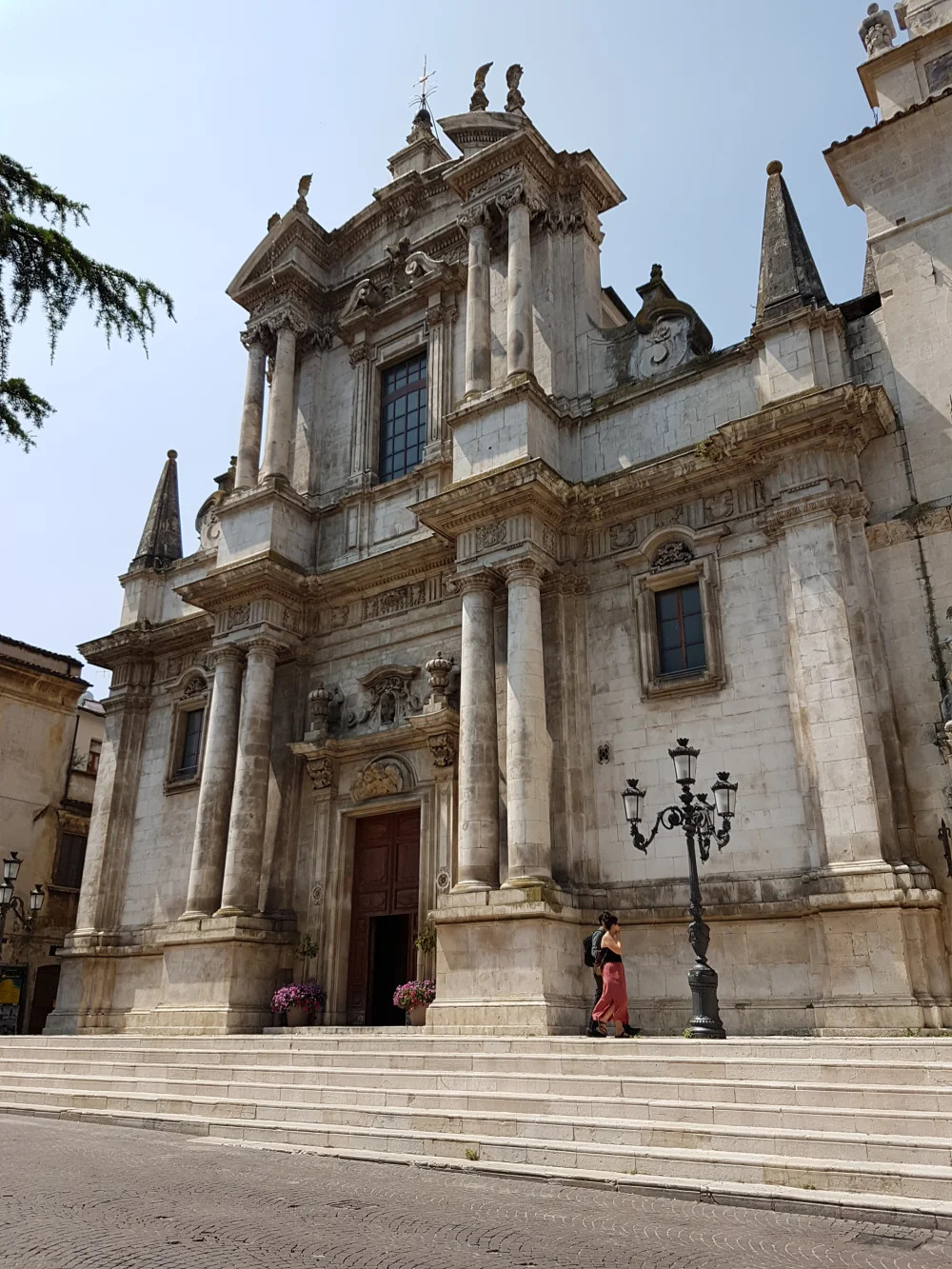
The Annunziata complex
Step back to distinguish the palace from the adjoining church. The complex grew around a hospital founded in the 14th century; the church acquired its Baroque appearance after the 1706 earthquake. The civic museum occupies the neighbouring palace. Its archaeological section follows the valley’s history before and during Roman times, while the Domus of Ariadne preserves an ancient house. Allow around an hour to complement your walk along the Corso.
© Superchilum / Wikimedia Commons · CC BY-SA 4.0
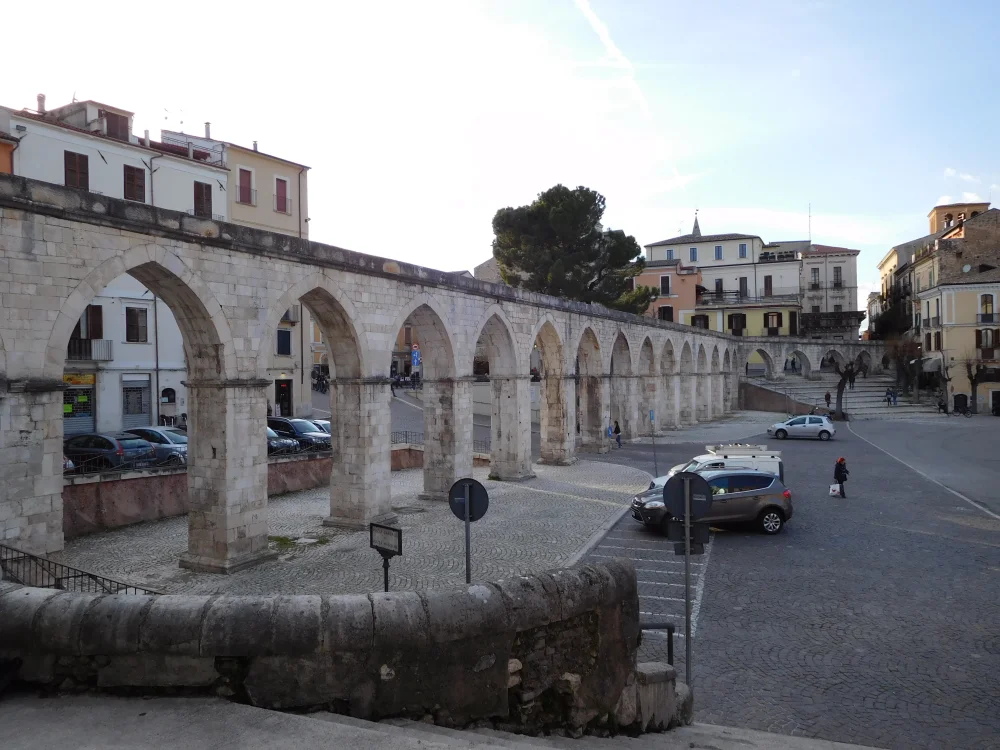
The medieval aqueduct
This long row of arches borders Piazza Garibaldi, with mountains behind it. Built in 1256 during Manfred’s reign, the aqueduct carried water from the Gizio to Sulmona’s fountains, gardens and workshops. Follow it across the square, then view it from the Corso, where the structure is almost enclosed by houses.
© Superchilum / Wikimedia Commons · CC BY-SA 4.0
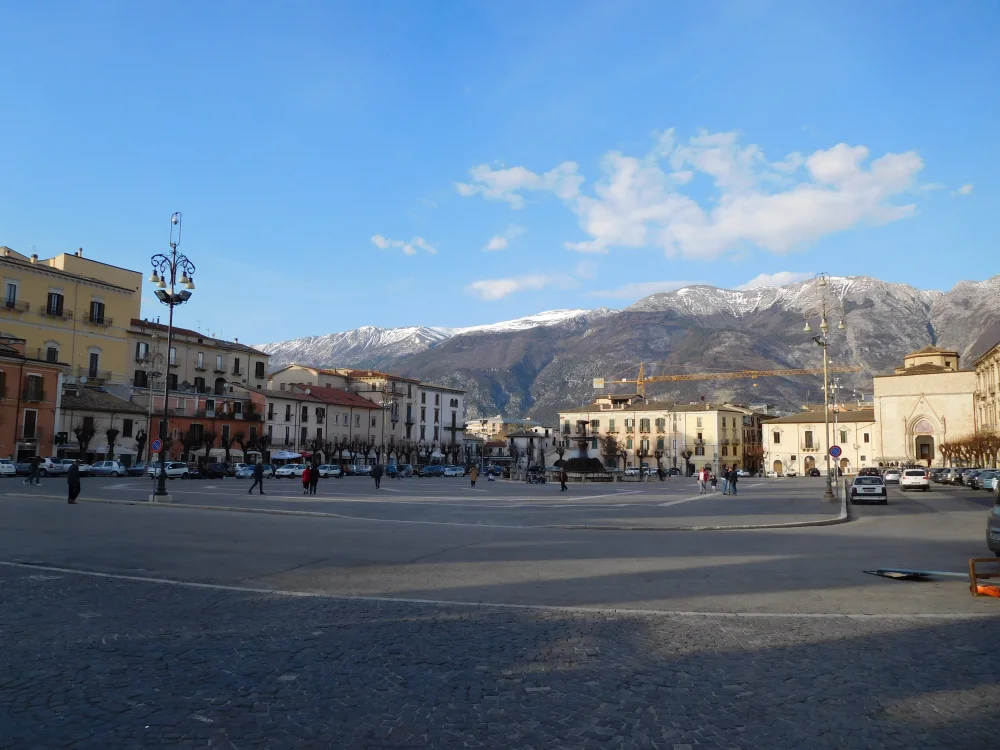
Piazza Garibaldi and its market
Piazza Garibaldi opens up the historic centre. A fountain stands in the middle, the aqueduct lines one side and mountains rise behind the façades. Wednesday and Saturday mornings bring market stalls and local shoppers. The square also hosts Sulmona's major events, from the Easter procession to the summer Giostra Cavalleresca.
© Parsifall / Wikimedia Commons · CC BY-SA 4.0
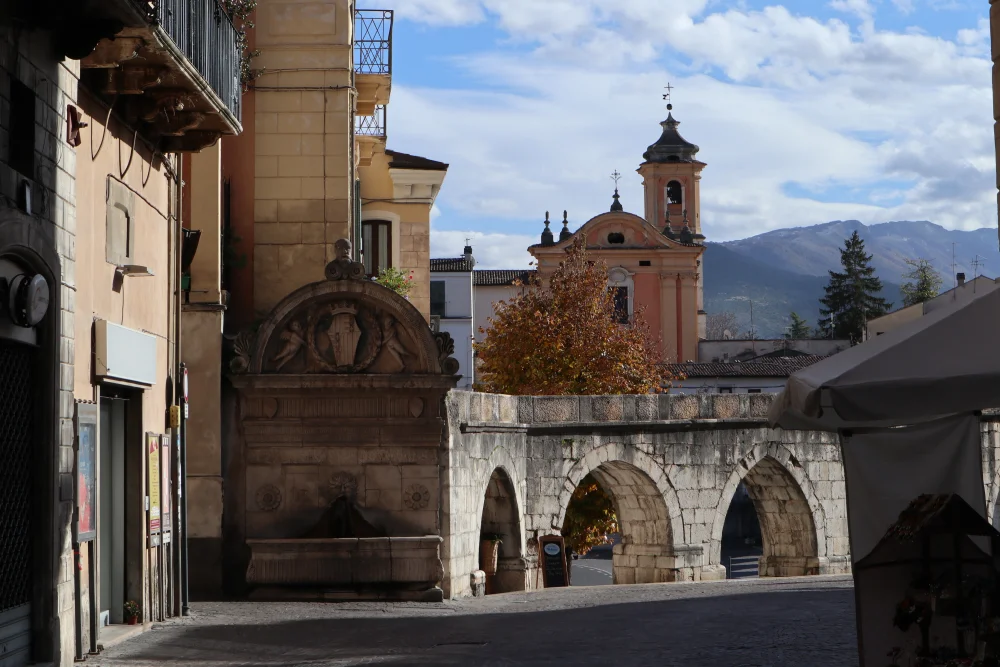
The Corso and the Fontana del Vecchio
Corso Ovidio links the main sights but also rewards an aimless stroll. Piazza XX Settembre holds a statue of Ovid, who was born in Sulmona. Further on, the Fontana del Vecchio stands against the aqueduct, a bearded head above its basin; its Renaissance decoration dates to 1474. Between them, look at the sweet-shop windows, where sugared-almond bouquets are assembled petal by petal.
San Panfilo Cathedral and its crypt
North of the centre, San Panfilo offers a quieter stop. Decorations added after the 1706 earthquake stand alongside Romanesque features in the nave. Below the choir, the medieval crypt has unevenly spaced columns, varied capitals and low vaults. Allow 20–30 minutes outside services. Admission is free; consider the crypt stairs if you have difficulty walking.
The Pelino Museum: how sugared almonds are made
The shops display the finished sweets; the Pelino Museum explains their manufacture. In the factory villa, copper pans, tools, historic arrangements and a reconstructed 18th-century workshop trace the craft's history. Learn how the coating is built up and how much work goes into a bouquet. The visit focuses on skills and machinery; it does not advertise access to today's production line.
The museum is located Via Stazione Introdacqua 55, outside the centre. Allow 30–45 minutes plus travel. Admission is free. Listed hours are Monday–Saturday, 08:30–12:30 and 15:00–18:30, excluding public holidays. Plan this visit for the afternoon if you want to learn more about sugared almonds..
Sulmona in 1-2 days
Half a day covers the Corso, squares and aqueduct. A full day leaves room for indoor sights, lunch and the Pelino Museum. With another night, choose an excursion: the valley, Scanno or the historic train each offers a different day. Use the times below as a guide and adapt them to your accommodation and opening hours.
The centre and local crafts
San Panfilo, then the Corso
Start north of the centre. If the cathedral is open, visit the crypt before joining Corso Ovidio. Stop for coffee on the way to the Annunziata.
Free entryThe Annunziata
Look at both façades, then allow around an hour for the palace’s archaeological section. If you prefer to stay outside, spend that time in nearby streets and shops.
Museum closed on MondayOvid, sugared almonds and the aqueduct
Walk through Piazza XX Settembre, continue to the Fontana del Vecchio, then head down to Piazza Garibaldi. On Wednesdays and Saturdays, start with the market before walking up the Corso.
WalkingLunch in Abruzzo
If choosing La Locanda di Gino, plan ahead: the restaurant lists lunch service only, Monday–Saturday.
Recommended reservationThe Pelino Museum, if the subject interests you
Visit the factory villa to learn about sugared almonds. If staying in the centre, replace this trip with a walk through the lanes or a pre-booked craft activity.
Museum free, closed Sunday and public holidaysBack to the Corso
Return to the squares for a final stroll and a drink. If staying overnight, dine in the centre: you can finish the day without using the car again.
Day two: choosing a direction
| Your interests | Morning | Afternoon |
|---|---|---|
| Villages and heritage, with a car | Badia Morronese, or Sant’Onofrio hermitage if you prefer a walk and access is open. | Pacentro: lanes, the castle if open, and a break in the village. |
| Lake and walk, with a car | Drive to Scanno and walk the Sentiero del Cuore if conditions are suitable. | Lunch, visit the village and then stop by the lake before the return. |
| A day by historic train | Departure from Sulmona station at the time indicated on your reservation. | Continue to the itinerary’s other stops and return on the same train. Allow the whole day. |
Market, rain and closing days
Wednesday or Saturday, start at Piazza Garibaldi for the market, then walk up the Corso towards the Annunziata and San Panfilo. Mondayreplace the civic museum with Pelino and a longer walk. Sunday or a holiday, check the archaeology museum's calendar; Pelino is closed. In rain, the two museums can fill a day when both are open. Save Scanno for better weather.
A break in the puppet workshop
This Italic puppet workshop offers a 30-minute introduction to the craft, with a short demonstration and a chance to try operating the puppets. It suits families and travellers interested in meeting a craftsperson. Use it in place of part of your stroll.
Sulmona and its surroundings
A walk from the Corso to the streets
For a walk without museums, start at San Panfilo and follow Corso Ovidio to the Annunziata. Continue to Piazza XX Settembre: enter a sweet shop, compare recipes and look closely at the bouquets. Carry on to the Fontana del Vecchio and Piazza Garibaldi. Allow one to two hours with stops rather than walking straight through.
On the way back, take a side street off the Corso, look at doorways and courtyards visible from the street, then return to the main route. The compact centre makes these detours easy. Elaborate shop windows contrast with quieter residential lanes, part of Sulmona's appeal. With a pushchair or to limit walking, save the crypt stairs and trip to Pelino for separate times.
For a guide's explanations, this two-hour private walk combines the centre, San Panfilo and its crypt with a shop tasting of sugared almonds. It replaces part of the independent route. The Pelino Museum is a separate visit.
Pacentro: from the alleys to the castle
East of Sulmona, Pacentro overlooks the Peligna Valley. Caldora Castle's towers mark the way, but the climb through narrow lanes, steps and closely packed houses is part of the visit. Allow two to three hours for an unhurried walk, the castle if open and a break. Some towers can be visited, depending on the route offered.
Follow the parking signs at the entrance and continue on foot. A car makes this outing easier and allows a morning visit to Badia Morronese too. You can manage without a car if staying only in Sulmona; to explore several villages, you can compare car rentals.
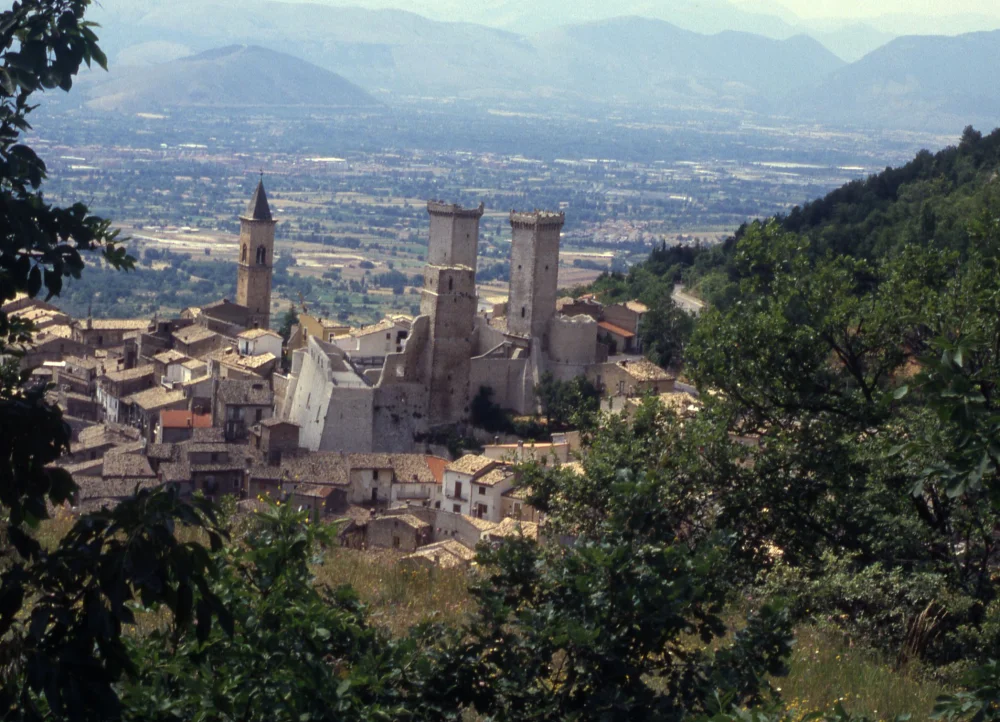
Pacentro and Caldora Castle above the Peligna Valley · © Smiley.toerist / Wikimedia Commons · CC BY-SA 4.0
At the foot of Morrone: Abbey or Hermitage
Around five kilometres from the centre, Badia Morronese surrounds large courtyards. Associated with the future Pope Celestine V, the abbey later served several purposes, including as a prison. Its painted refectory and stone staircase merit 45–60 minutes. Full adult admission is €5. Prefer the morning: on some days it closes at 13:30, and it is closed on Mondays. Check the official calendar to choose your time slot.
For mountain scenery, choose Sant’Onofrio hermitage, clinging to the cliff above the valley. Allow around 20 minutes from the trailhead, plus the return and visit; this is not the walking time from Sulmona. Check opening arrangements, wear suitable shoes and go only in appropriate weather. This can replace the Badia Morronese visit.
Scanno: the village, the lake and the viewpoint
The road to Scanno climbs the Sagittario valley. Allow a day: travelling, exploring the village and walking near the lake need more time than a photo stop. To see its heart shape, climb the Sentiero del Cuore viewpoint; it does not look the same from the shore.
You can start from the lake or the village. The tourist portal of Scanno lists around an hour to reach the viewpoint; add the descent and breaks. Choose your starting point to suit your fitness, wear walking shoes and skip the viewpoint in poor conditions. Without hiking, divide the day between the village, lunch and the lakeshore.
The Ferrovia dei Parchi, a historic train day
The “Trans-Siberian of Italy” offers another excursion from Sulmona. Historic carriages cross Abruzzo and Molise’s high plateaus, with stops varying by itinerary. Book a specific departure returning to Sulmona station. Reserve the whole day: it cannot be combined with Scanno or Pacentro.
Consult the calendar of the Ferrovia dei Parchi . Buy a dedicated ticket: regional rail tickets do not cover this train, and it does not run daily. If arriving from Rome, the organiser recommends staying in Sulmona the night before to avoid a tight connection.
What to eat in Sulmona?
Sugared almonds catch the eye in shop windows, but save room for lunch. Homemade pasta, lamb and wines from Abruzzo show another side of Sulmona. Pasta alla chitarra takes its name from the wire-strung tool used to cut it: look for the restaurant's own ragù.
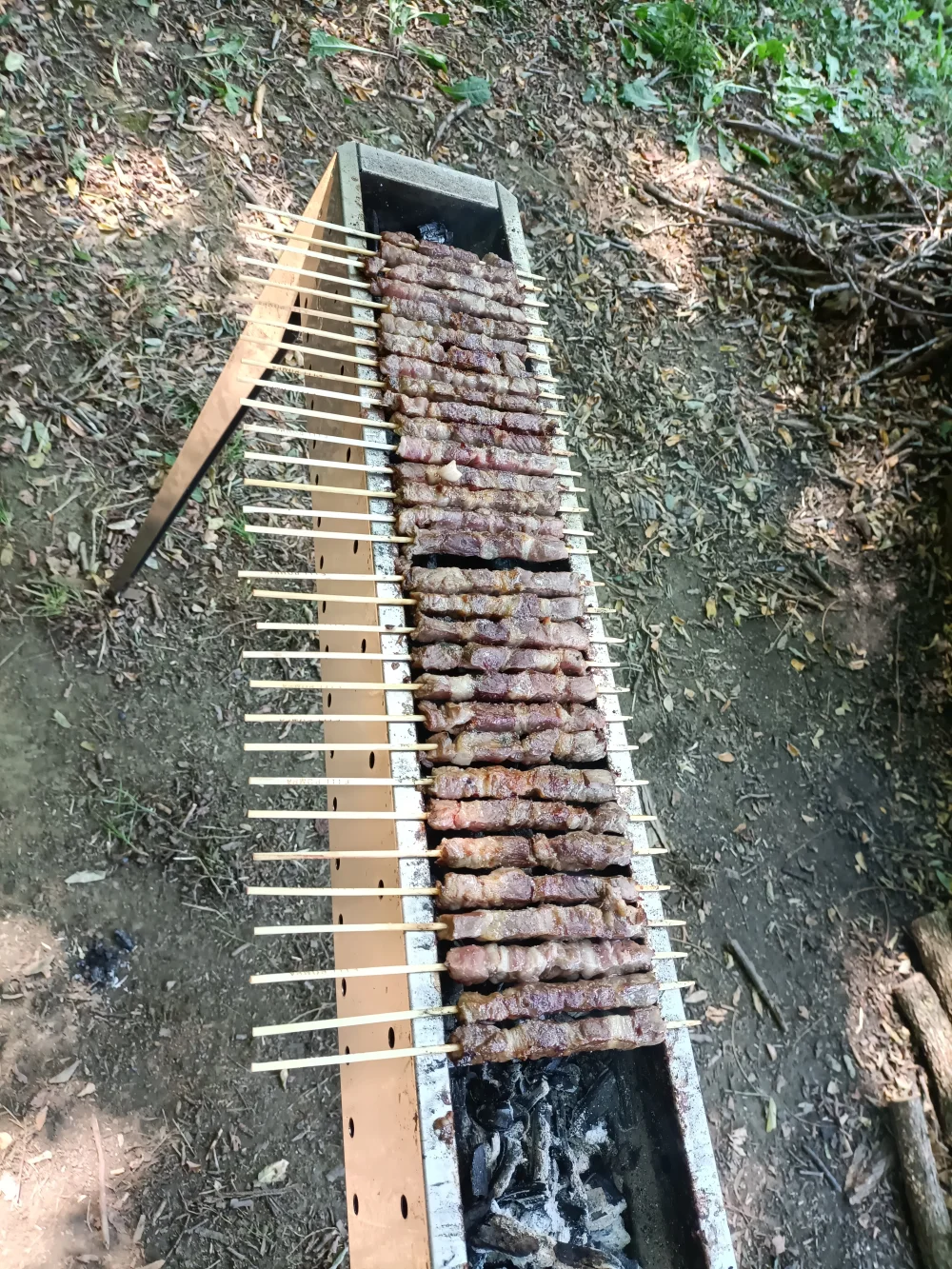
Arrosticini on the canalina, the traditional grill of Abruzzo · © Superchilum / Wikimedia Commons · CC BY 4.0
Confetti: Sulmona’s sugared almonds
The classic version is an almond coated in sugar. Producers also offer different recipes, flavours and floral arrangements. Compare box weights and taste if offered: a gift bouquet and a box for sharing serve different purposes.
arrosticini
These small skewers of sheep meat cook on a narrow grill called a canalina. Pieces of fat add flavour and tenderness over the embers. If listed on the menu, check the price per skewer and order to suit your appetite; not every restaurant serves them.
Montepulciano d’Abruzzo
This regional red wine pairs well with lamb. Ask for a local bottle suited to your dishes, or start with a glass. For several wines, ask about pairings by the glass.
Three places to eat
| Restaurant | Food and location | Why choose it |
|---|---|---|
| Ristorante Clemente | Piazza Santa Monica · homemade chitarra pasta, saffron and meat dishes. | For a meal focused on regional cooking. Book ahead; listed closures are Monday and Sunday evening. |
| La Locanda di Gino | Piazza Plebiscito 12 · chitarra with lamb ragù, saffron carrati and lamb. | For family cooking at lunchtime. The traditional set menu is listed at €35 per person, excluding cover charge and drinks. Lunch service only, Monday–Saturday. |
| Cantina di Biffi | Via Marco Barbato 1 · wine bar and Abruzzo cooking. | For a meal with wine at its heart and advice from the staff. Confirm meal service when booking. |
As a guide, Gino's €35 menu comes to around €45–50 per person including cover charge, shared water and a glass of wine. This is one full-meal example, not a typical price for every Sulmona restaurant. Consult the menu of the restaurant and order to suit your appetite.
Shops along the Corso are easy to include in your walk when buying sugared almonds to take home. Founded in 1783, Pelino combines its shop and museum at Via Stazione Introdacqua 55. It is convenient if already visiting the museum, but far from the only place to buy them.
Where to stay in Sulmona?
Staying centrally lets you enjoy Sulmona after sightseeing and leave easily for the villages or station the next day. Restaurants and monuments around the Corso and squares are walkable. On arrival, expect narrow streets, restricted access and possibly carrying luggage some distance.
If driving, prioritise parking and easy access over being a few metres closer to the Corso. Ask where to leave the car and unload luggage before booking. Central accommodation may have an arrangement, but a booking does not automatically permit entry to the ZTL.
| Property | Best suited to | What to check |
|---|---|---|
| B&B-Sei Stelle | A small address in a historic house, on Piazza Minzoni. | A base in the heart of town for exploring on foot. Ask about arrival arrangements if driving. |
| Hotel Rojan | A central hotel with air-conditioned rooms and a sweet and savoury breakfast. | Via degli Agghiacciati 15. Contact the reception to arrange access and confirm the conditions of the proposed parking. |
| Stella CasaBono | A small family-run hotel with six rooms and suites, plus a café and wine bar. | Via Mazara 18. The property places Santa Chiara car park around 350 metres away; ask for arrival instructions. |
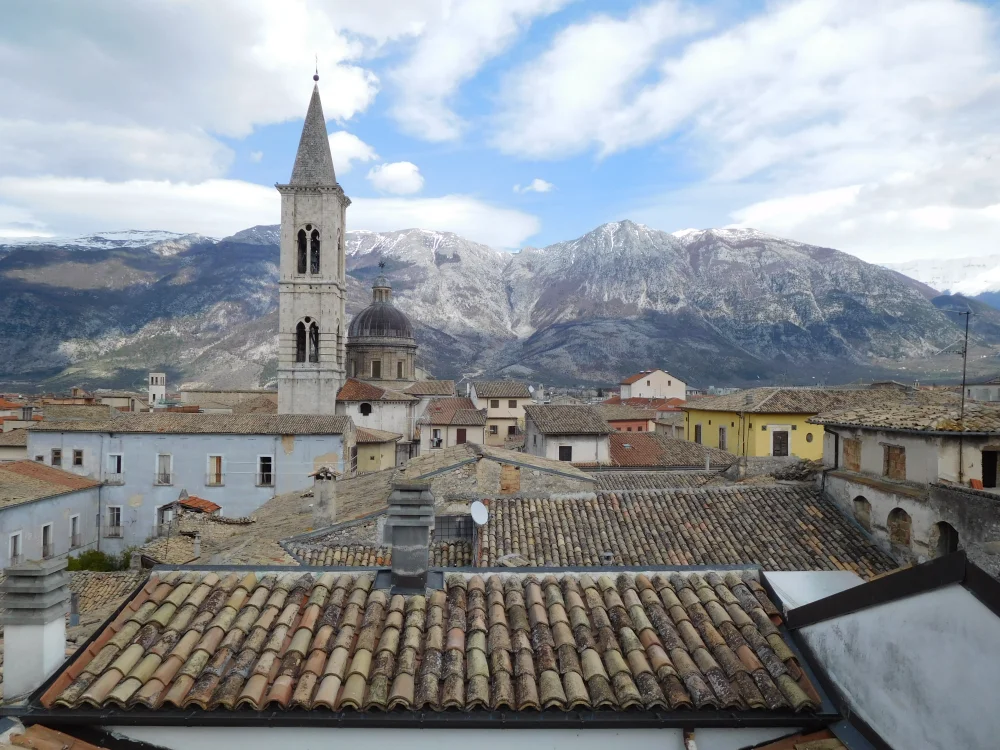
Sulmona's rooftops · © Superchilum / Wikimedia Commons · CC BY-SA 4.0
Compare the total price for your dates, breakfast, cancellation terms and parking. For Easter, the Giostra or a booked historic train trip, arrange accommodation alongside the rest of your plans: these events are good reasons to stay overnight.
Access and practical advice
Getting there by train, coach or car
You can reach Sulmona by train from Rome or Pescara. Search Trenitalia for your exact date: journey times and connections depend on the service. Rail is usually sufficient for the city; a car becomes useful when adding several villages.
Train station and centre
Coach from Rome
From Rome by road
If you arrive by plane, compare flights to Rome and Pescara on Skyscanner . At Pescara, TUA4FLY connects the airport with Pescara Centrale for trains to Sulmona. From Fiumicino or Ciampino, calculate the journey from the airport: arriving in Rome does not put you at your departure station.
Parking and reaching the sights
Explore the centre on foot. Santa Chiara is a useful car park near the squares. Parking Sulmona on Via Iapasseri is another option below the walls, with stairs or a lift to the centre. These are separate car parks. Check charges on site and follow access signs rather than taking a shortcut through the old town.
The ZTL is a restricted traffic zone monitored electronically. If your accommodation is inside, ask for instructions before entering. For buses between the station and centre, consult the hours published by the municipality, especially on Sundays.
What should you budget while you are here?
Walking, the squares and aqueduct are free, as are the Pelino Museum and San Panfilo. Your budget depends on meals, accommodation and activities, excluding accommodation and travel to Sulmona The two guided tours remain optional.
| Item | Guide price | What this includes |
|---|---|---|
| Walk and free sights | 0 € | Squares, aqueduct, cathedral and Pelino Museum, subject to opening hours. |
| Full meal at Gino's | Approximately 45–50 € per person | Example including set menu, cover charge, shared water and a glass of wine. |
| Badia Morronese | 5 € per adult at full price | Entrance to the abbey; transport to be added. |
| Puppet workshop | From 16 € per person | A 30-minute introductory session. |
| Private tour with sugared-almond tasting | From € 190 per group | Two hours, up to ten people. |
Add the archaeological museum if visiting, plus transport or parking for your plans. For a room for two, start with the total room price before calculating a per-person cost: keep sightseeing and overnight budgets distinct.
When to visit: walks, Easter or the Giostra?
Spring and early autumn suit a combination of city sights and excursions. In summer, walk during the cooler hours and visit museums when they reopen in the afternoon. For Scanno or Sant’Onofrio, decide according to local conditions: pleasant weather in Sulmona does not guarantee good conditions on higher trails.
On Easter Sunday, the Madonna che Scappa in Piazza celebrations centre on Piazza Garibaldi. In summer, the Giostra Cavalleresca turns the square into a jousting arena, with costumed processions. Visit then for a major local event, allowing for crowds and changes to the square. Choose another time for quieter sightseeing.
In Sulmona, leave some unplanned time between lunch and the evening stroll. Return to a shop window, choose a box of sugared almonds and follow the Corso to Piazza Garibaldi. The aqueduct and mountains are still there; enjoying them without a schedule is part of the stay.— The editorial team, Sulmona · Peligna Valley, Abruzzo
Between Ortona and Vasto, three-century-old wooden fishing platforms have become some of Abruzzo’s most sought-after places for a seafood meal.
Read more →Climb from the stone village to the towers seen in Ladyhawke, passing narrow lanes, a small octagonal church and wide…
Read more →