Things to do in L’Aquila: sights, food and day trips
The city with 99 fountains
Tradition links L’Aquila’s 13th-century foundation to 99 villages. Since 2009, the city has been patiently restoring its palaces and churches. Beneath Gran Sasso, it offers white stone, mountain air and a slower stop.
At 714 metres above sea level beneath the Gran Sasso massif, L’Aquila has a fresh mountain feel even in summer. Reconstruction cranes still mark the city after the 2009 earthquake. Named Italian Capital of Culture for 2026, it continues to reopen as restoration projects are completed.
Things to do in L’Aquila
Start with a pink-and-white façade facing a lawn, continue to a castle that houses a mammoth, then explore streets with views towards the mountains. Collemaggio, MUNDA at Forte Spagnolo, San Bernardino and the Fountain of the 99 Spouts are the main stops. Leave time for squares and breaks between them: exploring on foot involves a few descents and climbs.
L’Aquila developed in the Middle Ages from the surrounding communities. Tradition speaks of 99 founding castles, a number you will encounter throughout your walk. Since the 2009 earthquake, many buildings have reopened after restoration, while work continues elsewhere. Its designation as Italian capital of culture 2026 brings exhibitions and events to an already rich heritage.
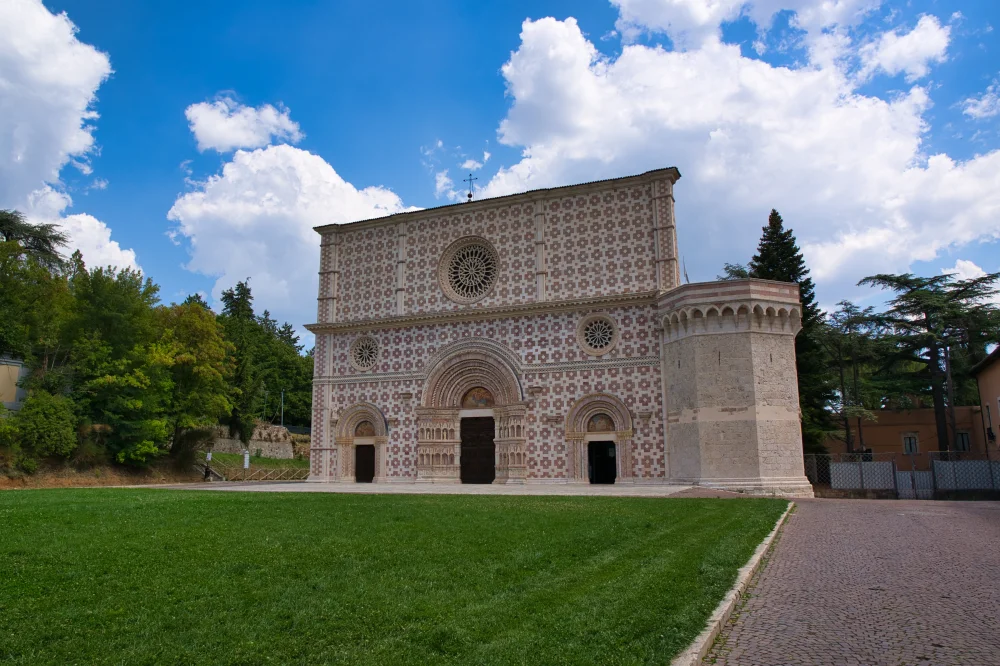
Santa Maria di Collemaggio in 2020 · © RenanGreca / Wikimedia Commons · CC BY-SA 4.0
Santa Maria di Collemaggio
Step back onto the lawn to take in the three rose windows, doorways and pink-and-white stone patterns: this is one of Abruzzo's most recognisable façades. Inside, the nave and pillars create a very different impression. Pietro da Morrone was crowned Pope Celestine V here in 1294. His tomb and the Holy Door link the basilica to the annual Perdonanza celebrations.
Allow 30–45 minutes for the façade and interior. Slightly away from the shopping streets, the basilica has an open setting that invites a pause. It works well at the start or end of a day passing through Collemaggio coach terminal.
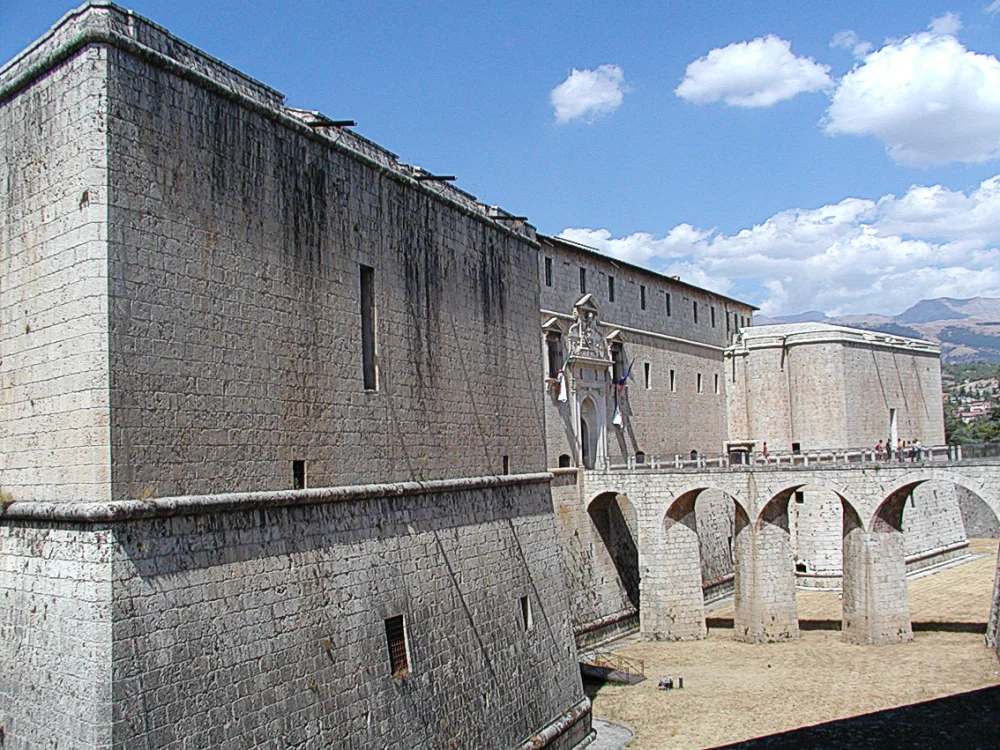
The Forte Spagnolo, photo of 2007 · © RaBoe/Wikipedia / Wikimedia Commons · CC BY-SA 2.5
The Forte Spagnolo and the MUNDA
A moat, bridge and huge bastions introduce a 16th-century fortress built to impress. Since December 2025, the castle has once again housed the National Museum of Abruzzo, MUNDA. The mammoth and art collections are therefore in the same building: this is the main indoor visit to plan in L’Aquila.
The southern mammoth skeleton, discovered near Scoppito, immediately conveys the animal’s size. Continue through medieval sculpture, painted Madonnas and altarpieces, including the Beffi Triptych. These works reflect the region’s churches and workshops. Allow 1 hour 30 minutes to 2 hours, longer for an exhibition.
San Bernardino, from the Renaissance facade to the golden ceiling
From Via Fortebraccio, the broad staircase frames the basilica above the neighbourhood. Approach from the centre’s upper level to avoid the climb. Cola dell’Amatrice’s façade has three tiers of columns and pilasters. Inside, look for the wood-and-gold ceiling, the 18th-century organ and the mausoleum of Bernardino of Siena by Silvestro dell’Aquila.
Allow a proper half-hour rather than a quick look. The basilica complements Collemaggio, with a different atmosphere and another major local historical figure. The friars list opening from 07:00 to 19:00; services take priority. Check service times before visiting.
The Fountain of the 99 Spouts, in the lower town
In the Rivera district, carved masks line long basins framed by pink-and-white stone. Look closely at their faces and animals: some are familiar, others more surprising. The fountain recalls the tradition of the 99 founding castles. Its former use as a washhouse also connects it with everyday life.
Around 20 minutes is enough to look around, but allow for the walk down from the centre and back up. The neighbouring former slaughterhouses housed MUNDA from 2015 to 2025; the collections have now returned to the Forte Spagnolo. Visit the fountain for its carved stone details and its quieter neighbourhood.
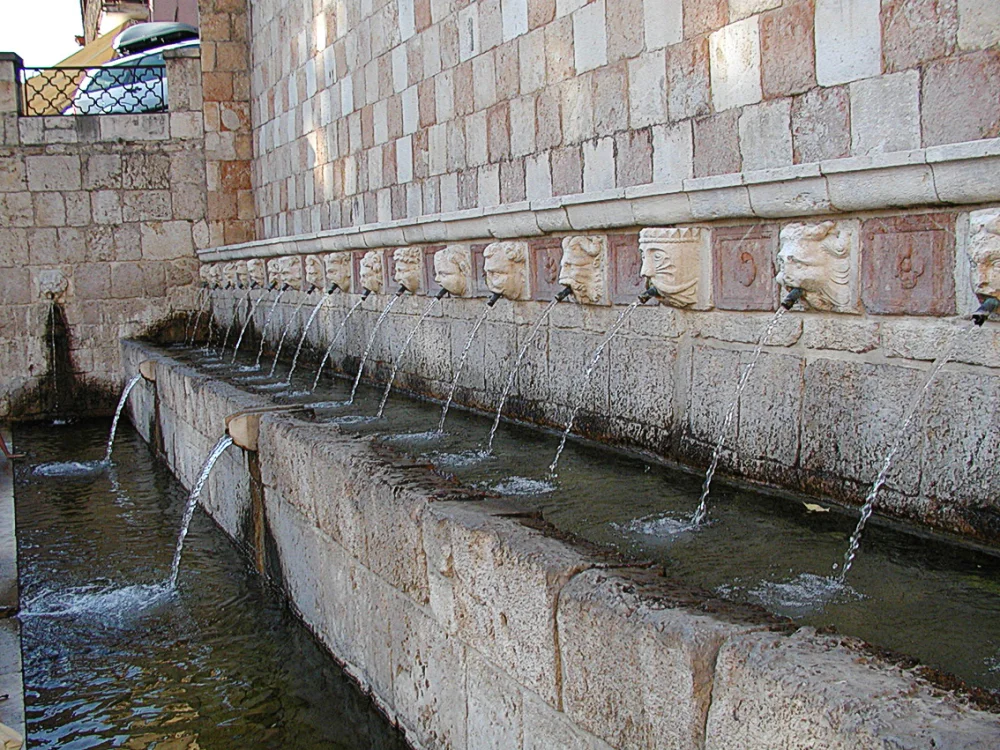
Carved masks at the Fountain of the 99 Spouts, 2007 · © RaBoe/Wikipedia / Wikimedia Commons · CC BY-SA 2.5
Piazza Duomo and the cultural year
Piazza Duomo is a useful starting point for exploring the centre, stopping for coffee and choosing where to walk next. Look at the fountains and cathedral façade. Restoration continues, and ordinary visitor access to the interior is not yet confirmed, but the square is still worth a stop.
For contemporary art, see the program of the MAXXI L’Aquila, in Palazzo Ardinghelli on Piazza Santa Maria Paganica. The museum announced a closure for rehanging until 25 September 2026; check its calendar when planning your visit. official L’Aquila 2026 program also includes concerts, exhibitions and occasional palace openings. An event may be a reason to stay another night.
Visit L’Aquila in 1-2 days
A full day is enough for the main monuments and the MUNDA. Staying overnight lets you spread out the sights, dine in the centre and save the next day for an exhibition or excursion. The route below starts at the castle and ends at Collemaggio. If your coach arrives at Collemaggio, visit the basilica first, then walk up to the centre, allowing time to reach the museum before last admission.
The city's main sites
MUNDA at the Forte Spagnolo
Start with the mammoth and art collections. Allow enough time inside, then continue to the Fontana Luminosa and the streets of the centre.
Allow 1 hour 30 minutes to 2 hoursSan Bernardino
Visit the basilica for its façade, gilded ceiling and mausoleum. Approaching from the upper part of the centre avoids climbing the broad staircase.
About 30 minutesLunch in the centre
Stop at Giorgione or Da Lincosta, depending on opening times. The route continues on foot, so leave time for an unhurried lunch.
Booking recommendedPiazza Duomo and Rivera
Cross Piazza Duomo, then walk down to the Fountain of the 99 Spouts. Take time to examine the carved masks and basins before heading back uphill.
A stop in the lower townSanta Maria di Collemaggio
Reach the basilica in time to see its façade and interior before evening services. If the walk feels too long, prioritise Collemaggio and save Rivera for another day.
Allow for walking time tooOne last walk or the return
If staying overnight, return to the centre for dinner. Otherwise, allow plenty of time to reach your exact coach stop, especially for departures from Amiternum.
Depending on your stayA day at Gran Sasso
Check the weather and cable car operation
Choose this outing only in suitable conditions. Plan both journeys to Fonte Cerreto, by car or using AMA connections.
A separate full-day outingGo to Campo Imperatore
Head to the cable car base at Fonte Cerreto and check the last descent. A trip up for the views is enough to appreciate the mountain landscape.
Subject to cable car operationEnjoying the landscape
Plan lunch and a walk suited to your fitness and the conditions. For a longer hike, choose a route in advance and make sure you understand its difficulty.
Choose a walk that suits youReturn to L’Aquila
Leave enough time for the cable car and onward transport. Back in town, keep the rest of the afternoon free for a break or travel to your next stop.
Plan the return journeyTwo days without leaving town
If you enjoy taking your time in museums, save MUNDA for the second morning. Spend the first day at Collemaggio, San Bernardino, the Fountain of the 99 Spouts and the streets between them, with a long lunch. The next day, combine the museum with an exhibition at MAXXI, if open, or a cultural event. This gives you two varied days without rushing between admissions.
The former display pictured below gives an idea of MUNDA's sculpture and paintings. Follow the current route at the castle: the move changed their presentation. A second day in town also works without a car, leaving time for shops and lanes around Santa Giusta.
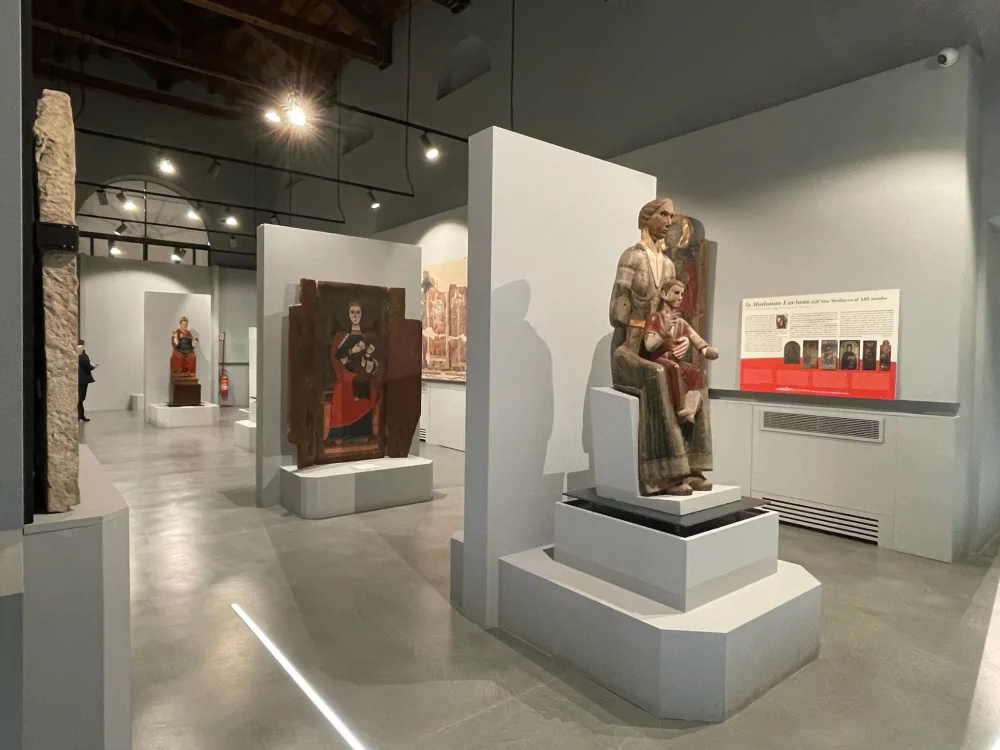
MUNDA collections in their former Borgo Rivera display, 2024 · © Marcok / Wikimedia Commons · CC BY-SA 4.0
With children, in the rain or on a Monday
With children, start with the mammoth at MUNDA, then choose a few art galleries before taking a break around the castle or in front of Collemaggio. Save the fountain for the following day if you want to avoid too much walking.
In rainy weather, spend longer in the museum and basilicas, using the arcades for part of your walk. On Mondays, first check whether MUNDA has an exceptional opening. If closed, plan around the other monuments and centre. MAXXI has its own calendar and is not automatically an alternative.
Walks and excursions around L’Aquila
From the Corso to the streets of Santa Giusta
From Piazza Duomo, follow Corso Vittorio Emanuele II towards Piazza Regina Margherita and the Fontana Luminosa. Doorways, windows and views along side streets reward a slower pace. The castle is close to the fountain. Return via Piazza Palazzo for a different route.
South of Piazza Duomo, Santa Giusta offers a quieter walk among palace façades and small streets. Via Fortebraccio leads to the broad San Bernardino staircase. Allow around an hour to wander, longer with coffee or a visit inside.
Restoration work can divert a route or temporarily close a street. Follow local diversions and look out for advertised palace openings. A courtyard visible through a doorway is not necessarily open to the public. The squares offer plenty to see without entering every building.
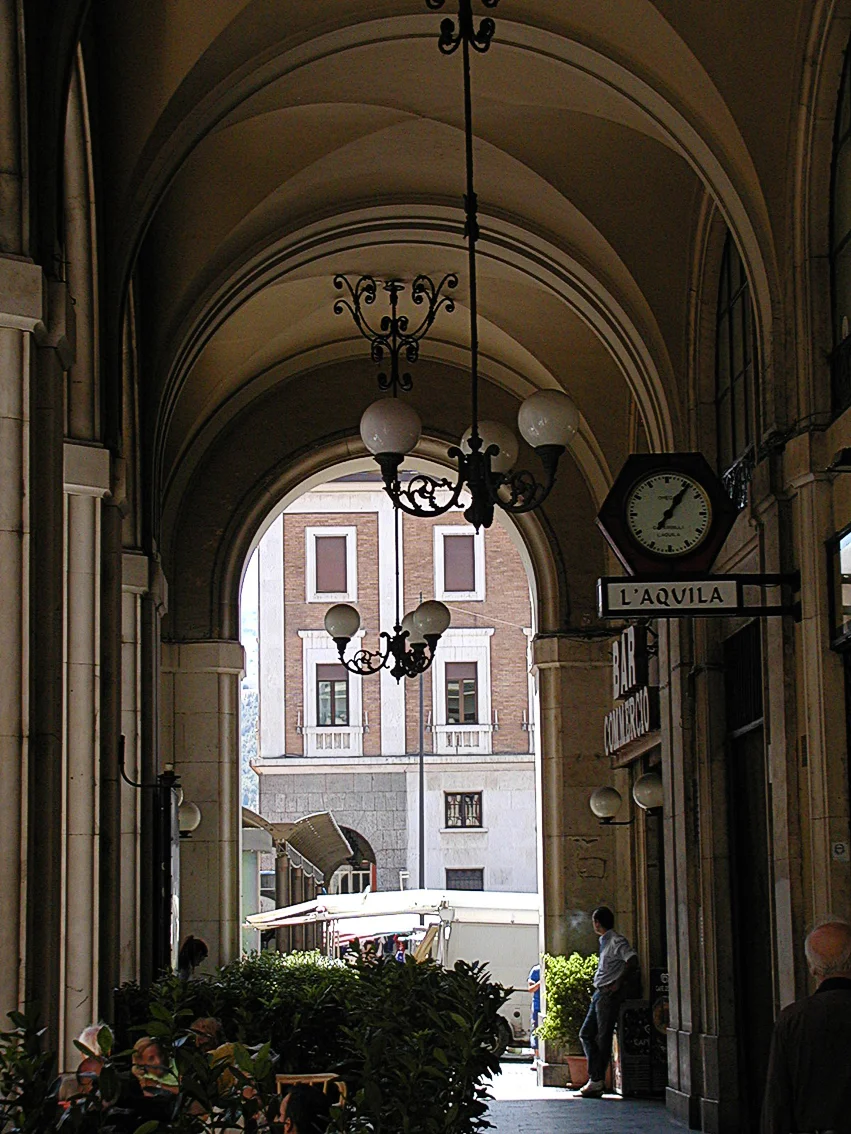
Doorways along Corso Vittorio Emanuele, 2007 · © RaBoe/Wikipedia / Wikimedia Commons · CC BY-SA 2.5
A guided tour to connect places and stories
The three-hour “L’Aquila of mysteries” tour combines Collemaggio, San Bernardino, the castle area and Piazza Duomo with a nougat tasting. It can replace part of the independent route if you prefer a guide. Commentary is offered in English or Italian. MUNDA admission is payable separately if you wish to visit.
Campo Imperatore and Gran Sasso
The mountains visible from L’Aquila take on a different scale at Gran Sasso. For a scenic trip, the cable car leaves from Fonte Cerreto, near Assergito Campo Imperatore. Enjoy the landscape around the upper station without attempting Corno Grande, which requires a proper mountain hike.
Allow a full day if using public transport. AMA’s M6 services reach the base, with some journeys requiring a change at Paganica. Check both directions and whether the cable car is operating. The summer 2026 return fare is €16.50, excluding travel to Fonte Cerreto. Compare the options in our guide to Campo Imperatore and Gran Sasso.
Santo Stefano di Sessanio and Rocca Calascio
For a day between villages and landscapes, combine the stone streets of Santo Stefano di Sessanio with Rocca Calascio. The first suits a walk and lunch; the fortress opens up views across the mountains. Allow time for the approach and the site rather than adding more villages.
A car makes this itinerary easier. At Calascio, final access depends on traffic restrictions and seasonal arrangements. The shuttle from Piazza della Repubblica runs on selected days, according to the published calendar. Plan to park in the village rather than beneath the towers. Theone-week Abruzzo itinerary helps you plan onward travel through the region.
What and where to eat in L’Aquila
Local cooking draws on pasta, meat and produce from the mountain plateaus. Spread your tastings across lunch, dinner and a sweet break. A plate of chitarra makes a simple meal; staying overnight leaves time for a more elaborate dinner.
Chitarra, arrosticini and saffron
The spaghetti alla chitarra are prepared differently from one restaurant to another: Giorgione lists a version with courgette, guanciale, saffron and pecorino, while Da Lin Costa offers them with mushrooms. Choose what appeals to you rather than expecting the same recipe everywhere.
The arrosticiniare small skewers of grilled sheep meat from Abruzzo's pastoral tradition. Share them with a few side dishes, and check the price, often per skewer, before ordering.
The Zafferano dell’Aquila DOP is produced around Navelli. When buying some to take home, compare the weight, producer and designation on the packaging. Harvest runs from mid-October, sometimes into early November, depending on flowering. Arrange producer visits in advance; saffron is also sold in shops outside harvest season.
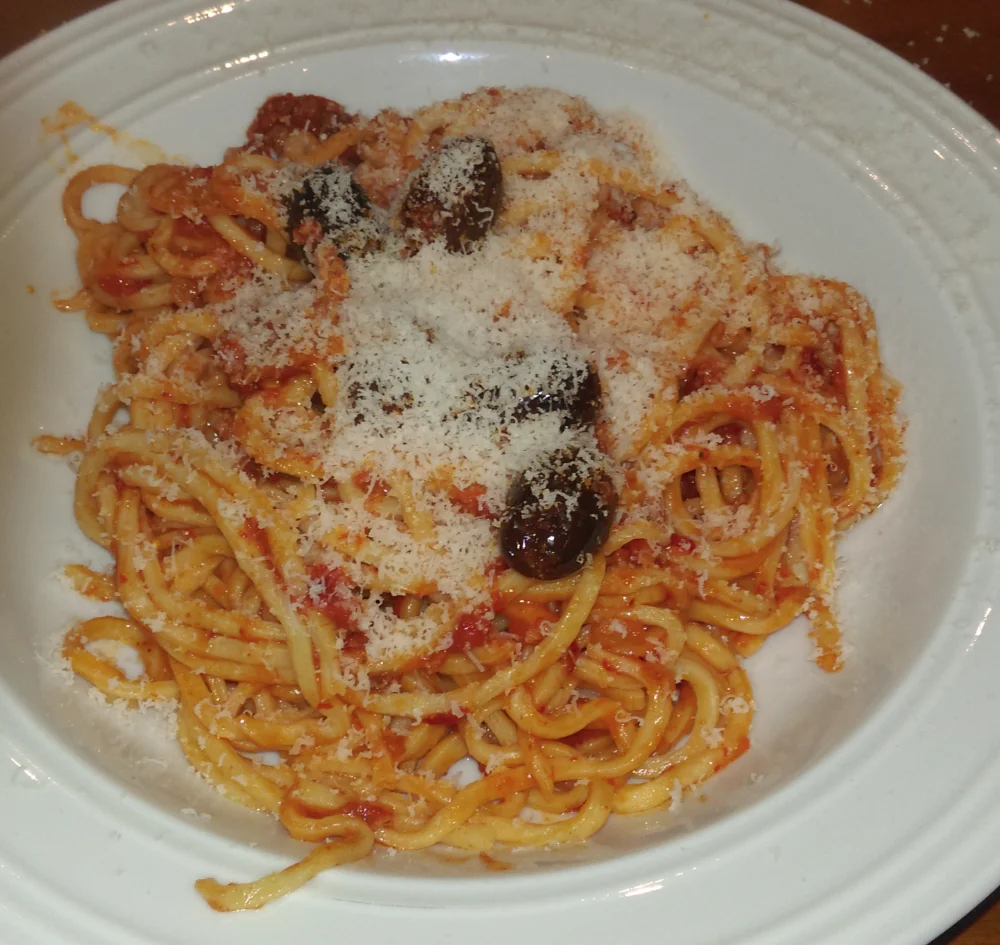
Spaghetti alla chitarra — culinary illustration · © Initialfluctuation / Wikimedia Commons · CC BY-SA 4.0
Two restaurants and a sweet stop
| Address | Why stop? | What to know |
|---|---|---|
| Osteria da Giorgione Via del Guastatore 2/B | For an Abruzzo menu including saffron chitarra and arrosticini. | Check the menu and book ahead to plan your meal in the centre. |
| Ristorantino Aquilano Da Lin Costa Via Antonelli 6 | For pasta and more elaborate combinations, through to dessert. | Closed Monday lunchtime, Wednesday and Sunday evening. |
| Fratelli Nurzia Piazza Duomo 74–75 | For soft chocolate-and-hazelnut torrone, or a box to take home. | A shop stop to include during your walk across the square. |
As a guide, Da Lin Costa's menu lists mushroom chitarra at €12, mango-and-coconut meringue at €9, plus a €3 bread and cover charge: €24 for this main course, dessert and cover charge, excluding drinks. The main course and cover charge alone come to €15. Adjust for your appetite and the menu available when you visit.
Torrone is worth a stop. Fratelli Nurzia's soft chocolate-and-hazelnut version offers a change from familiar white nougat. Several sizes are available, useful if you are continuing to Sulmona and its sugared almonds : two very different edible souvenirs from Abruzzo.
Where to stay in L’Aquila?
For one or two nights in town, first look in the historical centre. Around Piazza Duomo, Santa Giusta and Via Fortebraccio, you can walk to restaurants and head out again after sightseeing. Alongside a historic building's character, check the floor, bathroom arrangements and access with luggage.
Collemaggio is convenient if your coach serves that terminal. To the west, accommodation near Amiternum can suit a coach arrival or onward drive, but requires planning journeys to the centre. If Gran Sasso is the main focus of your stay, a base near Assergi may make more sense; give L’Aquila a separate day.
| Accommodation | Best suited to | What to check |
|---|---|---|
| Dimora Fortebraccio Via Fortebraccio 71 | Suites and apartments in a historic residence in the centre. | The chosen category, possible kitchen facilities, breakfast and parking arrangements. |
| B&B Palazzo Rustici Piazza San Marciano 8 | A base in the historic centre for walking to the squares. | Room facilities and arrival arrangements with luggage or a car. |
| Amaranto99 Via Goriano Valle 6 | A small guesthouse in Palazzo Alfieri, in the Santa Giusta district. | Some rooms have a private bathroom outside the room; choose your category. |
Compare offers for the same dates, cancellation terms and breakfast options. If driving, ask about parking and the permitted access route: a central address does not mean every street is open to traffic. This is especially useful for a one-night stay.
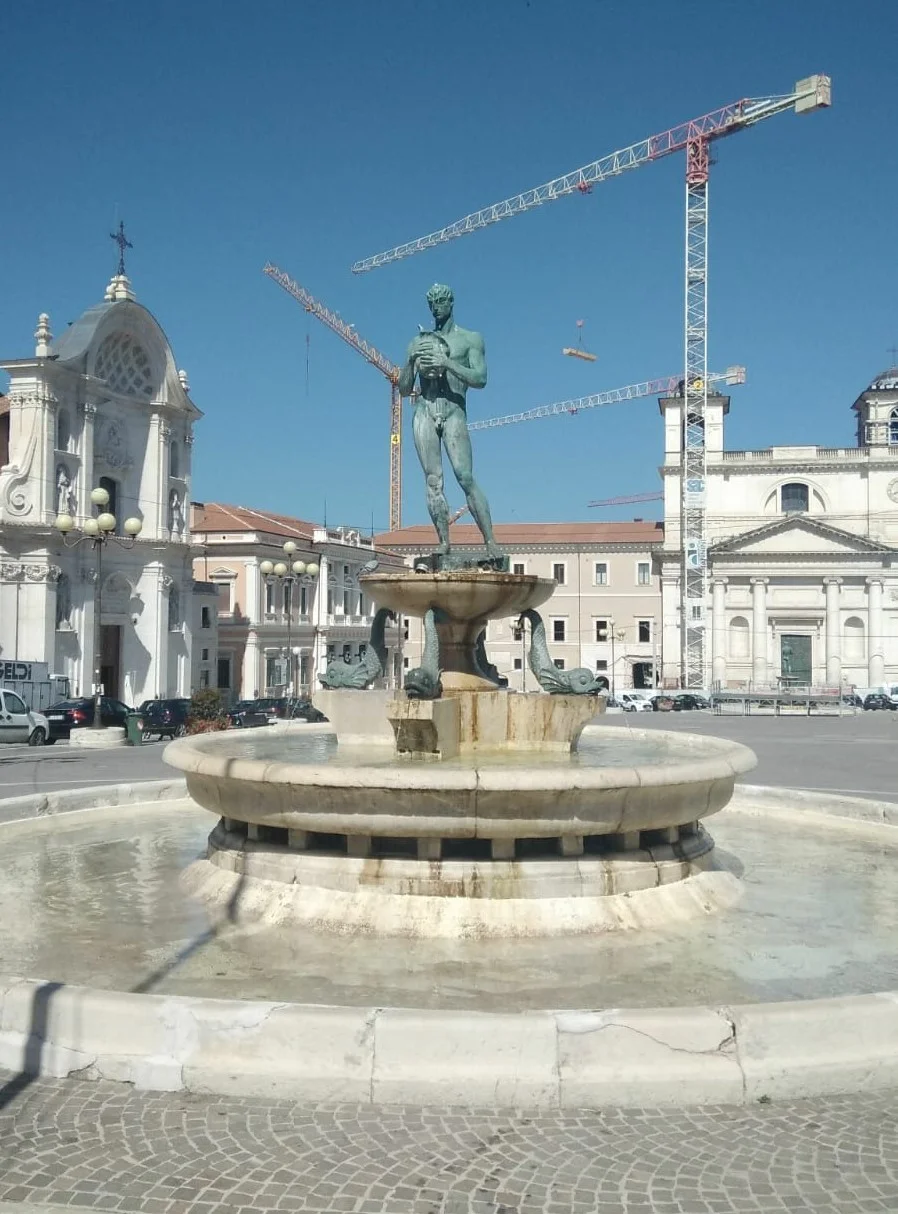
Piazza Duomo during the reconstruction, June 2019 · Simone Serra / Wikimedia Commons · CC0
Access, budget and practical advice
Getting to L’Aquila from Rome
The coach is a practical option from Rome. From Tiburtina coach station, allow around 1 hour 30 minutes to 2 hours, depending on the service and arrival stop. TUA and FlixBus serve L’Aquila. For a day trip, check the return journey at the same time as the outward one.
Your arrival stop affects the next part of the journey. Some services stop at Collemaggio terminal. FlixBus lists a stop on the SS17 outside Hotel Amiternum, west of the centre; allow for a local bus or taxi from there. Read the exact stop name on your ticket before planning the day's route.
From Fiumicino or Ciampino, also check Gaspari. The times announced from Tiburtina do not apply to departure from the airport. If your flight arrives late, compare the last bus with one night in Rome before planning your first day of visit.
By train or from Pescara
L’Aquila has a station on the Sulmona–Rieti–Terni line. Rail can work for a regional journey, especially from Sulmona. Search for your exact travel date on Trenitalia : engineering work can mean replacement coaches. The rail-replacement stop at the station is separate from Collemaggio terminal.
If you land at Pescara, TUA4FLY connects with Pescara Centrale. Continue by regional coach to L’Aquila, allowing enough time for the connection. This arrival works for a trip between the coast and inland Abruzzo; check the whole journey before booking accommodation far from your arrival point.
Parking and getting around
From Rome, the A24 leads to L’Aquila. For visiting the centre, the covered car park Collemaggio–Lorenzo Natalion Via dello Zafferano is listed by the municipal tourism website as free for cars and open 24 hours. Navetta Centro links this area with central stops. It is free Monday–Saturday; Sunday and public holiday fares follow the current AMA timetable.
See the AMA lines and schedules for your arrival and return, especially after dinner. Follow restricted traffic zone signs and direct your satnav to the car park. A car offers little benefit for the centre alone, but is more useful for visiting several villages. If your trip starts at Fiumicino, you can compare rental at the airport for this part of the stay.
Allow for the hills: the castle and main central streets are above the Rivera fountain. With a pushchair or reduced mobility, check monument access and spread out the stops. MUNDA lists an accessible entrance and a lift between its two visitor levels; this does not guarantee access throughout the surrounding streets.
What should you budget for sights and meals?
The squares, walks and fountain let you see much of L’Aquila without paying for several admissions. MUNDA is the main cultural expense in this itinerary. These examples use its ticket prices and Da Lin Costa's menu.
| Your choice | Detail | Total |
|---|---|---|
| MUNDA and simple meal | Museum and exhibition €12 + chitarra €12 + cover charge €3. | 27 € |
| MUNDA, main course and dessert | Museum and exhibition €12 + chitarra €12 + dessert €9 + cover charge €3. | 36 € |
These totals assume one adult paying full admission and ordering exactly the items listed. Add drinks, transport and accommodation if staying overnight. Budget separately for guided tours and mountain outings. Free or reduced MUNDA admission may change the total: check eligibility before buying tickets for the whole family.
When to visit, and what should you expect during the Perdonanza?
Spring and early autumn are pleasant for city walks and village visits. Longer summer days let you combine the city and mountains; bring an extra layer for higher ground and evenings. In winter, museums, churches and restaurants play a larger role, while mountain trips depend more on road and weather conditions.
The 28 and 29 August, the Perdonanza celestiniana centres its celebrations on Collemaggio and the Holy Door. This tradition associated with Celestine V is on UNESCO’s intangible cultural heritage list. Check the programme and book accommodation accordingly if attending. For an ordinary basilica visit, choose a time that fits around the ceremonies.
During L’Aquila’s 2026 cultural year, check what is happening on your travel dates. A concert or an open palace may justify another night. Keep mountain plans flexible: choose your day according to the weather and operating conditions.
Leave time between sights to cross a square, look at the pink-and-white stone or choose a piece of torrone. The monuments shape your itinerary; the streets between them are the reason to linger.— The editorial team, L’Aquila · Abruzzo
Between Ortona and Vasto, three-century-old wooden fishing platforms have become some of Abruzzo’s most sought-after places for a seafood meal.
Read more →Climb from the stone village to the towers seen in Ladyhawke, passing narrow lanes, a small octagonal church and wide…
Read more →