Things to Do in the Cilento: Beaches, Temples and Villages
An alternative to Amalfi Coast mass tourism: 1,800 square kilometres protected by a national park, winding roads, Greek ruins and beaches with room for your towel.
Heading south from Naples, most cars turn towards the Amalfi Coast. Continue 80 kilometres on the A2 and the built-up areas thin out. The Cilento begins beyond Salerno: a steep coast, stone villages 300 metres above the sea and Greek temples standing in tall grass.
- By air: Naples-Capodichino, the nearest airport. Compare flights on Skyscanner.
- By train: Naples or Salerno, then a regional service to Paestum or Ascea.
- By car: essential for hilltop villages and coves. Compare hire options on Rentalcars, with collection possible at Salerno station.
- Combine it with Naples and the Amalfi Coast: see our 5-day Campania itinerary.
Visiting Paestum: Greek archaeology without the crowds
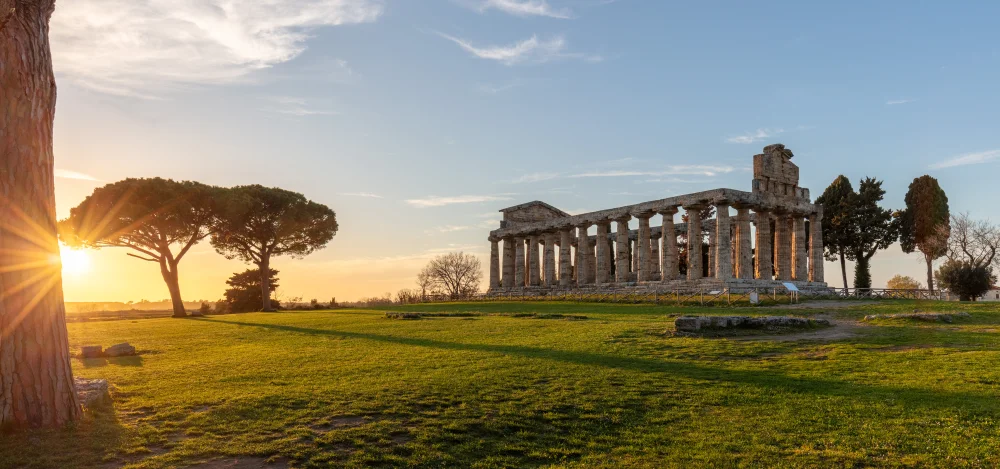
© Diego Delso / Wikimedia Commons — CC BY-SA 4.0
Even from the SS18, the sight is striking. On a grassy plain, with no modern city crowding around them, three 5th-century BC Doric temples stand in line facing the sea.
The Temple of Neptune, the largest, retains its entire outer colonnade and much of its two-level interior structure. Shell limestone catches the morning light and turns bright orange late in the day.
The ticket office opens at 8.30am. Arrive then. From 10am, heat settles on the unshaded stone and the first regional tour coaches arrive. The combined ticket starts at €15, with seasonal variation, covering the outdoor ruins and indoor collections.
Cross the road to escape the heat in the Archaeological Museum. Here you will find the Tomb of the Diver: five painted travertine slabs showing a young man diving into water. The lines are spare and minimalist. It is the only surviving fresco with a non-mythological subject from the Classical Greek period.
To understand the engineering details of these stone giants without reading sun-faded panels, the most effective option is a guided tour with a local archaeologist.
- Address: Via Magna Graecia 919, Capaccio Paestum (SA)
- Opening: ticket office at 8.30am; last admission around one hour before closing
- Price: from €15, valid for 3 days (museum included)
Where to eat the best mozzarella di bufala in Capaccio
The road around Paestum has a local nickname: the mozzarella route. Buffalo-milk dairies line the road for around ten kilometres. The most sought-after stop for purists is Tenuta Vannulo on Via Galileo Galilei in Capaccio.
The farm runs a closed production system, making around 300 kilos of mozzarella a day and selling none to supermarkets. You can wander freely through the barns, where buffalo sleep on rubber mattresses and are cleaned by automatic massage brushes.
Timing is the golden rule. Arrive before 10am. Sales stop once the night's stock runs out, often around 11.30am in summer. A 500-gram braid costs around €8 and comes in whey. Cut into it and the rind is slightly elastic, while the centre releases a musky-tasting white liquid without acidity.
If the sales counter is closed, try a €3 buffalo-milk yoghurt in a glass jar at the courtyard dessert counter. Otherwise, head to Barlotti dairy, closer to the temples, where you can eat the day's production beneath pergolas.
Things to do in Castellabate, the Cilento's hilltop village
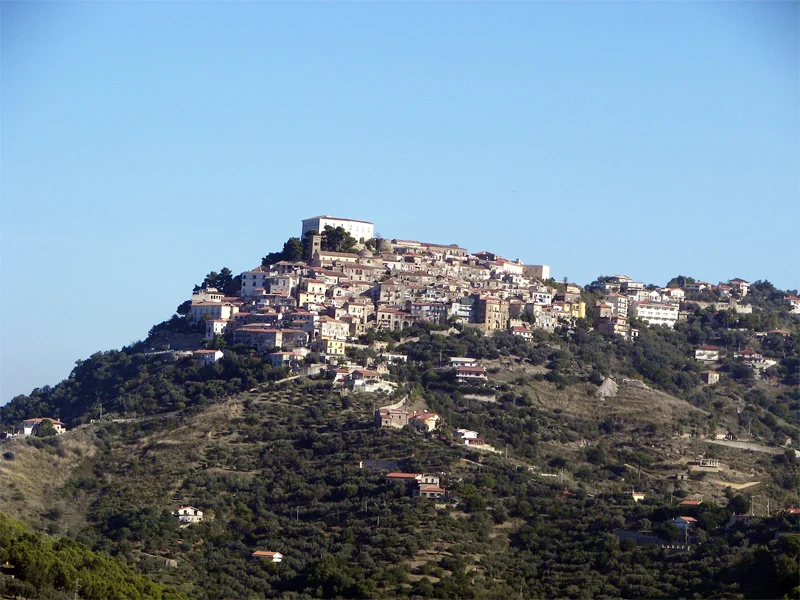
© GabrielePinto (presumed attribution) / Wikimedia Commons — Public domain
The Cilento coast is overlooked by villages built high up to avoid seaborne raids. Castellabate is the most compact. The road climbs three kilometres from the coast in tight hairpins.
As you climb, beach noise fades behind the continuous sound of cicadas, the scent of umbrella pines fills the car and the air cools by two or three degrees.
Cars are strictly banned from the centre. Leave yours in the paid car park at the village entrance, €2 an hour at the meter. The maze of sun-heated pale stone, uneven stairs and vaulted lanes leads to the viewpoint on Piazza 10 Ottobre 1123. Look straight down to Santa Maria di Castellabate's roofs and the Punta Licosa peninsula.
For lunch, find Cantina Belvedere, a hidden trattoria with a handful of tables on a narrow balcony above the drop. Paccheri with squid costs around €20. Book the day before or move on.
Acciaroli's beaches and Pioppi's food
Twenty minutes further south by road, Acciaroli has changed from a rough fishing port into the area's most popular seaside resort. The water is transparent to a depth of five metres. Fine-sand beaches stretch for several kilometres north and south of the centre.
Beach-club prices remain modest: two sunloungers and a parasol cost €15 to €20 a day, compared with double or triple on the Amalfi Coast.
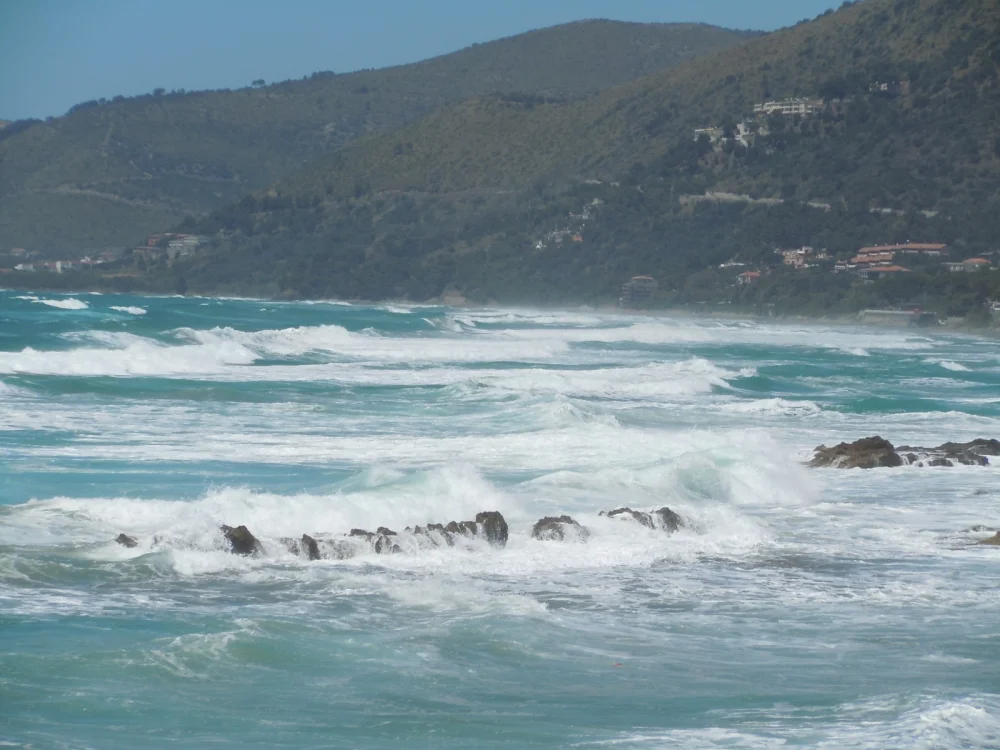
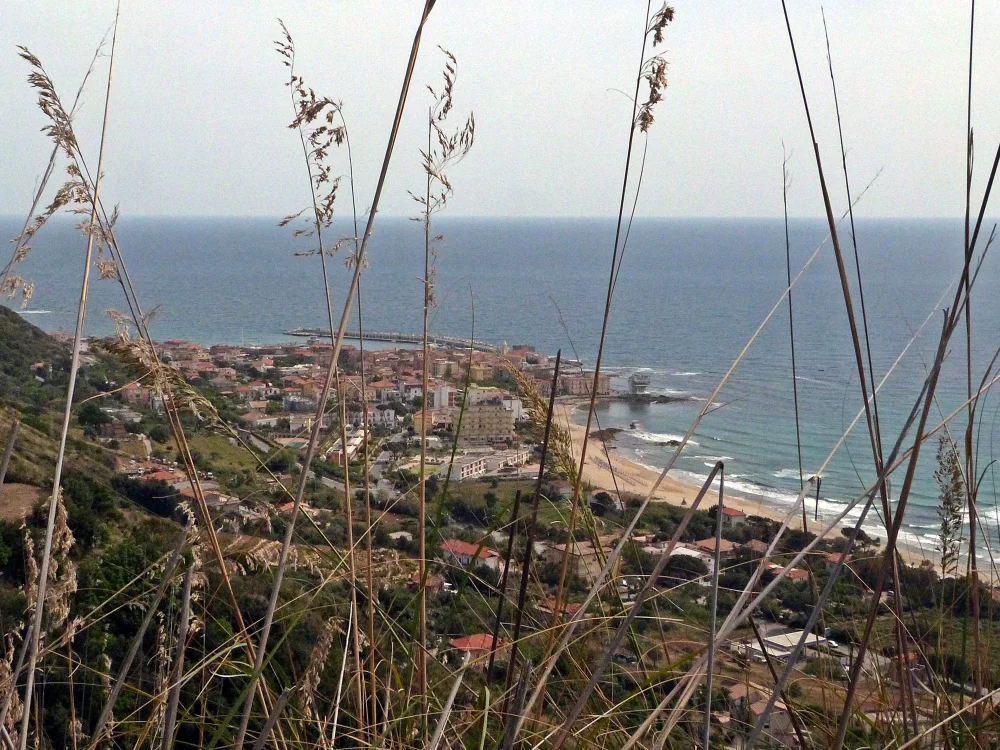
A few kilometres south, Pioppi is closely tied to the region's food history. Here, American physiologist Ancel Keys studied local habits in the 1960s, asking why so many local farmers lived beyond ninety. Rather than visit the small Mediterranean Diet Museum, put his discoveries into practice at the table.
Sit down at Suscettibile by the port. Order alici mbuttunate, stuffed anchovies, wild greens sautéed in bitter local olive oil, and lagane e ceci, short pasta with chickpeas. The bill is around €35 per person. This is the Mediterranean diet in its simplest form.
Pisciotta and menaica anchovies
© AleBonvini / Wikimedia Commons — CC BY 2.0
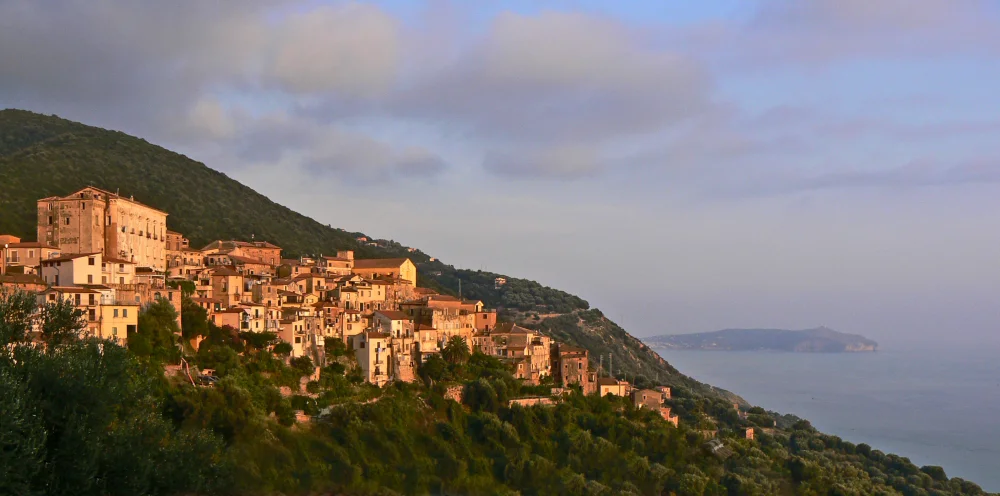
The SS267 suddenly narrows into a forest of monumental Pisciottana olive trees. Sometimes fifteen metres high, they drop fruit onto nets permanently stretched across stone terraces.
Pisciotta clings to the slope amid this landscape.
At the port, local fishermen still use the menaica, an ancient net with mesh sized to catch only adult anchovies and bleed them directly in the water. The result is pale flesh without bitterness, preserved in salt in terracotta barrels.
To taste these anchovies, produced in very small quantities, book Osteria del Borgo. Its terrace overlooks sea and olives. Menaica anchovies are served raw with olive oil or fried. Allow €35 to €40 for a full meal with house wine.
Exploring Palinuro's caves and Baia degli Infreschi
Beyond Ascea's headland, the geography breaks up: long beaches abruptly give way to Capo Palinuro's limestone promontory. The rock is riddled with underwater caves dropping into the Tyrrhenian Sea.
Fishermen at Palinuro port have converted their wooden gozzi into tour boats. A 1½-hour tour costs €20 per person. In August, do not turn up at noon without a booking: arrive at the quay at 8.45am to book a morning departure before the sea picks up and boats fill. The Grotta Azzurra rewards the early start: the skipper cuts the engine, and sunlight through an underwater tunnel turns the cave fluorescent blue.
Thirty minutes east along winding roads, Marina di Camerota is the departure port for horseshoe-shaped Baia degli Infreschi. The boat shuttle costs €15 return. To get there on foot, take the hiking path from Lentiscelle beach. Allow 1½ to 2 hours for an average walker. Remember you must walk back in afternoon sun unless you book a return boat.
Bring food and water: Baia degli Infreschi has no facilities, just white pebbles and water at 25°C.
Ancient Velia: Greek ruins facing the wind
© Carlomorino / Wikimedia Commons — CC BY-SA 3.0
Between Castellabate and Palinuro, Velia's ruins receive a tenth of Paestum's visitors. This was the Greek city of Elea, founded in the 6th century BC and known for Parmenides' philosophical school.
The Paestum, museum and Velia ticket grants one admission to each site over three days. Adult admission is €15 from March to November and €10 from December to February. Spread the visits out rather than cover both archaeological sites in one day.
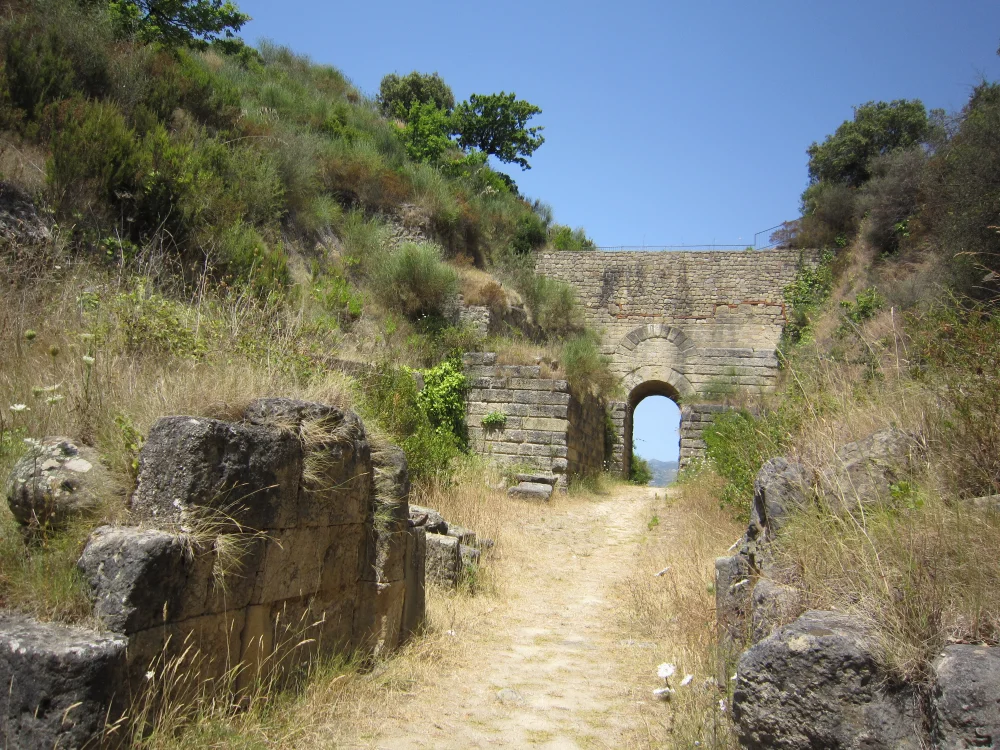
The sun beats down, stone reflects the heat and sea wind blows constantly. Halfway up, you pass beneath Porta Rosa. This Greek engineering work, an arch of precisely cut stone standing without mortar since the 4th century BC, marks the upper city's entrance.
At the summit, a cylindrical medieval tower was built directly from stones of the Greek temple beneath it. Address: Piazzale Amedeo Maiuri, Ascea Marina.
There are no drinking fountains or vending machines beyond the ticket office: bring a bottle or you may have to cut the visit short.
Padula Charterhouse: inland in the Vallo di Diano
© Bernard Gagnon / Wikimedia Commons — CC BY 4.0
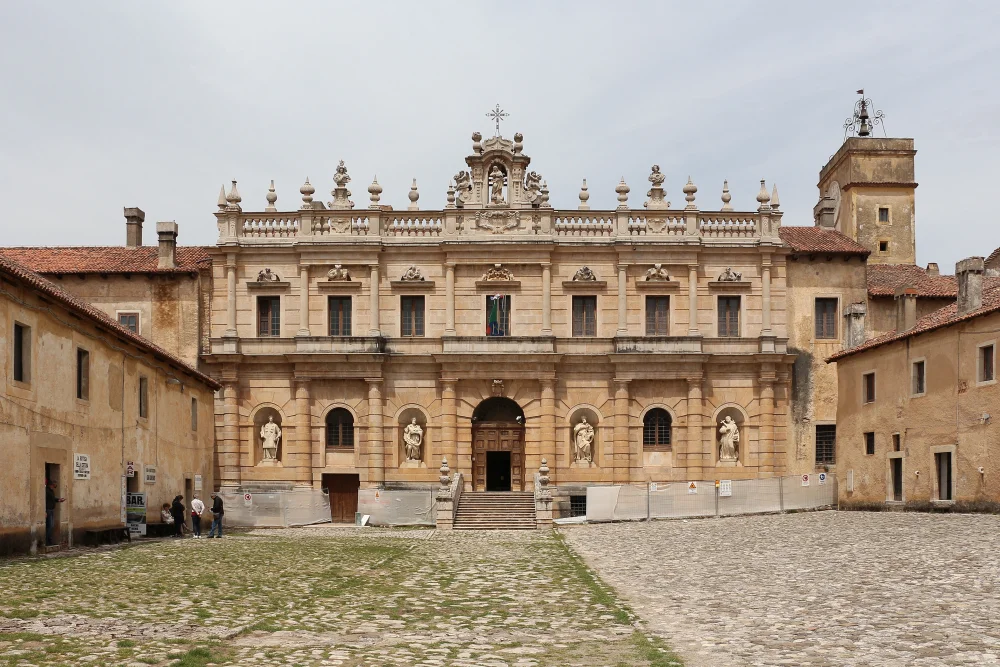
An hour and fifteen minutes from the coast, the Alburni Mountains cut through the interior. Follow the SS166 east to the Vallo di Diano, a broad plateau crossed by the A2. Here stands Certosa di San Lorenzo in Padula, Italy's largest Carthusian monastery.
The combined Certosa e Padula ticket costs €14 and is valid for 48 hours. Parking outside the gates is free.
Inside, total silence and a drop in temperature are striking. Explore without a guide, your footsteps echoing beneath the arcades of the 12,000-square-metre main cloister.
The sheer scale soon feels overwhelming: near-industrial former kitchens, where legend says a thousand-egg omelette was made for Charles V; the scent of dust and wax in a library with painted majolica floors; cold stone in the monks' individual cells. Allow a good two hours to explore without rushing.
Where to stay in the Cilento: split your trip between two bases
The Cilento is not a region to explore from one place. Roads twist, terrain sets the pace and forty kilometres may take an hour to drive. Split your stay between bases.
Spend the first two nights at an agriturismo on the Paestum plain to visit archaeology and dairies early in the morning. Then rent a coastal apartment for three or four nights around Pisciotta or Palinuro.
September remains the most practical time: the sea is warm, hilltop-village car parks have spaces again and rental prices fall by a third.
Seven days in southern Italy, from Naples' urban energy to the Amalfi Coast's steep cliffs, through Pompeii's ash and the…
Read more →Pompeii shows a Roman city's scale; Herculaneum reveals its intimate details, with surviving storeys and original carbonised beams.
Read more →