Jellyfish in Puglia: How to Avoid Them and What to Do If Stung
The Mediterranean is getting warmer, and jellyfish sometimes appear close to shore. Puglia's two coastlines give you more beaches to consider, but check local conditions before swimming.
A jellyfish sting can spoil a beach day, and Pelagia noctiluca is a species to watch for in Puglia. The region's two coastlines give you plenty of choice, but wind direction alone cannot guarantee a jellyfish-free swim. Here is what to check and how to get help after a sting.
Jellyfish in Puglia: Tramontana, Scirocco and beach choice
Puglia has two coastlines: the Adriatic to the east and the Ionian to the west. Wind and currents can move jellyfish towards or away from a beach, so looking at conditions on both sides of the peninsula gives you more options. A wind forecast cannot tell you whether a particular bay is free of jellyfish: check the water, beach notices and the lifeguards' advice before swimming.
To anticipate these movements, locals swear by the 3bmeteo and Il Meteo apps. Both let you check the day's wind direction over breakfast.
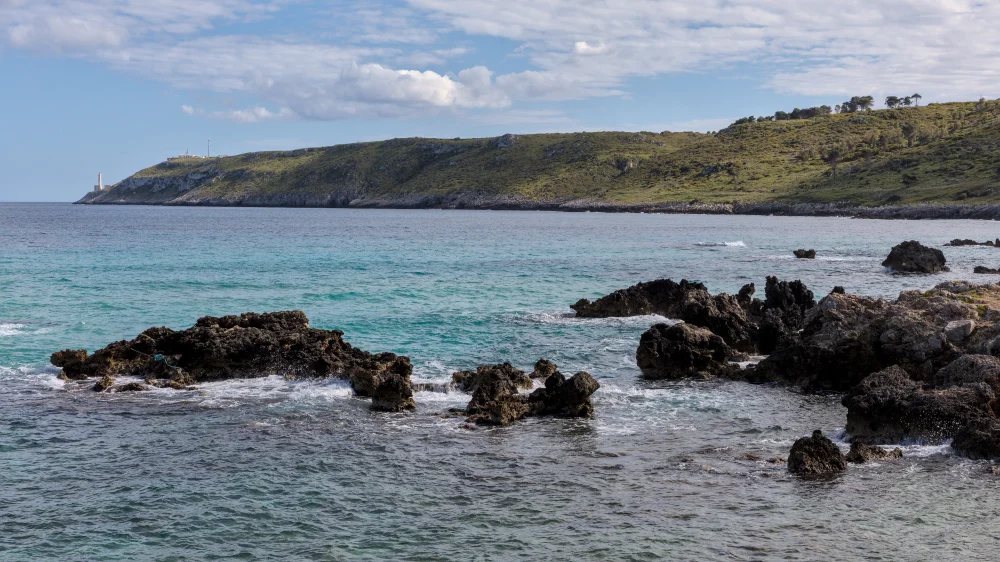
© Benjamin Smith / Wikimedia Commons — CC BY-SA 4.0
Tramontana and maestrale (north / north-west). These winds can make exposed stretches of the Adriatic coast rough. Before swimming around Polignano a Mare, Monopoli or Otranto, check the local sea forecast and beach warnings. Wind direction alone does not predict jellyfish at a particular beach.
The Ionian coast around Gallipoli, Porto Cesareo and the so-called Maldives of Salento may offer a more sheltered alternative, depending on the beach and conditions that day. Torre Lapillo is another bay to consider. Shelter from the wind does not guarantee calm water or an absence of jellyfish, so check locally before getting in.
Scirocco (south / south-east). This warm, humid wind can make exposed parts of the Ionian coast rough. Check conditions at Punta Prosciutto or Baia Verde before setting out, and compare them with beaches on the other side of the peninsula.
Parts of the Adriatic coast, including Torre dell'Orso and Baia dei Turchi, may be more sheltered in a southerly wind. The pine trees near Lido Balnearea, by the Alimini lakes, can offer some shelter on land. Neither the trees nor the wind direction guarantees safe swimming or water without jellyfish.
Before packing your beach bag, open 3bmeteo and check the wind and sea forecast. Compare beaches on both coasts, then follow the notices and lifeguards' advice at the beach you choose. A forecast helps you plan; it cannot confirm that the water is free of jellyfish.
Jellyfish in Salento and Gargano: checking local conditions
Switching coasts is practical in Salento, the far south of Puglia. The peninsula is so narrow here that it rarely takes more than forty minutes to drive from one sea to the other. That is a rare luxury in the Mediterranean.
You need a vehicle to switch between coasts. Book ahead through Rentalcars: demand for hire cars in Salento is intense from mid-July.
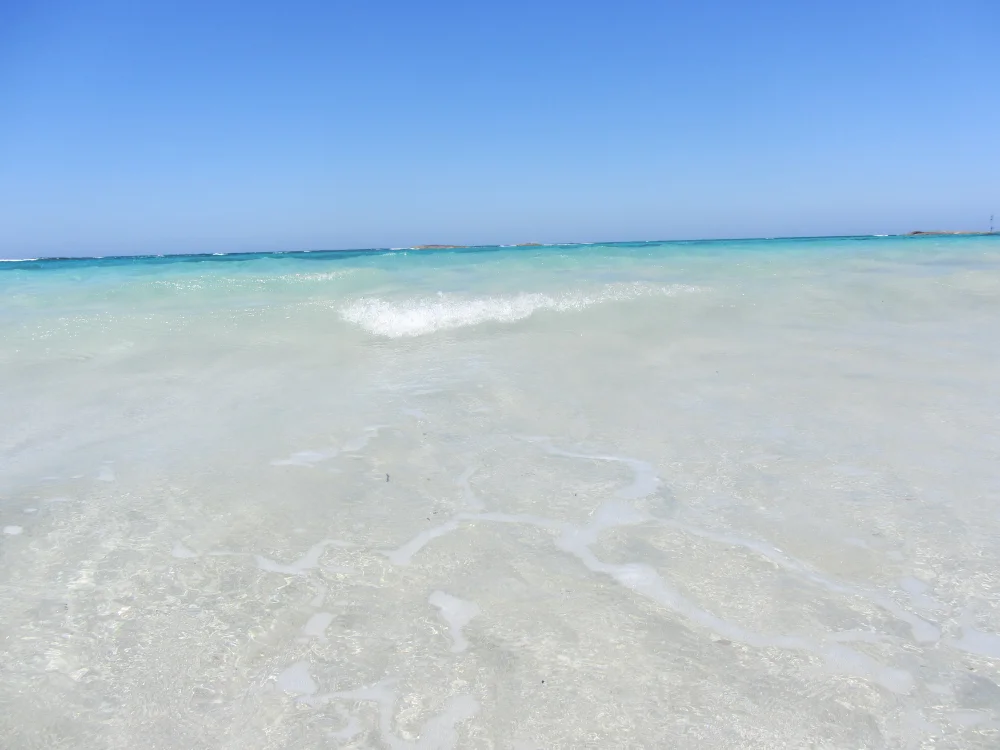
© Andrea / Wikimedia Commons — CC BY-SA 3.0 it
This east–west journey is a good opportunity to explore inland. Escaping the Scirocco gives you a reason to pass through the traditional villages of Grecìa Salentina, such as Corigliano d'Otranto. Stop for fresh figs at the roadside and handmade taralli before reaching the spectacular SP366 coast road, which winds above clear water south of Otranto.
Further north in the Gargano, the headlands around Vieste and Mattinata create different conditions from one bay to the next. Local currents can carry jellyfish into sheltered coves, and a change in the wind is not an all-clear. Ask locally and look for beach warnings rather than judging the risk from the colour or clarity of the water.
| Prevailing wind | Potentially exposed coast | Alternative coast to check |
|---|---|---|
| Tramontana / Maestrale (north–NW) | Adriatic (Polignano, Otranto, Monopoli) | Ionian (Gallipoli, Porto Cesareo, Torre Lapillo) |
| Scirocco (south–SE) | Ionian (Punta Prosciutto, Baia Verde) | Adriatic (Torre dell'Orso, Baia dei Turchi, Alimini) |
| Light or no wind | No clear choice from wind alone | Both coasts — check local conditions |
Jellyfish stings in Puglia: first aid and when to get help
Even with careful planning, stings can happen. The sudden pain, like an electric shock, always comes as a surprise. Avoid questionable home remedies and ask a lifeguard or someone trained in first aid for help.
Once you are safely out of the water, rinse the affected area with seawater rather than fresh water. Ask a lifeguard or someone trained in first aid for help.
Do not touch tentacles with bare fingers or rub the skin with a towel. Ask a lifeguard for help; any remaining tentacles should be removed carefully with tweezers or the edge of a bank card, without rubbing the affected area.
Do not apply hot sand or rub the sting with sand or stones. Ask a lifeguard or first aider for help. The Italian Red Cross advises warm-water immersion at 40–45°C to relieve pain; the water must not burn the skin. Follow local first-aid advice for the sting involved.

© Mattes / Wikimedia Commons — CC BY-SA 4.0
For a localised skin reaction, ask a pharmacist at the nearest Farmacia which treatment is suitable. Get medical advice if the pain remains severe or the sting is near the eyes, mouth or throat.
Call 112 immediately if there is difficulty breathing, faintness, loss of consciousness or a severe allergic reaction. A Guardia Medica Turistica can help with non-emergency medical problems where the seasonal service is available; it is not the right first stop for a serious reaction. Fees and opening arrangements vary locally.
| Species | Appearance | Risk | Period |
|---|---|---|---|
| Pelagia noctiluca | Pink, glows at night, long tentacles | Painful sting, with a red mark lasting several days. Allergies are rare but possible. | Peaks in August; may appear from late June depending on currents |
| Rhizostoma pulmo | Large and white with a blue rim, no visible tentacles | Almost harmless, with a very mild sting despite its impressive size | Throughout the season, often in deeper water |
Before choosing a rocky cove or a long sandy beach, check the wind and sea forecast on 3bmeteo. Then check the beach notices and ask a lifeguard about conditions. Being flexible about where you swim is useful, but clear water and an offshore breeze do not guarantee an absence of jellyfish.
From white sand on the Ionian coast to rocky Adriatic coves, here are my tips for avoiding crowds and finding…
Read more →Southern Italy is warm, but winter can be harsher than you expect and August can feel stifling without planning. Here…
Read more →