Costa dei Trabocchi restaurants: where to eat on a trabocco
Between Ortona and Vasto, three-century-old wooden fishing platforms have become some of Abruzzo’s most sought-after places for a seafood meal.
On the Costa dei Trabocchi, curious wooden structures stand against the Adriatic waves. In 1894, Gabriele D’Annunzio watched them from his villa in San Vito Chietino and described them as enormous spiders resting on the water.
What is a trabocco? How the fishing platform works
A trabocco is a wooden platform anchored to the rock by heavy Aleppo pine trunks. Some extend as far as 100 metres out to sea.
Cables and crossbeams hold the structure in balance. Two long wooden arms reach into the air, supporting the bilancia: a large square fishing net raised and lowered by a winch.
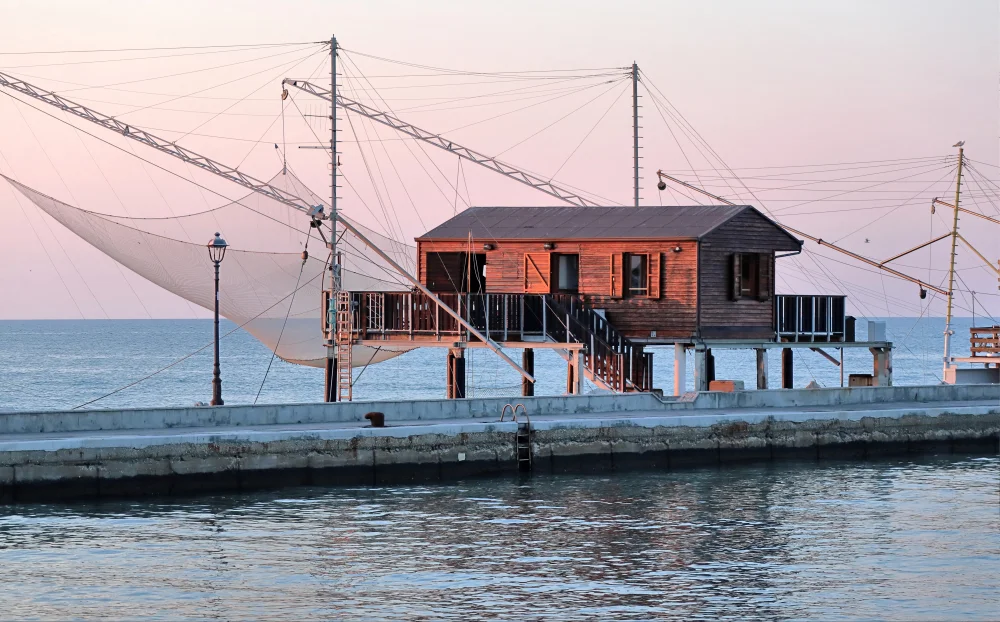
© Terragio67 / Wikimedia Commons · CC BY-SA 4.0
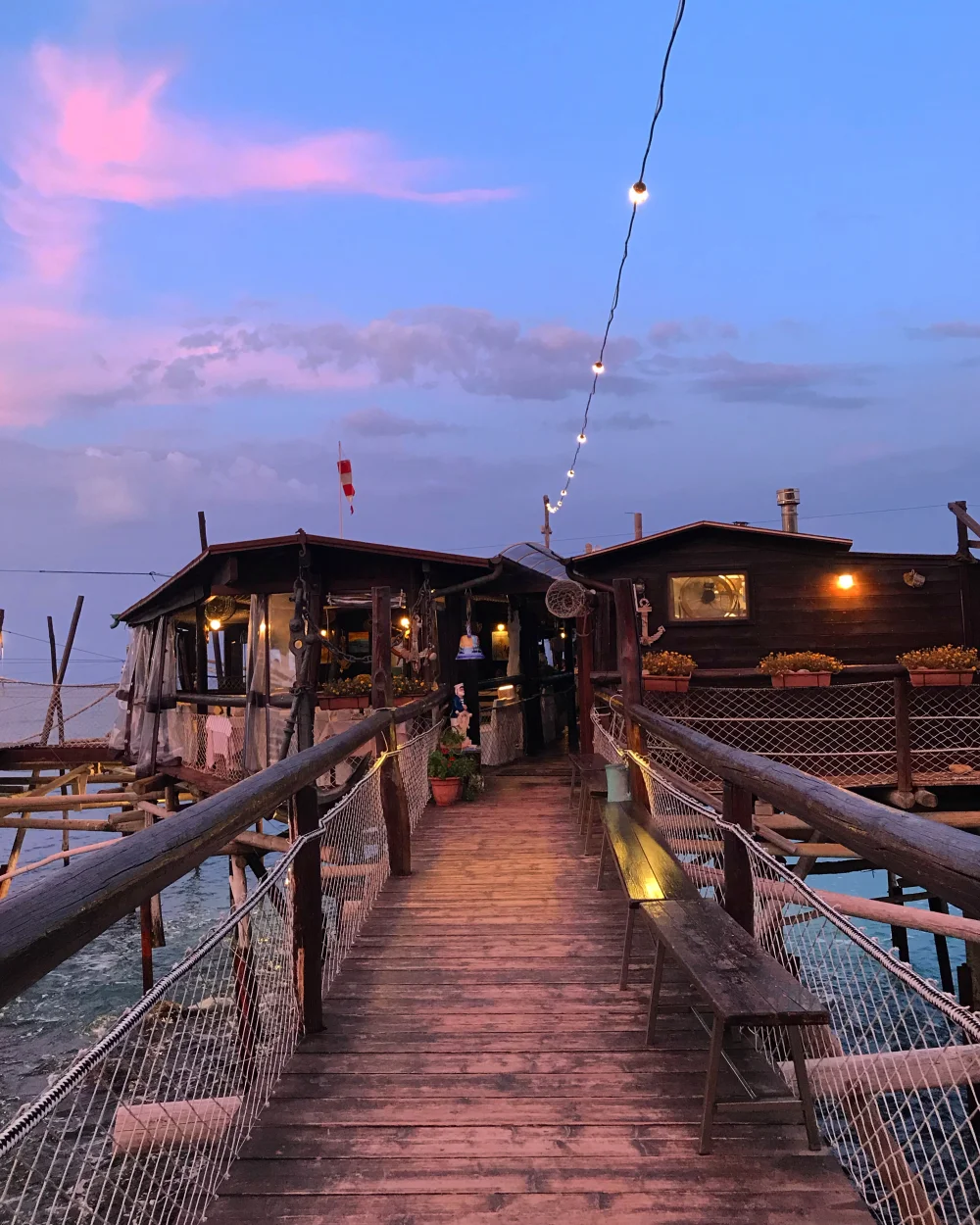
To reach your table, you cross a narrow wooden footbridge. Through the gaps between the planks, you can see dark water lapping around the posts below.
It can feel slightly dizzying, especially when the wind makes the structure tremble.
These giants need constant maintenance. Salt corrodes the iron and winter storms tear away timber. Owners spend the winter suspended in harnesses above the cold water, replacing rotten beams.
Abruzzo’s farmers were people of the land rather than sailors. This stretch of Adriatic coast has few natural shelters, and the sea can be treacherous.
The trabocco let them catch fish without leaving the safety of the shore: a practical way to make a living without taking a boat into storms.
The name probably comes from the Provençal trabuc and the verb trabucar, meaning to topple or overturn, with a root in the Latin trabis, a beam.
Related structures stand along the Gargano coast in northern Puglia, where the platforms sit lower, and in Tuscany, where they are known as retoni.
How Gabriele D’Annunzio made the coast famous
The Eremo Dannunziano is an austere house on a steep, windswept cliff. In 1889, Gabriele D’Annunzio was looking for just such a rugged setting.
This isolated coast gave the poet a secluded retreat with his mistress.
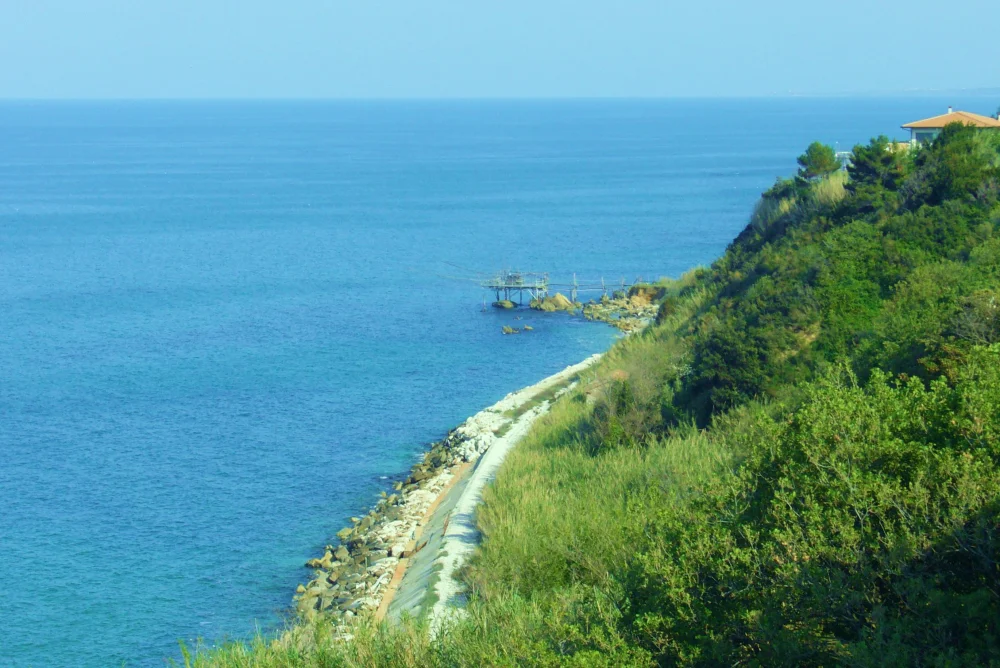
© maury3001 / Wikimedia Commons · CC BY 3.0
Walking among the rocks, he met a light-eyed fisherman with a salt-weathered face, whom he nicknamed Turchino.
His trabocco became a central setting in Il Trionfo della Morte, published five years later. Trabocco Turchino entered Italian literature long before tourism arrived.
Today, Trabocco Turchino is the coast’s only publicly owned fishing platform. San Vito Chietino’s municipality funds its upkeep, replacing beams damaged by salt and storms.
It is not a restaurant. From the viewpoint beside the SS16, the writer’s fascination becomes clear. Wind whistles through the ropes, the long wooden arms creak, and the dark frame stands out sharply against the deep-blue water.
Eating on a trabocco: brodetto, fried fish and Abruzzo wines
After the Second World War, industrial trawlers drove fish prices down and undermined the trabocco’s livelihood.
Most of the more than 200 structures documented in the early 20th century were left to rot. Restoration began in the late 1990s, supported by regional funds to repair their beams.
When the nets could no longer bring in enough fish to earn a living, the families set out tables. The smell of tar and wet nets gave way to garlic sizzling in olive oil and freshly fried food. The background sound remains the same: waves breaking against the stilts three metres below your feet.
© Jtorquy / Wikimedia Commons · CC BY-SA 4.0
What does a €60–80 set menu bring to the table? First comes a succession of antipasti: marinated anchovies, warm octopus and potato salad, and mussels stuffed with pecorino and egg.
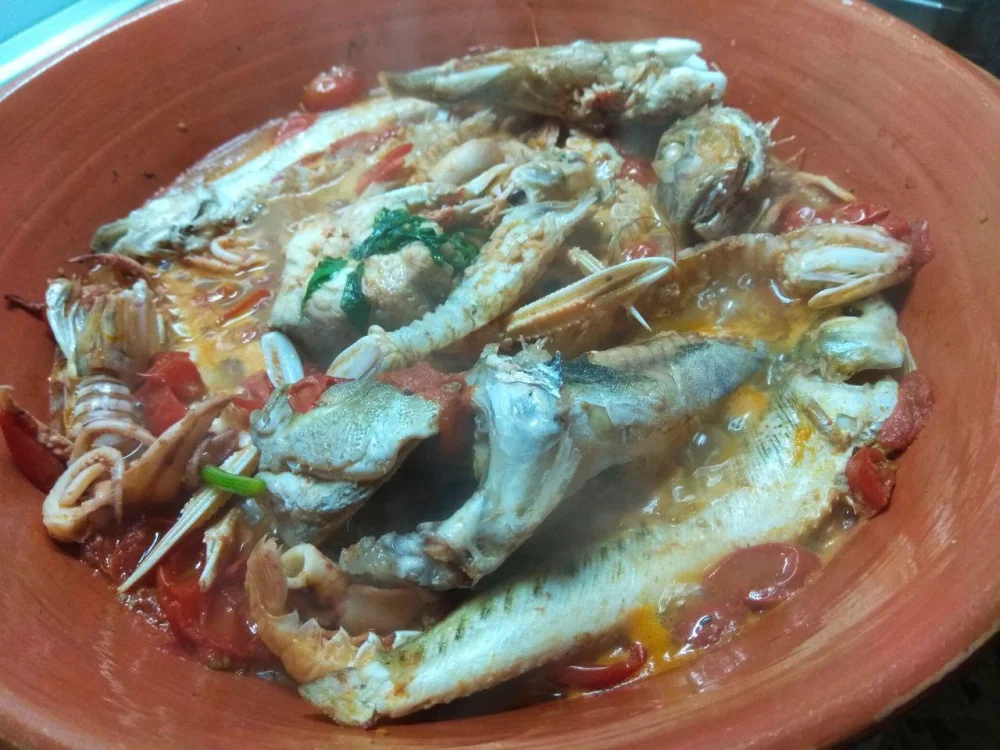
Then comes brodetto alla vastese. This red fish stew is made without onion: olive oil, fresh tomato, garlic and hot peppers form the base, with whole rockfish added according to their cooking times. Thick slices of toasted bread soak up the broth.
Another highlight is pasta: perhaps sagne e ceci, traditionally made with water-based pasta dough and chickpeas, adapted here with seafood, or simple al-dente linguine with clams.
The meal ends with frittura di paranza: small fish from the day’s catch, coated in fine semolina and quickly fried. Golden and crisp, without the taste of tired oil, they arrive in cones of yellow paper.
Local wines suit the meal. Pecorino, a dry white with mineral notes, cuts through the fried fish. For brodetto, try Cerasuolo d’Abruzzo: a full-bodied, cherry-coloured rosé, served cool, with enough character for the stew’s hot peppers.
- A 2019 regional law requires a fishing demonstration at least once during each service: the winch creaks, the wooden arms tilt and the net dips into the water.
- Book directly with the owners by phone or WhatsApp, rather than through a central booking platform.
- Trabocchi farther out to sea suit quieter dinners for two. Those beside the beaches can have large, lively tables until midnight.
Five trabocchi between San Vito Chietino and Fossacesia
The greatest concentration lies along a few kilometres of the Promontorio Dannunziano. From north to south:
A publicly owned literary landmark, viewed from the clifftop or the cycle path below. There are no interior visits or restaurant tables.
Walk here from San Vito’s main beach. In August, you dine above the bathers.
One of the few options for a visit without a full meal. Morning guided visits cost €5 and explain the winches and the structure’s history.
A much-photographed silhouette with a long wooden approach. The set menu costs around €60, with fried fish a highlight.
© Lucrezia Rossi / Wikimedia Commons · CC BY-SA 4.0
This marks the end of the busiest stretch of trabocchi. Park nearby, then climb to Abbazia di San Giovanni in Venere. Its 13th-century cloister is free to visit, with open views over orchards sloping towards the sea.
Getting to and around the Costa dei Trabocchi
The nearest airport is Pescara, around 40 minutes’ drive north of San Vito Chietino. Compare flights on Skyscanner.
Compare car hire on Rentalcars to cross the peninsula or follow the A14 down the coast. From Rome, allow around two and a half hours via the A25 through the Gran Sasso mountains. A car is the practical option for reaching inland accommodation.
© Marconeg / Wikimedia Commons · CC BY-SA 4.0
Once on the coast, consider leaving the car at your hotel and using the Via Verde. Spaces along the SS16 are scarce, and summer parking often costs €5–10 a day.
This former railway, closed in 2005, was paved to create a 42 km walking and cycling route between Ortona and Vasto.
The flat route follows the coast through old rock-cut railway tunnels, away from road traffic. Near the former San Vito Marina station, shops rent e-bikes for €15–20 a day. Ride ten kilometres along the coast, then leave your bike beside a trabocco’s footbridge for lunch.
In the evening, the cycle path feels different. The air cools and riders switch on their lights for the journey home.
Wild fennel replaces the smell of warm asphalt, while the trabocchi to your left light up one by one above the sea.
Where to stay on the Costa dei Trabocchi: hotels and agriturismi
Accommodation directly on the coast is limited. Many visitors stay a little inland among the olive-covered hills, five or ten minutes’ drive from the sea.
A modern hotel beside a small rocky cove, with private access to a pebble beach and a rooftop pool overlooking the Adriatic. Allow €150–220 a night in season and book months ahead.
Rocca San Giovanni sits on a hill three kilometres inland, among converted farmhouses. Rooms overlook vineyards and breakfast includes the property’s grape jams. Allow €80–110 a night. Evenings are cooler here, away from the coastal road’s traffic.
A four-star hotel on the SS16 coast road, 150 metres from the beach by Fossacesia’s harbour. Outdoor pool, free parking and air-conditioned rooms. From €130 a night.
In August, temperatures can reach 35°C and the narrow platforms grow noisy when every table is full. Consider the second week of September: the sea can still be around 24°C, cycling the Via Verde is more comfortable, and restaurant staff have more time to explain how the bilancia fishing net is lowered.
Seven days from Abruzzo’s coast to its mountains: Adriatic fishing platforms, a castle set among vineyards, Ovid’s home town, one…
Read more →Climb from the stone village to the towers seen in Ladyhawke, passing narrow lanes, a small octagonal church and wide…
Read more →