Taranto
The city of two seas
A fortified island, two seas and one of Europe's largest ancient gold collections. Taranto is unlike any other town in Puglia.
Taranto is a long way from the pristine, perfectly restored white villages of the Itria Valley. A huge steelworks stands on its horizon, and enormous timber props support 17th-century palaces in the old town.
What to see in Taranto: the main sights
Taranto packs 2,800 years of history onto a peninsula between two seas. Founded in the 8th century BC by exiles from Sparta, it became one of the richest ports in the ancient Mediterranean. These four sights form the basis of a visit, from the military fort still occupied by the Italian navy to the museum holding the funerary jewellery of Magna Graecia.
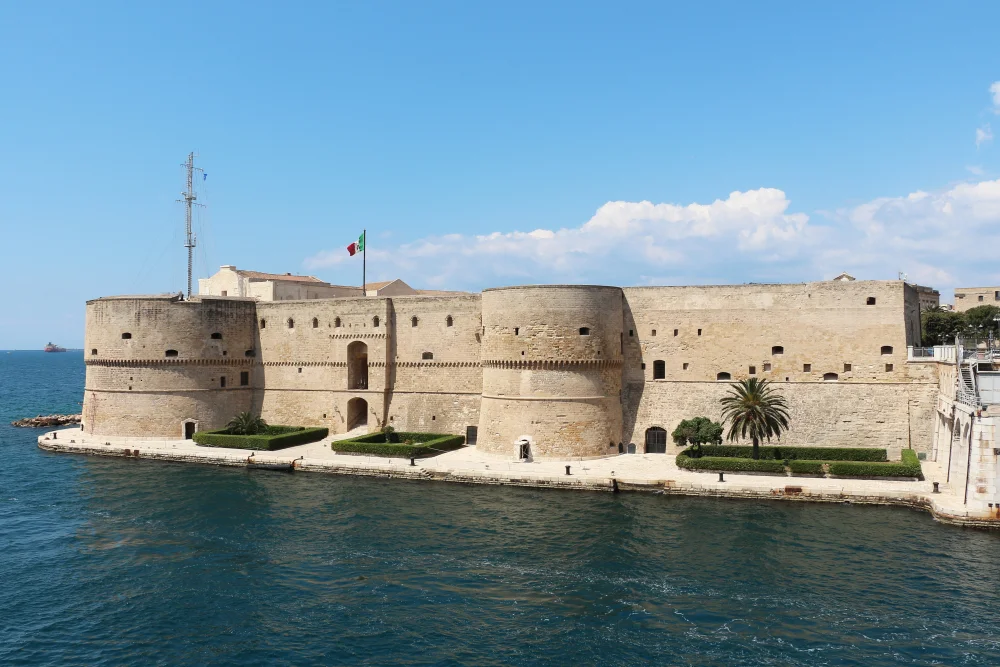
Built in the 15th century by Ferdinand of Aragon on Byzantine foundations, the castle stands beside the channel between the two seas. Visits are free and led by sailors from the Marina Militare, which still occupies the building. Tours leave every two hours, including late-night departures until 1.30am in summer.
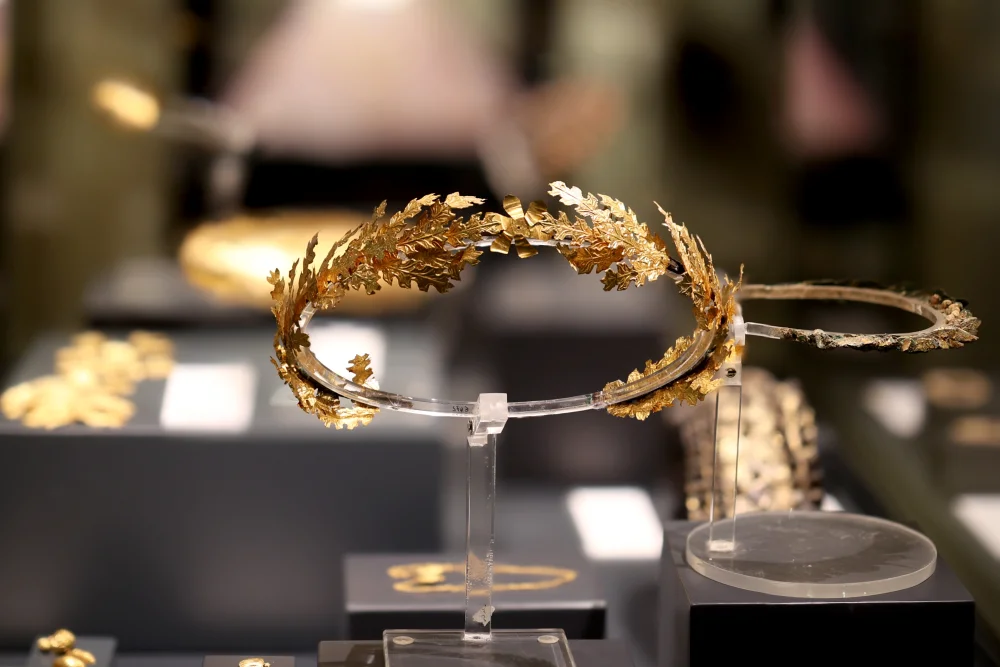
On the second floor is the ‘Gold of Taranto’: funerary wreaths of solid gold oak leaves, rings and earrings from the 4th century BC, so finely worked that you examine them with a magnifying glass. Admission is €10, or €12 to €15 during temporary exhibitions, and free on the first Sunday of the month.
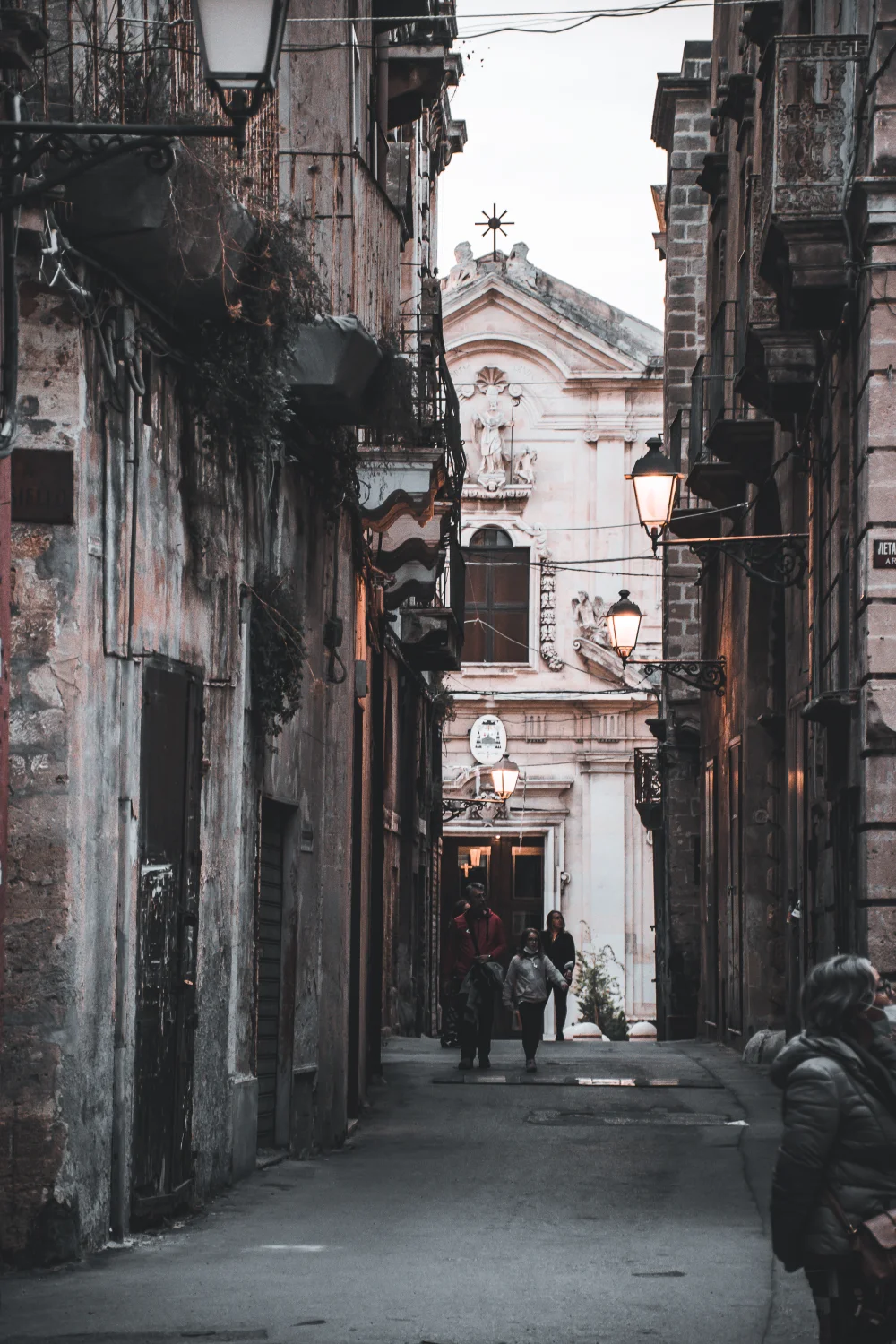
The historic centre is an island linked to the mainland by two bridges. You will see abandoned 17th-century aristocratic palaces, balconies secured with netting and windows bricked up with concrete blocks. Residents hang washing from balconies above the narrow passages. Via Cava drops steeply towards Mar Piccolo.
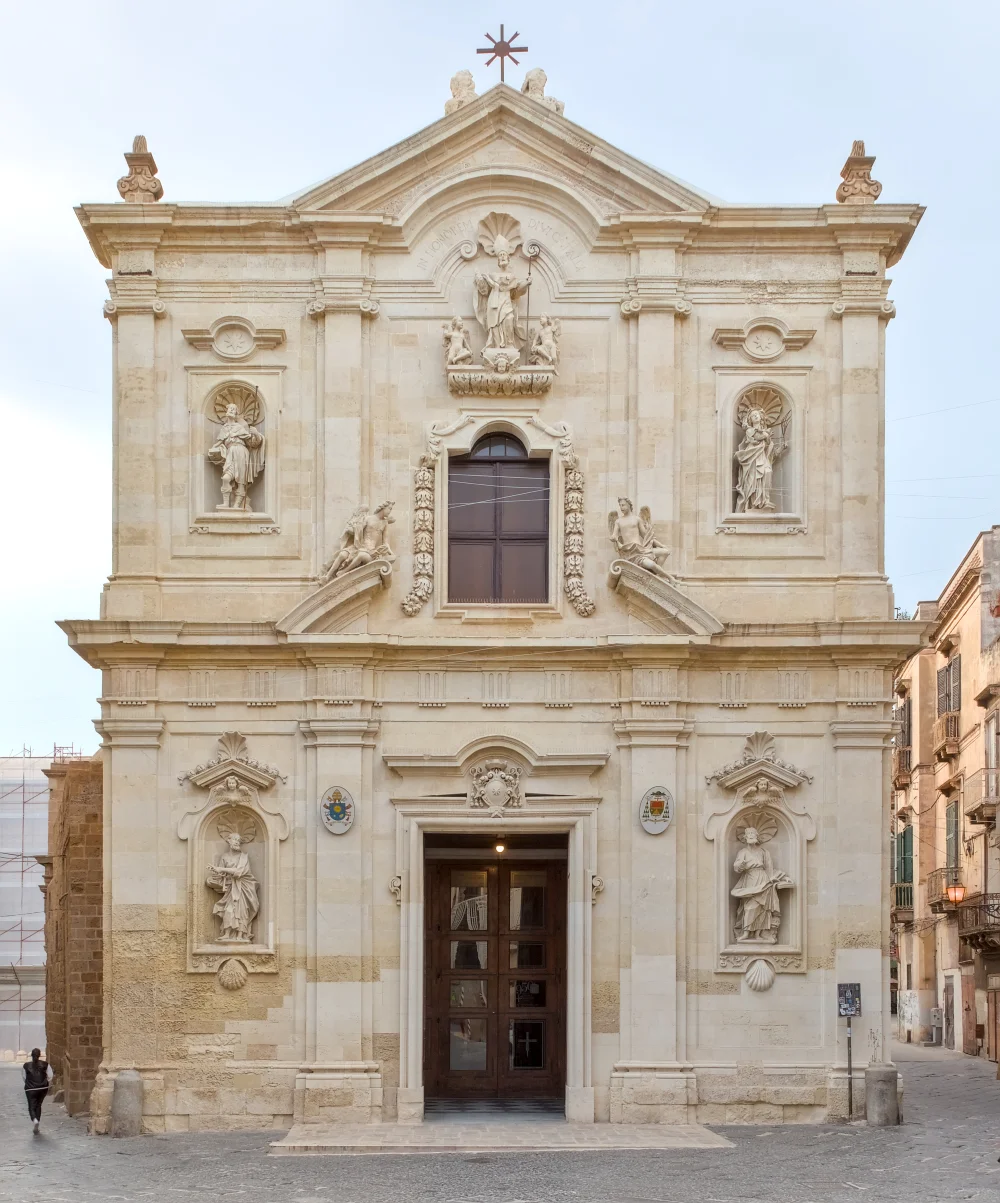
Built in the 11th century, this is Puglia's oldest cathedral. A Lecce architect added the baroque façade in 1713. Step inside: the dark Romanesque nave is a sharp contrast to the lavish exterior. The column bases came directly from the town's ancient pagan temples.
Other experiences can round out a visit. Dolphin-watching in the gulf is run by Jonian Dolphin Conservation, a scientific research association. Trips leave Molo Sant'Eligio at 10am for 5 hours on a 20-metre catamaran with marine biologists, costing around €45 per adult. In summer, they sell out weeks ahead.
You can also visit Taranto's hypogea, a network of chambers cut into the limestone. The one beneath Palazzo de Beaumont Bonelli, at Via Machiavelli 1, goes down to 14 metres below sea level. A thirty-minute visit with the palace owners costs €5. Finally, Ponte Girevole, the swing bridge opened in 1887, stops all traffic when naval ships enter or leave through the channel between the two seas.
Taranto in one day: a walking itinerary
One day is enough to cover the historic centre and Borgo Umbertino if you group the sights by area. With a car and an extra day, the countryside and coast are easy to reach.
Choose a café on Via Di Palma for a cappuccino and warm pasticciotto before your walk.
3 €Arriving at 9am lets you see the Gold of Taranto rooms before the school groups. The building is air-conditioned.
10 €Walk across the swing bridge from Borgo Umbertino to the old town island. The Aragonese Castle is immediately on your left.
FreeFollow Via Duomo to the cathedral square. Step inside to see the baroque marble chapel on the right.
FreeTry Al Gatto Rosso or a trattoria on Via Porto for pasta with shelled local mussels.
20–30 €The hypogeum on Via Machiavelli, fourteen metres underground. The temperature drops by 10°C as you descend.
5 €Head down Via Cava past the cracked façades. Afternoon light barely reaches the island's narrow streets.
FreeA late-afternoon guided visit with the Marina Militare. The heat is easing, and the courtyards are in shade.
FreeCross back over the bridge to the terrace at Caffè Italiano for a spritz, olives and taralli.
8 €A terrace on Lungomare Vittorio Emanuele III, looking out towards merchant ships anchored offshore.
35 €A 25-minute drive east. The Quartiere delle Ceramiche is carved into the San Giorgio ravine, with more than 50 workshops making pumi, the ceramic good-luck buds seen on balconies across Puglia.
25 min driveThe coast road heads south-east. Beyond San Vito, a 40-minute drive brings you to scrub-covered dunes and water that reaches 26–27°C in summer.
40 min driveWhere to walk in Taranto
Borgo Umbertino is open and spacious, laid out on a grid in the late 19th century. Via d'Aquino and Via Di Palma are lined with clothes shops and historic cafés. At 6pm, the main thoroughfare fills with students, families and office workers taking their customary evening stroll. Wrought-iron balconies project far over the pavements.
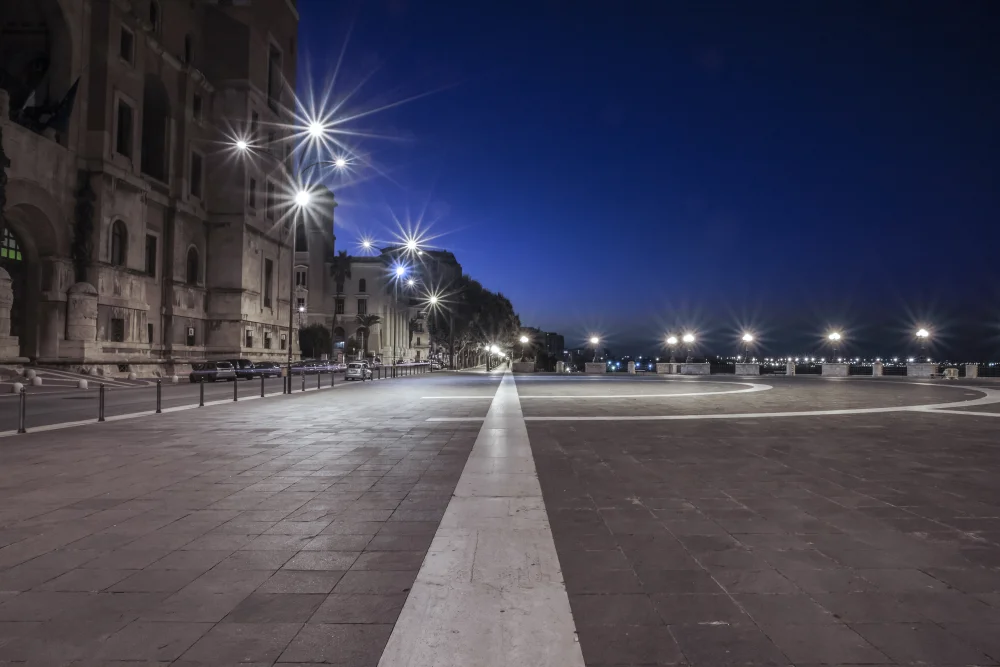
Lungomare Vittorio Emanuele III · Taranto, 2026 · © Eziobruno / Wikimedia Commons — CC BY-SA 4.0
Head west out of the grid of streets and the horizon suddenly opens up. Lungomare Vittorio Emanuele III runs straight along Mar Grande for two kilometres. Enormous 1930s administrative buildings, including the main post office and the provincial palace, face the water, their white stone framing squares designed for the gatherings of the era. Stone benches give uninterrupted views of the container ships anchored in the bay.
For a complete change, follow the waterfront north and cross the swing bridge into Città Vecchia. Flat shoes are essential on the uneven paving. Via Duomo runs straight across the island, while the side streets often become winding dead ends, designed in the Middle Ages to break the wind and slow attackers. Find Piazza Monte Oliveto: the restored façade of the Madonna della Salute church, opposite the rusty railings of neighbouring homes, tells much of Taranto's economic history. Via Cariati follows the inner waterfront, lined with local fishermen's small wooden boats.
Where to eat in Taranto: specialities and places to try
Taranto is Puglia's centre for raw seafood. Sea urchins, small octopuses and red prawns are eaten raw, fresh from the water. For this experience, rather than the informal stalls around Piazza Sant'Eligio, sit down at Al Gatto Rosso on Via Cavour. Expect around €25 for a raw seafood platter served with lemon.
Taranto's mussels are small and very meaty, with a strong briny flavour. They are eaten raw with lemon at fishmongers' stalls, or sautéed with garlic.
Short, smooth tube-shaped pasta served with tomato and garlic sauce, olive oil and shelled local mussels.
A round wood-fired bread with a hard crust and very little crumb, split and filled with grilled vegetables, mortadella or provolone.
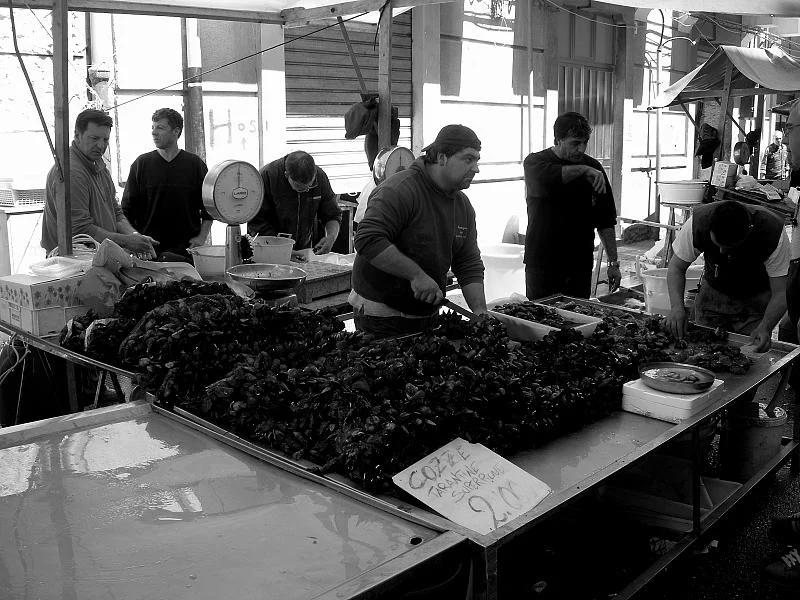
Cozze tarantine · Taranto, 2026 · © atharva80 / Wikimedia Commons — CC BY-SA 2.0
| Restaurant | Speciality | Budget | Our view |
|---|---|---|---|
| Al Gatto Rosso 4.3★ on Google | Raw seafood | around €25 | On Via Cavour, a well-known place for sea urchins and red prawns, served with lemon. |
| Trattoria Gesù Cristo 4.3★ on Google | Fried fish | 30–40 € | A noisy local institution serving food on metal canteen-style plates. Book the day before in summer. |
| Fratelli Pesce Ristò 4.5★ on Google | Tubettini con le cozze | around €14 | Via Porto 18, for short pasta with shelled mussels. |
Prices at Gesù Cristo depend on the day's market deliveries and cannot be guaranteed ahead of time. Book the day before during summer.
Where to stay in Taranto: recommended hotels
Staying in Città Vecchia puts you on the island but makes arrival more complicated: non-residents cannot drive in between 7am and 10pm. Dragging wheeled suitcases over Via Cava's broken paving in 35°C heat is best avoided. Borgo Umbertino, the modern town, has far more practical options for parking and reaching restaurants.
| Property | Price / night | Our view |
|---|---|---|
| B&B 102 B&B · Corso Umberto I · rated 9.8/10 on Booking |
85–100 € | One very large suite rented to one party at a time, with stone vaults, complete soundproofing and a private terrace accessible in the morning. |
| Hotel Europa 4-star hotel · rated 9/10 on Booking |
105–140 € | Right where Borgo Umbertino meets the island, with direct views of the Aragonese Castle and the moving swing bridge from upper rooms. |
| Hotel Delfino Taranto 4-star hotel · Viale Virgilio · rated 8.8/10 on Booking |
95–130 € | Further south, with rooms overlooking Mar Grande. The simplest option if you have a car, with easy parking in neighbouring streets. |
Look at the streets between MArTA and Ponte Girevole. Avoid the area north-west of the station near Tamburi: north-westerly winds regularly blow red dust from the steelworks onto balconies here.
Practical information for your stay
The main trap in Taranto is Città Vecchia's ZTL. Cameras read number plates at the entrances to the island's two bridges, and access is restricted every day from 7am to 10pm. Fines of €80 to €100 are issued automatically and later passed on through your hire company. Park in the modern town: Parcheggio Amedeo has 70 underground spaces, while blue-space street parking costs €1 per hour.
A direct Trenitalia train links Bari with Taranto FS station roughly every hour. From the station, Kyma Mobilità city buses or a 20-minute walk with your luggage take you to the modern centre. If you are travelling around Puglia without a car, this rail link is the region's most reliable option.
Taranto deserves a full day and an overnight stay. Travellers in a hurry often stop for just 4 hours to see the archaeological museum and swing bridge. They miss the change in the old town's atmosphere as the heat eases towards evening and the façades light up.
Do not spend the whole evening in the brightly lit modern town. At around 7.30pm, buy a cold Peroni from a small grocer's on Via Duomo and sit on the low wall facing Mar Piccolo. Fishing boats return to harbour, industrial cranes fade into the darkness, and the smell of frying fish drifts from the island's balconies.— The editors, Taranto · Puglia
Combine clear seas and lesser-known mountains. This circular route takes you from the Itria Valley to Matera's Sassi, with striking…
Read more →Puglia stretches for 400 kilometres. Here is how to choose the main sights, plan your journeys and avoid the tourist…
Read more →Frequently asked questions
Taranto: MArTA Archaeological Museum ticket